10 Top Airbnb Host Resources for 2026
Discover the 10 best Airbnb host resources for 2026. Level up your hosting with top tools for pricing, guest experience, operations, and property protection.

Managing Airbnb can feel simple on paper, then the inbox fills up, the cleaner texts that they're running late, a guest asks for the Wi‑Fi for the third time, and your pricing is already stale by dinner. That's why the best airbnb host resources aren't random productivity tools, they're a working stack that helps you run guest experience, revenue, operations, and risk like a real business. The right mix gives you fewer repetitive messages, better turnover discipline, smarter pricing, and less middle-of-the-night panic.
Table of Contents
- 1. ScanStay
- 2. Hostfully Digital Guidebooks
- 3. Touch Stay
- 4. PriceLabs
- 5. AirDNA
- 6. Turno formerly TurnoverBnB
- 7. Breezeway
- 8. Minut
- 9. Superhog Know Your Guest
- 10. Airbnb Resource Center official
- Top 10 Airbnb Host Resources: Comparison
- Building Your Ultimate Hosting Stack
1. ScanStay
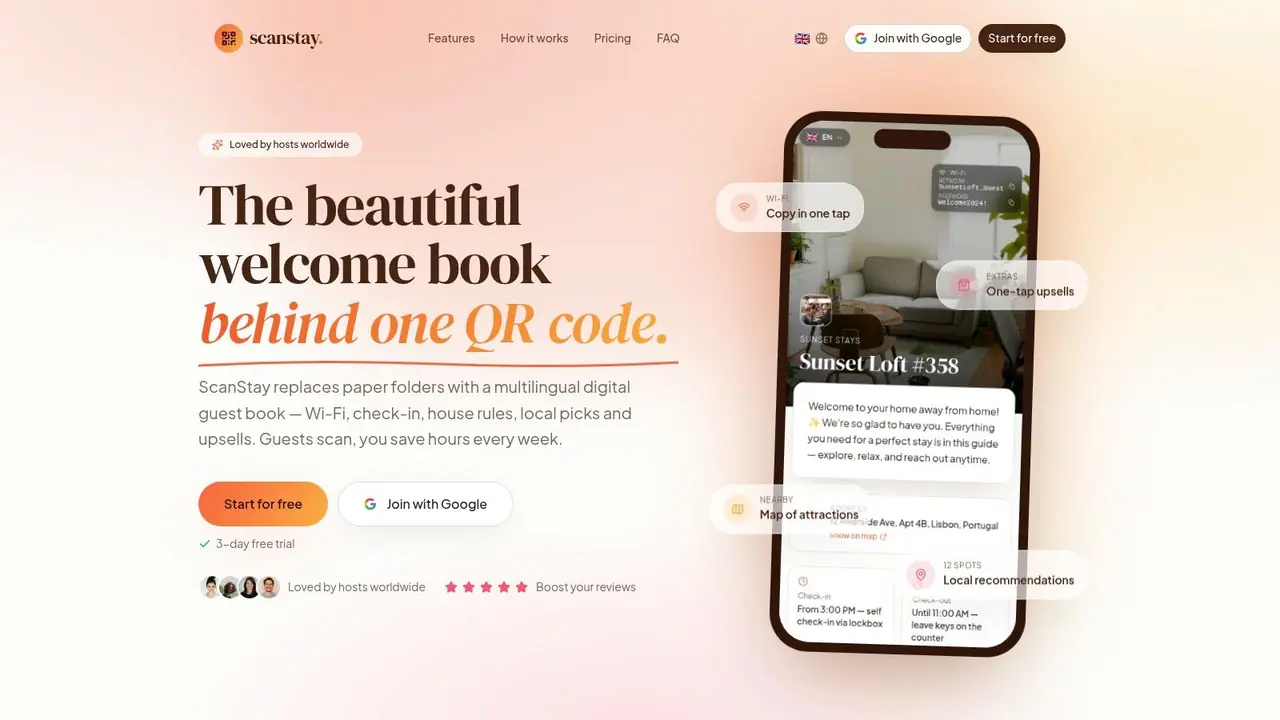
If your guest messaging still depends on scattered texts, paper binders, and memory, ScanStay is the cleanest fix in this category. It turns the basic guest guide into a single QR-linked mobile experience with Wi‑Fi, check-in and checkout details, house rules, local recommendations, video how-tos, and one-tap service upsells in the browser, so guests don't need an app to find anything.
Why it fits the guest experience workflow
ScanStay is strongest when you want to stop answering the same questions over and over. The platform's mobile-first setup, printable A5 QR poster, and reusable property templates make it easy to standardize the guest journey across multiple listings, which matters in a market where hosts are serving a highly distributed, multilingual audience rather than a single neighborhood or country Airbnb host scale and distribution. The AI translation support across 18 languages also makes the guidebook more usable for international guests without asking the host to rewrite everything manually.
It also has a practical revenue angle. One-tap upsells like late checkout, transfers, and gear rentals let hosts monetize the stay without feeling pushy, and that's a useful edge when you're trying to make each reservation work harder. The trade-off is simple, though, it depends on the guest having a smartphone and internet access, so it won't solve every low-connectivity stay.
Practical rule: if a guest asks the same question more than once a month, it belongs in the welcome book, not in your inbox.
ScanStay's direct fit is for hosts who want guest communications, branded content, and upsells in one link. It's a strong front-end layer, especially when you're trying to reduce repetitive support and make the stay feel more polished from the first scan. Visit ScanStay
2. Hostfully Digital Guidebooks
Hostfully Digital Guidebooks is the safer pick for hosts who want a polished guidebook that can grow into a bigger hospitality stack. It centralizes house rules, check-in instructions, local tips, and upsells, and it gives you a more formal presentation than a paper binder or a one-off PDF ever will.
Where it works and where it doesn't
The free plan for 1 guidebook makes it easy to test the format before paying for scale, and the platform supports custom branding, bulk editing, QR and PDF sharing, and instant translations in 16+ languages. That's useful for hosts who are still figuring out their guest communication style and don't want to rebuild content from scratch later. If you're already using Hostfully PMS, the guidebook fits neatly into a broader operations setup.
The limitation is visibility. Sponsored recommendations appear on the free plan, which can be distracting if you want a fully branded guest journey. Also, the public pricing doesn't give you the full Pro detail upfront, so scaling requires a sales conversation rather than a quick checkout. For a host who wants a low-friction starting point and can tolerate a little vendor friction later, that trade-off may still be worth it.
Hostfully also pairs well with the broader guidance in ScanStay's digital welcome book comparison, especially if you're deciding whether to stay lightweight or move into a more integrated PMS-linked workflow. In practice, this is a strong middle-ground tool for hosts who want better guest-facing documentation without jumping straight into a full operations suite.
3. Touch Stay
Touch Stay makes sense when your main problem is repetitive questions, not property management complexity. It's built around a polished digital welcome-book experience, and the embedded upsell widget gives you a way to promote extras without stapling another tool onto the guest journey.
Best use case for lighter operations
The platform's AI assistant inside the guidebook is the feature that matters most in day-to-day use. Guests can get quick answers without pinging you, which is exactly what you want before arrival and during a stay, especially if you manage more than one property. The built-in upsell widget also helps direct bookings and OTA stays feel more complete, since the same guidebook can carry paid options alongside house information.
The downside is setup discipline. Touch Stay has a polished output, but that polish takes work, especially when you're styling the guidebook for the first time and keeping upsell content current. Hosts who like to set a system once and forget it may still need a monthly maintenance habit, or the content starts to drift.
Touch Stay is a good fit when you want guidebooks and extras without committing to a full PMS. It's less useful if your operations are already messy, because the tool won't fix a broken workflow by itself.
For hosts comparing guest-facing systems, the practical distinction is this. Hostfully leans broader and more platform-linked, while Touch Stay feels leaner and more focused on presentation and recurring guest questions. If your priority is reducing inbox load while keeping the stay elegant, it belongs near the top of your shortlist. ScanStay's Touch Stay alternative overview
4. PriceLabs
PriceLabs is the strongest revenue management tool here for hosts who don't want to leave pricing to platform defaults. It updates nightly rates and minimum stays using market and performance data, and it gives you enough control to react to demand changes without manually tweaking every listing.
What it solves for revenue management
The value is in the depth of customization. PriceLabs syncs daily and offers 30+ customizations, including last-minute adjustments, orphan gap handling, and day-of-week rules. That makes it a better fit than basic auto-pricing when you're dealing with different booking patterns across multiple properties, or when one listing needs a very different strategy from another. It also connects with Airbnb, Vrbo, Booking.com, and 150+ PMSs, which matters if your portfolio isn't locked into one channel.
Hosts often outgrow simple pricing tools because they need more than a rate suggestion. They need control over minimum stays, portfolio reporting, and a way to apply the same logic across units without flattening performance. PriceLabs does that well, but the learning curve is real, and the pricing structure can feel fragmented if you're trying to compare subscription models quickly.
A useful companion resource is dynamic hotel pricing guidance from ScanStay, especially if you're still deciding how aggressive your rate strategy should be. In a crowded, international hosting market, pricing discipline is not optional, and tools like PriceLabs help make it repeatable rather than reactive. That's the main reason serious hosts keep it in the stack.
5. AirDNA
AirDNA belongs in the research phase of a host's workflow, not the daily guest workflow. It helps you understand market conditions before you buy, expand, or reset your strategy, which is a very different job from dynamic pricing software.
Use it before you make a decision
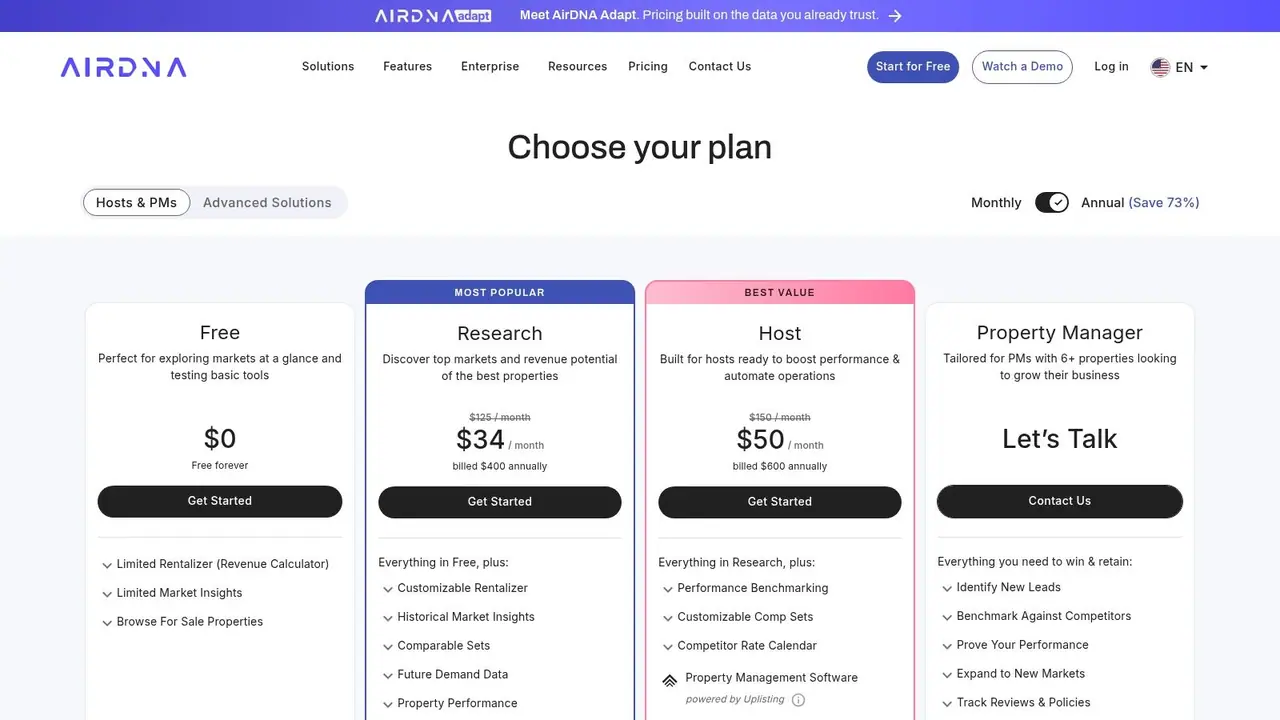
The strength of AirDNA is benchmarking. Its revenue calculator, competitive sets, historical market insights, and forward-looking demand signals are useful when you need to answer questions like whether a listing can carry itself, how a neighborhood compares, or how a portfolio should be positioned. For hosts who report to owners, lenders, or investors, that kind of market-level framing is often more persuasive than a gut feeling.
The limitation is coverage quality. Larger U.S. markets tend to be the most useful, while smaller or rural markets can have thinner comparable data, so you need to treat the output as directional rather than absolute. That makes AirDNA better for decision support than for day-to-day execution.
A useful benchmark to keep in mind is that global Airbnb supply is about 7.70 million active listings, with 56.4% average occupancy and a 4.78/5 average review score in AirROI's 2026 dataset, plus 18.2% of hosts managing 5+ listings AirROI 2026 benchmark dataset. Those market numbers reinforce why planning tools matter. A host is rarely making decisions in a quiet, low-competition environment, and AirDNA is useful precisely because it helps you see the market before you commit capital or adjust strategy.
6. Turno formerly TurnoverBnB
Turno solves a problem that every host learns quickly. Cleanings don't fail gracefully. If the turnover is late, the rest of the day gets harder, and guest trust takes the hit.
Why it belongs in operations
Turno automates the unglamorous part of turnovers by pulling in real-time reservations, creating clean projects from the calendar, and auto-scheduling jobs. It also gives you access to a marketplace of reviewed local cleaners, while still supporting your own cleaner network if you already have one. That flexibility matters, because redundancy is often more valuable than chasing the cheapest option.
The biggest win is miscommunication reduction. In-app chat, payments, and review tracking keep the turnover loop more organized, and that's exactly what solo hosts and small teams need when they're juggling last-minute changes. The trade-off is cost structure. Marketplace fees, subscription pricing, and processing details can vary depending on how you use the platform, so it's a tool that rewards careful review before you scale it across multiple units.
If your cleaner still texts you for every assignment, photo, and payment detail, you're paying a hidden management tax every week.
Turno works best when the host wants scheduled reliability without hiring an operations coordinator. It's not a full guest experience platform, and it doesn't need to be. It's the cleaner-side engine that helps the rest of your hosting stack function.
7. Breezeway
Breezeway is built for hosts who care about field operations as much as guest messaging. It covers task scheduling, inspections, maintenance, cleaner coordination, and owner reporting, so it's closer to an operational control center than a simple task list.
Where it stands in a grown-up hosting workflow
The strongest case for Breezeway is reliability at scale. Mobile apps for iOS and Android, offline sync, and vendor management make it practical for teams that are out in the field rather than sitting at a desk. If you manage multiple properties or use several contractors, that structure matters more than flashy guest-facing features.
The platform also complements a PMS instead of trying to replace one, which is often the right call. Breezeway's guest messaging, guidebooks, upsells, and 24/7 Assist are add-ons, so the total cost depends on what you need. That can make budgeting awkward, but it also means you're not forced to pay for guest-facing features if your real pain point is turnover execution.
A strong use pattern is this. Use Breezeway for checklists, inspections, and cleaner accountability, then layer a guidebook and pricing stack on top of it. That division keeps each system doing the job it's best at, and it avoids the common mistake of buying one “everything” tool that isn't especially strong at anything.
For hosts building toward professional management, Breezeway is one of the better choices when the property care side starts consuming too much of the week. It's not the simplest tool in this list, but it's one of the most operationally serious.
8. Minut
Minut is a risk management tool for hosts who've had enough of noise complaints, smoking issues, and uncertainty around what's happening inside the unit. It combines hardware and software so you can monitor noise, crowd levels, smoking, alarms, and tamper alerts before a problem turns into a neighbor dispute or a bad claim.
How it reduces after-hours stress
The practical advantage is early intervention. Triggered and scheduled guest messages let you respond to events without waiting until the problem gets worse, and the unified inbox for Airbnb, WhatsApp, and SMS keeps communication in one place. If you're trying to avoid being on call all night, the optional Call Assist service is a meaningful addition because someone else can contact the guest for you.
The trade-off is obvious. You need a device per unit, plus a software plan, and some features cost extra. That makes Minut less attractive for very small operators who only occasionally need compliance support, but far more attractive when one bad party can create real operational and legal headaches.
Minut belongs in a mature stack because it handles the part of hosting that doesn't show up in pretty photos. You don't buy it to impress guests. You buy it to prevent avoidable incidents and to keep the night from turning into a property crisis.
9. Superhog Know Your Guest
Superhog, through Know Your Guest, handles the screening and protection layer that gives a host more control before a reservation turns into a liability. It focuses on ID verification, biometric checks, fraud detection, deposits, waivers, and claims assistance, which makes it especially useful for direct bookings and hosting across multiple OTAs.
When screening matters most
This tool fits best when Airbnb's built-in protections do not fully match your risk profile. If you manage higher-value units, accept bookings across several channels, or take reservations outside the Airbnb ecosystem, a formal screening layer can lower uncertainty and make your house rules easier to enforce. Its damage-protection positioning also helps when you need a clearer case for owners or premium properties.
The trade-off is friction. Any extra verification step can slow the booking flow if it is not set up carefully, and pricing that changes with booking volume and coverage level means you need to understand the cost before rolling it out broadly. Used well, though, it creates a more professional front gate for your business.
Screening works best when it is invisible to good guests and firm with bad ones.
That is the balance to aim for. A screening tool should make your business safer without turning every booking into a hurdle race.
10. Airbnb Resource Center official
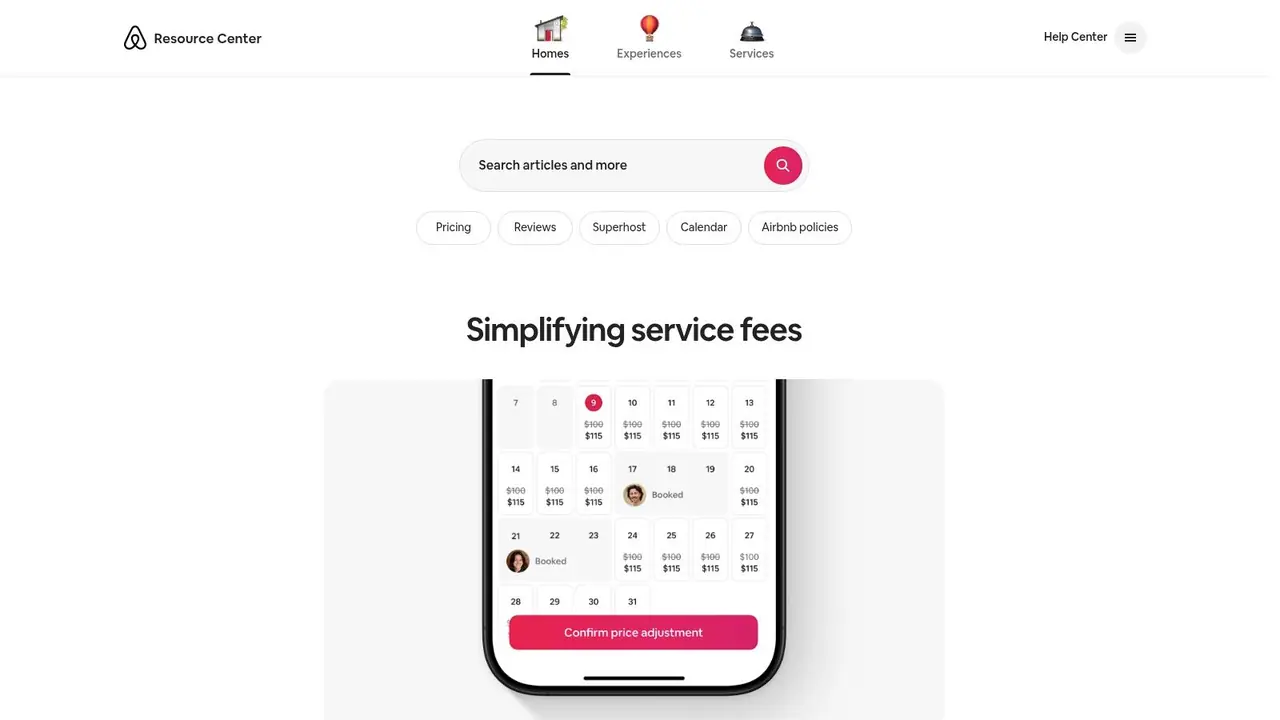
Airbnb's official Resource Center deserves a permanent place in the stack because it tells you how the platform itself wants hosts to operate. It covers getting started, five-star hospitality, host tools, pricing, safety, policies, and product updates, which makes it the best source for platform-specific guidance.
Why every host should keep it bookmarked
The main advantage is alignment. If Airbnb changes a feature, adjusts a policy, or surfaces a new tool like auto-reply or earnings protection, the Resource Center is where you go to understand the platform's current logic. That matters because a lot of third-party advice goes stale quickly, while official guidance is designed to keep pace with product changes.
It's also useful for newer hosts who need structure. Local Host Clubs and the Community Center give you a way to learn from other operators while staying inside Airbnb's ecosystem. The limitation is scope. It's not a substitute for operations software, pricing software, or risk software, and it won't help much if you're managing several OTAs at once.
A practical host uses the Resource Center like a policy compass, not a business system. It keeps your Airbnb-specific decisions honest, while the rest of your stack handles the work that the platform doesn't solve.
Top 10 Airbnb Host Resources: Comparison
| Product | Core features (✨) | UX & Quality (★) | Price / Value (💰) | Target audience (👥) |
|---|---|---|---|---|
| 🏆 ScanStay | ✨ QR guestbook; one‑tap Wi‑Fi; AI translation (18); Google Maps pins; one‑tap upsells; printable A5 QR | ★★★★☆, fewer support msgs (−82%); +34 5★ reviews reported | 💰 Solo $9/mo; Pro $29/mo; Unlimited $99/mo; 3‑day trial; VAT invoices | 👥 Solo hosts → agencies; scaling portfolios |
| Hostfully Digital Guidebooks | ✨ Guidebooks & templates; QR/PDF; 16+ translations; marketplace upsells | ★★★★, polished, integrates with Hostfully PMS | 💰 Free (1 guidebook); Pro/Enterprise by quote; sponsored recs on free plan | 👥 Hosts wanting professional guidebooks; PMS users |
| Touch Stay | ✨ AI Q&A in guidebook; built‑in upsell widget; polished templates | ★★★★, guest‑friendly; reduces pre‑arrival inbox load | 💰 Paid tiers; advanced styling/setup time | 👥 Hosts wanting guidebooks + upsells without full PMS |
| PriceLabs | ✨ Dynamic nightly pricing; AI base price; daily syncs; portfolio analytics | ★★★★, powerful customization; learning curve | 💰 Per‑listing or revenue‑% plans; scalable but pricing can be complex | 👥 Revenue managers & large portfolios |
| AirDNA | ✨ Market intelligence; Rentalizer revenue calc; comp sets; demand forecasts | ★★★☆, strong in major markets; thinner rural data | 💰 Paid research plans; can be costly for full features | 👥 Investors, market researchers, expansion planners |
| Turno (formerly TurnoverBnB) | ✨ Auto‑schedule cleans from reservations; cleaner marketplace; in‑app chat & payments | ★★★☆, automates turnovers; good US coverage | 💰 Subscription + marketplace fees; review terms before scaling | 👥 Hosts needing cleaning automation & backup cleaners |
| Breezeway | ✨ Task checklists; inspections; vendor & cleaner management; mobile apps | ★★★★, purpose‑built ops; scales well; add‑ons available | 💰 Add‑ons & tiered pricing by quote; total cost varies | 👥 Property managers & large portfolios |
| Minut | ✨ Noise, crowd & smoking detection; triggered guest messages; tamper alerts | ★★★☆, proactive risk mitigation; reduces after‑hours intervention | 💰 Hardware + subscription; Call Assist & some features extra | 👥 Hosts in noise‑sensitive or party‑risk areas |
| Superhog (Know Your Guest) | ✨ ID/biometric verification; fraud detection; deposits/claims support | ★★★☆, strengthens screening; may add guest friction | 💰 Per‑booking pricing; varies by coverage level | 👥 Hosts seeking high damage protection & screening |
| Airbnb Resource Center (official) | ✨ How‑to guides; product updates; safety & policy hubs; host tips | ★★★★, authoritative, platform‑specific guidance; free | 💰 Free | 👥 New & experienced Airbnb hosts |
Building Your Ultimate Hosting Stack
The right airbnb host resources don't just add features, they create a system. A digital welcome book like ScanStay handles the guest-facing layer, a pricing tool like PriceLabs handles revenue, and an operations platform like Turno keeps cleanings from slipping through the cracks. Add Breezeway if your field team needs structure, Minut if risk control is a real issue, and Superhog if screening has become part of your business model.
The best stack depends on your biggest bottleneck. If the inbox is draining you, start with guest experience. If your calendar is underperforming, start with revenue management. If turnovers are the weak link, fix operations first, because a great listing still fails if the cleaner misses the window. That's also why the official Recepta.ai answering service for property management companies is worth a look if you're trying to extend responsiveness without living on your phone.
Hosts get into trouble when they buy software before they identify the pain point. The smarter move is to build one layer at a time, then connect it into a workflow that repeats cleanly across properties. That's how hosting becomes more profitable and less stressful, not just more complicated.
If you want the guest-experience layer that ties this whole stack together, ScanStay gives you a QR-based digital welcome book with Wi‑Fi, check-in details, house rules, local tips, and upsells in one place. It's built for hosts who want fewer repetitive messages and a more polished stay, without adding another app for guests to learn. Visit ScanStay and see how it can fit into your hosting workflow.