How Does Vacation Rental by Owner Work: A 2026 Guide
Explore how does vacation rental by owner work in 2026. Our guide details the entire process for hosts: listing, booking, taxes, operations, and scaling.
You've got a property. Maybe it's a second home that sits empty between trips. Maybe it's a former long-term rental. Maybe it's the place you keep looking at and thinking, “Could this earn?”
That's usually where the question starts. Not with software or pricing rules, but with a simple idea: list the place, get bookings, make income. Then reality shows up. Guests ask where to park. Someone can't find the Wi-Fi password. A cleaner misses a stain. A lock battery dies an hour before check-in. The listing wasn't the business. It was the opening move.
That's the answer to how does Vacation Rental by Owner work in 2026. You're not just publishing a property online. You're stepping into a hospitality operation with sales, guest service, turnover management, payment workflows, house rules, and reputation management all tied together. The scale of the market makes that clear. In the European Union, guests booked 951.6 million short-stay accommodation nights via major online platforms in 2025, up 11.4% year over year. Globally, Airbnb reports more than 9 million active listings, and 61% of short-term rental operators used AI in 2025 according to this vacation rental statistics roundup.
If you're still deciding whether this model fits your property, a broader short-term rental guide for new hosts helps frame the opportunity. What matters here is the mindset shift. Owners who do well stop thinking like landlords and start thinking like operators.
Table of Contents
- Introduction Your Guide to the Modern VRBO World
- What Exactly Is a Vacation Rental by Owner
- The Host Lifecycle From Listing to Review
- Managing Money Taxes and Legal Rules
- Mastering Operations for 5-Star Reviews
- Common Pitfalls New Hosts Face and How to Avoid Them
- How to Increase Bookings and Reduce Guest Questions
Introduction Your Guide to the Modern VRBO World
A lot of owners still approach this business as if the hard part is getting a listing live. It isn't. Listing is easy. Running the stay well, every time, is where the money and stress both live.
That's why so many first-time hosts get surprised after their first few bookings. The calendar fills, but the workload multiplies with it. You're suddenly coordinating cleaning windows, answering arrival questions, handling amenity issues, and learning that one weak review can drag down future conversion. That's normal. It's also why the best hosts build systems early.
The shift from owner to operator
The old mental model was simple. Own a home, post photos, wait for inquiries.
The modern model is different. Platform-based booking has changed guest expectations, and competition is deeper than most new hosts realize. Travelers compare your property against professionally managed homes with polished photos, fast replies, clear house information, and frictionless check-in. If your operation feels improvised, guests notice quickly.
Practical rule: If you want consistent bookings, treat each stay like a product you deliver, not just a date range you sell.
What success actually looks like
The hosts who last in this business usually get three things right:
- They standardize communication. Guests get clear instructions before they need to ask.
- They manage turnover tightly. Cleaning, inspection, restocking, and maintenance happen on a repeatable schedule.
- They protect the review loop. Good stays produce good reviews, and good reviews improve future booking performance.
That's the modern VRBO world. The property matters, but the operation decides whether the listing feels reliable enough to book.
What Exactly Is a Vacation Rental by Owner
A guest books your place for a long weekend. They are not buying square footage alone. They are buying arrival clarity, a clean kitchen, working Wi-Fi, easy access, and confidence that someone has thought through the stay.
That is what a vacation rental by owner means in practice.
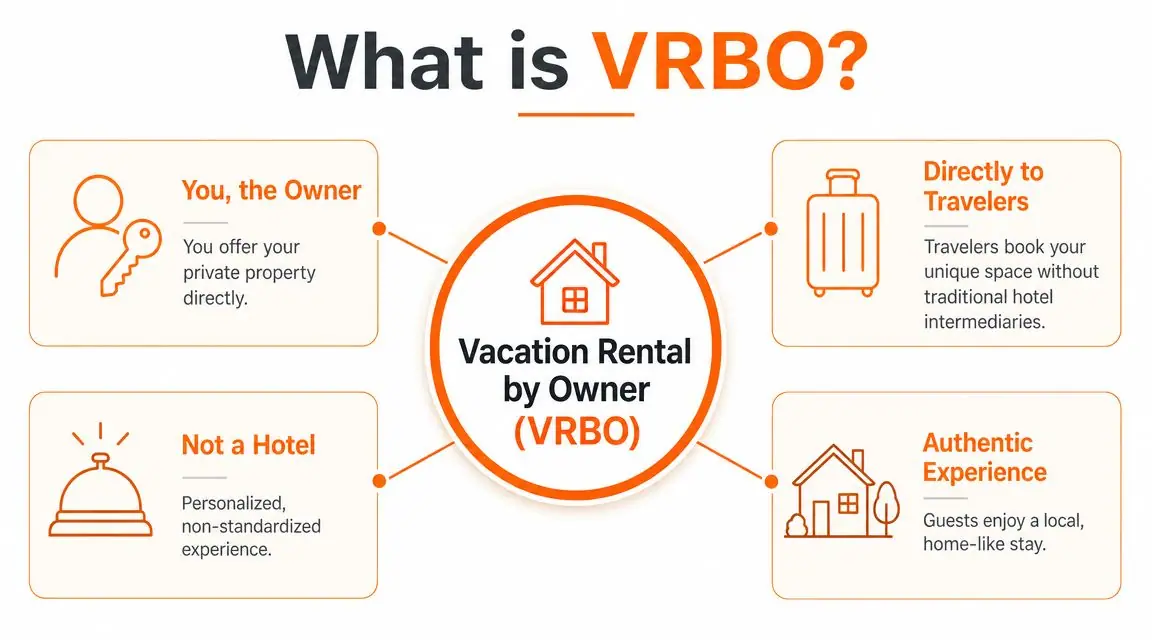
Vrbo stands for Vacation Rentals by Owner. At the platform level, it is an online marketplace where owners list private homes for travelers to book, as explained in NerdWallet's guide to what Vrbo is and how it works. At the operating level, it is a host-run hospitality business. The platform helps with visibility, booking flow, payments, and messaging. The owner is still responsible for the product the guest experiences.
It's an entire-home hospitality model
Vrbo has long centered on private homes rather than shared rooms. That shapes the stay from the first click. Guests usually expect privacy, more space, a kitchen, and control over their schedule.
They also expect the home to function without a front desk.
That changes the job. In a hotel, staff cover gaps in the experience minute by minute. In a vacation rental, the host has to build those answers into the operation ahead of time through clear setup, clear standards, and clear communication. Good hosts use tools like digital guidebooks, scheduled messaging, and detailed property instructions because guests do not separate the home from the service around it.
The platform gives you distribution. You still run the stay
New hosts often overestimate what the booking platform handles. Vrbo can bring travelers to the listing and process the reservation. It does not stock the coffee, verify the cleaner finished on time, or explain how the smart lock works when a family arrives after dark.
Here's the practical breakdown:
| Role | What they do |
|---|---|
| Owner or host | Creates the listing, sets pricing and rules, prepares the property, manages the guest experience, coordinates turnover and maintenance |
| Platform | Displays the listing, processes booking flow, facilitates payment, supports messaging |
| Guest | Searches, compares, books, follows house rules, and leaves a review |
This distinction matters because many owners start with a listing mindset. Strong hosts switch to an operations mindset fast. The home is the asset. The business is everything wrapped around it.
“By owner” usually means controlled by owner
Some owners handle everything themselves. Others hire cleaners, maintenance vendors, co-hosts, or a local manager for guest support. Both models can work.
What matters is control over standards, response times, house rules, and the financial side of the booking. That includes setting expectations in your listing and backing them up with solid paperwork, including vacation rental contracts that protect both host and guest.
In 2026, that is the significant shift. Listing a property is easy. Running a reliable short-term rental business takes systems, judgment, and consistency. “By owner” is less about doing every task yourself and more about owning the result.
The Host Lifecycle From Listing to Review
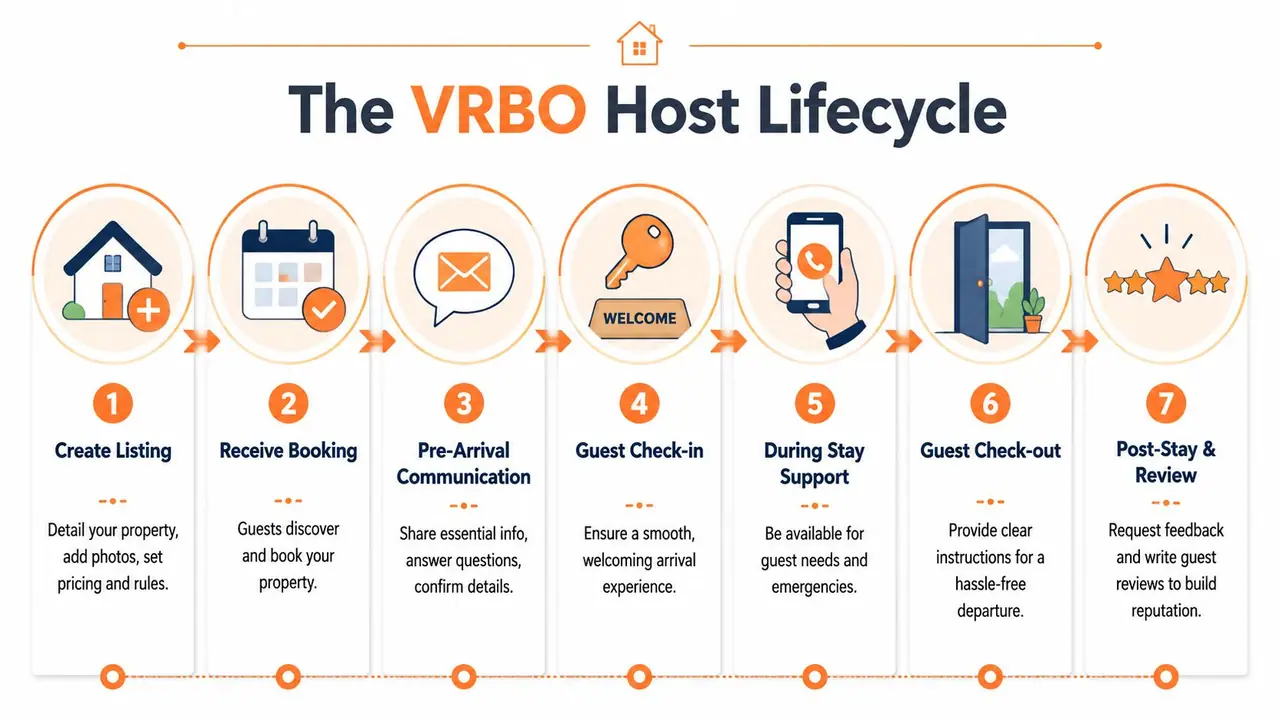
Every booking follows a predictable sequence. Once you understand that sequence, hosting gets less chaotic because you stop reacting and start building workflows.
The whole-home model makes this especially important. Owners have to define access details, check-in and check-out timing, amenity usage, and cancellation terms in the rental agreement or visible property instructions, which makes the host-driven lifecycle central to the stay, as described in this video explanation of the whole-home inventory model.
The booking cycle in real terms
A clean host lifecycle usually looks like this:
Create the listing
You write the description, upload photos, choose amenities, set nightly pricing, block unavailable dates, and publish your rules.Receive the booking
A guest books instantly or sends a request. You confirm details and make sure your calendar reflects the reservation correctly.Handle pre-arrival communication Strong hosts excel in this area. Send parking notes, access instructions, arrival timing, and any property quirks before the guest has to chase you for answers.
Manage check-in
A self-check-in lock, keypad, lockbox, or in-person handoff only works when the instructions are simple and tested.Support the stay
Guests may need help with Wi-Fi, appliance use, local recommendations, or a maintenance issue. Fast response matters.Run checkout
Give concise departure instructions. Don't bury them in a long message.Inspect, reset, and review
After departure, check for damage, confirm cleaning completion, restock supplies, and leave a guest review while requesting one in return.
Why most problems happen between stages
New hosts often focus on the visible moments, listing setup and check-in day. The fragile parts are usually the handoffs in between.
A cleaner doesn't get the updated checkout time. The guest receives an outdated door code. A last-minute message gets missed because it wasn't templated. These aren't dramatic failures. They're operational misses, and they create the kind of friction guests remember.
A solid vacation rental contract workflow also helps define expectations before arrival. That matters because guests rarely read everything closely unless the instructions are short, clear, and easy to find.
If you're writing the same message over and over, the process isn't finished yet.
Reviews are not the end of the booking
The review is part of the next sale. Owners who understand this don't treat post-stay follow-up as an afterthought.
A good review cycle usually comes from three things. The guest knew what to expect, the property matched the listing, and problems were handled without defensiveness. If one of those breaks, the review often reflects it.
Managing Money Taxes and Legal Rules
A key transition occurs as a casual host turns into a real operator. Money, taxes, and legal compliance aren't side tasks. They're part of the job.
A lot of owners only think about gross booking revenue. That's the wrong lens. The better question is simpler: after all the routine costs and legal obligations are accounted for, does the property still work as a business?
Revenue is only the top line
Your booking total isn't your profit. It's the starting point.
The expenses that usually shape the business most are the obvious ones people mention and the smaller ones people forget. Cleaning, maintenance, replacement items, supplies, platform fees, taxes, insurance, and downtime between stays all affect what the property earns. That's why experienced hosts track every recurring cost and every one-off cost from day one.
Here's a practical breakdown:
Platform-related costs
Booking platforms charge fees, and payment processing can affect what lands in your account.Operating expenses
Cleaning, laundry, consumables, repairs, landscaping, pest control, and restocking are routine, not exceptional.Property-level obligations
Mortgage, rent, HOA rules, utilities, and insurance all continue whether the month is strong or weak.
Taxes and compliance are not optional
Local lodging or occupancy rules vary widely, and hosts need to know what applies before they start taking reservations. Registration, guest record handling, and local reporting obligations can become a problem fast if you assume the platform handles everything for you.
If you need a starting point for the administrative side, this guide to registration of guests for short-term rentals shows the kind of recordkeeping and process discipline many operators need.
Good hosts keep receipts, document policies, and know which rules apply before the first booking arrives.
Insurance and local rules deserve more attention than they get
Standard homeowner coverage often isn't built around short-term guest turnover. That doesn't automatically mean you're unprotected, but it does mean you need to verify what your policy covers and what it excludes.
Local regulations also matter more than many owners expect. Some markets require permits or impose operating conditions. Others restrict building access, noise, occupancy behavior, or rental duration. If your condo board, landlord, or municipality doesn't allow the use case, no pricing strategy will fix that.
The right financial question
The strongest hosts ask one question before they furnish a property or take the first booking: what has to happen operationally for this to remain worth the effort?
That question usually leads to better decisions than “How much could this bring in?” because it forces you to account for labor, compliance, and risk.
Mastering Operations for 5-Star Reviews
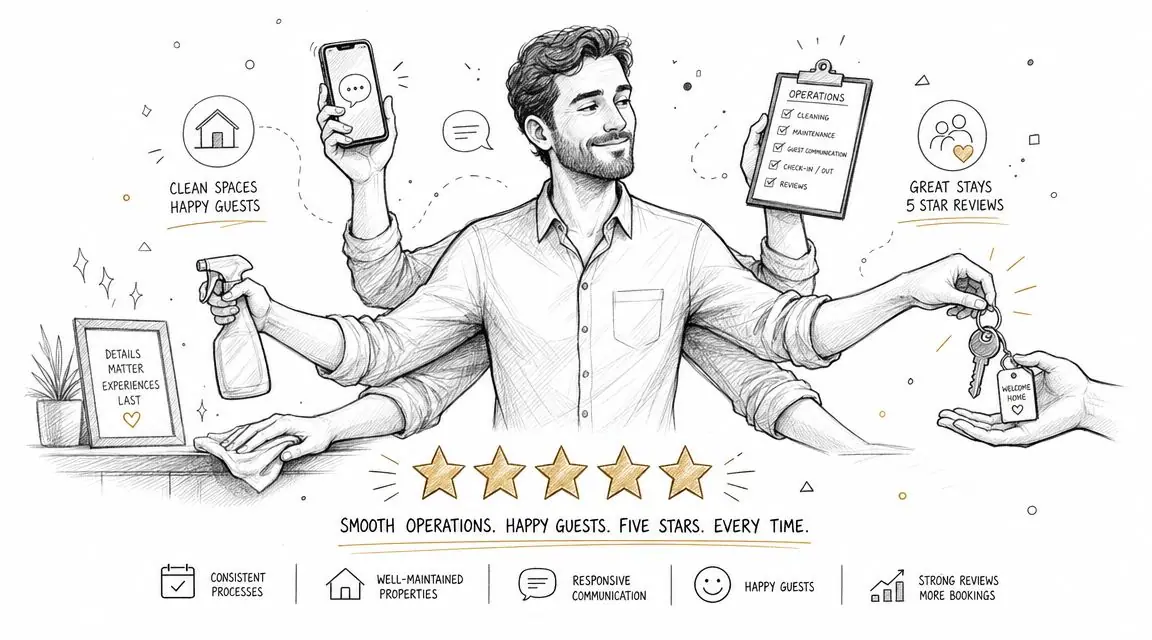
A strong listing can win a booking. Operations decide whether you keep momentum or spend your week putting out fires.
Vacation rental management is highly channel- and turnover-sensitive. Professional managers use software that syncs calendars across platforms in real time to prevent double-booking, and they treat instant booking and fast response times as core performance levers, according to Altexsoft's overview of vacation rental management operations.
Communication is part of the product
Guests don't rate communication separately in their minds. They roll it into the whole experience.
If the guest has to ask where to park, how to open the door, whether early bag drop is possible, or what to do with trash, your system is creating work for both sides. Strong hosts send useful messages at the right time, in plain language, with no scavenger hunt required.
A simple communication standard works better than long, polished messages:
Before arrival
Confirm check-in timing, access steps, parking, and anything unusual about the property.During the stay
Reply quickly and keep tone calm, especially when the issue feels obvious to you.Before checkout
Send short departure instructions with only the actions that matter.
Turnover is where reputation is won or lost
Cleaning quality isn't just about hygiene. It's about trust. The guest walks in and decides within minutes whether the listing feels professionally run.
That means your cleaner needs more than a generic “please tidy up” instruction. They need a property-specific checklist. Beds, bathrooms, kitchen surfaces, amenities, outdoor areas, trash, inventory reset, and damage spotting all need an order and a standard.
Guests forgive a small home more easily than a sloppy one.
Maintenance works the same way. The issue itself often matters less than the response. A tripped breaker, weak Wi-Fi signal, faulty lock, or leaking tap can happen in any property. What damages reviews is delay, confusion, or a host who minimizes the problem.
This short video captures the practical side of day-to-day rental operations:
The systems that reduce chaos
Operations improve when you stop relying on memory. Use tools for the jobs they're good at.
| Operational need | Useful approach |
|---|---|
| Calendar control | Channel management software that blocks dates across platforms |
| Cleaning coordination | Shared turnover calendars and task checklists |
| Guest messaging | Saved templates for confirmation, arrival, support, and checkout |
| Access management | Keypads, lockboxes, or smart entry systems with tested backup plans |
| Property readiness | Inspection routine after every clean, not just after problem stays |
What doesn't work is running a multi-booking calendar from scattered texts, handwritten notes, and memory. That setup feels manageable right up until two guests overlap, a cleaner misses a turn, or you send the wrong code to the wrong reservation.
Common Pitfalls New Hosts Face and How to Avoid Them
The biggest mistakes in this business aren't mysterious. They're repetitive, expensive, and usually avoidable.
The economics and risk of becoming a vacation rental host are often understated. Profitability depends on nightly rate, occupancy, cleaning, maintenance, taxes, and platform fees, and owners should run the numbers for their specific market before buying or listing a property, as noted in Beyond's guide to becoming a vacation rental host.
Mistake one is treating bookings as profit
A booked calendar can still hide a weak business. New hosts often see reservation income and assume the property is performing. Then the recurring costs start stacking up and the margins look very different.
This is especially common when owners underestimate turnover labor or maintenance. The property may look profitable in a spreadsheet built around best-case occupancy and minimal wear. Real operations rarely behave that neatly.
Mistake two is pricing emotionally
Some owners price based on what they think the property deserves. Guests don't book on sentiment. They compare alternatives.
Underpricing causes its own problems. It can leave money on the table and attract guests who don't fit the home well. Overpricing reduces conversion and creates long gaps that owners later try to solve with panicked discounts. Neither approach is disciplined.
A better approach is to review pricing as an operating lever, not a personal statement about the home.
Mistake three is underestimating the job itself
Hosting looks passive from the outside because the storefront is digital. The work isn't.
You're managing customer service, operations, scheduling, vendor coordination, and quality control in a business where many issues arrive nights, weekends, and holidays. If you don't want to do that yourself, you need help lined up before the first busy stretch.
The fastest way to burn out is to call it passive income while doing active work every day.
Mistake four is taking reviews personally
A bad review can sting, especially when you worked hard. But defensive responses usually make things worse.
Use reviews as operating data. If multiple guests struggle with access, the instructions are weak. If they mention cleanliness, the turnover process needs work. If one review is unfair, respond briefly, stay factual, and move on. Future guests are judging your professionalism as much as the complaint itself.
Mistake five is ignoring break-even risk
Owners love upside scenarios. The discipline is in asking what happens when the calendar softens, expenses rise, or local rules tighten.
Run the numbers before you commit. Then run them again using less optimistic assumptions. If the model only works when everything goes right, it isn't a durable business yet.
How to Increase Bookings and Reduce Guest Questions
Once the basics are stable, the next gains usually come from clarity. Better clarity improves conversion and cuts support load at the same time.
Guests book more confidently when the listing answers practical questions upfront. They also enjoy the stay more when the property information is easy to find after arrival. Most hosts still lose time because the same questions keep returning: What's the Wi-Fi password? How do I use the hot tub? Where do we park? What's the checkout routine?
Remove friction before guests ask
A good listing helps the right guest self-qualify. Strong house manuals do the same during the stay.
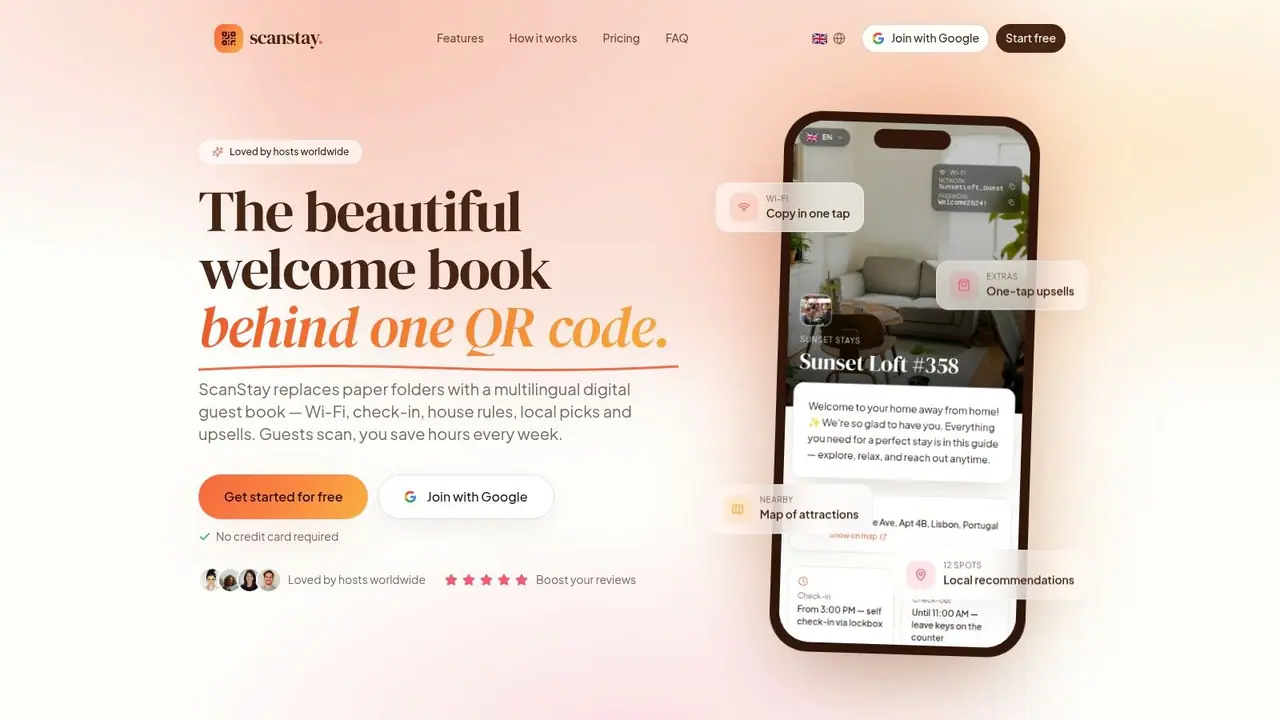
That means moving away from scattered instructions and paper binders that get ignored. The modern version is a mobile-friendly digital guide that puts the essentials in one place. Wi-Fi details, check-in steps, appliance how-tos, local recommendations, house rules, and checkout instructions should all be simple to access and simple to scan.
The best tools reduce both effort and error
When hosts centralize guest information, two good things happen. Guests become more self-sufficient, and the host gives fewer rushed answers from memory.
Useful information to centralize includes:
Arrival essentials
Parking instructions, entry steps, Wi-Fi, and what to do if something isn't working.Property guidance
How to use heating, air conditioning, coffee machines, TVs, hot tubs, or outdoor equipment.Local context
Restaurant picks, grocery options, transport tips, and nearby services guests ask about.Departure steps Trash, dishes, keys, windows, and anything that matters before checkout.
Better information can also support better revenue
A cleaner guest experience tends to support better reviews and fewer avoidable complaints. It can also create room for thoughtful add-ons when they fit the property. Late checkout, equipment rental, mid-stay cleaning, or local service recommendations work better when they're offered inside a polished guest flow rather than through scattered messages.
The larger point is simple. Hosts who want more bookings usually focus on visibility. Hosts who want sustainable growth focus on friction. Remove enough friction, and both booking confidence and guest satisfaction improve.
If you're tired of repeating the same check-in details, house rules, and local recommendations, ScanStay is built for exactly that. It gives hosts a digital welcome book guests can open from a QR code, so they can find Wi-Fi info, arrival steps, video how-tos, checkout instructions, and local tips in one place, without downloading an app. It's a practical way to cut repetitive messages, present the property more professionally, and make the stay feel easier on both sides.