What Is Language Localization: Beyond Translation
Discover what is language localization, why it's more than translation, and practical steps to localize your guest guide for better reviews & more bookings.
A guest lands late, gets into your rental, and opens the welcome guide on their phone. The Wi-Fi details are clear enough. Then they try to use the induction hob, sort the trash correctly, and figure out whether checkout is at 10/11 or 11/10. Your guide is in English. Their confidence drops fast.
That's the moment most hosts think they have a translation problem. Usually, they have a localization problem.
For short-term rentals, language localization isn't a big-enterprise software concept. It's a practical hospitality tactic. It helps guests understand your home, use it correctly, follow rules without friction, and feel comfortable buying extras like late checkout or airport transfers. That matters because the web is still heavily English-first, even though nearly 64% of all websites use English while less than 26% of the over 5 billion internet users understand English, according to these localization statistics. The same source notes that 84% of marketers worldwide say localization positively influences revenue growth.
Hosts see the same pattern on the ground. Guests don't just want words converted. They want instructions that make sense in their context.
If you've ever tried to explain a local phrase, an appliance label, or a house rule to someone from another country, you already understand the gap. A resource like Gaeilgeoir AI for Irish idioms makes that point well. Idioms and everyday phrasing don't travel cleanly. Guest communication works the same way.
That's also why smart hosts move repetitive explanations into structured digital systems instead of retyping the same answers in chat. If you're still sending manual check-in clarifications, this guide on how to automate Airbnb messages pairs naturally with localization work.
Table of Contents
- Speaking Your Guests Language Literally
- Translation vs Localization Whats The Real Difference
- Why Localization Is A Game Changer For Hosts
- How To Localize Your Digital Guest Guide
- Guest Guide Localization Best Practices And Checklist
- Streamline Localization With A Tool Like ScanStay
Speaking Your Guests Language Literally
A family from Spain arrives after a delayed flight. They're tired, hungry, and trying to get settled quickly. The heating panel has labels in English, the house manual explains recycling with local shorthand, and the check-out note says to leave towels “in the utility.” If they don't use that word at home, that instruction may as well be hidden.
This is what is language localization in practice. It's not a theory. It's the difference between a guest feeling taken care of and a guest feeling like they're decoding your property.
A direct translation might convert your words into another language. Localization goes further. It makes the guide usable in the moment a guest needs it most. That includes how you explain appliances, which examples you use, how you format dates, and whether local expectations are obvious without asking.
Practical rule: If a tired first-time guest can't act on the instruction in under a few seconds, the content isn't localized well enough.
Hosts often underestimate how much friction comes from tiny misunderstandings. A guest may not message you to say the guide is confusing. They just improvise. That leads to thermostat issues, missed house rules, poor appliance use, and frustration that later shows up in the review.
Translation handles the surface
Think about a kitchen notice that says: “Please separate general waste, recycling, and food scraps before Tuesday collection.”
A translated version may be accurate word for word. It can still fail if the guest doesn't know:
- What the local bin colors mean
- When “Tuesday collection” happens
- Whether glass is included
- Where those bins are stored on the property
That's why hosts who localize well don't just change words. They rewrite for clarity.
Localization protects hospitality
A vacation rental is full of small decisions. Which button starts the washer. How to lock the patio door. Whether parking is free on weekends. Guests make those decisions quickly, often on a phone screen, often while carrying bags or managing kids.
When your guide speaks their language with direct understanding and contextual awareness, it reduces stress. It also reduces the kind of support message that arrives when you're at dinner, asleep, or turning over another property.
Translation vs Localization Whats The Real Difference
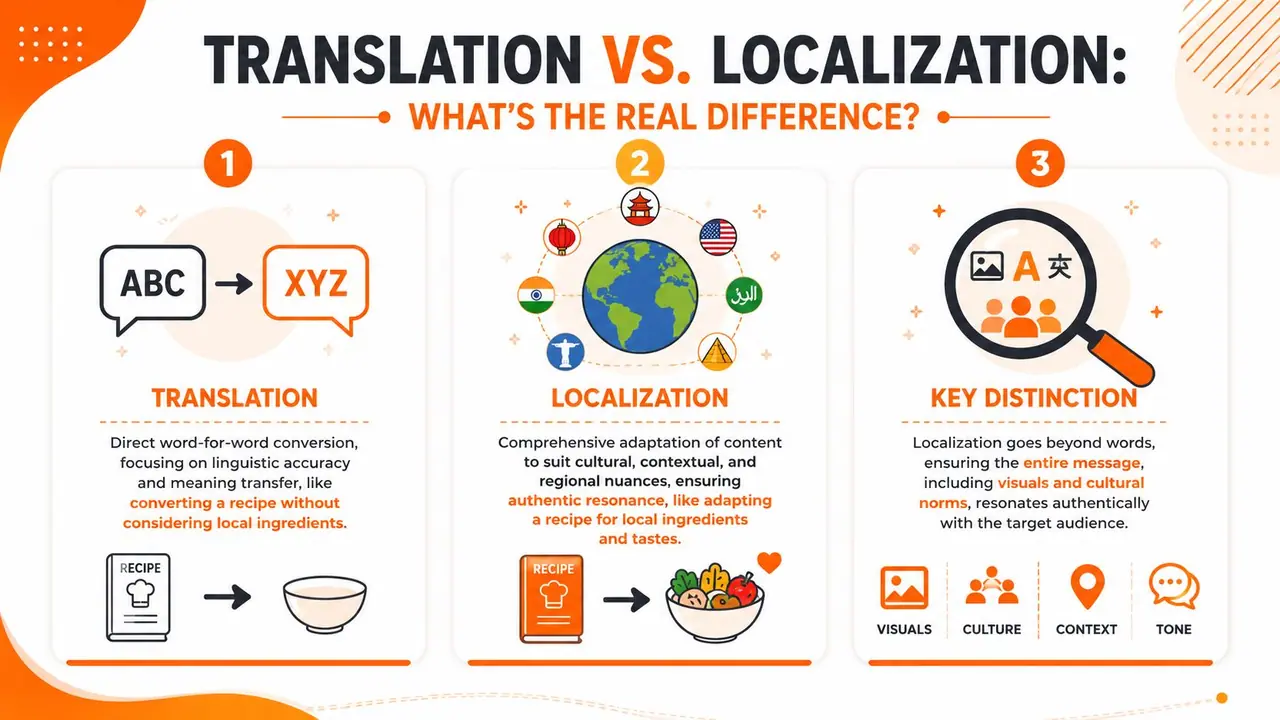
The simplest way to explain it is this. Translation changes the language. Localization changes the experience so it feels local.
If translation is swapping the recipe into another language, localization is also changing the ingredient names, oven temperature format, measuring system, and even the example dish so the cook can make it without guessing.
Translation handles words
A translated guest guide can tell someone “turn left after the post office” in their language. That's useful.
But direct translation usually stops short of the details that make a rental feel intuitive. It won't automatically fix:
- Date confusion such as arrival instructions that can be read two different ways
- Currency context for damages, deposits, or optional services
- Unit mismatch like Fahrenheit in a market that expects Celsius
- Visual meaning when an icon or image doesn't communicate clearly across cultures
Translation is still part of the job. It's just not the whole job.
Localization handles the guest experience
Localization adapts content to local language, culture, expectations, and technical display. That's why it's more demanding. According to language localization market data, 72% of global Language Service Providers used AI tools such as neural machine translation in their workflows as of 2023.
That number makes sense in hospitality. A host may need to localize welcome messages, check-in steps, appliance instructions, upsell offers, captions on how-to videos, and emergency information. Doing that manually across multiple properties becomes messy fast.
Good localization answers the question behind the question. Not just “what does this sentence say,” but “will a guest from another place know what to do next?”
Video is a good example. A short video showing how to use a washer or self-check-in lockbox can be excellent, but only if the text on screen is understandable. Tools that automate video captions can help hosts make visual instructions more accessible across languages.
Here's the difference in a host context:
| Aspect | Translation | Localization |
|---|---|---|
| House rules | Converts the wording | Rewrites for local clarity and tone |
| Check-in guide | Changes the language | Adapts address format, timing, and navigation cues |
| Upsell page | Translates offer names | Adjusts wording so the offer feels natural and trustworthy |
| Appliance help | Converts labels | Explains controls in a way guests can act on immediately |
If your guest guide is technically translated but guests still ask basic questions, that gap is almost always localization.
Why Localization Is A Game Changer For Hosts
Most hosts think about localization as a courtesy. It's better treated as an operating advantage.
A localized guide does three jobs at once. It reduces confusion, lowers your message load, and improves the odds that guests say yes to optional extras. Those outcomes matter whether you manage one apartment or a portfolio.
It improves the stay before support is needed
Guests don't usually want more communication. They want fewer moments of uncertainty.
When a guide explains the property in language and formats that feel natural, guests move through the stay with less hesitation. They find check-in details faster, use the heating or AC correctly, and understand local house rules without needing a follow-up. That tends to create smoother arrivals and calmer evenings for the host.
There's also a trust effect. A guest who sees their language handled carefully usually assumes the rest of the stay is managed carefully too.
It opens the door to upsells
This is the overlooked part. Localization isn't just defensive. It can produce revenue.
For short-term rentals, Numerous AI reports that localized CTAs increase conversion by 20–30%, and specifically notes that this impact is often missed in hospitality guides. That matters for offers like:
- Late checkout
- Airport transfers
- Baby gear rental
- Mid-stay cleaning
- Breakfast or welcome packs
If the offer only appears in English, some guests will skip it because they don't feel fully sure what they're buying. If the same offer is presented in their language, with clear timing and terms, the barrier drops.
A guest won't purchase an add-on they half understand. Clarity is part of the sale.
Hosts often spend time trying to increase nightly rate when easier ancillary revenue is sitting in the guide itself. Localization makes those offers easier to understand and easier to trust.
There's a practical hierarchy here:
Core stay content first
Wi-Fi, arrival, parking, heating, bins, and checkout need to be clear before anything else.Then paid extras
Once the basic experience feels smooth, upsells feel helpful instead of pushy.Then destination content
Restaurant picks, transport tips, and neighborhood notes add polish and reduce repetitive questions.
A well-localized rental feels less like a document and more like a thoughtful host who anticipated the guest's next question.
How To Localize Your Digital Guest Guide
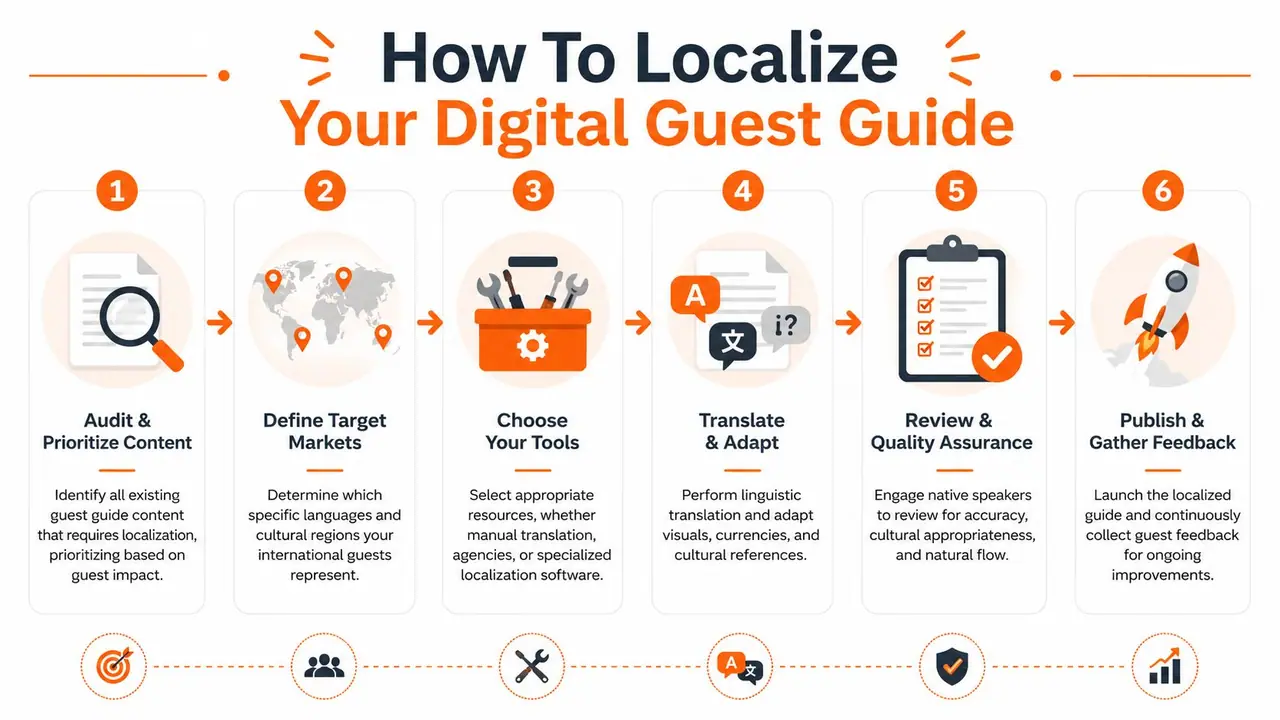
Most hosts don't need a giant localization project. They need a usable process.
The first move is simple. Stop treating your guest information like a pile of separate messages, printed sheets, and saved notes. Put it into one digital guide that you can update without replacing paper copies. If you're building that foundation now, this overview of a vacation rental welcome book is a practical place to start.
Start with the pages guests need under pressure
Don't begin with your neighborhood history or a long host welcome. Begin with the content guests open when they need an immediate answer.
Prioritize pages like:
- Check-in and entry instructions
- Wi-Fi details
- Heating, AC, and hot water
- Kitchen and appliance how-tos
- Parking
- Checkout steps
- Emergency contacts and house rules
These pages carry the highest risk if misunderstood.
Then localize the details that often break trust if formatted incorrectly. Proper localization needs the right locale handling, such as en-US versus en-GB, so dates and currencies display correctly for the guest. The University of Washington localization notes point out that locale identifiers should include both language and region to avoid errors like showing US dollar formatting to UK guests.
Choose a workflow you can maintain
Manual translation can work for a single property with a small amount of stable content. It starts to fail when:
- You update instructions often
- You manage several listings
- You add seasonal offers
- You need consistency across languages
A maintainable workflow usually looks like this:
Write clean source text
Keep English plain. Short sentences translate better than clever ones.Group content by purpose
Arrival, stay, house rules, upsells, local recommendations.Translate and adapt, not just convert
Change units, examples, and phrasing where needed.Review on a phone
Many localization issues only show up on mobile.Ask for feedback from real guests or native speakers
Natural phrasing beats technically correct wording.
Hosts get into trouble when they localize once and never revisit it. Treat the guide like a living operational document. If guests keep asking about one step, rewrite that step in every language version.
Guest Guide Localization Best Practices And Checklist
The difference between a decent localized guide and a strong one usually comes down to small choices. The strongest guides are simple, visual, and built for tired travelers who are reading on a phone.
A lot of hosts overfocus on sentence accuracy and underfocus on usability. That's backwards. If the wording is perfect but the guest still can't act on it, the guide failed.
What works better than direct translation
Use plain source language before you translate anything. Avoid slang, jokes, and local shorthand unless you're certain they can be adapted cleanly. If you want a deeper documentation-focused view, this guide for globalizing your documentation is useful because guest guides behave a lot like product documentation. They need clarity more than flair.
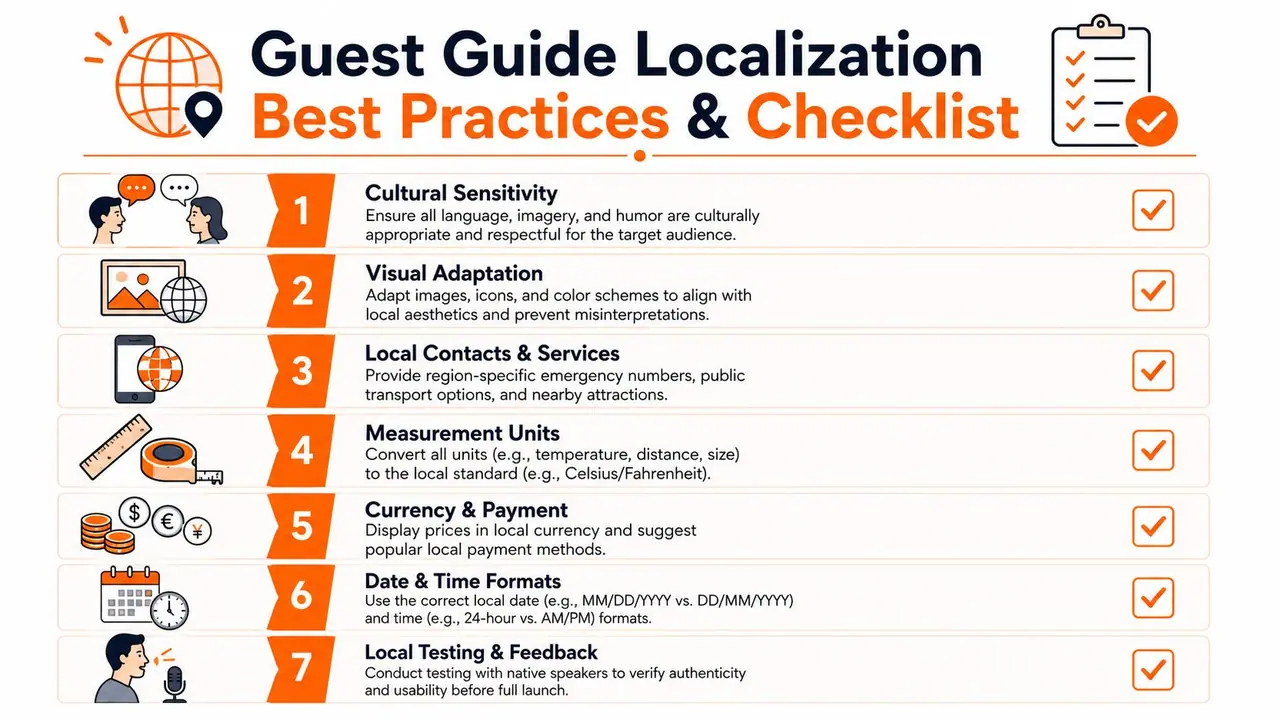
Then check the experience itself:
- Use visuals carefully. A photo of the exact lockbox or washing machine often helps more than extra text.
- Convert units and formats. Temperature, distance, time, and currency should feel familiar.
- Localize recommendations. “Best brunch spot” is weaker than “good for families, opens early, walkable from the property.”
- Check reading direction and spacing. Some languages expand in length. Tight layouts break.
Accessibility belongs here too. According to SimpleLocalize's accessibility article, up to 40% of users abandon non-localized interfaces due to inaccessible date or currency formats or right-to-left layout failures. That matters for guest guides because a beautiful guide that becomes confusing in another language stops being useful immediately.
Keep layouts flexible. Short English labels often become longer in other languages, and rigid mobile screens don't forgive that mistake.
A practical checklist
Before publishing a localized guide, run through this list:
Check key tasks first
Can a guest enter the property, connect to Wi-Fi, and control temperature without messaging you?Review dates and prices
Make sure the displayed format matches the guest's locale expectations.Test every visual cue
Icons, screenshots, arrows, and photos should still make sense when the language changes.Trim clever copy
Friendly is good. Ambiguous is not.Read on mobile
That's where most guests will use it.Validate right-to-left behavior if relevant
If you support RTL languages, the layout needs to remain readable and navigable.Update after repeat questions
Guest confusion is feedback. Treat it like product testing.
The best localized guide doesn't sound translated. It sounds obvious.
Streamline Localization With A Tool Like ScanStay
Manual localization breaks down for the same reason paper binders break down. It's hard to keep everything current, consistent, and easy to access.
Hosts need one place to manage guest-facing content, one link or QR code to deliver it, and a simple way to offer the same experience across multiple languages. That matters even more when you're updating check-in steps, refining appliance instructions, or testing new upsells across several properties.
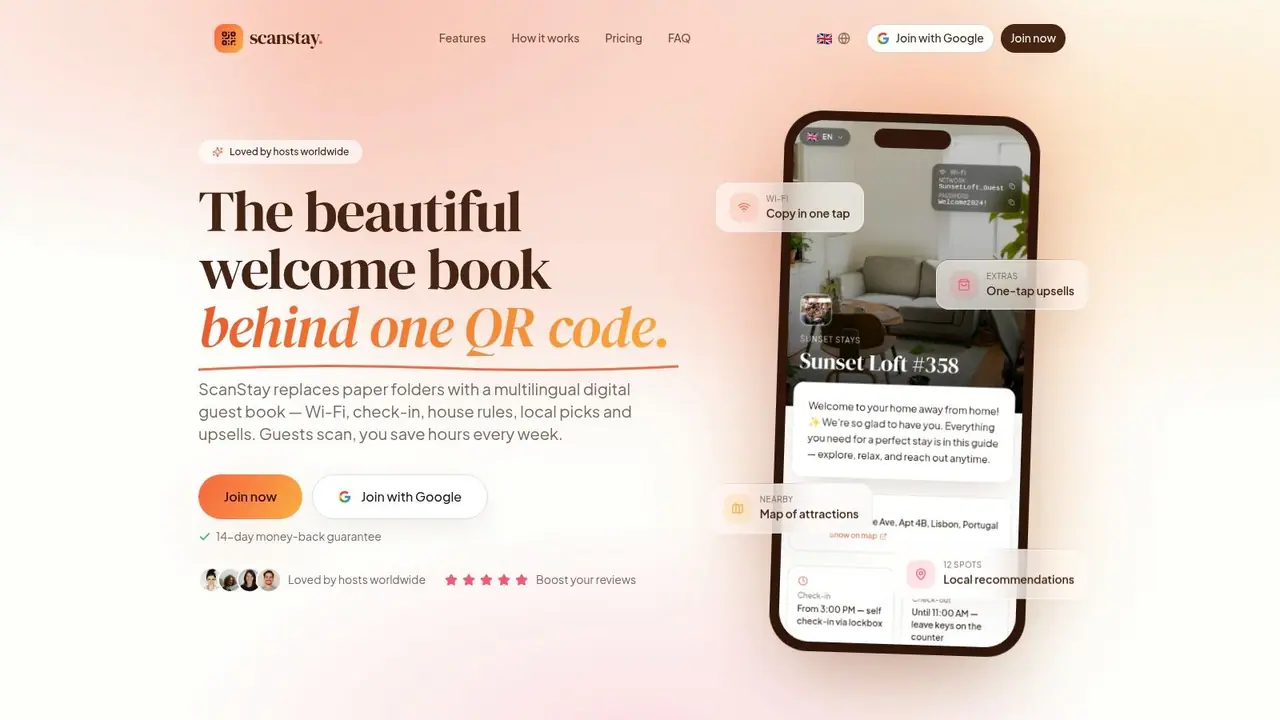
A tool built for vacation rentals solves the operational side of localization, not just the linguistic side. It replaces static PDFs and scattered messages with a live guide guests can use. It also makes it easier to present late checkout, transfers, or rental add-ons in a cleaner, more structured format.
For hosts, that's the true win. Better communication isn't only about fewer questions. It's about creating a stay that feels easy from arrival to checkout, while making room for extra revenue without adding more manual work.
If you want to see what that kind of workflow looks like in practice, ScanStay is designed around exactly that use case for short-term rentals.
If you're ready to turn guest information into a cleaner, multilingual experience, ScanStay gives you a practical way to do it. You can replace paper binders and repetitive messages with a digital guide, deliver it by QR code, support guests in multiple languages, and present upsells in a format that's easier to understand and easier to act on.