10 Sites Like Furnished Finder for Hosts
Compare 10 sites like Furnished Finder for hosts, including pricing models, audiences, pros, cons, listing tips, and migration advice.

The biggest marketplace isn't automatically the best replacement for Furnished Finder. A host filling a suburban home for a relocating family has different needs from an owner targeting remote workers, corporate teams, or traveling professionals. Platform reach matters, but so do minimum stay, renter type, property style, geography, pricing model, lead quality, and the amount of work required after an inquiry arrives.
The strongest sites like Furnished Finder fit a specific hosting strategy. Some are managed corporate-housing providers with consistent service and higher pricing. Others are owner-direct marketplaces that give hosts more control but require them to handle screening, leases, payments, and guest communication. Broad-reach platforms can generate more visibility, while niche services may deliver fewer but better-matched leads.
Each option below covers the practical points that affect a host's decision: who the platform serves, what its pricing approach means, where it performs well, where it falls short, and how to optimize a listing before cross-posting. Once a guest books, a digital guest-information tool such as ScanStay's digital welcome book can centralize Wi-Fi, check-in details, house rules, local recommendations, and service offers behind one QR code.
Table of Contents
- 1. Blueground
- 2. Landing
- 3. Anyplace
- 4. AVE by Korman
- 5. CorporateHousing.com
- 6. Corporate Housing by Owner
- 7. National Corporate Housing
- 8. Churchill Living and FurnishedHousing.com
- 9. Stay Sojo
- 10. Airbnb Monthly Stays
- Top 10 Furnished Housing Platforms Comparison
- Build a Portfolio, Not Just a Backup Listing
1. Blueground
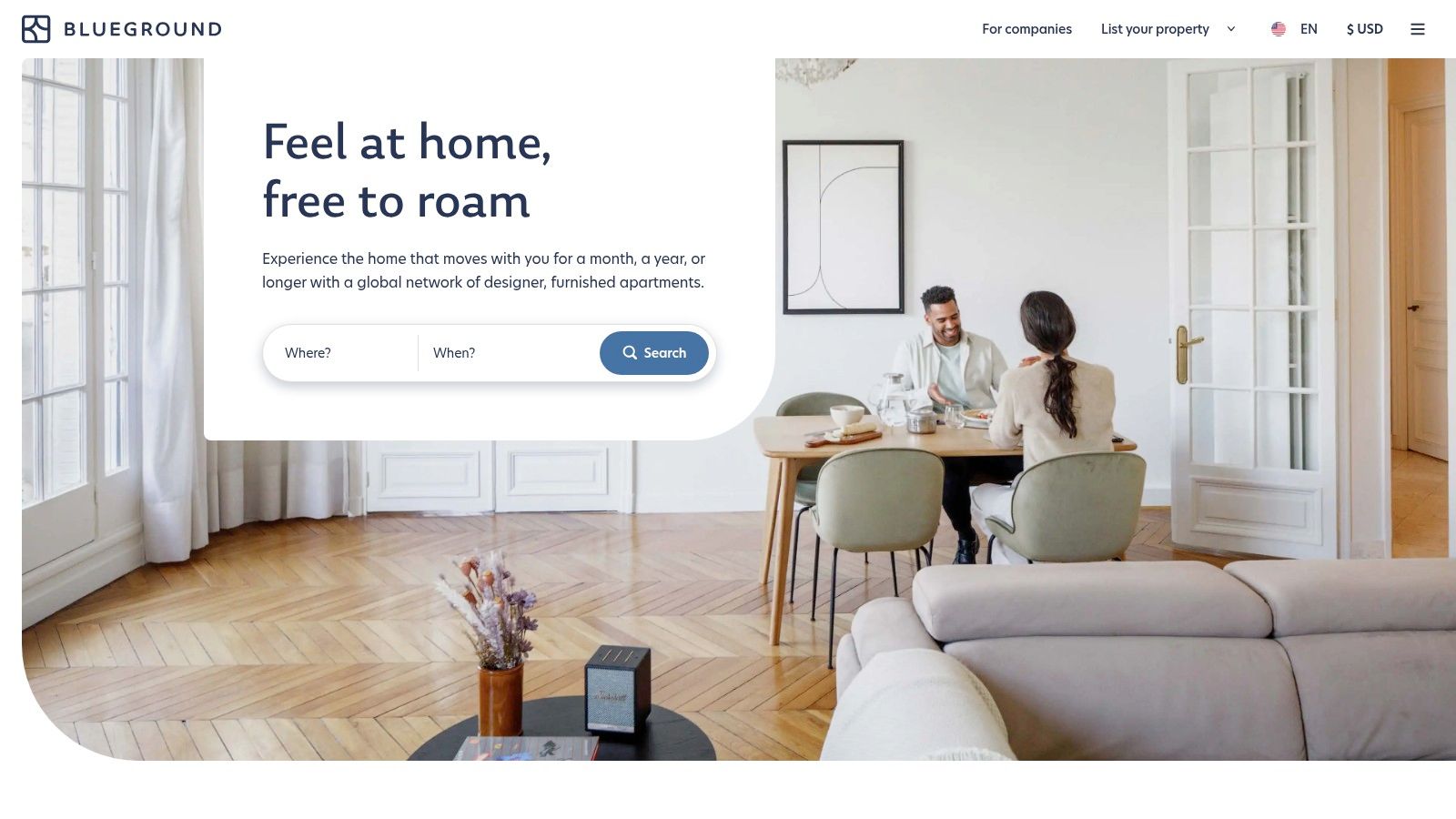
Blueground is built for hosts and renters who value consistent, professionally furnished apartments over the flexibility of negotiating with an individual owner. Its apartments target business travelers, corporate relocations, and professionals who want a move-in-ready home with a more standardized experience than a typical marketplace listing.
Stays begin at 30 days, with monthly extensions available in many locations. Furnishings, utilities, and Wi-Fi are included, and Blueground supports corporate programs for team placements and relocation housing. Its network also gives eligible renters the ability to transfer between units and cities, which is useful for professionals whose assignments change.
The trade-off is straightforward. Blueground's managed, design-led model can command more than an owner-managed rental, and its inventory is less useful for hosts operating in smaller towns or markets without a strong corporate-apartment presence. It's also not a conventional owner marketplace. A host looking to advertise one independent house won't get the same direct-listing workflow found on Furnished Finder or CHBO.
Best hosting strategy
Blueground is most relevant as a benchmark for corporate-ready presentation, rather than as a broad owner-direct channel. Hosts competing for relocation or executive demand should study the qualities Blueground emphasizes:
- Move-in readiness: Show the complete kitchen setup, linens, workspace, laundry, and storage rather than relying on “fully furnished” as a vague promise.
- Pricing clarity: Present monthly costs and included utilities in a way that lets a corporate renter compare the unit quickly.
- Neighborhood utility: Explain commute options, nearby services, parking, and access to business districts.
- Consistent visuals: Use bright, accurate photos that make the property feel dependable, not improvised.
Practical rule: If your property can't be understood as a comfortable temporary home within a few minutes of viewing the listing, corporate renters may choose a more standardized option.
For owners, Blueground's main lesson is that quality control is part of marketing. A clean listing, reliable internet, a proper work area, and simple move-in instructions help an independent rental compete with branded operators, even when the property itself is in a different category. Visit Blueground to compare its current furnished-apartment model and market coverage.
2. Landing
Landing fits hosts who want to reach remote workers, frequent movers, and renters relocating between cities. Its membership model creates a different type of demand from an owner-direct marketplace. Renters join a network, then choose among participating furnished apartments instead of negotiating with one independently managed property.
The platform offers furnished apartments with 30-night minimums, member-focused move-in terms, and transfers between participating apartments on select plans. A Standby option can reduce flat monthly pricing while giving the renter less certainty about the unit and timing. That arrangement suits someone whose work location may change, while a renter with a fixed start date and specific home requirements may prefer a direct booking.
Hosts should assess product fit before treating Landing as another distribution channel. Its customers generally expect a connected experience in an apartment community. A furnished single-family home, basement suite, or property in a smaller market may perform better through an owner-direct marketplace, a corporate housing channel, or a broad-reach monthly platform.
Match the listing to the renter
Landing is most relevant to a portfolio strategy built around mobility rather than one-off monthly occupancy. The listing should answer practical questions before the renter inquires:
- Arrival readiness: State what is supplied and whether the renter can arrive with only personal luggage.
- Work conditions: Describe desk space, natural light, internet reliability, and quieter areas.
- Timing and extensions: Explain extension policies and current availability without promising dates you cannot honor.
- Building logistics: Cover amenities, parking, elevators, package handling, and access to nearby services.
The membership structure may add an annual fee, furniture charges, or cleaning costs for renters. Hosts should show which costs are included in the advertised rate and which may apply separately. A clear breakdown helps prevent inquiries from renters whose total budget does not match the property.
Landing also illustrates why cross-posting requires operational discipline. If the same unit appears on a flexible network, an owner-direct marketplace, and a broad monthly-stay site, synchronize availability, move-in rules, fees, and descriptions. Conflicting dates or terms can reduce trust before a renter contacts you.
Review the current network and member model on Landing, then compare its audience with the channels that already produce suitable inquiries for your property.
3. Anyplace
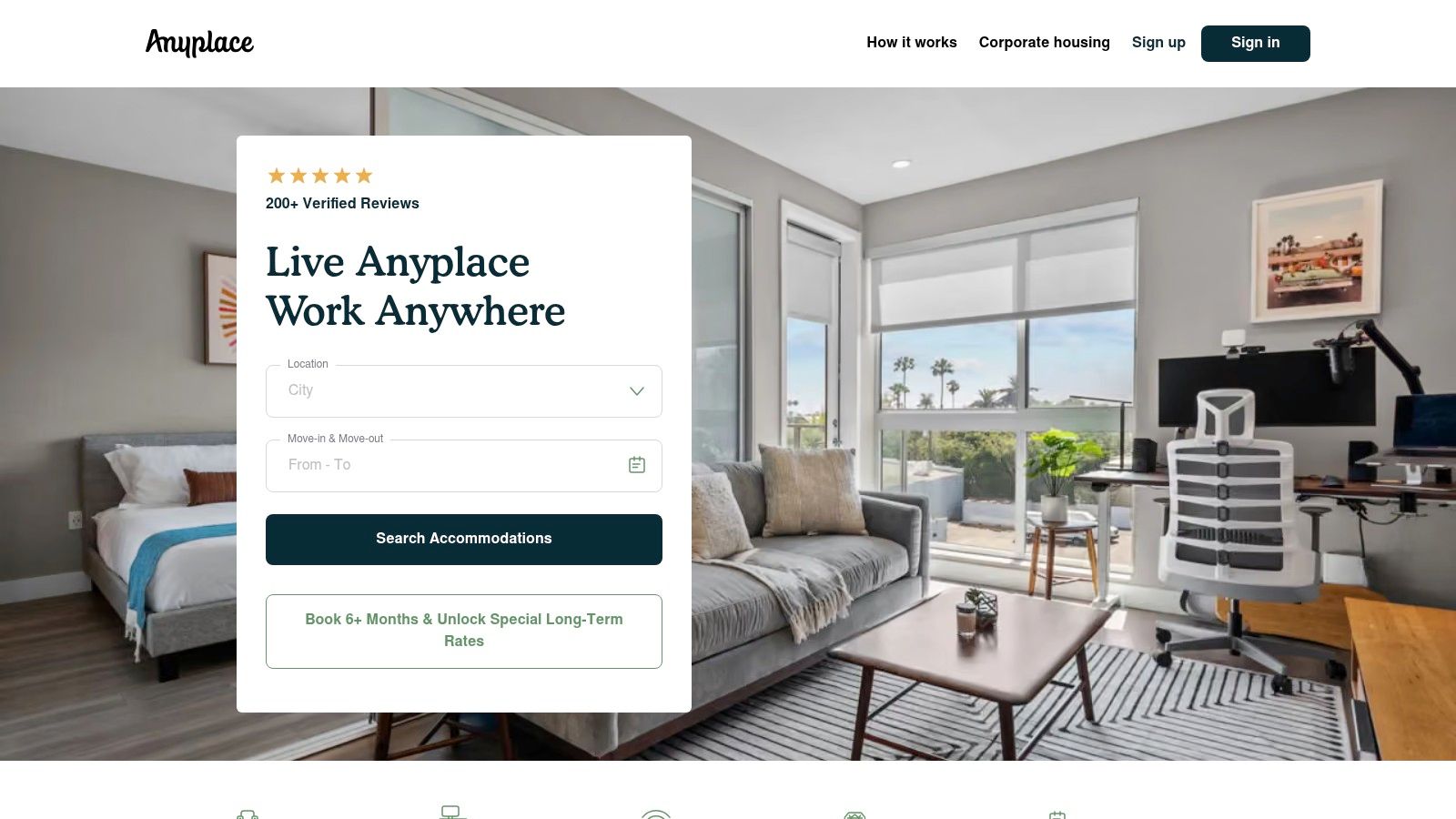
Anyplace suits hosts targeting remote workers and digital nomads who treat workspace quality as part of the housing decision. Its furnished apartments are built for stays of 30 days or more, with dedicated work areas and private high-speed internet included in each unit.
That focus creates a clear listing standard. Attractive décor will not compensate for a small desk, uncomfortable chair, or vague internet information. Hosts competing for this audience should show how the property supports a normal workday, not merely label it “work-friendly.”
The all-inclusive presentation also affects price comparisons. Utilities, periodic cleanings, furniture, Wi-Fi, and routine service are incorporated into the monthly commitment, so renters do not need to reconstruct those costs from separate fees.
A work-ready listing should give the workspace the same attention as the bedroom. Photograph the desk, chair, outlets, lighting, and distance from the sleeping area. If there are multiple suitable work locations, identify each one.
Use the description to answer practical questions:
- Internet details: State the service arrangement and router location. Avoid speed claims that have not been verified.
- Workspace inventory: List desks, chairs, monitors, lamps, and surfaces suitable for extended computer use.
- Noise information: Explain whether the unit faces a street, shares walls, or sits in a quiet residential setting.
- Routine support: Clarify cleaning frequency, the maintenance contact, and the process if connectivity fails.
“A desk in a room isn't automatically a remote-work setup.”
Anyplace has a smaller footprint than the largest national marketplaces, and its inventory favors apartments over single-family homes. That trade-off can benefit an owner whose property matches a specific remote-work profile. A specialized description may produce better-fit inquiries than a generic “monthly furnished rental” label, even when the platform reaches fewer renters.
Hosts can also cross-post strategically. Use Anyplace for work-ready demand, an owner-direct channel for renters who value direct communication, and a broad monthly-stay marketplace for wider reach. Keep availability, fees, furnishings, and work-related claims consistent across listings. Compare the work-ready standards and current availability on Anyplace.
4. AVE by Korman
AVE by Korman suits renters who value a serviced, amenity-rich community over the flexibility of an owner-direct home. Its furnished apartments target corporate assignments, relocations, and lifestyle transitions, with on-site teams and hospitality services supporting residents during flexible stays.
The offer sits closer to extended-stay hospitality than to a casual furnished rental. Depending on the location, residents may find gyms, lounges, co-working areas, pools, and other shared amenities. That setup can appeal to families and teams that want managed support, common facilities, and a predictable living environment.
For independent hosts, AVE provides a useful benchmark for positioning. A property does not need to match a staffed community to compete. A house near a hospital or business district can emphasize private outdoor space, multiple bedrooms, parking, laundry, and a residential setting. Those features may matter more to renters who prioritize privacy, space, or direct communication.
An AVE-style listing should lead with the resident's daily routine. Relocating families need clear information about sleeping arrangements, meals, storage, schools, offices, medical facilities, and shopping. Project teams may focus on separate bedrooms, work surfaces, parking, and straightforward invoicing. Corporate bookers also need included utilities, furnishings, services, and required documentation stated plainly.
Match the first photos and opening lines to the intended renter:
- Families: Show bedrooms, dining space, laundry, outdoor areas, and storage.
- Teams: Identify bed configurations, bathrooms, parking, and shared work areas.
- Corporate bookers: List utilities, furnishings, services, and documentation requirements.
- Longer stays: Explain maintenance access, cleaning arrangements, and extension procedures.
AVE's concentrated inventory makes it a stronger comparison for markets where its communities operate than for every location. Its generally higher pricing also illustrates a clear trade-off. Independent owners should not copy a premium monthly rate without matching the service level. Instead, cross-post according to strategy: use an owner-direct channel for control, a corporate-housing marketplace for assignment demand, and a broad monthly-stay platform for reach. Keep availability, fees, furnishings, and service descriptions consistent across channels.
See the current communities and flexible-stay options at AVE by Korman.
5. CorporateHousing.com
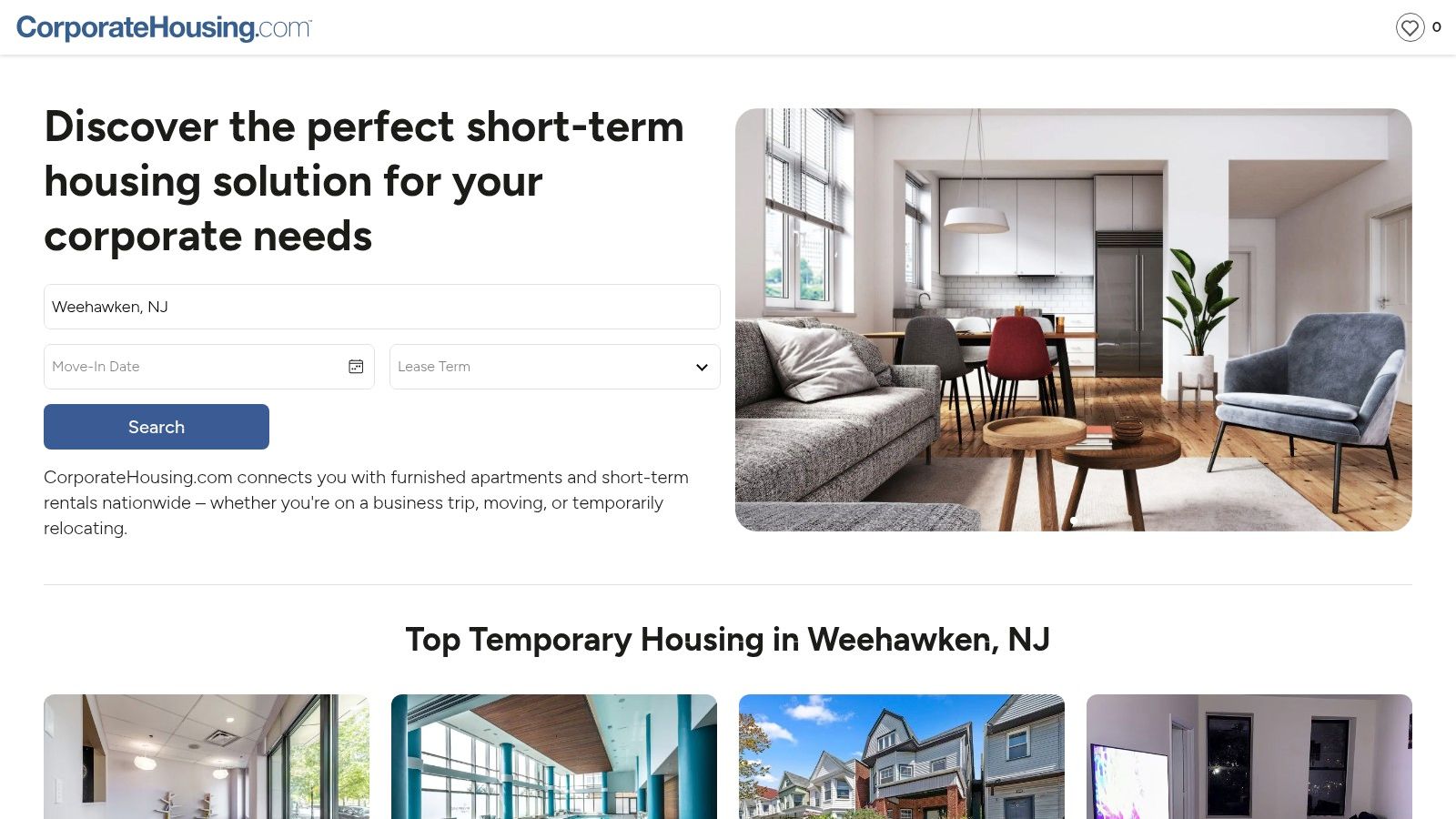
CorporateHousing.com suits hosts pursuing broad monthly-stay reach rather than a fully managed booking channel. This national directory and marketplace includes apartments, condos, and single-family homes, helping residential properties reach corporate renters who need more space or neighborhood access than an extended-stay building provides.
Its value depends on the provider. Coverage can reach markets outside major urban centers, while pricing, property quality, availability, and response speed vary by listing. Renters generally complete leases and payments outside the platform, so the host owns the trust-building, screening, and transaction process.
That model fits experienced owners and managers with clear procedures for inquiries, deposits, lease documents, and move-in coordination. It also works for relocation housing, renovation stays, insurance placements, and project assignments. A host seeking platform-managed operations should choose a different channel.
Match the listing to the assignment
Directory visitors often compare several providers quickly. Put the decision-making details near the top:
- Property and sleeping setup: Identify the house, condo, apartment, or private room, then state bed arrangements and capacity.
- Assignment fit: Name suitable uses such as relocation, renovation, insurance, or project work.
- Monthly cost structure: Separate rent from utilities, cleaning, parking, and deposits.
- Inquiry workflow: Explain the information you need and the expected reply timing.
Cross-posting makes sense when each channel serves a different host strategy. Pair CorporateHousing.com with an owner-direct option for control, a furnished-housing marketplace for assignment demand, or broad-reach channels such as sites like Vrbo. Keep availability, fees, furnishings, and service terms consistent, while adjusting the opening copy for corporate bookers, relocating households, or remote workers.
Use CorporateHousing.com when residential inventory and provider discovery matter more than one standardized booking process.
6. Corporate Housing by Owner
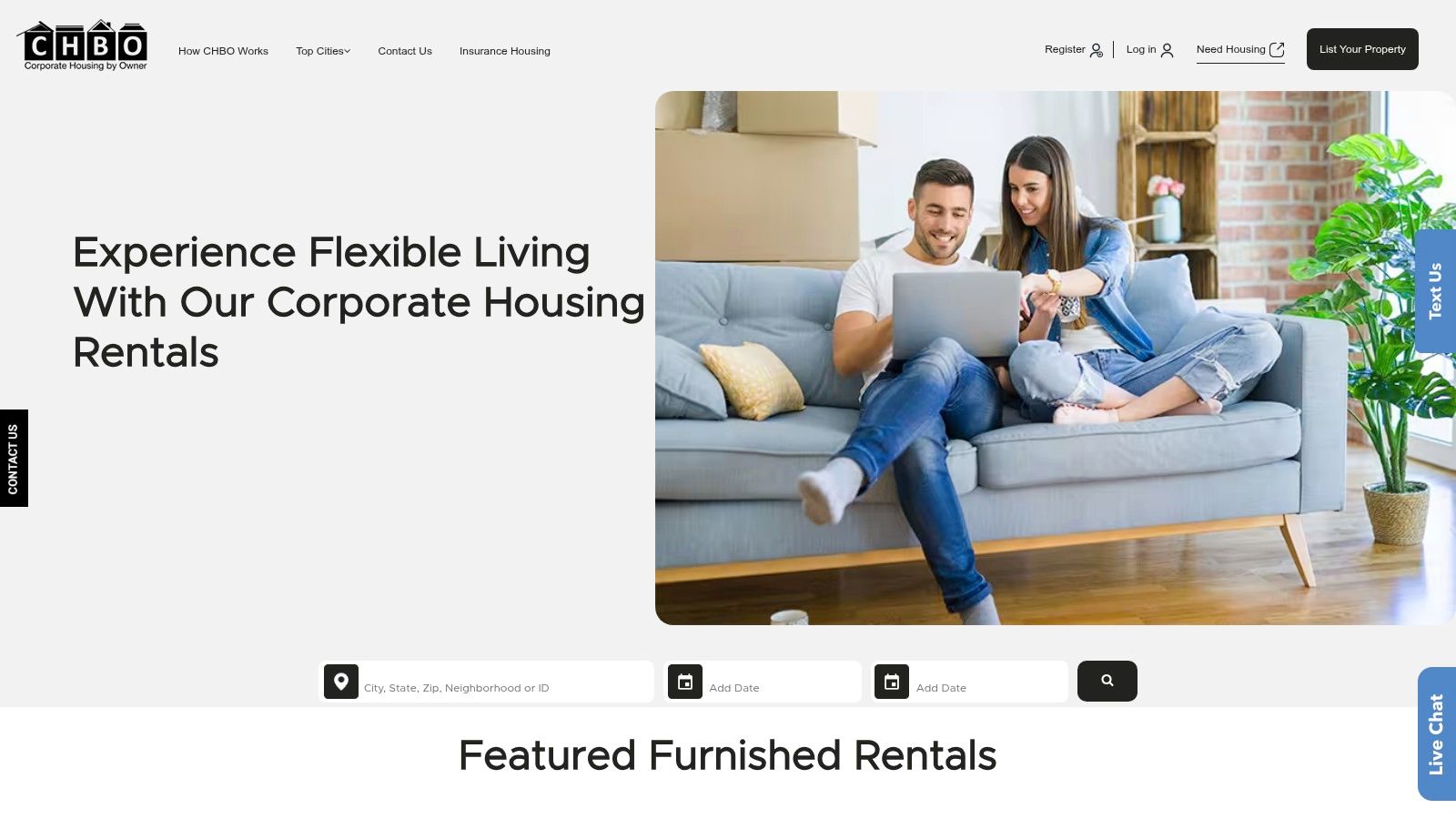
Corporate Housing by Owner, commonly known as CHBO, suits hosts who want an owner-direct, residential approach to monthly rentals. It focuses on furnished homes for stays of 30 days or more, with listings often created and managed by individual landlords.
The platform is a practical match for houses, condos, and neighborhood properties that do not fit a hotel-style inventory model. Owners keep control over pricing, renter communication, lease terms, and tenant selection. Annual listing plans, rather than per-booking commissions, may also make costs easier to assess when a property receives regular inquiries.
That control comes with operating work. Hosts still need a screening process, a clear lease, documented property condition, and a dependable payment procedure. Listing quality and response times vary, so the owner's process directly affects the renter experience.
Choose CHBO when control is part of the strategy
CHBO is most useful for hands-on owners who can manage communication before move-in and throughout the stay. It fits especially well when the property offers:
- Residential space: A complete home, multi-bedroom condo, or private neighborhood property.
- Defined monthly terms: A clear minimum stay, extension policy, and availability calendar.
- Corporate-ready paperwork: A lease, inventory list, utility policy, and payment instructions.
- A service plan: Maintenance contacts, emergency procedures, and scheduled inspections.
The listing should identify its intended renter instead of promising a generic fit. A relocation household may care about school access, parking, and a complete kitchen. A contractor or remote worker may prioritize workspace, reliable internet, and flexible extension terms. Those details help owner-direct hosts attract better-matched inquiries without giving up control.
Owner-direct requires owner-structured operations. Tasks handled outside the platform need clear procedures.
Hosts comparing direct-rental models can review practical background on how vacation rental by owner works. The Corporate Housing by Owner listing model is worth assessing when direct control matters more than platform-managed placement.
7. National Corporate Housing
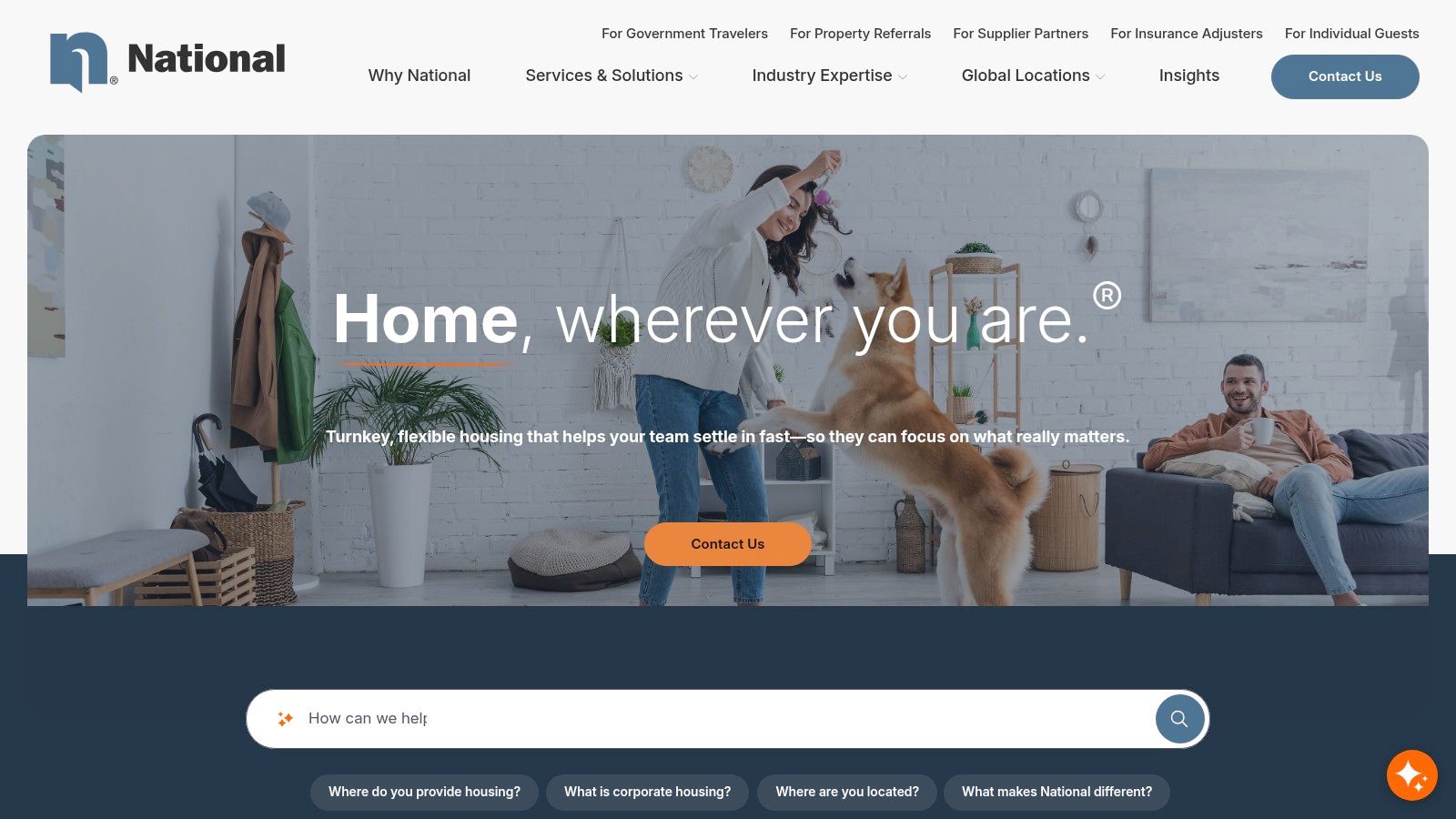
National Corporate Housing fits placements where the booking decision depends on relocations, project housing, government assignments, or insurance stays, rather than on finding the lowest monthly rate. It places individuals and teams in furnished apartments across U.S. markets, with local teams, inspections, and a vendor network supporting the arrangement.
The operational trade-off is clear: the renter or employer gets one managed relationship, while the host gives up some direct control over pricing, communication, and placement terms. Its one-bill model combines rent, furniture, utilities, Wi-Fi, and support in a single monthly charge. That arrangement reduces vendor coordination for employers and mobility teams, especially when employees would otherwise submit separate expense claims.
Government and GSA-related experience can also matter when a placement involves formal procurement or compliance requirements. Hosts should therefore compare this channel by renter type, not platform reach. It suits professional operators with suitable inventory and reliable service processes more than casual hosts targeting flexible, budget-focused monthly stays.
A packaging model for professional operators
National Corporate Housing offers a useful operating reference for portfolio owners. The practical lesson is to make the decision easy for the booking contact, even without a national provider's scale.
A corporate-ready listing should state:
- What the monthly invoice includes
- Who handles maintenance and urgent issues
- Whether the property suits a team or family
- What documentation is available before move-in
For multiple properties, keep these facts in a shared property sheet covering occupancy, furnishings, utilities, parking, internet, accessibility, pet rules, and availability. Cross-posting then becomes faster and safer because each platform receives adapted wording based on the same verified details.
A host optimizing for remote workers may foreground workspace and internet. A relocation-focused listing should lead with family suitability and practical access. A professional operator can present both angles without changing the underlying offer.
National Corporate Housing works best when service and accountability justify a premium. Owner-direct listings remain a better fit for renters who want to negotiate terms personally or keep costs low.
Review the provider's corporate placement model at National Corporate Housing.
8. Churchill Living and FurnishedHousing.com
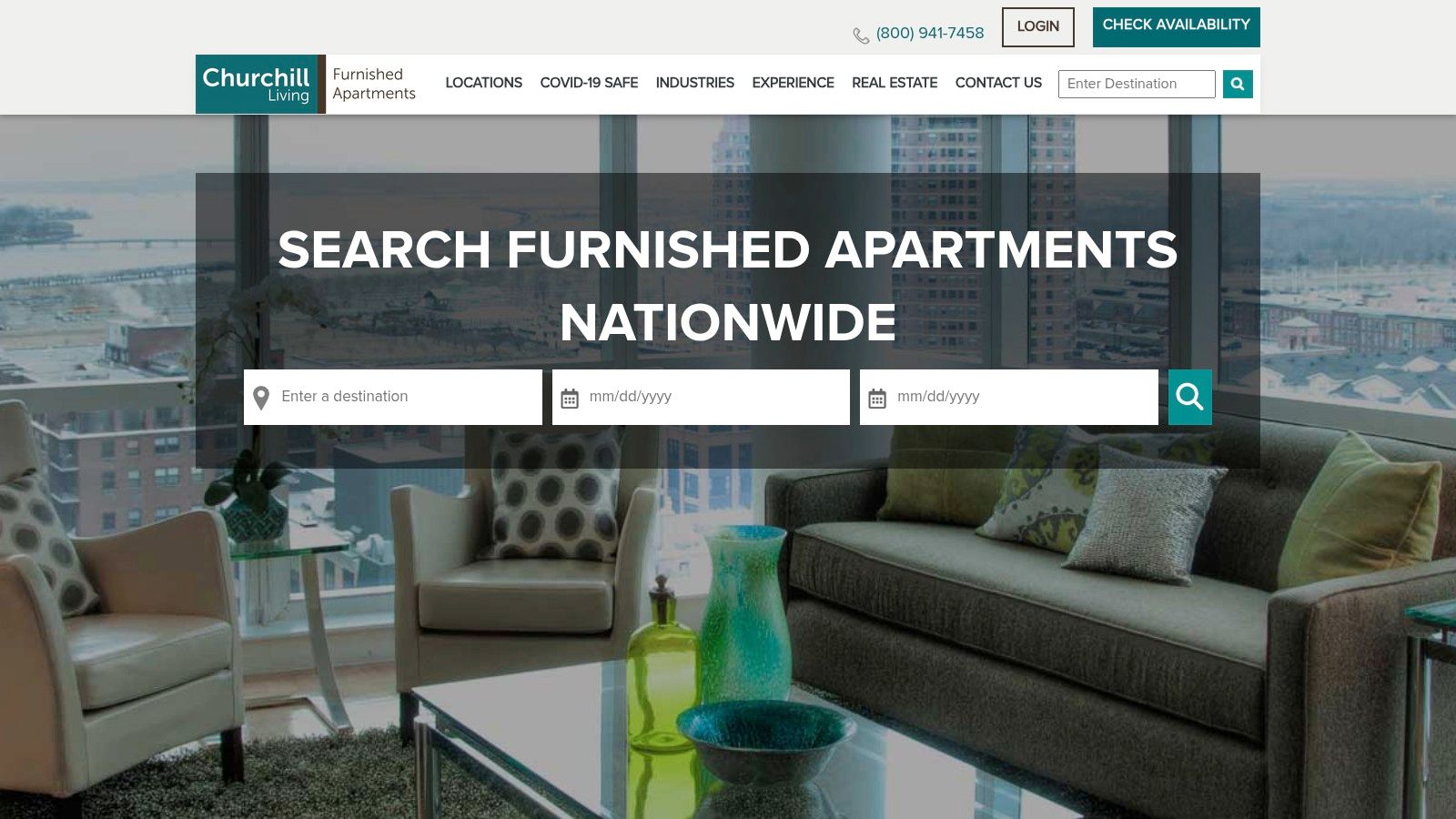
Churchill Living, presented through FurnishedHousing.com, targets renters who want professionally furnished apartments with a consistent corporate-housing standard. Units include kitchens and housewares, and placements generally cover stays of 30 days or more. Because the design and furniture inventory are controlled, the experience is more consistent than on a peer-to-peer marketplace.
The model fits corporate travelers, relocating employees, and project teams that need a clear monthly quote with bundled services. Churchill's partner inventory also extends coverage across major metros, although its strongest availability tends to be in the Northeast and other established urban markets.
For an owner-direct host, the useful lesson is operational rather than decorative. A corporate renter needs to know whether the kitchen is ready for daily use, how arrival works, and who responds when something breaks. Those details can matter more than stylish furnishings.
A listing competing for this audience should make four answers easy to find:
- Inventory: Name the cookware, linens, appliances, laundry equipment, and workspace items included.
- Service: Explain who handles repairs, cleaning, and stay-related questions.
- Monthly quote: Separate included utilities and services from additional charges so a coordinator can forward the offer internally.
- Condition: Keep photos and descriptions aligned with the actual unit.
Churchill's corporate-grade service usually comes with higher pricing than an owner-posted rental, while rural availability may be tighter. Hosts competing on low monthly cost should not copy that positioning. Hosts targeting employers, executives, or relocation coordinators can use it as a quality benchmark.
A remote worker will look for a practical desk and dependable internet. A relocating family may care more about storage, parking, and the route to schools or work. Photograph the kitchen stocked for ordinary use, available storage, and the path from parking or building entry to the apartment.
For current corporate-housing availability and service details, review FurnishedHousing.com.
9. Stay Sojo
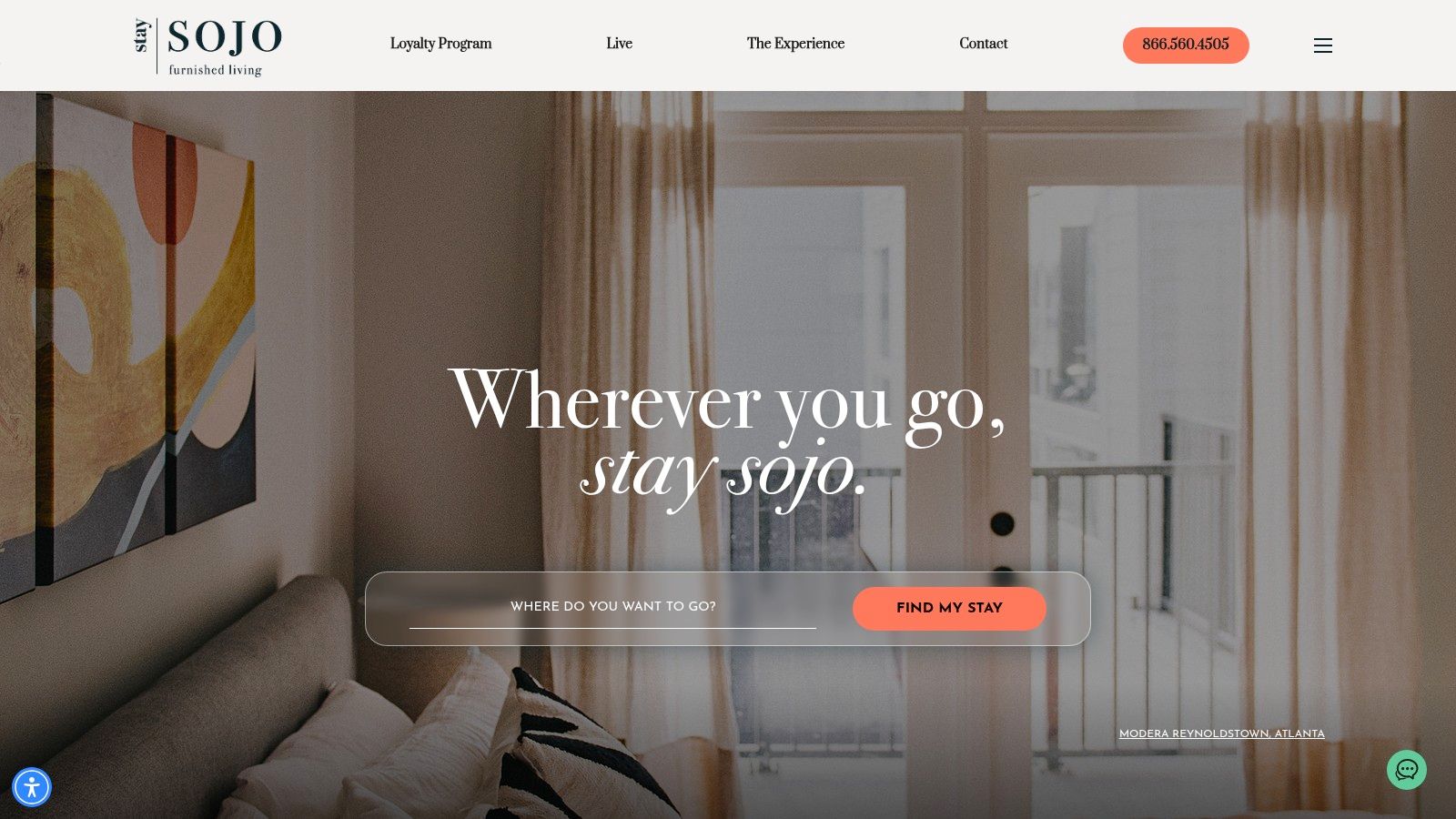
Stay Sojo presents a boutique, design-forward corporate-housing option across multiple U.S. markets. Its furnished apartments serve relocations, project housing, and corporate bookings, with housewares, utilities, and Wi-Fi bundled to reduce setup work for the renter.
That positioning suits hosts who want to reach design-conscious professionals or organized corporate placements. It is less suitable as a direct comparison for price-sensitive monthly renters choosing among owner-direct listings. Availability changes by market and season, and pricing generally runs above owner-posted rentals.
The right comparison depends on the host's strategy. A relocation-focused owner should emphasize documentation, move-in timing, and extension options. A remote worker needs a usable workspace and reliable internet. A company placing several employees may care about multiple units in the same area. A professional operator can compete on presentation and response time without copying a national provider's service model.
Position the listing for the booking decision
The searcher may be a relocation manager, project coordinator, or the eventual resident. Put the information that person needs near the top:
- First photo: Show the strongest complete-room image, with enough context to judge the space.
- Headline: State the location, property type, bedroom capacity, and monthly suitability.
- Amenities: Lead with practical features, including furnishings, kitchen equipment, laundry, workspace, and parking.
- Availability note: Give the earliest move-in date and explain whether extensions are possible.
- Contact response: Offer a clear next step, such as requesting dates, occupancy details, or a written quote.
A polished listing does not require expensive styling. Accurate photos, consistent furnishings, specific copy, and prompt replies create a credible alternative for renters comparing providers with independent hosts. Cross-posting can extend reach, but each version should preserve the same availability, pricing logic, and core facts. Review the current service and placement approach at Stay Sojo.
10. Airbnb Monthly Stays
Airbnb suits hosts who need large-scale visibility, in-platform messaging, payments, reviews, calendars, and support. Its search tools accommodate stays of 28 nights or more, with monthly pricing and discounts set by the host. Studios, apartments, and larger homes can reach remote workers, families, relocation renters, and professionals who do not need a dedicated corporate-housing provider.
That reach comes with trade-offs. Renters can compare neighborhoods, photos, reviews, availability, and prices in one workflow, while hosts face platform and service fees, uneven screening, lease-like paperwork, cancellation rules, and property policies that vary by listing. Owner-direct hosts gain access to broad demand, but they must decide whether the extra exposure justifies the fees and operational work.
Airbnb works best as part of a channel plan. A property might serve short-term guests in one season and monthly renters in another, provided the calendar, minimum stay, pricing, and turnover process support both uses. Hosts evaluating how Airbnb works for hosts should also assess how their listing fits a broader starting an Airbnb business strategy.
Make the monthly offer easy to evaluate
A monthly listing must show how the home functions over an extended stay. Describe workspace, storage, laundry, kitchen equipment, parking, neighborhood access, utilities, and the services included in the monthly discount. State usage limits, separate cleaning charges, deposits, extension terms, and house rules before booking.
For cross-posting, keep one authoritative availability calendar and apply the same core facts across every channel. Recalculate the monthly rate after fees, cleaning, utilities, vacancy risk, and any furnishing costs. State whether the home fits families, co-workers, pets, or solo professionals, then prepare consistent answers about internet, check-in, maintenance, and extensions.
Airbnb is a broad-reach option, not automatically the right fit for every host. Owner-direct rentals may prefer more control, while professional operators can use it to fill gaps between corporate placements and relocation bookings. Compare monthly listings in the target market, then adjust the first photo, headline, amenities, and availability details to match the renter's decision.
Top 10 Furnished Housing Platforms Comparison
| Provider | Core Offerings ✨ | Target Audience 👥 | Quality ★ | Value / Price 💰 | Unique Strengths 🏆 |
|---|---|---|---|---|---|
| Blueground | 30+ day furnished units, utilities & Wi‑Fi included ✨ | 👥 Corporate relocations, long‑term renters | ★★★★☆ | 💰 Premium, transparent monthly rates | 🏆 Network transfers across cities; hotel‑like consistency |
| Landing | Membership‑based furnished apartments, Standby & transfers ✨ | 👥 Flexible members, mobile professionals | ★★★☆ | 💰 Mid, membership + possible fees (Standby cheaper) | 🏆 Subscription model & easy transfers on select plans |
| Anyplace | 30+ day, work‑ready units with gigabit internet ✨ | 👥 Digital nomads, remote workers | ★★★★☆ | 💰 Mid, all‑inclusive, transparent pricing | 🏆 Dedicated workspace + guaranteed high‑speed internet |
| AVE by Korman | Upscale furnished apartments, amenities & onsite teams ✨ | 👥 Corporates, families, relocations | ★★★★☆ | 💰 Premium, amenity‑rich pricing | 🏆 Hotel‑style service and community amenities |
| CorporateHousing.com | Marketplace/directory for vetted providers nationwide ✨ | 👥 Companies & searchers needing broad coverage | ★★★☆ | 💰 Variable, provider‑dependent pricing | 🏆 Wide geographic coverage; good for comparisons |
| CHBO (Corporate Housing by Owner) | Owner‑listed furnished homes for 30+ day stays ✨ | 👥 Budget‑aware renters, residential stays | ★★★☆ | 💰 Budget, potential owner savings | 🏆 More home‑like inventory; owner‑direct contacts |
| National Corporate Housing | Nationwide placement, one‑bill bundles (rent+services) ✨ | 👥 Relocations, teams, insurance placements | ★★★★☆ | 💰 Premium, full‑service bundled billing | 🏆 Strong sourcing + hands‑on local teams |
| Churchill Living (FurnishedHousing.com) | Standardized furnished apartments with housewares ✨ | 👥 Corporate travelers seeking consistency | ★★★★☆ | 💰 Premium, corporate quote‑based pricing | 🏆 Quality control and standardized product |
| Stay Sojo | Curated, design‑forward furnished apartments + corporate support ✨ | 👥 Relocations, project housing, corporates | ★★★★☆ | 💰 Mid–Premium, curated inventory pricing | 🏆 Boutique design with national booking support |
| Airbnb Monthly Stays | Massive marketplace for 28‑90+ night stays; host pricing ✨ | 👥 Wide, travelers, long‑stays, budget→premium | ★★★☆ | 💰 Variable, monthly discounts vs platform fees | 🏆 Unmatched selection, reviews & in‑platform tools |
Build a Portfolio, Not Just a Backup Listing
Choosing among sites like Furnished Finder starts with the renter, not the logo. Define who you want to house and the minimum stay your operation can support. A remote worker may prioritize internet and a desk. A relocating family may need bedrooms, storage, parking, and a neighborhood that supports daily routines. A corporate placement may require one invoice, documentation, inspections, and a dependable point of contact.
Next, compare the pricing and payment model. Owner-direct marketplaces can preserve control and reduce platform involvement, but you'll manage leases, deposits, screening, and payment coordination. Managed providers may charge more, yet they can reduce the workload for corporate and relocation placements. Broad marketplaces can supply reach and booking infrastructure, but fees and platform policies affect the final cost for both sides.
Geography should narrow the list quickly. A national provider may be useful in major markets and for multi-city corporate demand, while an owner-direct directory may produce better results for a residential home in a smaller market. Check whether the platform's actual inventory resembles yours. Don't choose a channel because its brand is familiar if your property type and location rarely appear in relevant searches.
Then estimate lead quality and operational effort. Track where inquiries come from, whether prospects match your minimum stay, how much follow-up each lead requires, and whether the resulting booking is profitable after cleaning, utilities, maintenance, and vacancy. Test one or two platforms before expanding. A smaller number of well-managed channels is safer than publishing everywhere and losing control of the details.
Cross-posting only works when the listings remain consistent. Create a master document containing the property address or approved location description, room dimensions where relevant, bed configuration, amenities, utility terms, pet rules, fees, check-in process, photos, and availability. Use one calendar workflow, update every channel when dates change, and add UTM-tagged links where a platform allows external tracking.
Don't copy every field unchanged. Tailor the first photo, headline, amenities, monthly pricing, and availability notes to the audience. A corporate directory needs documentation and invoicing clarity. Airbnb needs strong visual proof and review context. An owner-direct platform benefits from a transparent explanation of the home and lease process. For additional seasonal preparation ideas, review these hosting for the holidays tips, then adapt the same operational discipline to monthly stays.
Guest experience continues after the booking. A QR welcome book from ScanStay can put Wi-Fi credentials, arrival instructions, house rules, local recommendations, video how-tos, and optional services in one mobile-friendly location. That reduces repetitive questions across a portfolio and gives every guest the same clear starting point, regardless of which platform generated the booking.
ScanStay gives furnished-rental hosts one QR-based welcome book for Wi-Fi, check-in and checkout instructions, house rules, local recommendations, video guides, and optional service offers. Visit ScanStay to centralize guest information across your properties and create a clearer arrival experience after every booking.