Restaurant Recommendations for Hosts: A Strategic Guide
Stop guessing. Learn to create strategic restaurant recommendations for your rental that boost guest satisfaction, save you time, and earn 5-star reviews.
If you host short stays, you already know the message. It usually lands right after check-in, right before dinner, or when guests are tired and hungry: “Where should we eat?”
Most hosts answer that question the same way every time. They send a short text, copy an old note, or point guests to a paper binder with a random list of places they liked once. That works, but only barely. It doesn't help a family decide between a quick kid-friendly dinner and a sit-down meal. It doesn't help a couple find something quieter than the obvious tourist strip. And it definitely doesn't make your property feel thoughtfully managed.
Good restaurant recommendations do more than fill a page in your guidebook. They reduce back-and-forth, make guests feel looked after, and give them a stronger sense that they booked with someone who knows the area. The hosts who do this well aren't just listing restaurants. They're building a system guests can use fast.
Table of Contents
- Why Your Restaurant Recommendations Matter More Than You Think
- The Research Phase Finding Your Area's True Gems
- Curating and Structuring a User-Friendly Guide
- Crafting Entries That Delight and Inform
- Digital Delivery Using ScanStay to Showcase Your Picks
- The Living Guide Updates Analytics and Monetization
Why Your Restaurant Recommendations Matter More Than You Think
Restaurant recommendations feel small until you see how often they shape the guest experience. A tired traveler rarely wants a giant list of options. They want a confident answer that fits the moment. Quick breakfast near the unit. Solid dinner after a long drive. A place worth dressing up for on the last night.
That's why this part of hosting matters more than generally realized. You aren't only answering a dining question. You're removing friction at one of the highest-stakes moments in the stay, when guests are hungry, pressed for time, and deciding whether your local advice is useful or generic.
There's also real commercial weight behind recommendations. Global food service sales were projected to reach $1.5 trillion in 2025, and digital channels can account for 30% of sales in some markets, which shows how much dining discovery now happens through digital behavior and guided choices, not just passing foot traffic (restaurant industry statistics roundup). For hosts, that means a recommendation isn't a throwaway courtesy. It can influence where guests spend money and how they remember the trip.
Practical rule: If guests ask the same dining question more than once a month, the answer belongs in a system, not in your notes app.
The host benefit is just as clear. Better restaurant recommendations save message time, cut repetitive explanations, and help guests self-serve. A strong guide also improves how your property feels. Guests notice when you've anticipated their needs before they had to ask.
What doesn't work is the old “here are my five favorites” approach. That method usually reflects the host's taste, schedule, and budget, not the guest's. A strong family recommendation list looks different from a couples-weekend list. A rainy-day lunch choice is different from a late arrival option.
The shift is simple. Stop treating restaurant recommendations as hospitality fluff. Start treating them like part of operations.
The Research Phase Finding Your Area's True Gems
The hardest part of building a useful dining guide isn't writing it. It's finding places that deserve to be in it.
Most hosts begin where everyone else begins. They open Google, TripAdvisor, or Instagram, copy the obvious names, and call it done. That gives guests the same list they could've found on their own in two minutes. It doesn't create trust, and it doesn't give your property an edge.
Start with guest fit, not your personal favorites
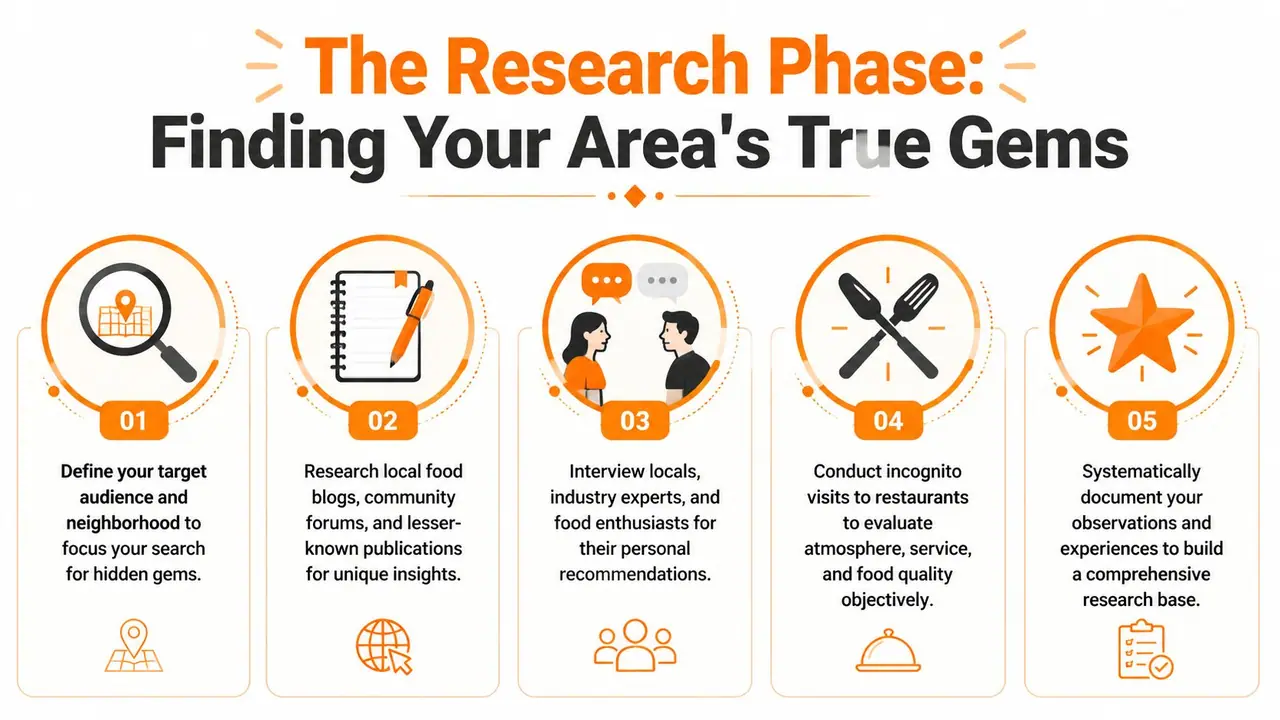
Start by defining who stays with you most often. A cabin host may need breakfast spots, barbecue, and low-hassle family dinners. An urban apartment host may need coffee shops for remote workers, date-night restaurants, and quick lunch counters near transit. A beach property may need seafood, takeout, and casual places where sandy kids won't feel out of place.
I keep a simple lens when researching:
- Arrival-night guests need easy wins, forgiving hours, and simple parking.
- Weekend couples want atmosphere, not just food.
- Families care about wait times, kid tolerance, and portions.
- Longer-stay guests need repeatable, practical options, not only celebration restaurants.
When you research through those use cases, your guide stops sounding like a food blog and starts functioning like guest support.
How to find places that aren't recycled everywhere
There's growing demand for authentic local dining, and guest forum data from 2024 to 2025 showed a 40% increase in queries for “restaurants where locals eat” that are not on Google's top 10 lists (discussion of off-the-beaten-path dining demand). That demand is exactly where most host guides fall short.
A better research process usually includes a mix of sources:
- Shopkeepers and service staff often know where locals eat after work.
- Neighborhood Facebook groups and community forums surface places before travel lists do.
- Regional food writers and small local publishers often notice openings and changes faster than mass tourism sites.
- Your own field visits matter most. Walk in. Sit down. Notice the pace, noise, parking, and whether the experience matches the label.
If you recommend spots that need reservations, it also helps to understand the guest side of that process. This guide to securing top restaurant spots is useful because it explains the practical friction around booking, timing, and planning ahead.
Don't confuse “popular with locals” with “hidden.” A packed classic diner can still be a great recommendation. It just belongs in a different category than a place guests would never find without you.
Separate local staples from low-density discoveries
This distinction matters. Many lists call something a hidden gem when it's already one of the most talked-about places in town. That's not wrong, but it's sloppy. Guests who say they want local often mean one of two very different things.
They may want a local staple. That's a place residents love, even if visitors know about it too.
Or they may want a low-density discovery. That's the place outside the obvious corridor, in a quieter neighborhood, side street, or less trafficked zone.
Those should never be mixed into one bucket. If you separate them, your guide becomes much more useful because guests can choose between convenience, buzz, and exclusivity.
Curating and Structuring a User-Friendly Guide
Once you've done the research, the next mistake is dumping every good restaurant into one long list. Guests don't read that list carefully. They skim it while walking, riding in the car, or standing on the sidewalk trying to make a decision.
A guide only works if people can scan it fast.
Build categories guests can scan in seconds
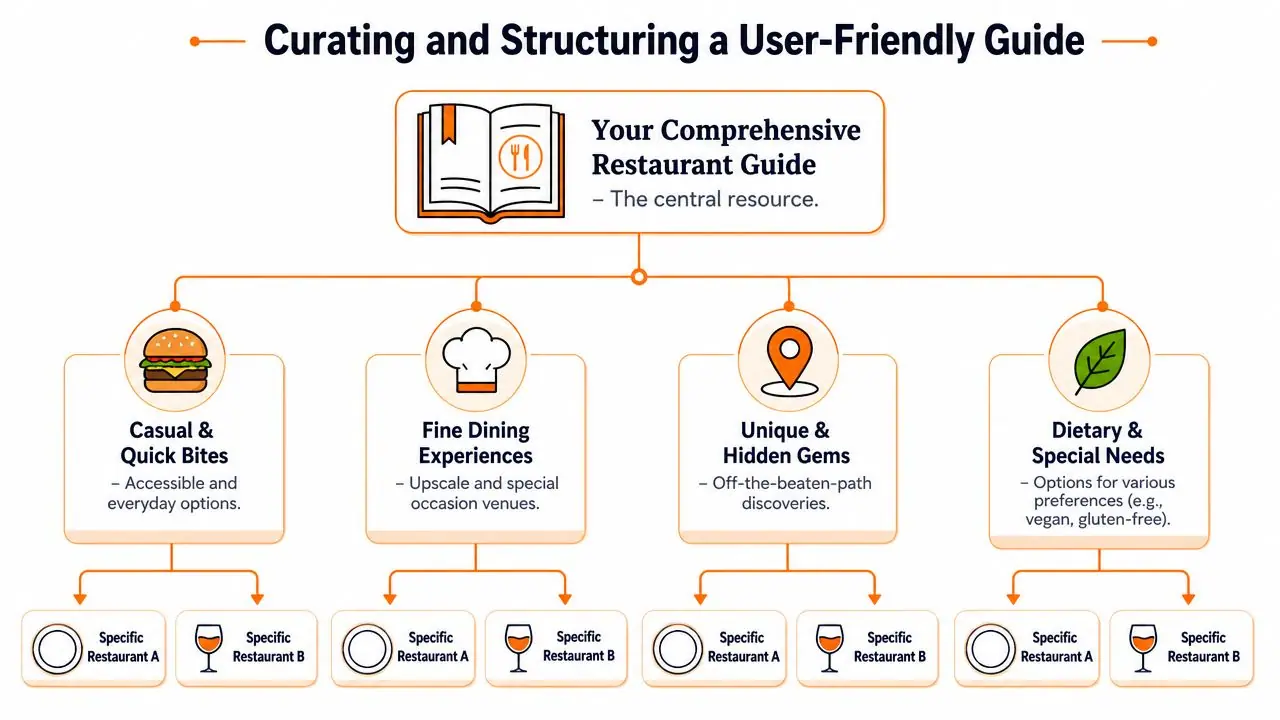
The simplest fix is to organize by decision type, not by cuisine alone. Cuisine matters, but it's usually not the first filter. Timing, budget, group type, and vibe come first.
Good top-level categories often include:
- Quick and casual for arrival nights, lunch, and low-effort meals
- Date night for guests celebrating or wanting atmosphere
- Breakfast and coffee for early departures and slower mornings
- Family-friendly for easier seating and kid-tolerant settings
- Hidden spots worth the detour for guests who want something less obvious
That structure mirrors how people choose. It also reduces the classic follow-up message: “Any place good for kids?” or “Any place we can walk to?”
Use tags like a working database
Power comes from tagging. Think like an operator, not a writer. Each restaurant entry should carry useful labels that help you sort and reuse the recommendation later.
A practical tag set might include the following:
| Tag type | Examples |
|---|---|
| Atmosphere | Romantic, lively, quiet, casual |
| Use case | Arrival night, brunch, quick lunch, celebration dinner |
| Guest fit | Family-friendly, couples, groups, solo travelers |
| Food needs | Vegan options, gluten-aware, seafood, comfort food |
| Logistics | Walkable, easy parking, takes reservations, patio |
If you build your list this way once, you can repurpose it everywhere. Your pre-arrival message can pull from it. Your welcome book can filter it. Your cleaner or co-host can also use the same logic when guests ask for help.
For hosts still using paper binders, it's worth seeing how a digital guide changes this experience. A vacation rental welcome book works better when guests can tap, sort, and browse instead of flipping through static pages.
Balance beats volume
A guide with twelve well-chosen entries often beats one with forty. More options don't always feel more helpful. They often create decision fatigue.
I prefer balanced coverage over exhaustive coverage. That means including:
- A few safe, reliable picks that won't let guests down
- One or two special occasion choices
- Several practical options near the property
- A handful of distinctive local spots guests would miss on their own
For inspiration on how food can be framed around place and experience, I like looking at projects such as Food Escapes. Not because hosts should imitate travel storytelling word for word, but because it's a reminder that dining choices are part of how guests remember a location.
Working standard: Every restaurant in the guide should earn its spot for a different reason. If two places solve the same guest problem in the same way, keep the stronger one.
That's the curation test. Don't ask, “Is this good?” Ask, “Does this fill a distinct role in the guest journey?”
Crafting Entries That Delight and Inform
A strong list can still fail if every entry reads like a directory. Name, address, cuisine, done. That isn't enough. Guests need a quick feel for why the place matters and whether it fits their moment.
The easiest way to improve your writing is to compare a weak entry with a useful one.
The difference between a weak entry and a useful one
A weak entry looks like this:
Joe's Grill. American food. Good burgers. Downtown.
That tells guests almost nothing. They still don't know whether it's a good arrival-night option, whether parking is annoying, whether it's loud, whether kids will be comfortable, or why you included it at all.
A useful entry sounds more like a host speaking from experience:
Joe's Grill is my go-to for a no-brainer first-night dinner. Casual room, fast turnaround, easy parking, and a menu that works for adults and kids. Order the burger if you want the house favorite, but the grilled chicken sandwich is the sleeper pick. Best before the peak dinner rush if you don't want to wait.
That version does real work. It helps the guest decide.
The perfect restaurant recommendation template
Use a repeatable structure so every entry feels polished and easy to skim.
| Element | Description | Example |
|---|---|---|
| One-line summary | Short reason this place belongs in the guide | Casual neighborhood spot that works especially well on arrival night |
| Vibe | Tone and setting | Lively but relaxed, easy for groups, not a dress-up place |
| Price indicator | Quick budget signal | $$ |
| Best for | Main guest use case | Families, quick dinner, easy takeout |
| Must-try | One or two standout items | House burger and onion rings |
| Logistics | Practical details that affect the decision | Easy parking, call ahead on weekends, patio seating available |
| Why I recommend it | Your host perspective | Reliable, fast, and easy when guests don't want to overthink dinner |
You don't need to write a long paragraph every time. You need to answer the questions guests have before they ask them.
Write like a trusted host, not a directory
A few writing habits make entries sharper.
- Lead with the use case. “Best for a relaxed brunch after a late check-in” is stronger than “A lovely brunch spot.”
- Name the friction. If parking is hard, say so. If reservations help, say so.
- Give one specific nudge. A dish, table type, or timing tip makes the recommendation feel lived-in.
- Avoid hype words. “Amazing” and “must-visit” don't help much. Concrete detail does.
Here's a simple before-and-after pattern I use:
| Before | After |
|---|---|
| Great Italian restaurant | Better for date night than for kids, quieter on weeknights, worth booking ahead |
| Nice coffee shop | Strong Wi-Fi, good pastry case, and enough seating for remote work in the morning |
| Hidden gem | Out of the main visitor corridor, easier parking, and less crowded than the obvious downtown options |
The goal isn't to sound like a critic. It's to sound dependable. Guests remember that tone because it feels like someone has already done the sorting for them.
Digital Delivery Using ScanStay to Showcase Your Picks
The format of your guide changes whether guests use it. A polished restaurant list inside a paper binder often stays in the property. A PDF buried in a message thread gets lost. Guests need your recommendations where they make dining decisions, which usually means on their phone, while moving.
Make the guide usable on the move
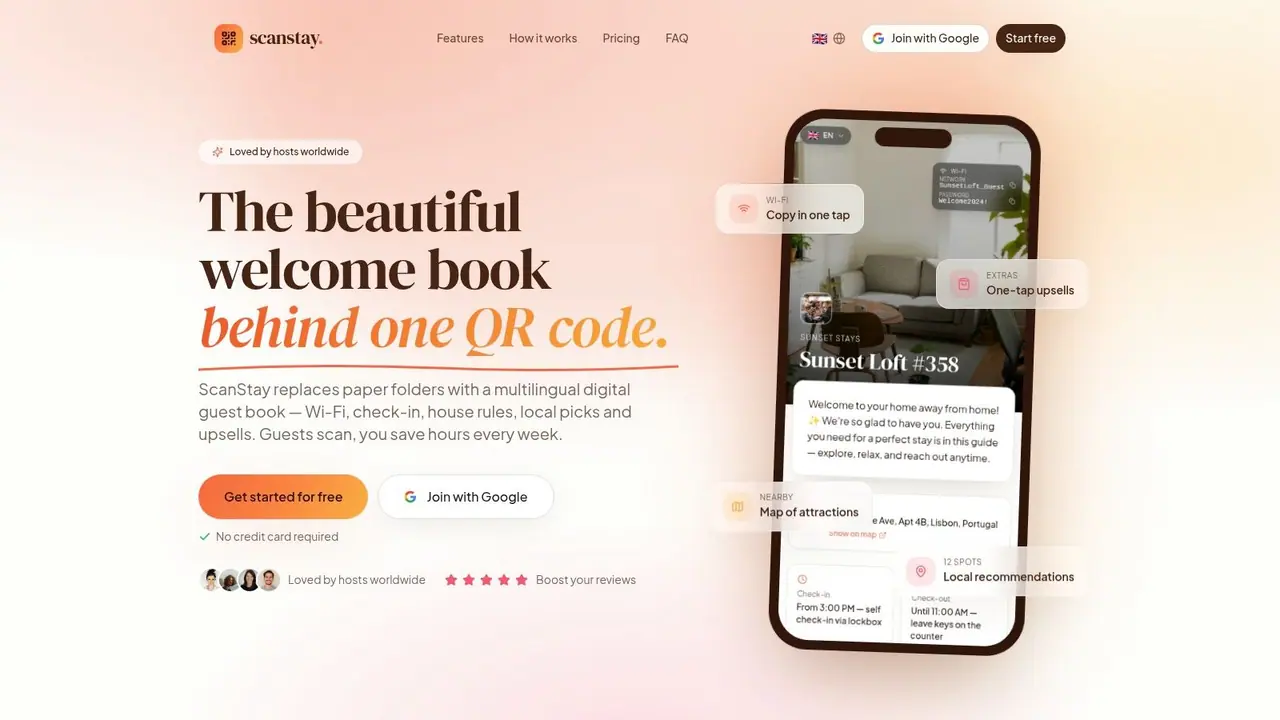
A mobile-first format solves a lot of common problems at once. Guests can tap directions instead of retyping addresses. They can call for reservations without searching. They can check a menu while standing outside another restaurant deciding whether to switch plans.
That's why I prefer a digital welcome book over a static document. Used this way, ScanStay lets hosts place local recommendations inside a QR-code-accessed guidebook that guests open in their browser, with content such as restaurant listings, map pins, and one-tap actions built into the same flow.
A good digital restaurant section should include:
- Restaurant name and short description
- Map pin or direct navigation
- Phone number for one-tap calling
- Menu link when available
- Tags or categories that match guest intent
- A short host note with context
What to include in the digital setup
The setup matters more than most hosts realize. If you just paste a list into a generic notes field, you lose the advantage of going digital in the first place.
Structure each recommendation so a guest can answer four questions quickly:
- What kind of place is this?
- Is it right for us tonight?
- How do we get there?
- Do we need to call first?
If you already use contactless guest materials, the same logic applies to dining. A QR code check-in system works because it removes friction. Restaurant recommendations benefit from the exact same delivery method.
One more practical point. Don't overload the first screen. Lead with a few featured categories, then let guests drill down. “Dinner tonight,” “Breakfast nearby,” and “Date night” perform better than a giant alphabetical index because they match real decision moments.
A quick walkthrough helps if you're building this into a guest-facing setup:
Why QR access changes guest behavior
Guests use recommendations differently when access is simple. They're more likely to check the list before messaging you. They're more likely to revisit it during the stay. They're also more likely to trust it when the design feels current and maintained.
That last part matters. A crumpled binder page suggests the information may be stale. A clean digital guide suggests you've thought through the guest experience.
The best recommendation system is the one guests can use with one hand while walking to the car.
That's the standard I use. If the guide isn't fast on mobile, it isn't finished.
The Living Guide Updates Analytics and Monetization
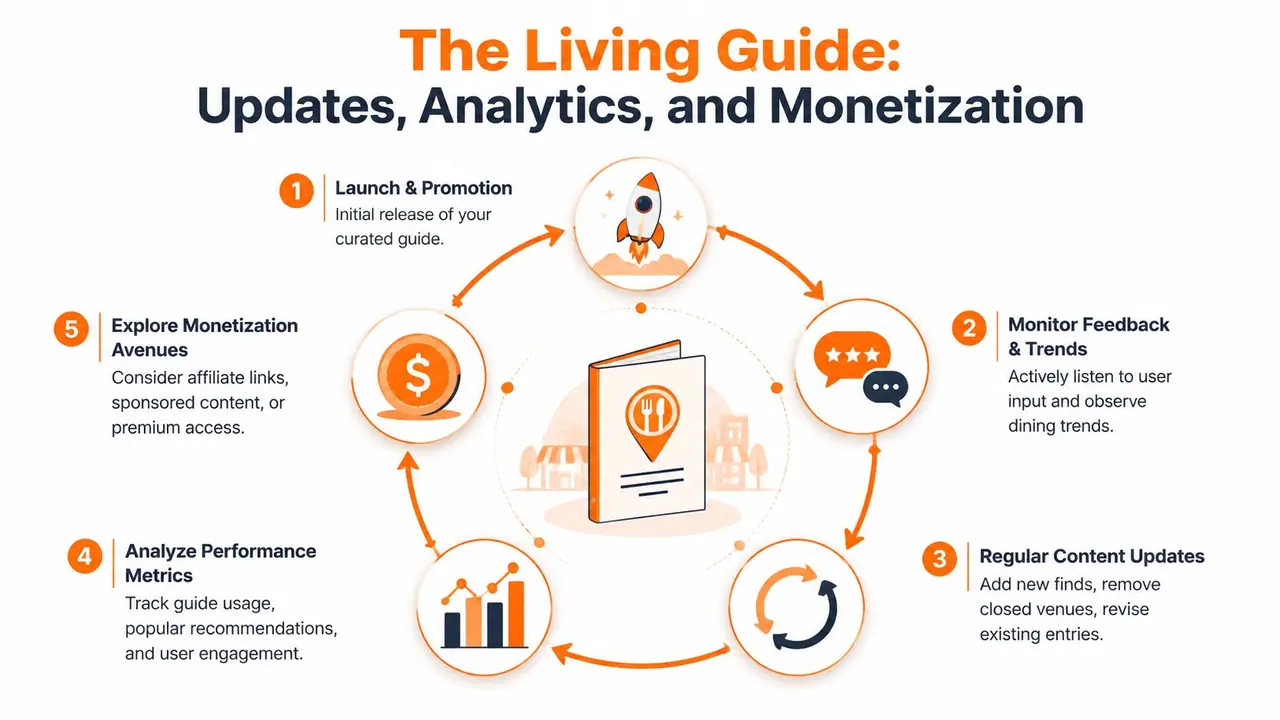
The most useful restaurant guide is never static. Restaurants change hours, menus shift, service slips, neighborhoods get busier, and once-quiet spots become crowded. If you don't update your guide, your best recommendations slowly turn into outdated advice.
The broader recommendation economy already runs on digital signals. Platforms increasingly rely on user-generated inputs such as page views, reviews, and aggregated attributes rather than pure editorial curation, which is visible even in how Tripadvisor ranks listings like its Phoenix restaurants page. For hosts, the takeaway is simple: a dining guide has to stay current if you want guests to keep trusting it.
Treat the guide like an operating asset
The maintenance routine doesn't need to be complicated. It just needs to be consistent.
A practical update cycle usually includes:
- Check closures and hour changes before peak seasons
- Retest a few recommendations each cycle, especially top-performing ones
- Remove weak entries quickly if the experience has slipped
- Add new options carefully after you've verified they solve a real guest need
I like a short review cadence rather than a massive yearly overhaul. Small maintenance sessions are easier to keep up with, and they reduce the chance that guests hit outdated information.
Use guest behavior to improve the list
A living guide gets smarter when you watch how guests interact with it. Which entries do they open most? Which categories seem to get ignored? Which recommendations generate follow-up questions anyway?
That kind of feedback helps you improve the guide in ways opinion alone can't. If lots of guests open brunch options but still ask for coffee nearby, your list may be too meal-focused. If one date-night spot gets attention but also triggers logistics questions, the entry may need clearer parking or reservation notes.
For hosts who want to track usage patterns more deliberately, vacation rental analytics can help connect guest behavior with what you publish in your guide.
Useful filter: Promote the places guests use and praise. Demote the ones you keep having to explain.
That's the loop. Publish. Watch. Adjust. Repeat.
Monetize carefully and keep trust intact
Monetization can work, but only if the guide stays honest. Guests can tell when a recommendation exists for them versus for you.
The cleanest options are usually the simplest:
- Exclusive guest perks with a local restaurant, where the guest gets a small benefit and the restaurant gets qualified traffic
- Reservation help as a concierge add-on for guests booking special occasions
- Featured local experiences only when they're clearly relevant and genuinely useful
If you add paid placements, label them clearly and keep them separate from your core recommendations. The core list should remain editorial in the practical sense of the word. It should reflect what you'd recommend even without compensation.
That's how the guide keeps its value. It saves time, improves the stay, produces cleaner guest communication, and may open up new revenue opportunities without turning into advertising.
If you want one place to organize restaurant recommendations, house info, upsells, and guest-access links in a mobile-friendly format, take a look at ScanStay. It gives hosts a QR-based digital welcome book so guests can find local dining picks, directions, and stay details without digging through long message threads or paper binders.