Sustainable Hospitality: A Practical Guide for Hosts
Sustainable hospitality made practical for hosts and small properties. Learn strategies, KPIs, certification paths, and how digital tools cut waste.

The first time I sat down to make my short-term rentals “more sustainable,” I had the same problem a lot of hosts have now. There were compost bins, bamboo toothbrushes, refillable soaps, LED bulbs, recycling labels, carbon targets, and enough marketing language to make the whole thing feel expensive and vague at the same time. What mattered for the business was much simpler, guests noticed clear choices, utility use dropped when the right systems were in place, and the properties that could prove their performance were easier to explain, easier to defend, and easier to improve.
That's the practical reality of sustainable hospitality. It's not a mood board, and it's not a pile of green gestures. It's the discipline of running a stay that uses fewer resources, creates less waste, treats the surrounding community with more care, and still makes financial sense for the host.
Table of Contents
- What Sustainable Hospitality Really Means Today
- The Business Case for Hosts and Small Properties
- Five Operational Pillars Every Property Can Measure
- Turning Guests Into Active Participants
- Certification Options Worth the Effort
- A 30-Day Rollout Plan for a Small Property
- Making Sustainable Hospitality Stick for the Long Run
What Sustainable Hospitality Really Means Today
A lot of hosts hear “sustainability” and think about a long checklist of eco-friendly upgrades they can't justify right now. That's the wrong frame. For a short-term rental, boutique inn, or small guesthouse, sustainable hospitality means running the property so that environmental impact, guest experience, and business durability all reinforce each other.
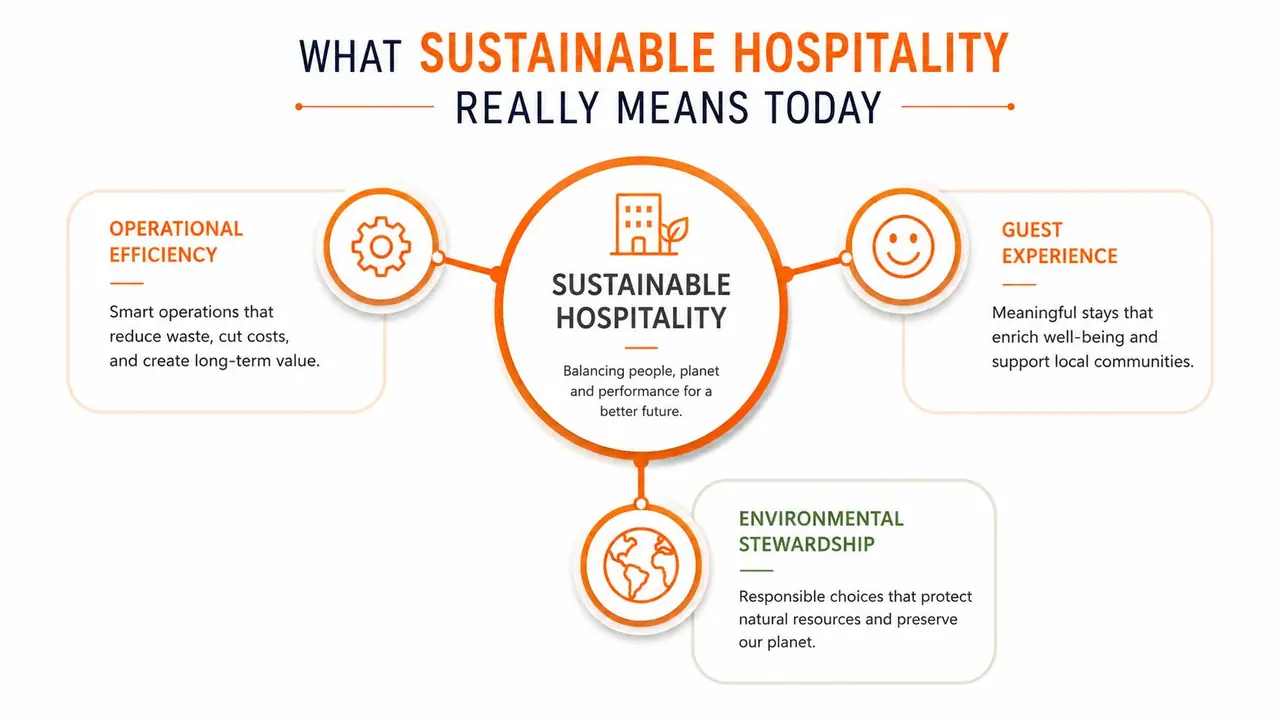
A working definition I use is this. Sustainable hospitality is the practice of reducing resource use and waste, making the stay easier to understand and operate, and protecting the long-term value of the property without making the guest experience feel stripped down. That fits a single condo, a boutique hotel, or a multi-unit portfolio.
Doing less harm versus actively regenerating
There's a useful distinction between doing less harm and actively regenerating. Doing less harm covers the basics, lower energy waste, less packaging, smarter laundry, cleaner sourcing, and less paper. Actively regenerating goes further, supporting local suppliers, using circular purchasing decisions, and designing operations that leave the property and community better than before.
That second level is harder, and it shouldn't be confused with a marketing slogan. If a host replaces disposable amenities with a system that cuts waste and improves consistency, that's meaningful. If a property plants one herb pot and calls itself sustainable while ignoring water use, laundry loads, and guest communication, that's just branding.
The market now treats this as part of the booking decision, not a niche preference. A 2021 survey found 81% of travelers planned to choose a sustainable accommodation option in the coming year, a separate 2020 Booking.com survey found 53% wanted to travel more sustainably on future trips, and a Hilton survey found one-third of guests research a hotel's environmental and social practices before booking, rising to 44% among guests under 25 source. That doesn't mean every guest wants a lecture. It does mean the commercial case is already embedded in the decision process.
Practical rule: If you can't explain your sustainability approach in one sentence, it's probably not operationally real yet.
A useful test is simple. If your property can reduce waste, save resources, and clearly communicate those choices without frustrating guests, you're doing sustainable hospitality. If the effort increases complexity without measurable value, it's decoration.
For hosts looking for a packaging perspective that still respects actual operations, the eco-friendly packaging guide for UK cafes is a helpful example of how to think about material choice, waste, and practicality without getting lost in buzzwords.
The Business Case for Hosts and Small Properties
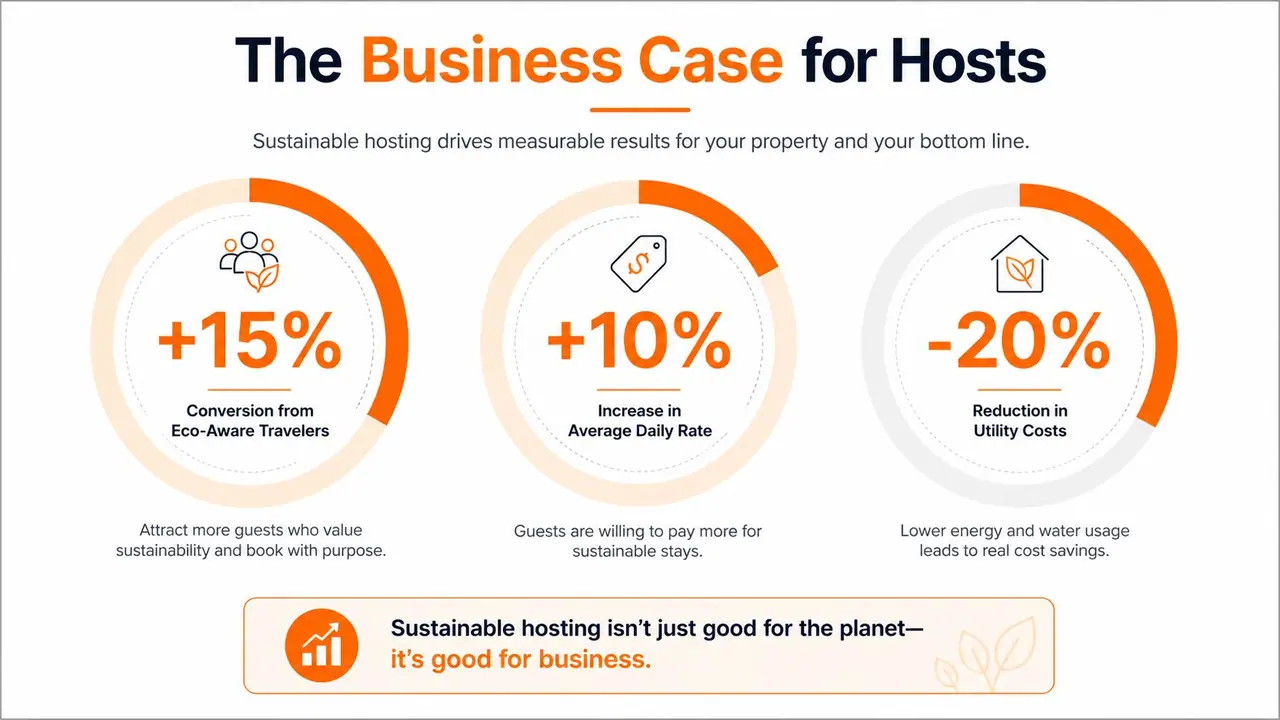
The fastest way to lose interest in sustainability is to frame it as pure cost. The better way is to treat it as a set of levers that can improve conversion, reduce friction, and lower operating waste at the same time.
Revenue-side gains that hosts can actually feel
The first gain is better conversion from eco-aware travelers. When sustainability is visible, believable, and easy to understand, it helps a listing stand out in a crowded market. That matters because the booking decision is often made quickly, and travelers who care about sustainability don't want to dig through vague claims to figure out whether a property means it.
The second gain is stronger review quality. Guests respond to clarity. If you explain the linen policy, waste setup, and energy guidance clearly in the welcome materials, you reduce confusion and the small annoyances that often show up later in reviews. That doesn't guarantee praise, but it removes avoidable friction.
The third gain is positioning. A property that can explain its choices well can often support a more distinctive market stance than a generic stay that looks like everything else. That's especially useful for boutique operators who depend on repeatable identity, not just occupancy.
Cost-side savings that stop leaks
On the expense side, the wins are usually boring, which is exactly why they work. LEDs, smart temperature controls, refill systems, and better waste sorting tend to reduce waste in places hosts pay for. The sector also has a larger decarbonization gap to close, with CBRE citing the Sustainable Hospitality Alliance target of a 66% cut in carbon emissions per room by 2030 and 90% by 2050 versus 2017 levels source. That's a signal that small operational fixes aren't cosmetic, they're part of a much bigger transition.
A simple mental model helps. If a property switches from inconsistent heating and lighting habits to LEDs plus smarter temperature controls, the savings come from fewer wasted hours, fewer calls from guests asking how to adjust the room, and fewer replacements over time. The point isn't the exact number in a vacuum. The point is that the same upgrade can lower both utility costs and operational noise.
For hosts comparing operational systems, the metrics discussion in operational efficiency metrics is useful because sustainability only becomes useful when it's measured in the same way as other property performance.
If you're tempted by single-item fixes, do read around. The reduce pod waste with stainless steel piece is a reminder that one product swap can be helpful, but it still has to fit your cleaning flow, guest expectations, and supply system.
Why small operators benefit the most
Small properties often win here because even modest operational gains compound. One better-referenced guest message saves time. One fewer unnecessary amenity saves waste. One improved utility habit across a whole portfolio adds up faster than it does on a single large site that has more slack in the system.
The right question isn't whether sustainability is “worth it” in theory. It's whether you can make the stay clearer, leaner, and easier to defend. For most hosts, that answer becomes yes once the project is tied to revenue, cost, and review quality instead of abstract virtue.
Five Operational Pillars Every Property Can Measure
Sustainable hospitality gets real when you stop describing it as a philosophy and start managing it like an operation. The most useful lens is to track energy, water, waste, sourcing, and guest engagement by occupied room or guest night, not just by whole-property totals. That normalization matters because raw totals swing with occupancy, while per-guest-night metrics isolate efficiency.
Start with the right denominator
Guidance in the hospitality sector recommends metrics such as total energy per guest night, water use in litres per guest night or per m², and waste production in kg per guest night, with waste per guest night being a common hotel benchmark source. This approach keeps you from celebrating a lower bill during a slow month when the property was merely emptier.
The other reason this matters is accountability. If you want to know whether a change worked, you need a repeatable measurement before and after the change. A spreadsheet is enough for a small host if it's used consistently.
| Pillar | High-Leverage Action | Primary KPI |
|---|---|---|
| Energy | Replace inefficient lighting, add smart temperature control, and reduce idle usage in empty rooms | kWh per guest night |
| Water | Fix leaks fast, use low-flow fixtures, and prompt shorter showers when appropriate | Litres per guest night |
| Waste | Separate recycling clearly, remove unnecessary disposables, and track what actually leaves the property | kg of waste per guest night |
| Sourcing | Buy refillable, repairable, and bulk-format items where they fit the stay | Reusable or bulk share of purchased amenities |
| Guest engagement | Use a digital welcome book and clear in-room messaging to prompt the right actions | Guest participation rate in reuse or sorting steps |
The five pillars in practice
Energy is usually the first place to look because it's visible and operational. If rooms are often empty between check-out and housekeeping, avoid letting heating or cooling run blindly. Track kWh per guest night and treat the number as a property habit score, not a vanity metric.
Water is partly a fixtures issue and partly a housekeeping issue. Leaks, overfilled laundry cycles, and unnecessary top-ups add up over time. If you're serious, measure litres per guest night and tie it to linen practices and plumbing checks.
Waste is where many properties think they're “doing enough” just by placing a bin in the kitchen. That rarely works without clear separation, good labels, and fewer unnecessary items at the source. The KPI should be kg of waste per guest night, not a vague sense that “the trash looks better.”
Sourcing is where procurement and sustainability meet. Buying bulk amenity formats, repairable tools, and lower-waste packaging changes the burden on housekeeping and storage. If you want a better sourcing program, don't ask whether a product is green in theory, ask whether it reduces replacement frequency and waste in your operation.
Guest engagement is the multiplier. A property can only go so far if guests can't see what's expected of them. A digital welcome book helps because the message lives where guests look, on their phone, during the stay.
For linen and laundry decisions, the operational details in laundry linen service are relevant because textiles often create more waste, labor, and inconsistency than hosts expect.
Keep the metric visible, or the initiative becomes a story instead of a system.
Turning Guests Into Active Participants
The most effective sustainability programs don't ask guests to become environmental experts. They make the right choice obvious, easy, and present at the exact moment it matters. That's why visible cues work better than backstage virtue.
What guests actually notice
A neatly written linen reuse card gets seen. A clearly labeled recycling station gets used. A message in the room reminding guests how to reduce air-conditioning waste gets read if it's short and direct. Invisible actions, like better sorting behind the scenes or a more efficient compost setup in a service area, still matter, but guests can't respond to what they never see.
That distinction matters because hospitality is a communication business. Guests are much more likely to follow a small, well-timed prompt than a long sustainability statement buried in a listing description. The World Sustainable Hospitality Alliance and the World Economic Forum both emphasize standardized ESG/KPI tracking, separate recycling streams, and in-room or digital communication that prompts guests to reduce air-conditioning, water, and towel or linen use source. The message is simple, visible policies plus visible tracking are what turn intent into resource reduction.
Why the digital welcome book matters
A digital welcome book is a force multiplier because it repeats the same sustainability message without creating paper clutter. It also reaches guests at the moment they need the information, check-in, first shower, first trash disposal, or first question about room temperature. That's better than a static binder that gets ignored on the coffee table.
It also cuts the “same question, different guest” problem. When the Wi-Fi details, house rules, recycling instructions, and amenity guidance are in one place, hosts spend less time answering repetitive messages. That saves labor, but it also makes the property feel more polished.
Practical rule: If a guest has to ask twice, the instruction is probably in the wrong format, not just the wrong place.
Here's a short sustainability checklist every welcome book should carry:
- Linen and towel guidance: Explain reuse expectations plainly, without sounding preachy.
- Waste sorting instructions: Show what goes where with labels that match your bins.
- Temperature use tips: Tell guests how to use heating or cooling efficiently in your property.
- Water reminders: Keep the wording light, practical, and specific to your fixtures.
- Amenity policy: Clarify what's refillable, what's available on request, and what isn't default.
- Local low-waste options: Point to nearby refill stores, cafes, or services that fit the stay.
The reason this works is operational, not ideological. Better communication reduces printed materials, lowers repetitive support messages, and creates room for upsells or better service recovery. If sustainability is going to pay for itself, the guest-facing layer has to be part of the design.
For hosts building that layer, the vacation rental welcome book concept is worth studying because it shows how structure and timing shape guest behavior more than long explanations do.
Certification Options Worth the Effort
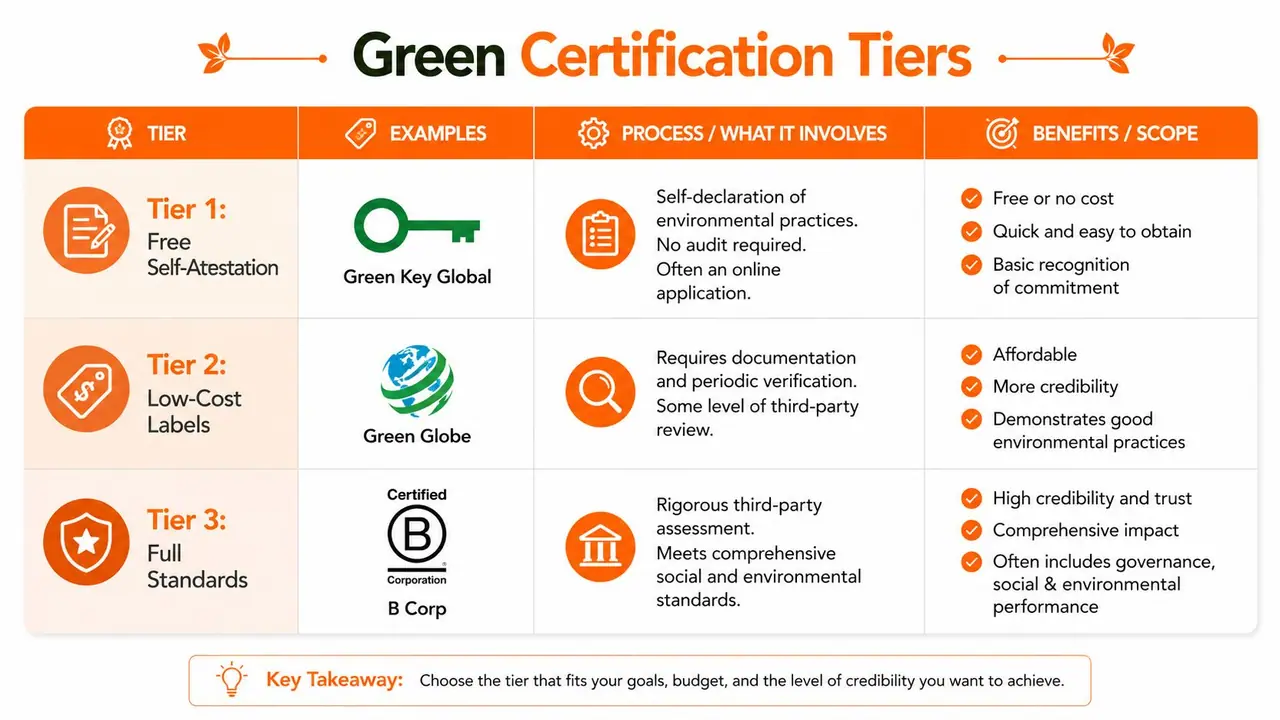
Certification can help, but it's easy to spend too much time chasing badges before the operation is ready for them. The cleanest way to think about it is in three tiers.
Three tiers that fit different property sizes
Tier 1 is free self-attestation. A host documents the property's practices internally and makes claims only where they can be supported. It's lightweight, fast, and often enough for a single listing that mainly wants to improve operations before it markets sustainability publicly.
Tier 2 is low-cost third-party labeling. This is the middle path for operators who want external credibility without a heavy audit burden. Programs such as Green Key and Travelife are often discussed in this space, and they work best when the property already has stable routines and enough consistency to document them properly.
Tier 3 is full sustainability standards. This is the right fit when sustainability is central to the brand, or when a portfolio has enough scale that formal systems and audits become worth the effort. Options such as EarthCheck or broader frameworks like B Corp can make sense for larger operators, but they're often too much for a single short-term rental that hasn't stabilized its measurement first.
How to choose without overbuying complexity
The decision rule is straightforward. If you have one listing, start with self-attestation and clean measurement. If you have a small portfolio or boutique property and sustainability is part of the brand story, a third-party label may be worth it because it gives guests a clearer trust signal. If sustainability will be one of the main reasons guests book you, full standards start to make more sense.
Platform visibility matters too. A badge that guests can see in the booking flow is more useful than one that lives on a back-office certificate. That's why some hosts focus too much on the badge itself and not enough on whether the listing, photos, and welcome materials reinforce the same message.
The biggest mistake is choosing certification before process. A property with weak routines will struggle to maintain any label, no matter how good it looks on paper. Build the habits first, then decide how much external verification you need.
A 30-Day Rollout Plan for a Small Property
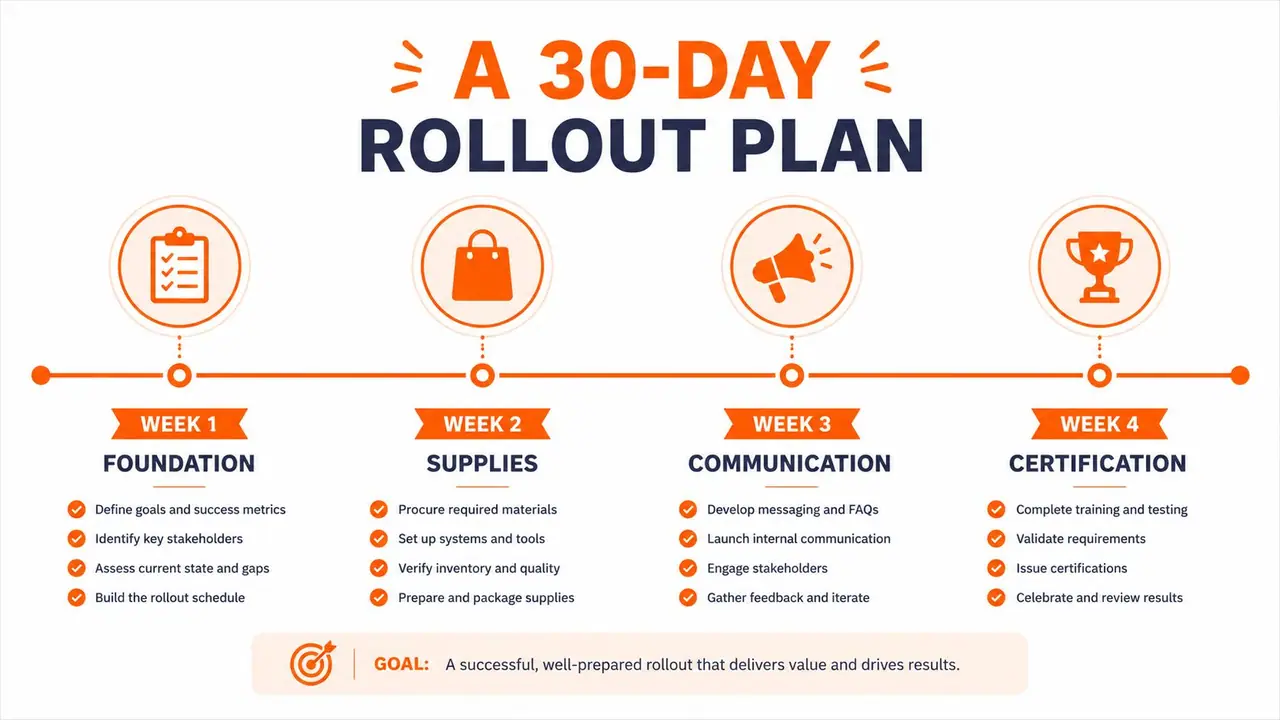
A month is enough to make meaningful progress if the work is sequenced correctly. The trick is to start with actions that improve operations immediately, then layer in sourcing, measurement, and proof.
Week one and week two
Week 1, Foundation. Change the easy wins first. Check for leaks, swap in LED bulbs where needed, and set up a digital welcome book so the property's core instructions are no longer trapped in paper. At the end of the week, verify that each occupied room can receive the same instructions without extra manual work.
Week 2, Supplies. Replace default single-use items with bulk or refillable options where they fit your setup. Add a clear recycling station and remove any amenities that no one uses but still gets restocked. The verification step is simple, confirm that housekeeping can follow the new supply routine without improvising.
Week three and week four
Week 3, Communication. Add sustainability notes to the listing, the welcome book, and the in-room messages. Keep the wording practical, not moralizing. Then take a baseline snapshot of your energy, water, and waste by guest night so future changes can be compared against something real.
Week 4, Certification and proof. Decide whether the property is ready for self-attestation, a light label, or a larger standards path. Collect guest feedback on what they noticed, what confused them, and what felt useful. If your changes can't be explained clearly to guests, they're not ready to market yet.
Proof beats intention. A simple before-and-after log is more valuable than a page of promises.
The best rollout plans aren't heroic. They're repeatable. A host who can standardize one property can usually standardize a second, and that's where sustainable hospitality starts becoming a portfolio habit instead of a one-off project.
Making Sustainable Hospitality Stick for the Long Run
The properties that keep this going don't treat sustainability as an extra chore. They treat it as a quality system. Guests get clearer instructions, hosts get fewer repetitive questions, and the business gets a cleaner way to show that it's operating with intent.
I've seen the same pattern over and over. One property starts with a single measurable change, like better lighting or a cleaner welcome flow. Then it adds one visible guest-facing behavior cue. Then it updates the listing so the story matches the operation. Once those three pieces line up, the work stops feeling like a sacrifice and starts feeling like better hospitality.
That's the durable version of sustainable hospitality. Start with one metric, one visible change, and one updated guest touchpoint. Don't try to fix everything at once, and don't wait for the perfect certification before you prove the basics. The hosts who build measurement and storytelling habits now will find future filters, partnerships, and standards easier to access, while the ones who do nothing will keep competing on price alone.
A CTA for ScanStay. If you want to make your sustainability messaging easier to prove, easier for guests to follow, and easier for you to manage across one listing or a full portfolio, ScanStay can help you replace paper binders and repetitive messages with a single digital welcome flow that supports a cleaner, more professional guest experience.