10 Best Property Management Software Tools for 2026
Find the best property management software for your short-term rentals. We review 10 top tools for features, pricing, and who they're for in 2026.
You've got bookings coming in from Airbnb and Booking.com, guest messages hitting at awkward hours, cleaners texting for access details, and a paper binder in each unit that guests barely read. On top of that, you're trying to grow direct bookings without creating a second full-time job for yourself. That's the point where most hosts start looking for the best property management software.
The problem is that “property management software” means very different things depending on who's writing the list. In traditional property management, the category is already large and growing, with one market report estimating USD 3.61 billion in 2025 and USD 5.89 billion by 2033, while another forecast put it at USD 7.1 billion in 2025 and USD 17.1 billion by 2035. Both also point to cloud deployment as the dominant model. But short-term rental hosts don't buy software for the same reasons as large multifamily operators.
That gap matters. Many roundup articles still optimize for accounting depth, lease workflows, and traditional rental operations rather than guest communication, upsells, multilingual self-service, and fast setup for short stays, as noted in this overview of common software comparisons. So instead of one generic top-10 list, this guide groups tools by what they do best.
You'll find all-in-one systems, automation-first platforms, direct-booking focused options, and guest-experience tools. For each one, I'm focusing on the trade-offs that matter when you're running short-term rentals: what it replaces, where it saves time, where it gets expensive, and what migration looks like in practice.
Table of Contents
- 1. ScanStay
- 2. Guesty
- 3. Hostaway
- 4. Lodgify
- 5. OwnerRez
- 6. Hostfully
- 7. Hospitable
- 8. Uplisting
- 9. Escapia
- 10. Cloudbeds
- Top 10 Property Management Software Comparison
- How to Choose the Right Property Management Software for You
1. ScanStay
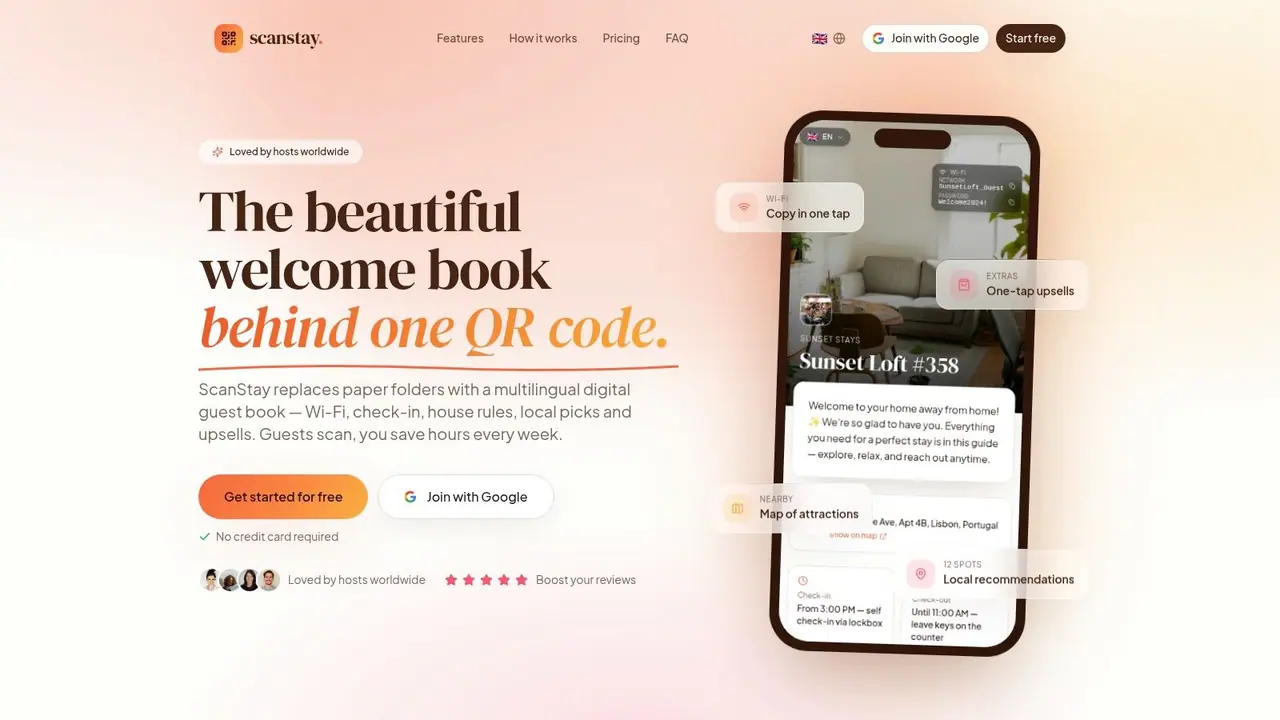
ScanStay isn't a full PMS, and that's exactly why it deserves a place high on this list. It solves one of the most expensive hidden problems in short-term rentals: the endless stream of repetitive guest questions that don't need a human reply.
Instead of handing guests a binder or sending the same check-in paragraph over and over, ScanStay gives you a mobile-first digital welcome book accessible by QR code. Guests open it in their browser. No app install, no account creation, no friction at the worst possible moment, which is usually arrival.
Why it stands out
The practical value is simple. You centralize Wi-Fi details, check-in and check-out instructions, house rules, local recommendations, video how-tos, and add-on services in one place. For hosts with international guests, support for 18 travel languages with AI translation is a major operational win because it reduces confusion before it becomes a support ticket.
The pricing is also unusually clear. You can build for free and pay when you publish. Plans start at $19 per month for one property, then $49 per month for up to 10 properties, and $99 per month for unlimited properties with white-labeling and dedicated onboarding. For hosts comparing options, that kind of transparency is still too rare in this category, especially when many buyers are trying to understand true software costs across plans and add-ons, a gap highlighted in this pricing-focused property software breakdown.
Practical rule: If you answer the same guest question more than a few times per week, that answer should live in a self-serve guest guide, not in your inbox.
ScanStay also goes beyond “information storage.” Built-in one-tap upsells for late checkout, transfers, and rentals turn the guest guide into a revenue surface. That's more useful than it sounds because guests are most likely to buy extras when the offer appears in context, not buried in a message thread.
Best fit and implementation notes
ScanStay fits hosts, co-hosts, and managers who already use a PMS but still need a better guest-facing layer. It also works well for smaller operators who don't want to pay for a heavy all-in-one platform just to fix communication chaos.
A few trade-offs matter:
- Best for guest clarity: ScanStay is strongest when your pain point is guest messaging, arrival instructions, and on-property experience.
- Less suited as a core ops hub: It won't replace channel management, accounting, or reservation administration.
- Requires mobile access: Because the experience is browser-based, guests still need a phone and internet connection for the smoothest use.
For implementation, start with one property and document your top questions first. Build the sections guests ask about most: parking, Wi-Fi, access, trash, heating or AC, checkout, and local recommendations. Then add upsells. Hosts comparing lightweight tools with a hospitality-first angle should also look at this guide to affordable property management software for short-term rentals.
2. Guesty
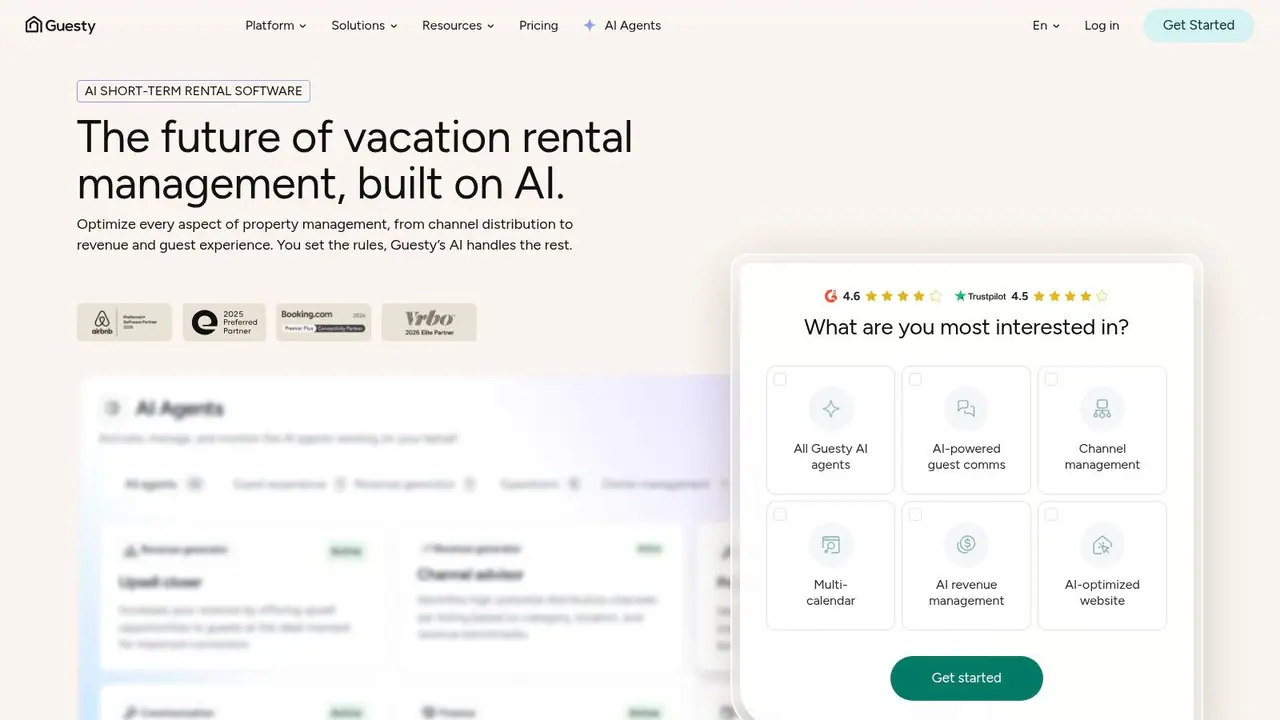
Guesty is one of the clearest examples of an all-in-one platform built to grow with you. If you're managing several listings today and expect that number to keep climbing, Guesty makes sense because it combines the pieces hosts usually bolt together over time: inbox, calendar, channel distribution, direct booking, payments, and reporting.
Why operators choose it
The strongest reason to choose Guesty is consolidation. You can run OTA connectivity, guest communication, and a direct booking setup from one environment instead of stitching multiple lightweight tools together. That becomes more valuable as soon as you have staff, co-hosts, or VAs involved, because one source of truth matters more than advanced features on paper.
Its trade-off is weight. Small hosts with one or two listings often find platforms like this heavier than they need. A complex PMS can create discipline, but it can also create admin overhead if your operation is still simple.
What works well:
- Unified operations: Inbox, multi-calendar, and channel management belong together when you're scaling.
- Growth path: Starter options make it easier to begin without committing to enterprise complexity on day one.
- Marketplace depth: Integrations matter once you add locks, pricing tools, or accounting workflows.
What doesn't work as well:
- Quote-based expansion: Advanced modules and higher tiers can make budgeting less predictable.
- Learning curve for tiny teams: If you self-manage a handful of units, you may only use a fraction of the platform.
Guesty is usually a better buy for operators planning around future complexity, not just current pain.
Migration is easier if you standardize your templates before import. Clean up listing names, cancellation rules, check-in messages, and fee structures first. If your main challenge is scaling vacation rental operations broadly, not just guest communication, this overview of vacation property management workflows is a useful complement.
3. Hostaway
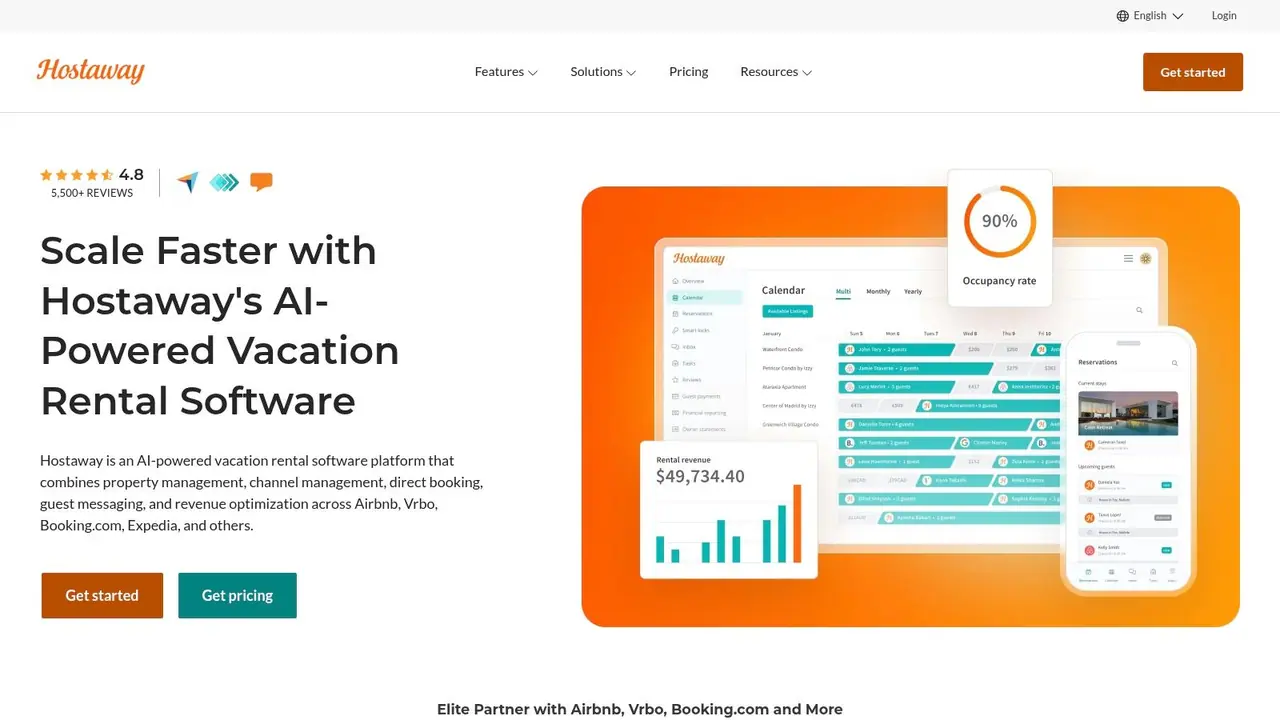
Hostaway is built for managers who want extensive channel connectivity and enough operational depth to support a real portfolio, not just a side business. It's especially appealing when Airbnb, Vrbo, Booking.com, and Expedia all matter to your distribution mix.
Where it fits best
The biggest strength here is infrastructure. Hostaway is the kind of system teams choose when they want booking channels, messaging, reporting, revenue tools, and direct-booking support under one roof, with the expectation that automation will carry more of the load over time.
For a single listing, that's usually too much software. For a manager with multiple properties and standardized processes, it starts to make sense fast.
A realistic read on the trade-offs:
- Strong for channel-heavy businesses: When OTA sync reliability is critical, Hostaway deserves a close look.
- Good for process builders: Teams that already use SOPs, cleaner workflows, and templated messaging will get more out of it.
- Less ideal for micro-portfolios: It can feel oversized if you're still experimenting with one or two units.
The migration issue to watch is messaging logic. Hosts often bring over too many automated messages from a previous tool and create noisy guest communication. Before switching, simplify your message flows into arrival, stay, and departure moments. If your priority is reducing manual guest communication through better automation, this article on automating Airbnb messages is worth reading alongside any Hostaway evaluation.
4. Lodgify
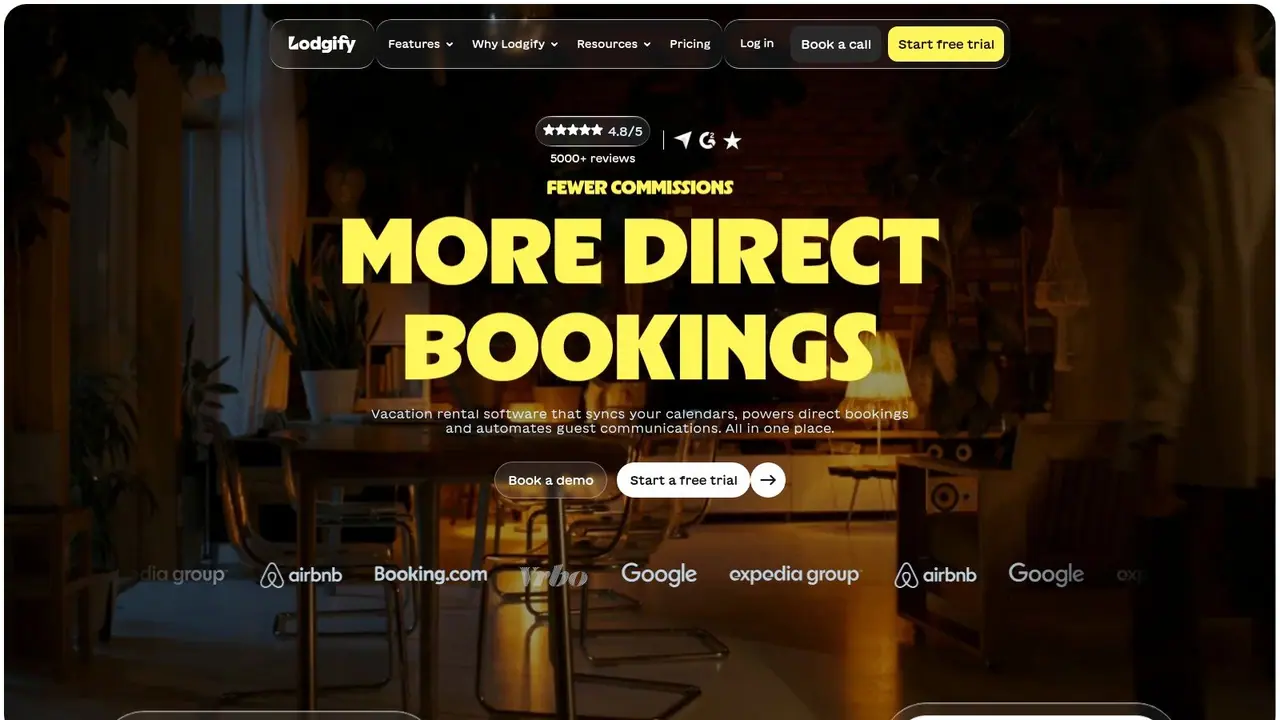
Lodgify is one of the better choices if your direct booking site matters as much as your channel manager. Some tools treat the website as a secondary feature. Lodgify treats it as part of the core product.
Best use case
This is the tool I'd look at if you want a cleaner path from OTA dependency toward commission-free repeat business. The no-code website builder, booking engine, payments, and channel management work well together for hosts who want a guest-facing brand, not just listings on marketplaces.
That said, direct booking success doesn't come from software alone. If you don't have repeat guests, a clear brand, or a plan to send traffic to your site, website features can be underused.
What stands out in practice:
- Website-first approach: Better fit for hosts serious about building their own booking channel.
- Core PMS coverage: Calendar sync, messaging, and property operations are there.
- Transparent start: A free trial and public plan pages make early evaluation easier.
The watch-out is feature gating. Some higher-value capabilities sit on more expensive tiers or require add-ons. That isn't unusual, but it matters when you compare “headline pricing” versus the setup you'll need.
A direct booking site only pays off if your guest journey is polished enough to convert trust into bookings.
Migration tip: build your website structure after your listing data is clean. Don't import messy room names, inconsistent amenities, and weak descriptions into a direct-booking experience. Fix the data first, then launch.
5. OwnerRez
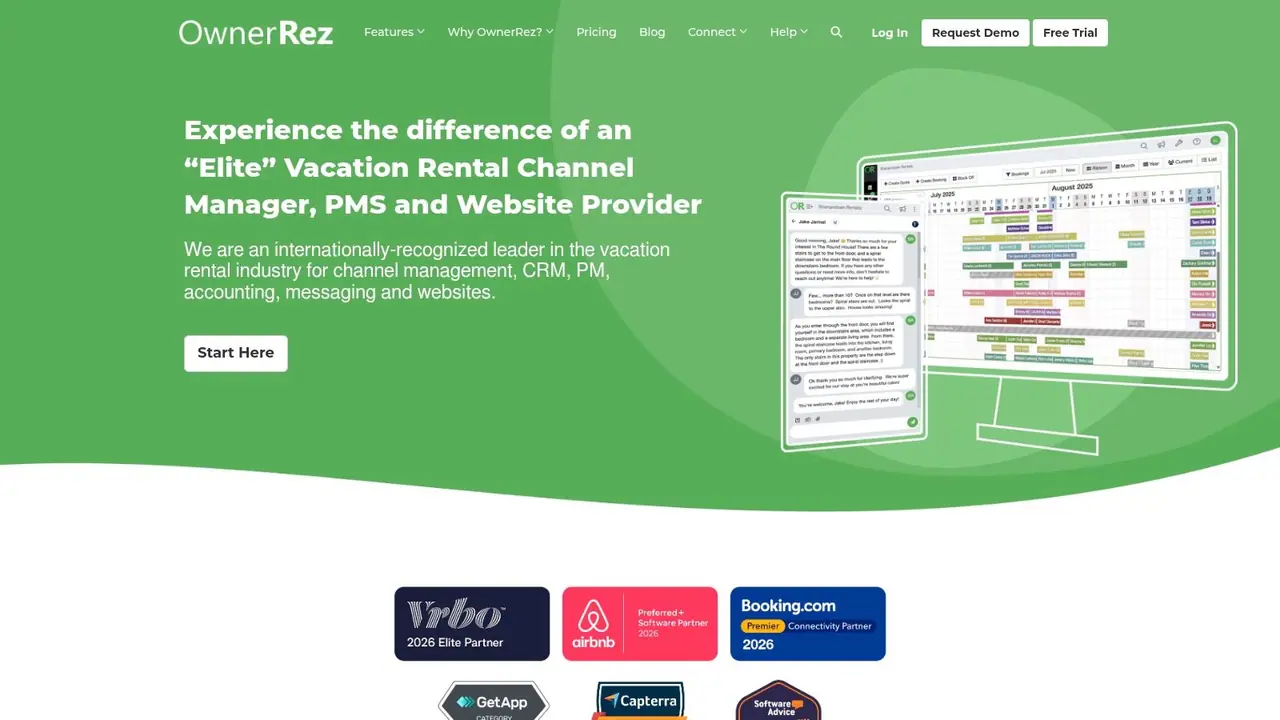
OwnerRez appeals to a specific kind of operator. If you like modular systems, want control, and don't mind a more technical setup, it can be one of the best property management software options for a serious short-term rental business.
Who gets the most from it
OwnerRez is less “plug and play” than beginner-friendly tools, but more flexible once you understand how you want your stack to work. That's a real advantage for hosts who've outgrown simple systems and know exactly which modules they want to pay for.
The modular pricing structure is one of its strengths and one of its risks. You avoid paying for a bloated package, but it's easier to underestimate your total cost once websites, APIs, and extra capabilities get layered in.
Its practical profile looks like this:
- Best for control: Good if you want granular settings and a customized setup.
- Good direct-booking support: Hosted sites and WordPress options give you flexibility.
- Steeper setup: Expect more configuration work than with beginner tools.
If you switch to OwnerRez, don't migrate everything at once. Start with reservations and calendar integrity. Add messaging automations, owner portals, cleaner workflows, and payment logic after the booking foundation is stable. Teams that rush the setup usually create duplicate rules and messy triggers.
6. Hostfully
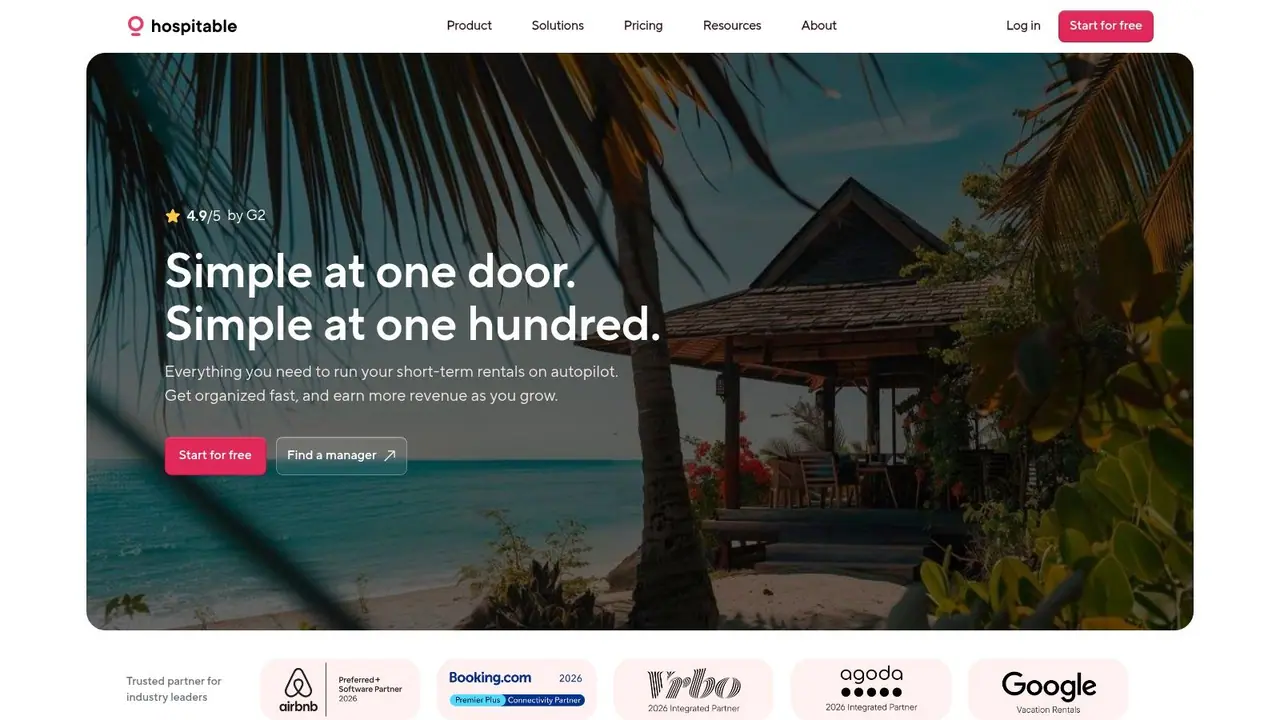
Hostfully sits in a useful middle ground. It's not the lightest option on this list, and it's not trying to be the most enterprise-heavy either. That makes it attractive for managers moving from a handful of properties into a larger portfolio that needs structure without becoming rigid.
Where it wins
The integration ecosystem is a big reason people choose Hostfully. If your operation depends on locks, pricing tools, guest communication layers, or specialized workflows, a broad partner network matters because it gives you room to evolve instead of forcing an all-or-nothing stack.
Its tiering also signals who it's built for. There's a clear path from small portfolios into much larger ones, which reduces the risk of needing a second migration too soon.
Pros and trade-offs in plain terms:
- Strong ecosystem: Better for operators who know they'll need connected tools.
- Direct booking plus PMS: Good balance between guest-facing and backend needs.
- Learning curve: Depth helps once configured, but onboarding takes attention.
The best migration move with Hostfully is to assign one person to own system logic. Too many teams let every staff member create templates, tags, and triggers during setup. That leads to clutter fast. One person should define naming rules, automation ownership, and what belongs inside Hostfully versus a third-party tool.
7. Hospitable
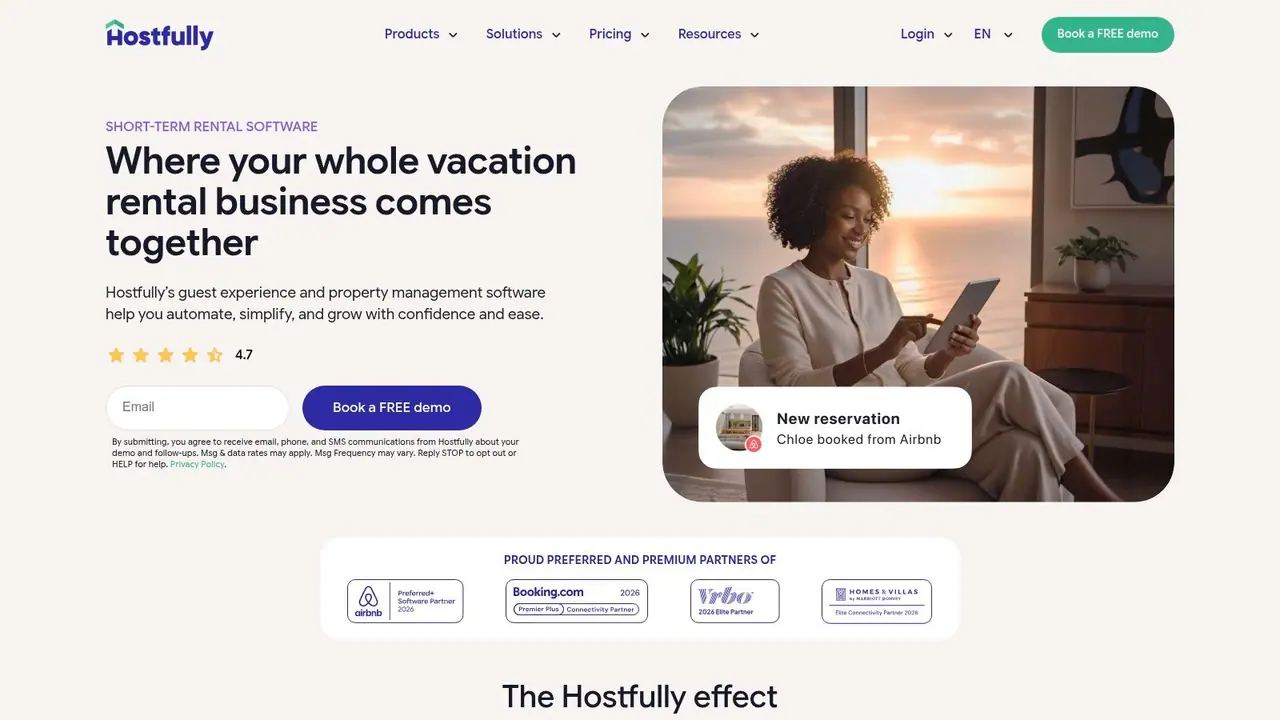
Hospitable has long been associated with messaging automation, and that focus still shapes why hosts choose it. If your biggest bottleneck is guest communication and recurring operational tasks, Hospitable is often more appealing than a broader PMS with weaker automation.
Automation-first appeal
The product's strongest case is straightforward. You want message automation that feels dependable, task handling that reduces manual chasing, and direct-booking capabilities that are available if you need them. That's a better fit for many hosts than jumping straight into a heavier system.
This category matters because short-term rental operators are solving different problems than traditional residential managers. Industry benchmarks in broader property management emphasize outcomes like keeping late payments under 5 percent, achieving annual renewal rates in the 65 percent to 75 percent range, and maintaining vacancy under 5 percent, according to property management industry benchmarks compiled here. STR hosts, by contrast, often need software that reduces response burden, coordinates turnovers, and improves guest experience in very short booking windows.
Hospitable works best when:
- Messaging is the pain point: Automated replies and workflows do a lot of the heavy lifting.
- You want operational help without major complexity: Cleaner payouts and task coordination are practical strengths.
- You understand tier limits: Some protections and tax-related tools depend on plan level or region.
Don't buy an automation-first tool and then keep replying manually out of habit. The payoff only appears when you trust the system enough to use it.
For migration, audit every automated message before switching it on. Remove anything generic, repetitive, or likely to trigger at the wrong time. Better automation usually means fewer messages, not more.
8. Uplisting
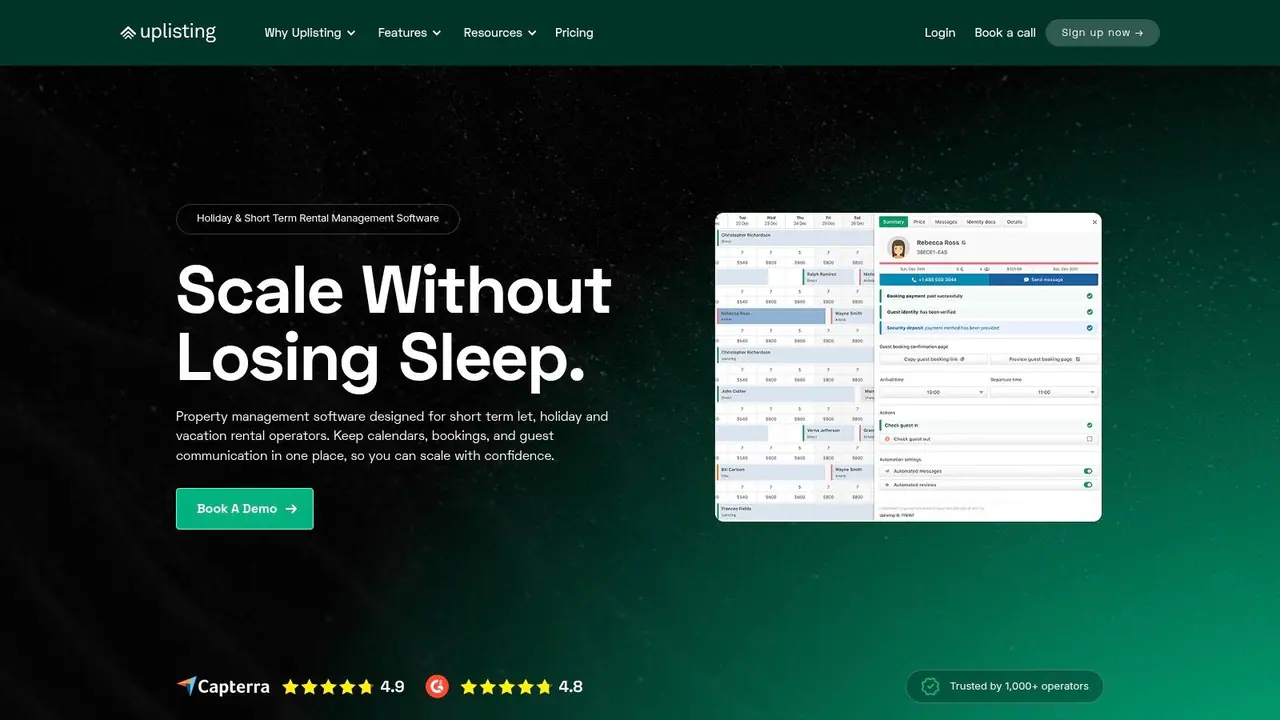
Uplisting tends to appeal to operators who are tired of opaque pricing and overbuilt interfaces. It covers the essentials well and doesn't pretend to be everything for everyone.
Why lean teams like it
If you run a lean portfolio and want clear costs, dependable channel management, guest messaging, cleaning coordination, and a capable direct-booking site, Uplisting is easy to understand. That alone makes it stand out in a category where many vendors prefer a sales conversation before they reveal meaningful pricing detail.
Its sweet spot is the operator who values reliability over feature sprawl. You're not buying the deepest enterprise accounting suite. You're buying a toolset that handles core short-term rental operations cleanly.
The trade-offs are sensible:
- Transparent cost structure: Easier to compare against alternatives before a demo.
- Good operational coverage: Strong for small to mid-size portfolios.
- Less depth at the top end: Large managers may outgrow it or need extra tooling.
Migration advice here is simple. Move one sales channel at a time, verify availability sync, then add automations and agreements. Calendar integrity comes first. Fancy workflows can wait until you trust the plumbing.
9. Escapia
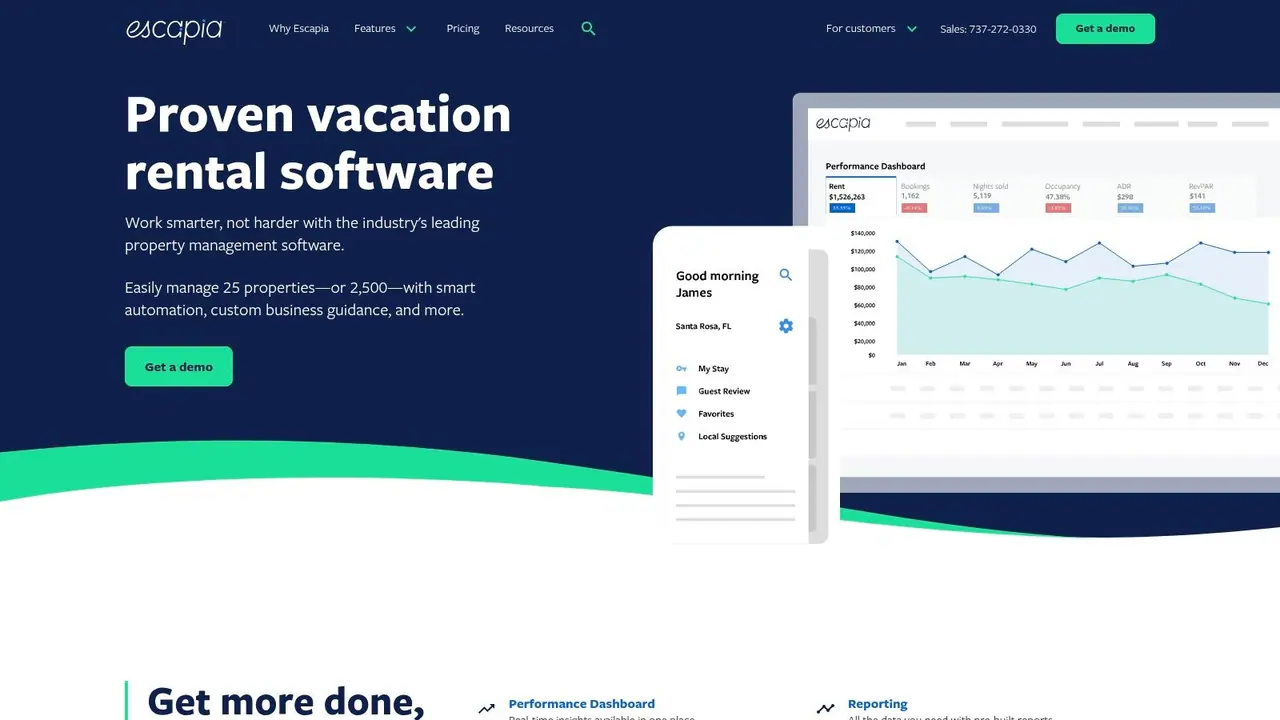
Escapia is not aimed at casual hosts. It's designed for established vacation rental management companies that care about accounting depth, reporting structure, and distribution tied closely to the Expedia and Vrbo ecosystem.
Who should consider it
If you're managing a professional operation with owners, accounting processes, staff roles, and formal reporting expectations, Escapia starts to look more attractive. The value isn't simplicity. The value is operational control for larger organizations.
That also means implementation is more serious. You don't “try out” Escapia the way a small host tries a lighter tool over a weekend. The switch usually requires process decisions, staff training, and change management.
Where it fits well:
- Professional managers: Better aligned with established teams than self-managing hosts.
- Accounting and reporting needs: Stronger fit when financial structure matters as much as reservations.
- Distribution ties: Useful if Vrbo and Expedia relationships are central to your business.
Where it doesn't:
- Not ideal for tiny portfolios: Too much machinery for a simple hosting setup.
- Quote-based buying process: Harder to assess quickly if you need a fast decision.
A smart migration approach is phased rollout. Move accounting and distribution carefully, and don't change every owner-facing workflow at the same time. Larger teams usually fail software transitions when they try to redesign the business and implement the tool in one motion.
10. Cloudbeds
Cloudbeds is the best fit on this list for operators who sit between short-term rentals and hotel-style hospitality. If you run a boutique hotel, inn, guesthouse, serviced apartments, or a mixed portfolio with room-based inventory, Cloudbeds deserves serious attention.
Best for hybrid hospitality
This is hotel-grade software, not just STR software with extra settings. That matters if you need multi-room inventory handling, rate plans, payment workflows, booking engine support, and a broader commerce stack than most vacation rental tools provide.
The category trend supports this direction. One market forecast valued the global property management software market at USD 695.55 million in 2024 and projected USD 1,195.09 million by 2032, with cloud-based workflows identified as a key driver and Asia-Pacific as the fastest-growing region, according to this market forecast on property management software. In practical terms, operators increasingly expect cloud tools to handle distribution, operations, and revenue decisions in one system.
Cloudbeds is strong when:
- You manage room inventory, not just standalone homes: Hotel logic matters here.
- You need hospitality workflows: Rate plans and booking-engine behavior are more mature.
- You can handle setup depth: It's more system than a single-unit host usually needs.
The downside is obvious. For one or two vacation rentals, Cloudbeds can be excessive. For a boutique accommodation business, it can be exactly right. During migration, pay extra attention to room types, restrictions, and rate structures. If those are messy at launch, downstream reporting and availability become harder to trust.
Top 10 Property Management Software Comparison
| Product | Core features | UX & quality | Pricing & value | Target audience | Unique selling point |
|---|---|---|---|---|---|
| 🏆 ScanStay | QR guestbook: Wi‑Fi, check‑in/out, house rules, Google Maps pins, video how‑tos, one‑tap upsells | ★★★★☆ Mobile‑first, no‑app, reduces guest messages | 💰 Free start; Solo $19/mo; Pro $49 (≤10); Unlimited $99, built‑in upsell revenue | 👥 Solo hosts → agencies | ✨ One QR link + AI translation, printable A5 QR, analytics (Pro+) |
| Guesty | PMS: unified inbox, multi‑calendar, channel manager, payments, revenue tools | ★★★★☆ Enterprise‑grade; can feel heavy for tiny portfolios | 💰 Lite for 1–3; Pro/Enterprise quote‑based | 👥 Scaling hosts → enterprises | ✨ Deep integrations, marketplace, revenue optimization |
| Hostaway | Channel manager, unified inbox, revenue tools, direct booking site & app | ★★★★☆ Robust automations & API connectivity | 💰 Quote‑based (portfolio pricing) | 👥 Multi‑property managers and growth operators | ✨ Strong OTA APIs & automation depth |
| Lodgify | No‑code direct‑booking websites, channel manager, payments, automations | ★★★★☆ Conversion‑focused; clear trials & plans | 💰 Published plans + add‑ons; 7‑day trial | 👥 Hosts prioritizing direct bookings | ✨ Commission‑free websites; Google VR on higher tiers |
| OwnerRez | Per‑property pricing, channel management, direct bookings, owner/cleaner portals | ★★★★☆ Granular control; steeper setup for novices | 💰 Per‑property + optional modules (calculator) | 👥 US hosts wanting granular control | ✨ A‑la‑carte pricing and deep customization |
| Hostfully | Channel/reservation manager, direct booking, mobile app, 100+ integrations | ★★★★☆ Tiered onboarding; strong partner ecosystem | 💰 Tiered plans (1–4, 5–199, 200+) | 👥 Managers scaling from few → dozens | ✨ Large integration marketplace & success resources |
| Hospitable | AI Auto‑Reply, task automation, cleaner payouts, direct booking tools | ★★★★☆ Automation‑first messaging; clear docs | 💰 Tiered pricing; some processing/add‑on fees | 👥 Ops‑focused hosts wanting automation | ✨ Superb messaging automation & operational tools |
| Uplisting | OTA channel manager, unified inbox, cleaning scheduler, direct booking | ★★★★☆ Reliable, transparent UX with public pricing | 💰 Clear published pricing; minimal surprises | 👥 Lean teams & small/mid portfolios | ✨ Straightforward pricing + dependable core features |
| Escapia (Expedia) | Rates manager, enterprise accounting, EscapiaConnect, Vrbo/Expedia integration | ★★★★☆ Enterprise workflows; needs onboarding | 💰 Quote‑based enterprise pricing | 👥 Large property management companies | ✨ Expedia‑backed, trust accounting & revenue tools |
| Cloudbeds | PMS + booking engine, channel manager, Payments, Revenue Intelligence add‑on | ★★★★☆ Hotel‑grade workflows & analytics | 💰 Quote‑based; add‑on pricing for Revenue Intelligence | 👥 Boutique hotels & hybrid portfolios | ✨ Hotel commerce stack with Signals AI revenue add‑on |
How to Choose the Right Property Management Software for You
The best property management software is the one that removes your current bottleneck without creating a bigger one somewhere else. That sounds obvious, but a lot of hosts buy for the future they imagine and ignore the pain they already have. Then they end up paying for complexity they don't use.
Start with portfolio size and business model. A host with one or two apartments needs something very different from a manager running dozens of units across multiple owners. That difference is one reason software comparisons often feel unhelpful. In the rental-property software segment, cloud deployment accounted for 67.2 percent of the market in 2025, residential use cases represented 72.3 percent of demand, and AppFolio, Yardi Systems, and RealPage collectively held about 34 percent of global share, according to this rental property management software market summary. But those broader market leaders don't always align with what short-term rental hosts need day to day.
Define your essential requirements before you book demos. If your main headache is channel sync, focus on channel management and calendar reliability. If direct bookings are the goal, evaluate website quality, booking engine flow, and payment setup. If guest communication drains your time, put more weight on inbox automation or guest-facing tools like digital guidebooks.
Then assess costs carefully. Public pricing is only the starting point. Setup fees, onboarding, payment processing, add-ons, premium support, and feature gating can change the actual total fast. If a vendor makes pricing difficult to understand before a sales call, assume implementation will require the same level of effort.
The cheapest plan is rarely the cheapest system once you add the features you actually need.
Shortlist two or three tools, not ten. Run the same evaluation process for each one. Test calendar sync, message automation, direct booking flow, reporting clarity, and mobile usability. If your team will use it, involve them early. The people answering guest messages and coordinating cleanings usually spot friction faster than the person signing the contract.
Migration deserves more planning than most hosts give it. Clean your listing data first. Standardize property names, fees, templates, check-in instructions, and cancellation settings before import. Don't use migration as a way to carry every bad habit from your old setup into the new one.
The labor side of the industry is another reason this matters. Property management employed 466,100 professionals in 2024 and is projected to grow 4 percent through 2034, according to the benchmark summary cited earlier. Software isn't replacing the work. It's helping teams and operators handle communication, maintenance, coordination, and revenue tasks at scale.
For many short-term rental businesses, the right stack is not one giant platform. It's a core PMS plus one or two specialized tools that do critical guest-facing jobs better. A heavy all-in-one can work. So can a lighter system paired with excellent automation or guest experience software. The right answer depends on where your time is leaking now.
If you want a simple decision rule, use this one. Choose the platform that makes your operation easier to run next month, not just easier to imagine at a much larger size someday. Good software should give you time back, reduce avoidable guest friction, and help you deliver a more consistent stay. If it can't do those three things, keep looking.
If your biggest operational drain is repetitive guest questions, scattered check-in instructions, and missed upsell opportunities, ScanStay is one of the fastest tools to implement. It won't replace your PMS, but it can make your current setup feel dramatically more organized by turning one QR code into a multilingual guest guide, a service upsell channel, and a cleaner stay experience. For hosts who want fewer inbox interruptions and a more polished on-property journey, it's an easy place to start.