7 Best Rental Management Services Portland for 2026
Find the best rental management services Portland with our 2026 guide. We compare 7 top firms on fees, services, & pros/cons to help you choose.
Choosing a Portland rental manager usually starts the same way. You've got a property, or you're about to buy one, and you're trying to avoid two expensive mistakes at once. Hiring a manager who's all polish and no systems, or keeping everything self-managed until the guest messages, turnovers, compliance tasks, and pricing decisions start eating your week.
That tension is real in Portland. The city's housing office reported that the residential rental market was softening in 2023, with rent growth slowing or declining in different parts of the city, which is a reminder that one neighborhood can perform very differently from another in the City of Portland housing summary. If you own here, broad promises don't help much. You need a manager who understands your asset type, your block, your operating model, and your tolerance for involvement.
For short stays, mid-term setups, and hybrid portfolios, generic “we handle everything” language isn't enough either. You also need to think about guest experience, owner visibility, permit friction, and how much repetitive support work your operator still pushes through text and email. If you want a better Portland stay experience yourself, Max's Luxury Rides Portland guide is a solid local companion.
This guide gets to the point. These are the rental management services Portland owners should compare, plus the questions I'd ask before signing anything.
Table of Contents
- 1. Vacasa
- 2. iTrip Northwest
- 3. Descansa PDX
- 4. Stay Awhile Cohosting
- 5. Ziva Property Management & Consulting
- 6. STR Solutions PDX
- 7. Simply Vacation Rental Management
- 8. Side-by-Side Portland Rental Management Services Compared
- 9. Your Vetting Checklist 10 Questions to Ask a Potential Manager
- 10. Beyond Management Reduce Support and Boost Revenue with a Digital Guide
- Top 10 Portland Rental Management Services Comparison
- Making Your Final Choice and Onboarding Your Partner
1. Vacasa
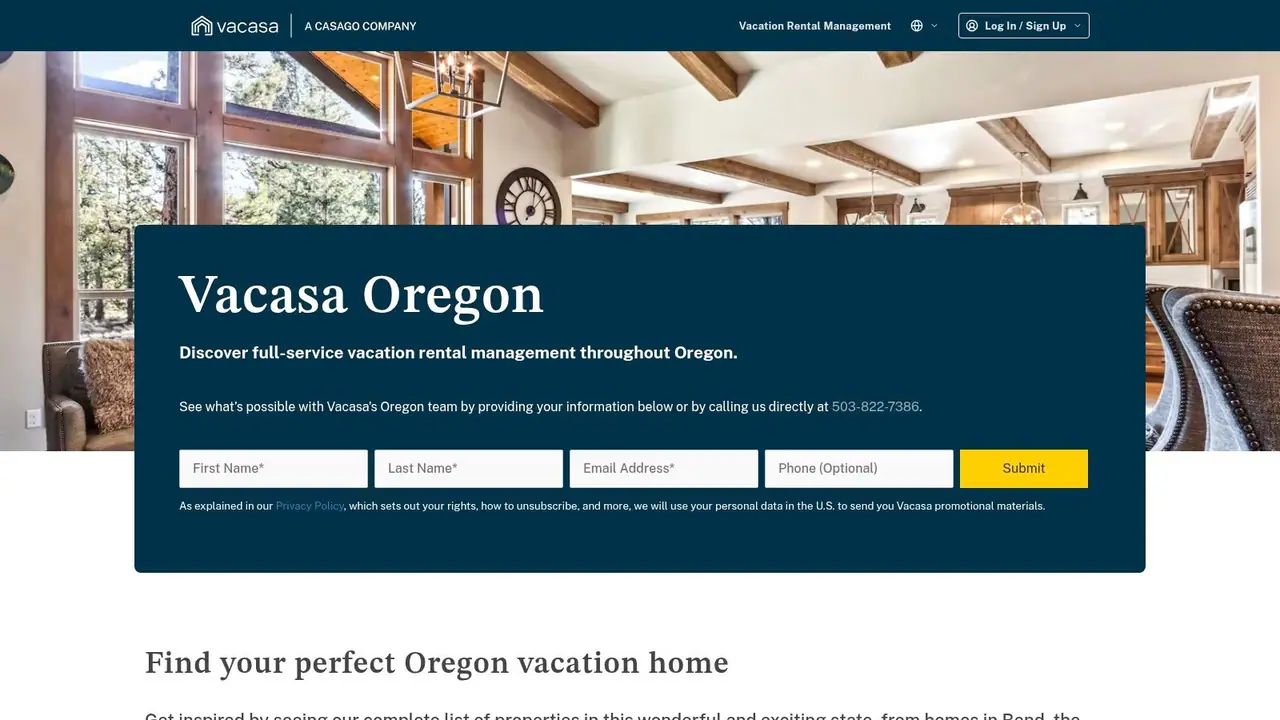
If you want scale, process, and broad distribution, Vacasa's Oregon property management team belongs on the shortlist. This is the operator I'd look at first for owners who don't want to build a local vendor bench, don't want to answer guest issues, and care more about systemization than boutique hand-holding.
Its appeal is straightforward. Vacasa offers local Oregon operations teams, multi-channel distribution, pricing optimization, 24/7 guest support, an owner app, and a smart-home hardware program that includes locks, noise monitoring, and a Wi-Fi hub. That package tends to work best when the owner wants operational consistency across one or several properties.
Where Vacasa fits best
The trade-off is personalization. Big operators can be excellent at standard operating procedures, but they're not always ideal for owners who want custom staging direction, constant strategy calls, or a manager who knows every drawer in the unit from memory.
Here's where Vacasa usually makes sense:
- Hands-off owners: You want coverage, structure, and owner visibility without managing cleaners or guest comms yourself.
- Standardizable homes: The more your property can run on repeatable systems, the more a scaled operator helps.
- Multi-market investors: If you own beyond Portland, larger platforms can simplify reporting and oversight.
Practical rule: If your biggest fear is operational chaos, scale is your friend. If your biggest fear is being treated like account number 427, look boutique first.
2. iTrip Northwest
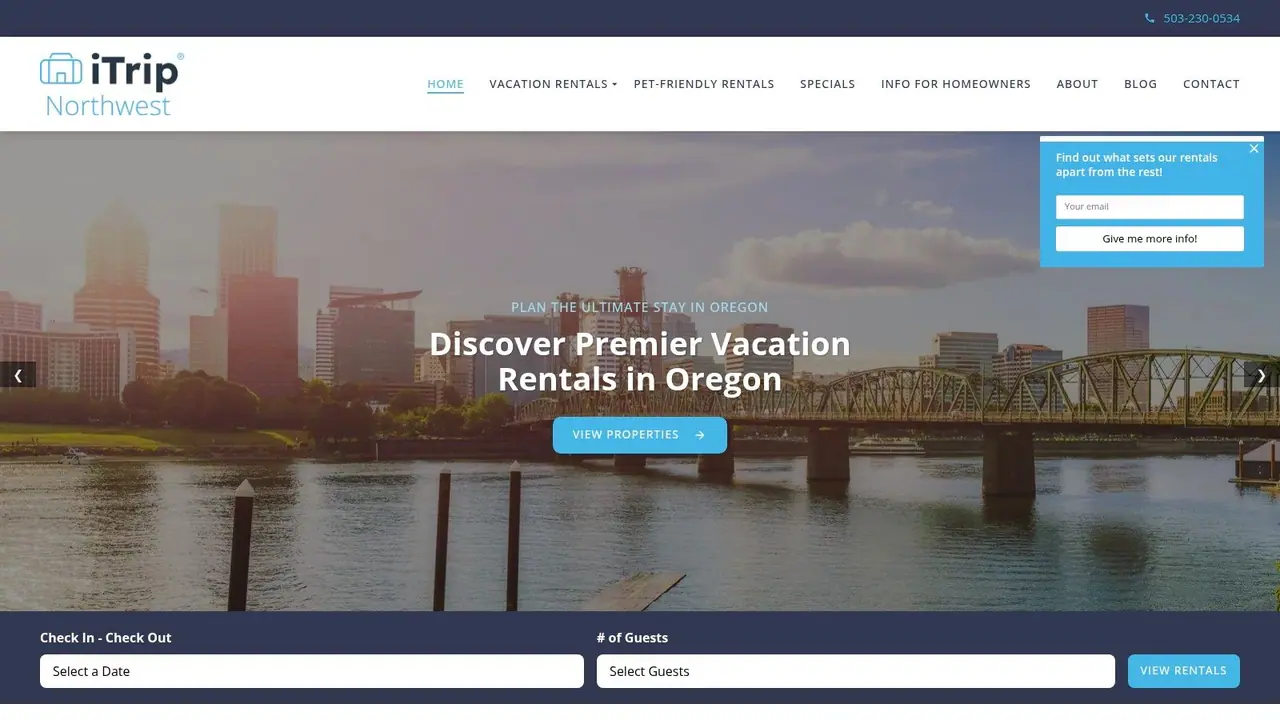
iTrip Northwest sits in a middle lane that a lot of owners like. It has the visibility and platform reach of a recognized brand, but it's operated through a local franchise serving Portland Metro, Wine Country, Mt. Hood, the Coast, and nearby leisure markets.
That mix matters if you want local ownership without giving up broad OTA distribution. iTrip Northwest handles the core hosting stack most owners care about, including marketing, guest communication, cleaning, and maintenance, while still leaning on a larger booking and marketing framework.
Best use case
I'd put iTrip in front of owners who want regional coverage with a local-feeling team. That's especially useful if your Portland property isn't your only Oregon asset, or if you expect to expand into nearby destination markets over time.
Its strengths are easy to read:
- Regional flexibility: Portland owners with coast or mountain inventory can keep one management relationship.
- Full hosting operations: It covers the repetitive work that burns out self-managers fastest.
- Owner-facing resources: Clearer owner materials usually make the sales process and onboarding easier.
The caution point is the franchise model itself. Franchise systems can be strong, but experience still comes down to the local team, not the logo alone. Ask who handles your account day to day, who oversees turnovers, and who solves after-hours property issues.
Don't confuse brand familiarity with service certainty. In a franchise, the local operator is the product.
3. Descansa PDX
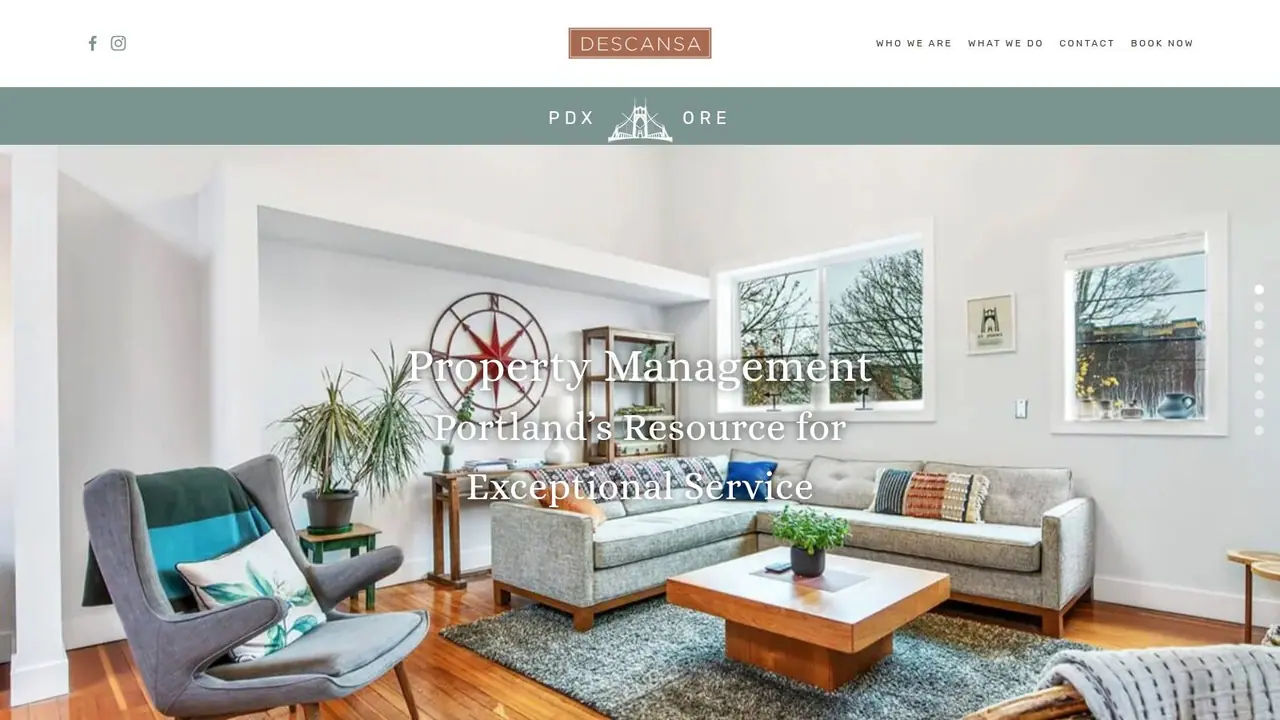
Descansa PDX is the kind of company owners choose when they want a manager who feels closer to a partner than a platform. It's a Portland-based boutique operator with short-term and long-term management, plus design, staging, and DIY consultation support.
That combination is more useful than it sounds. Some properties don't need a giant machine. They need a better setup, sharper photos, a tighter guest experience, and a manager willing to make judgment calls based on the specifics of the home and neighborhood.
What stands out
Descansa's value is attention. Owners who already know the basics but want a more polished operation often do well with boutique firms that can focus on presentation, turnover quality, and guest flow instead of just filling calendar nights.
What I like about this kind of operator:
- Design-aware management: Better staging and better in-unit flow often matter more than owners expect.
- DIY support options: Not every owner wants full-service forever.
- Local knowledge: Portland rewards people who understand micro-markets and guest expectations.
The downside is capacity. Smaller shops usually can't onboard everyone, and they may be selective about fit. That isn't a flaw. It just means you should ask early about timeline, portfolio size, communication expectations, and whether they handle your property type regularly.
4. Stay Awhile Cohosting
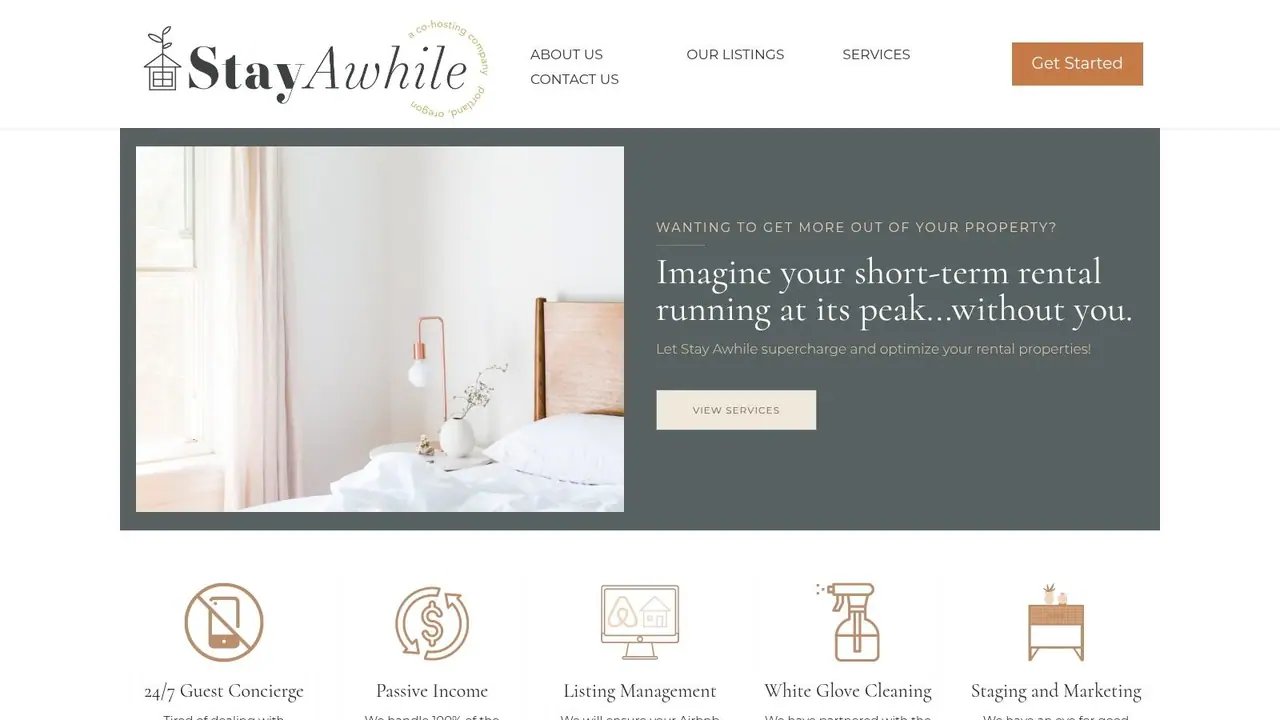
Stay Awhile Cohosting does something many managers still avoid. It gives owners a clearer view of plan options up front. In a market where lots of firms still push everything into a custom quote, that transparency alone gets attention.
The service mix is geared toward short-term rental owners who want help at launch and after launch. It offers full-service management and lighter support tiers, along with daily pricing adjustments, channel management, 24/7 guest communication, cleaning coordination, restocking, professional photos, a digital guestbook, and guidance around permits and tax forms tied to Portland accessory short-term rental rules.
Why owners shortlist it
This is a strong fit when you need setup help as much as management help. A lot of Portland owners aren't starting with a fully optimized unit. They're converting a property, testing the model, or trying to understand whether hosting is viable at all. If that's you, this practical overview on starting an Airbnb without owning property is useful context for thinking through operating structure.
Stay Awhile's strengths are practical:
- Published plan options: Easier to compare than mystery-fee proposals.
- Setup support: Photography, launch positioning, and digital guide assets matter.
- Compliance-minded posture: Owners in Portland need managers who take local rules seriously.
The main drawback is that add-on costs can still matter, including a laundry subscription fee on top of management fees. I'd also expect a boutique operator with transparent standards to be selective about which homes it brings on.
5. Ziva Property Management & Consulting
Ziva Property Management & Consulting is aimed at owners who want close collaboration, not just outsourced operations. It serves Portland and Seattle and combines management with consulting, design, and staging support.
That matters most for owners with premium listings, unusual homes, or a clear brand vision for the guest stay. Some managers are built to run inventory. Others are built to shape a hospitality product. Ziva clearly leans toward the second category.
Who should consider Ziva
If you care about positioning as much as execution, boutique consulting-led operators can be worth the extra conversation. They're often better at helping an owner answer questions like: Should this be a high-touch short-term rental, a furnished mid-term stay, or something else entirely?
That question is more important in Portland than many owners realize. A major gap in Portland property-management content is the lack of clear guidance on choosing between long-term, mid-term, and short-term rental management when policy risk and operating rules are changing, as noted in this Portland property-management content analysis. Generic service lists don't solve that decision.
With Ziva, I'd ask directly how they evaluate fit across those models, how involved they get in pre-launch design, and how they handle owners who want frequent strategy input. Limited client counts can be a plus when you want high-touch service, but they can also mean availability is tight.
6. STR Solutions PDX
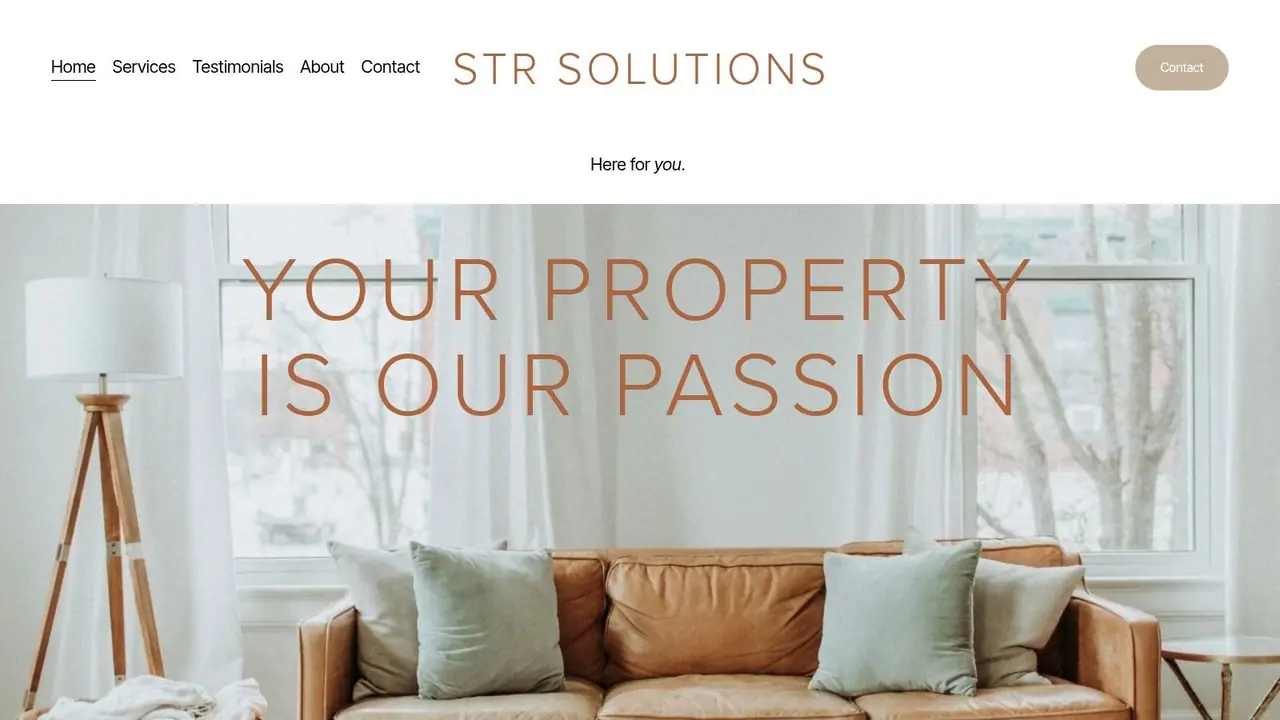
STR Solutions PDX looks most appealing to owners who want flexibility. Not every property needs a fully outsourced stack, and not every owner wants one. This shop supports guest management, cleaning and turnovers, maintenance, staging, design, and listing development, including scenarios where the owner keeps part of the operation in-house.
That hybrid mindset is valuable. Plenty of Portland owners are comfortable handling pricing or owner messaging, but they don't want to coordinate cleaners, deal with maintenance calls, or rebuild listings from scratch.
Where it can outperform bigger brands
Smaller specialists often win on edge cases. If your property has quirks, your calendar strategy is nonstandard, or you want to keep some control, a flexible operator can be a better fit than a rigid full-service platform.
A few reasons owners may prefer this route:
- Hybrid support: You can outsource the messy parts without surrendering every decision.
- In-house maintenance where possible: Faster repairs can protect reviews and reduce downtime.
- Setup help for self-managers: Useful if you want a professional launch but not permanent management.
The caution is simple. With a smaller online footprint, due diligence matters more. I'd ask for a walkthrough of issue escalation, vendor coverage, owner reporting, and exactly what happens on a same-day turnover when something goes wrong.
7. Simply Vacation Rental Management
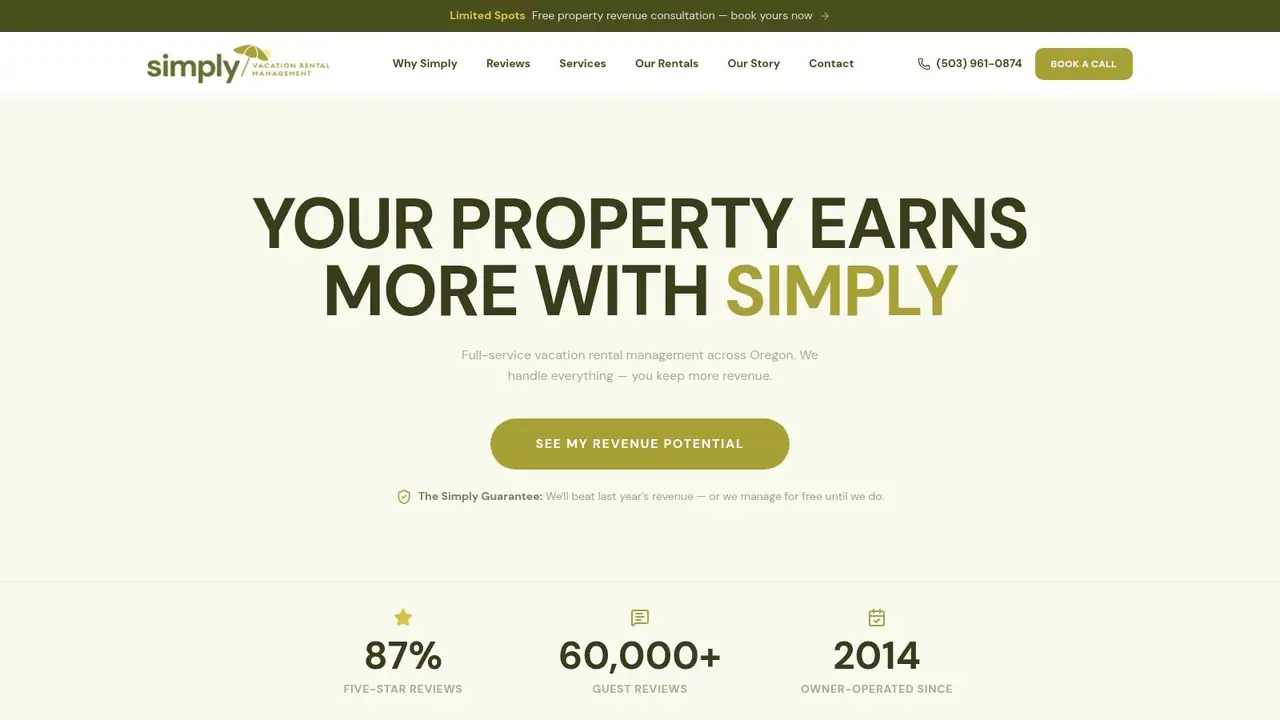
Simply Vacation Rental Management has a profile that many investors like right away. It's locally owned, investor-oriented, and operates beyond Portland into Mt. Hood and the Oregon Coast. If you've got multiple Oregon properties, that reach is useful.
Its service model centers on full-service Airbnb management with dynamic pricing, guest vetting, in-house cleaning teams, maintenance coordination, and 24/7 support. That's a practical package for owners who care about consistency across regions without juggling separate managers.
Strong fit for regional owners
This kind of firm usually makes sense for owners thinking like operators. You're not just asking, “Can they handle my condo?” You're asking, “Can they support my portfolio if I add a second or third property in another Oregon market?”
The upside is operational depth paired with regional familiarity. In-house cleaning teams often create more accountability than patchwork vendor networks, especially when you're managing homes in both urban and leisure markets.
The downside is that you'll want to verify reputation carefully during diligence. When a company's public review footprint is lighter, the interview process matters more. Ask for examples of how they handle guest-readiness standards, owner communication, and coordination across different market types.
8. Side-by-Side Portland Rental Management Services Compared
If you're comparing rental management services Portland owners use, don't just look at who offers marketing, screening, or cleaning. Nearly everyone says they do. Compare operating style.
Filters are these: do you want scale or access, fixed systems or flexibility, one-property support or regional portfolio coverage, polished launch help or mature back-end operations. Those are the differences that affect owner experience.
What should drive your comparison
Use the comparison table below to focus on practical fit, not sales language. The strongest shortlist usually comes from matching one manager to one clear ownership style.
- Scale-first owners: Vacasa is usually the obvious benchmark.
- Local-with-distribution owners: iTrip Northwest sits comfortably here.
- Boutique and design-led owners: Descansa PDX and Ziva deserve the call.
- Transparent-plan buyers: Stay Awhile Cohosting stands out.
- Hybrid operators: STR Solutions PDX can make more sense than a big brand.
- Regional Oregon investors: Simply Vacation Rental Management is worth a serious look.
A broader industry note matters here too. U.S. property management is large and still growing, with projected 2024 revenue of $100.8 billion, about 84.6% tied to residential management, roughly 304,000 businesses overall, and annual growth around 3.70%, according to this property management industry dataset. In plain English, you're shopping in a crowded, mature market. That makes differentiation and vetting more important, not less.
9. Your Vetting Checklist 10 Questions to Ask a Potential Manager
The interview stage is where weak managers start sounding vague. That's useful. Good operators usually answer direct questions directly. Weak ones retreat into broad promises, fuzzy process language, and “it depends” responses that never get more specific.
If you want a deeper framework for evaluating operators and responsibilities, this overview of vacation property management is a good companion. Then use these ten questions in your calls.
The questions that matter most
- What exactly is included in the management fee? Ask them to separate management, setup, maintenance coordination, restocking, photography, and renewal or relisting work.
- Who handles guest communication after hours? You want a real process, not “our team monitors messages.”
- How do you handle same-day turnover problems? Missing linens, appliance failure, a cleaner no-show, a broken lock.
- Who are your cleaners and maintenance vendors? In-house and outsourced models both work, but you need to know which one you're buying.
- What owner reporting do I get, and how often? Dashboards are nice. Useful commentary is better.
- How do you price this specific property? Look for a local answer, not generic yield language.
- What property types are not a fit for you? Great managers know where they're weak.
- How do you approach permits, lodging taxes, and house rules? Compliance shouldn't be an afterthought.
- What are the exit terms? If the relationship goes sideways, you need a clean off-ramp.
- Who is my point of contact? Salespeople disappear. Operators remain.
The best answer you can get in a manager interview is a specific one that sounds a little unglamorous. Real operators talk about process, exceptions, and failure handling.
10. Beyond Management Reduce Support and Boost Revenue with a Digital Guide
A Portland guest arrives late, the keypad works, but the stay still starts with three messages. They need the Wi-Fi, parking instructions, and the checkout time. Your manager can answer those questions, but that is not the best use of paid operational time.
A digital guide cuts that support load at the source. ScanStay gives guests a single QR-based place to find check-in steps, house rules, Wi-Fi details, local recommendations, video how-tos, and add-on offers without asking them to download an app.
The upside is practical. Managers should spend their attention on exceptions, not repeat questions. The best operators are paid to solve real problems like a cleaner running late, a lock failing before check-in, a guest complaint that could turn into a bad review, or a pricing decision for a weak midweek gap. If your guide handles the routine information well, your manager has more room for work that protects revenue.
If you want ideas for the guest-facing content itself, this vacation rental welcome book template guide is a practical starting point.
That matters more in a softer market. Analysts cited in this Portland rent report described slowing fundamentals in the area. Short-term rentals and long-term rentals behave differently, but the owner takeaway is the same. Tighter execution matters when demand is less forgiving.
A well-built digital guide helps in a few measurable ways:
- Fewer routine guest messages: Guests can find answers on their own before they contact your manager.
- More consistent operations: House rules, appliance instructions, parking details, and checkout steps stay in one controlled source.
- Better add-on revenue: Late checkout, early check-in, mid-stay cleaning, and local partner offers are easier to present at the right time.
- Stronger guest experience: The property feels organized from arrival to departure, which helps reviews and reduces confusion.
For owners comparing Portland rental management services, this is part of the selection process, not an extra feature. Ask whether the manager already has a good guest guide system, whether they will use yours, and who owns that content if you change providers later. That last point matters. A manager can be replaced. Your operating playbook should stay with the property.
Top 10 Portland Rental Management Services Comparison
A comparison table is useful only if it helps you shortlist the right fit fast. Portland owners do not all need the same thing. A condo used as a part-time second home needs a different manager than a small portfolio spread across Portland and nearby vacation markets. Use the table below to narrow the field, then pressure-test your top options with the vetting checklist and your own operating priorities.
| Service | 🔄 Implementation Complexity | ⚡ Resource Requirements | ⭐ Expected Outcomes / 📊 Impact | 💡 Ideal Use Cases | Key Advantages |
|---|---|---|---|---|---|
| Vacasa (Oregon team) | Moderate, standardized processes and onboarding | Higher, full-service fees, smart-home hardware included | High ⭐, broad marketing reach, dynamic pricing and steady occupancy potential | Owners wanting scale, passive income, and broad distribution | Massive marketing reach; 24/7 support; owner app; smart-home program |
| iTrip Northwest (Portland Metro franchise) | Moderate, franchise processes with local variation | Moderate, local franchise resources plus OTA distribution | Good ⭐, local presence with global OTA exposure | Owners wanting local ownership plus major-platform distribution | Local franchise support; multi-channel marketing; owner testimonials |
| Descansa PDX | Low to Moderate, boutique, hands-on onboarding | Modest, small team, design and staging resources | High ⭐, stronger guest experience and listing performance | Owners seeking personalized management and listing optimization | Personalized service; design and staging; strong owner testimonials |
| Stay Awhile Cohosting (Portland) | Low, published plans and clear tiers | Moderate, published fees, extra laundry subscription option | Good ⭐, strong setup, optimization, and compliance support | Owners who want transparent pricing and Portland ASTR guidance | Clear pricing; pro photos; permit and tax guidance; launch and SEO services |
| Ziva Property Management & Consulting | Moderate, high-touch, limited client intake | Higher, custom consulting, design, and market research | High ⭐, specific market research and Superhost-level performance | Owners desiring close collaboration and custom strategy | Custom, high-touch service; design and consulting; limited roster |
| STR Solutions PDX | Moderate, flexible operations and hybrid support | Moderate, in-house maintenance possible, staging support | Good ⭐, faster fixes and operational reliability | Owners wanting hybrid or self-managed options with local maintenance | In-house maintenance; flexible service levels; listing setup help |
| Simply Vacation Rental Management | Moderate, regional operations for investors | Higher, in-house cleaning, 24/7 support, multi-region coverage | Good ⭐, consistent guest-ready standards across a portfolio | Investors with multiple Oregon properties (Mt. Hood, Coast) | Investor focus; regional coverage; in-house cleaning and 24/7 support |
| Side-by-Side: Portland Rental Management Services Compared (infographic) | Low, informational summary | Low, no operational resources required | Moderate ⭐, quick decision aid, highlights core differences | Owners comparing options at a glance | Concise side-by-side comparison of key attributes |
| Your Vetting Checklist: 10 Questions to Ask a Potential Manager (checklist) | Low, easy to use during interviews | Low, owner time investment only | High ⭐, improves due diligence and contract clarity | Any owner interviewing prospective managers | Actionable checklist covering fees, contracts, emergency processes |
| Beyond Management: Reduce Support & Boost Revenue with a Digital Guide (ScanStay) | Low, straightforward QR and digital guide integration | Low, minimal setup, subscription or tool cost | Good ⭐, reduces routine inquiries, supports upsells and automation | Managers and owners wanting to automate guest communications | Cuts support load; drives upsells; improves guest experience |
The practical read on this table is straightforward. Vacasa sits on the scale end of the spectrum. Descansa PDX, Stay Awhile, and Ziva skew more boutique. STR Solutions PDX stands out if you want to keep some control in-house instead of handing over every function.
ScanStay belongs in this comparison for a reason. It is not a property manager, but it pairs well with one. Owners who combine a solid manager with a digital guest guide usually get cleaner guest communication, fewer repetitive questions, and a better system they can keep if they switch providers later.
Making Your Final Choice and Onboarding Your Partner
The best rental management services Portland owners choose aren't automatically the biggest, cheapest, or most polished on the website. They're the ones that match the property, the owner, and the operating model. That's the frame I'd use if I were making this decision today.
If you want maximum structure and broad distribution, Vacasa is the obvious scale play. If you want local ownership with established channel reach, iTrip Northwest makes sense. If you care about presentation, tighter collaboration, and a more boutique feel, Descansa PDX and Ziva are stronger fits. Stay Awhile Cohosting is appealing for owners who value plan transparency and setup help. STR Solutions PDX works well for hybrid operators who don't want to outsource every moving part. Vacation Rental Management deserves attention if you're thinking across Portland and other Oregon vacation markets.
Once you've narrowed the list, stop comparing websites and start comparing conversations. Ask who answers after-hours guest messages. Ask how they handle a failed turnover. Ask what they do when pricing is soft, demand is uneven, or your property doesn't fit their normal box. The right manager won't just talk about marketing and occupancy. They'll talk clearly about exceptions, accountability, and decision-making.
Onboarding matters almost as much as selection. Good onboarding should include a clear scope of service, emergency protocols, owner-use rules, maintenance approval thresholds, revenue reporting expectations, listing ownership terms, photography and staging decisions, and a calendar for launch or transition. If those pieces aren't clear before the agreement is signed, they usually won't get clearer later.
I'd also decide early how much tech you want layered into the operation. Even strong managers benefit from better guest information delivery, better documentation, and less repetitive messaging. That's especially true for short-term rentals, furnished mid-term stays, and any property where guest confusion creates support drag.
The easiest mistake owners make is hiring a manager to solve every problem while leaving the guest experience half-organized. The strongest setup is a good operator plus clean systems. That combination protects your time, reduces friction, and gives the property a better chance to perform whether you own one Portland unit or a small Oregon portfolio.
If you want to make any management company look sharper and run lighter, pair it with ScanStay. It gives your guests a simple QR code for Wi-Fi, check-in details, house rules, local recommendations, and upsells, so your manager fields fewer repetitive questions and your property delivers a more polished stay.