Are Airbnb's Profitable? A 2026 ROI Guide
Thinking about hosting in 2026? Learn the facts to determine are airbnb's profitable by analyzing revenue, startup costs, and modern management strategies.
Most new hosts ask the wrong question. They ask whether Airbnb is profitable in general, when the actual question is whether your specific property, in your specific market, with your operating habits will produce reliable profit after all the leaks are exposed.
That gap matters because many hosts calculate revenue, subtract cleaning, and call it a business plan. Then the hidden costs show up. Repetitive guest messages. Last-minute maintenance. Preventable bad reviews caused by unclear check-in instructions. Hours lost answering the same Wi-Fi and checkout questions instead of working on pricing, occupancy, or direct profit levers.
The short answer is yes, Airbnbs can be profitable. But the hosts who keep profit tend to treat the property like an operating business, not just a spare room with a listing.
Table of Contents
Are Airbnbs Actually Profitable in 2026
Yes, they can be. But “are airbnb's profitable” only has a useful answer when you tie it to a property, a market, and an operating model.
At the platform level, Airbnb entered 2024 from a position of strength. Airbnb reported approximately $10.0 billion in full-year revenue for 2023, and active listings passed 7.7 million, up 18% year over year, according to Airbnb's Q4 2023 and full-year financial results. That tells you the ecosystem is large, active, and still expanding.
That does not mean every host is making money.
A profitable Airbnb usually comes down to a small set of controllable variables:
Revenue quality: Can you maintain a healthy nightly rate without depending on unrealistic peak-season assumptions?
Occupancy consistency: Can you fill enough nights across shoulder periods, not just holidays?
Expense discipline: Do your costs stay stable when something breaks, a guest checks out late, or supplies need replacing?
Operational friction: How much time do you spend manually supporting guests, coordinating cleaners, and fixing preventable confusion?
Practical rule: Profit isn't created by booking volume alone. Hosts keep more money when the property runs cleanly, guests get information fast, and the host isn't trapped in constant reactive work.
I've seen new hosts overestimate demand and underestimate effort. They assume profit lives in the calendar. In practice, it often lives in the process. The host who answers fewer repetitive questions, prevents more avoidable issues, and keeps standards tight will usually outperform the host who chases a higher nightly rate.
That's why a realistic Airbnb profit analysis has to look beyond revenue screenshots. It has to include the invisible labor behind the stay.
Decoding Your Potential Revenue and Occupancy Rate
Revenue is the easy part to romanticize and the easiest part to misread. New hosts often look at a few high nightly rates in their area and assume that's the business. It isn't. Your income depends on what you can charge and how often you can fill the calendar.
Start with the two numbers that drive income
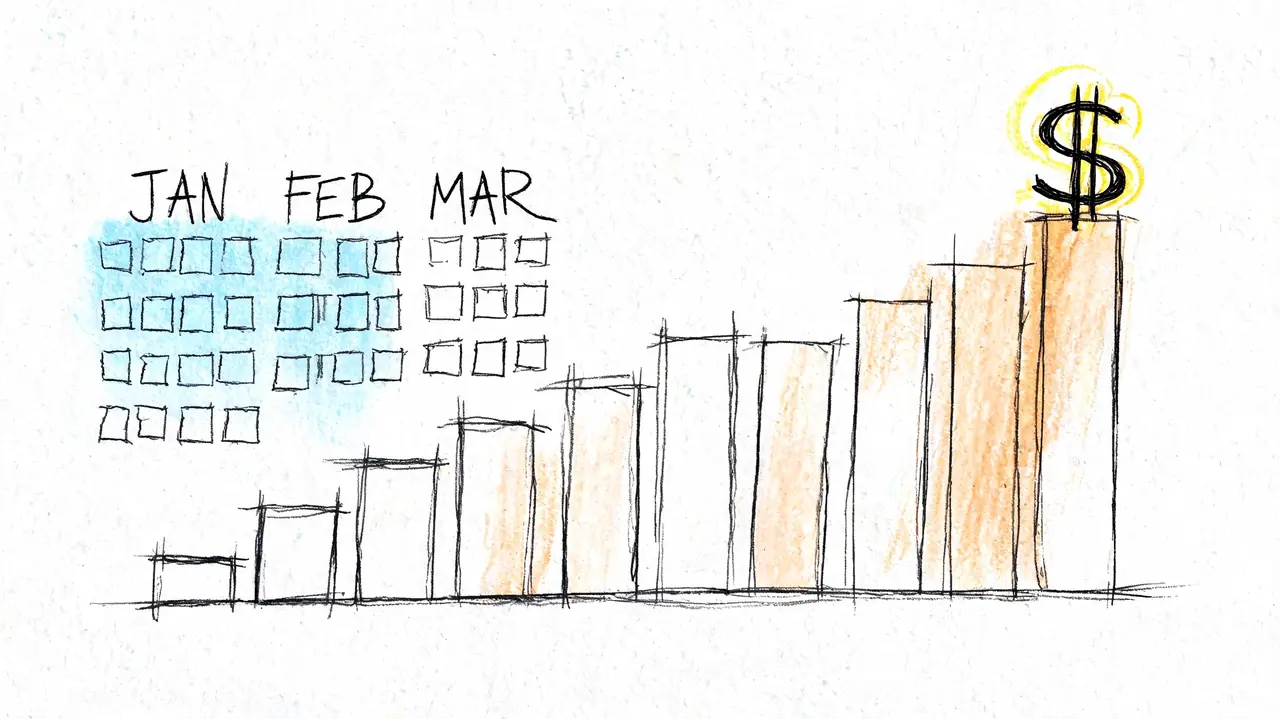
Think of an Airbnb like a small retail business. One number is your price per unit sold, which in STR terms is your Average Daily Rate (ADR). The other is your sales volume, which is your occupancy rate.
If either one is weak, the business feels it.
The broad income potential is real. In the US, the average individual Airbnb host earned $14,000 in annual supplemental income in 2023, with monthly revenues averaging $4,300 in some periods, according to Business of Apps' Airbnb statistics roundup. That should encourage new hosts, but it shouldn't become your budget. That figure varies sharply by location, property type, and season.
Here's how to think about the core revenue metrics:
ADR: What guests will pay per booked night for your property type in your exact submarket.
Occupancy: The share of nights your property is booked.
Revenue per available night: The blend of those two numbers. A strong ADR with weak occupancy can still underperform.
Build a realistic top-line forecast
Start with comps, but not lazy comps. Compare your property to listings that match on size, layout, guest count, location, design standard, and amenities. A renovated two-bedroom with parking and self check-in is not directly comparable to an older unit three streets away with weaker photos and stricter house rules.
Use a forecast that includes three scenarios:
Base case Use local comparables you believe you can match within a few months, not the best listing in the market.
Soft case
Assume a slower start, weaker review velocity, and off-season softness.Strong case
Use this only for upside. Don't underwrite the property around your best month.
A few practical checks help keep you honest:
| Revenue question | Why it matters |
|---|---|
| Are your comp listings professionally presented? | Better photos and copy often support better pricing |
| Do they have many reviews? | New listings usually need time to earn trust |
| Are you comparing weekday and weekend performance separately? | Many markets have different booking patterns |
| Is your forecast seasonal? | Averages can hide weak stretches |
A high ADR on paper means nothing if your calendar sits open. A full calendar at the wrong price can also underperform.
When hosts ask me whether an Airbnb looks profitable, I usually look for one thing first: whether the revenue estimate was built from evidence or optimism. The hosts who survive slow periods are the ones who model boring months as carefully as good ones.
The Real Costs of Running an Airbnb
Revenue gets attention because it's visible. Costs are where many hosting plans fall apart. Some expenses are obvious from day one. Others arrive slowly and chew up margin one replacement purchase, emergency call, or extra guest message at a time.
The costs hosts expect
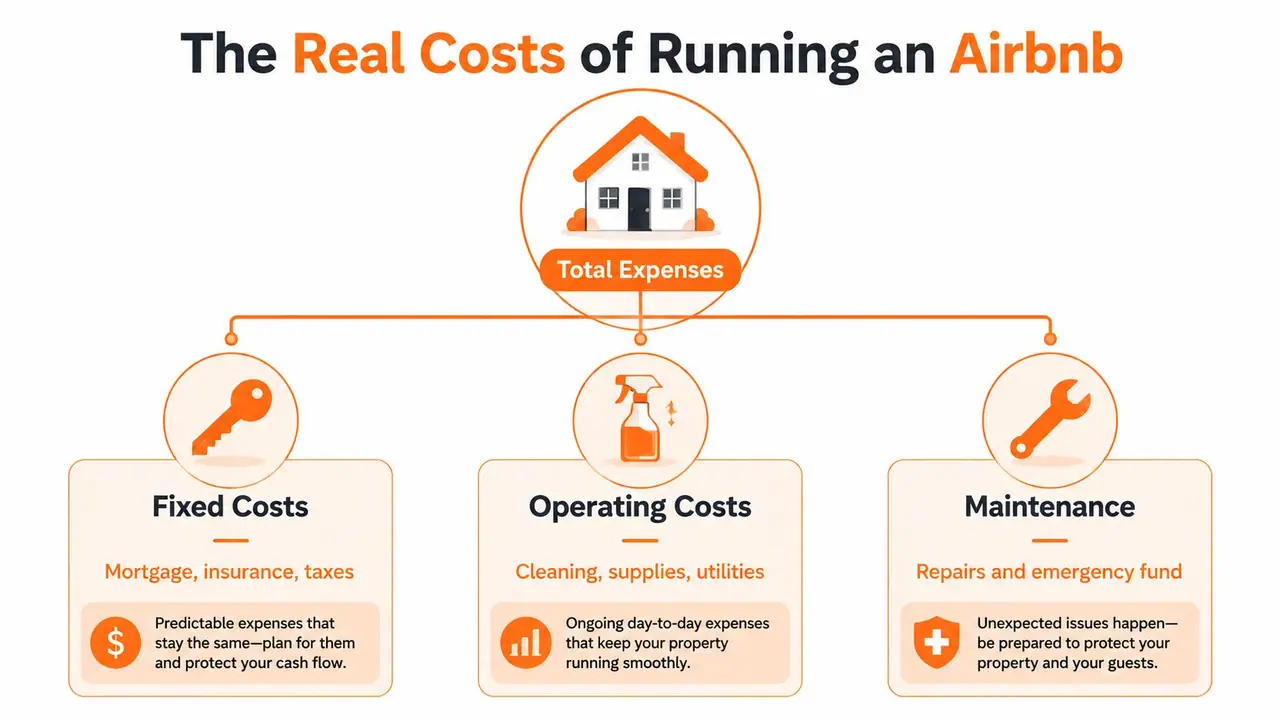
Most new hosts budget the headline items first, which is right. Those usually fall into two buckets.
Startup costs often include furnishing, initial décor, kitchen setup, linens, safety items, smart locks, basic guest tech, and any licensing or permit setup your local market requires.
Ongoing costs usually include:
Housing overhead: Mortgage or rent if applicable, insurance, and property taxes
Turnover operations: Cleaning, laundry, restocking supplies, and inspection time
Utilities: Power, water, internet, waste collection, and streaming services
Platform and admin: Booking fees, software, accounting, and banking overhead
These are the numbers hosts tend to list in spreadsheets. They matter, but they're not the whole picture.
The costs that quietly erode margin
The less visible category is operational wear. Profitability gets softer than expected in this area.
Minor maintenance shows up constantly in real portfolios. A loose handle, stained sheet set, broken remote, clogged drain, dented cookware, or lock battery failure won't destroy a month alone. Together they create a steady drag. So do consumables. Coffee, paper goods, detergents, toiletries, trash bags, and replacement house items don't feel large in isolation, but they repeat all year.
Then there's labor, even if you never put it in the spreadsheet.
A host who personally manages messaging, check-in questions, cleaner follow-ups, and guest issue resolution is spending time that has value. That's why operational systems matter as much as line-item cost control. Strong cleaning coordination helps, and if you're refining that process, this guide on Airbnb cleaning jobs and app workflows is useful for thinking through handoffs and consistency.
Bad cost tracking doesn't just produce bad accounting. It produces bad decisions, especially when a host mistakes gross revenue for usable cash.
The hidden cost that gets ignored most often is guest support friction. If guests can't quickly find Wi-Fi details, parking instructions, appliance guidance, or checkout steps, they message. If they message, you context-switch. If you manage several properties, those interruptions stack up fast. The cost is not just time. It's slower response quality, higher stress, and more room for negative reviews that were preventable.
Hosts who run lean do more than spend less. They remove recurring friction that creates spend in the first place.
How to Calculate Your Airbnb Profitability and ROI
Once revenue and expenses are on the table, the next step is simple: turn them into a model you can pressure-test. The point isn't to produce a perfect forecast. The point is to find out how fragile the deal is if occupancy slips, ADR softens, or costs run hotter than expected.
Use a simple profitability stack
A practical Airbnb profitability model can be built in four layers.
Gross revenue
This is your booked lodging income for the year before operating expenses.Net operating income
Subtract recurring property operating expenses from gross revenue. This tells you what the asset produces before financing and owner-specific tax treatment.Cash flow Subtract financing costs and any recurring owner obligations from NOI. This is what the property contributes to your bank account.
Return on invested cash
Compare annual cash flow to the cash you put into the deal, including furnishing and setup.
Experienced short-term rental operators often target 8–15% net yields, but that target is sensitive. A 10% drop in occupancy or ADR can reduce NOI by 25–35%, according to TaxStra's Airbnb profitability analysis. That's why I always prefer conservative underwriting. If a deal only works in a strong-case scenario, it doesn't really work.
Sample annual profitability calculation for a 2-bedroom condo
Use a table like this as a working template. The amounts below are placeholders for your own market research and actual costs.
| Item | Calculation | Amount |
|---|---|---|
| Gross lodging revenue | Occupied nights × average nightly rate | Your estimate |
| Less cleaning and turnover costs | Total turns × average turnover cost | Your estimate |
| Less utilities and internet | Annual total | Your estimate |
| Less supplies and consumables | Annual total | Your estimate |
| Less maintenance and replacements | Annual total | Your estimate |
| Less insurance and property taxes | Annual total | Your estimate |
| Less platform and software costs | Annual total | Your estimate |
| Net operating income | Gross revenue minus operating expenses | Your estimate |
| Less debt service if financed | Annual loan payments | Your estimate |
| Annual cash flow | NOI minus debt service | Your estimate |
| Cash-on-cash return | Annual cash flow ÷ total cash invested | Your estimate |
A good model should answer uncomfortable questions, not avoid them. Ask:
What happens if occupancy comes in below plan?
What happens if your average rate softens during low season?
What expenses rise first when the property gets busy?
Can the business still function if you need outside help for cleaning, messaging, or maintenance?
Underwriting advice: Build your spreadsheet so a weaker season doesn't surprise you. If the property only survives under ideal assumptions, the numbers are too tight.
A lot of new hosts focus on the upside case because that's more motivating. Lenders, co-hosts, and experienced operators do the opposite. They look for downside tolerance. That's the habit worth copying.
Practical Strategies to Maximize Your Airbnb Profits
Profit growth usually comes from two places. You either improve revenue quality, or you reduce operational waste. The best hosts do both at the same time.
Improve price and guest experience together
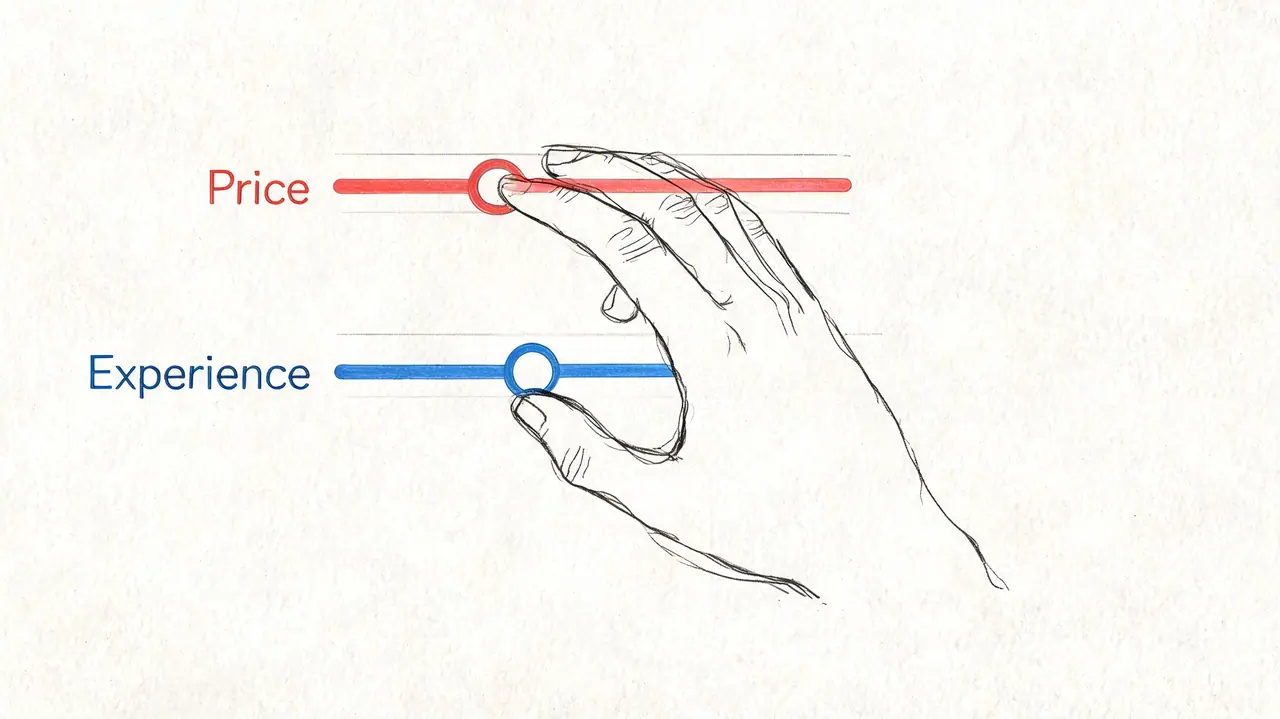
Raising rates without improving the stay usually backfires. Discounting to fill nights can also weaken the guest mix and increase wear. The better approach is to keep pricing active while making the property easier to book and easier to enjoy.
That means:
Tight listing presentation: Clear photos, accurate amenity descriptions, and no confusion about sleeping arrangements or parking
Low-friction arrival: Self check-in that works, clear directions, and concise arrival instructions
Review protection: Fast clarity around house rules, noise expectations, and appliance use before problems start
This is also where many hosts overlook operational systems. If your process is patchy, guests feel it. Teams managing multiple listings often improve consistency by adopting more structured vacation property management workflows instead of relying on memory and ad hoc messaging.
Cut support friction before you chase more bookings
A property can look profitable on paper and still feel exhausting to run. That usually happens when the host becomes the operating system.
Top-performing properties with high ratings are built on guest satisfaction, and that correlates with frictionless communication. A host wasting 5+ hours weekly on repetitive messages is losing time that could be automated, according to iGMS on owning an Airbnb. In practical terms, that time loss can chip away at the same income stream hosts are trying to protect.
Here are the repetitive questions that consume margin most often:
Arrival questions: Gate codes, parking details, key pickup, and what to do if they arrive early
In-stay questions: Wi-Fi password, how to use the TV, thermostat, coffee machine, or hot tub
Departure questions: Checkout time, trash instructions, dishwashing expectations, and where to leave keys
Hosts often think these are small interruptions. They aren't small when they happen every week across multiple bookings.
The fix is simple in concept and demanding in execution. Build a guest journey that answers common questions before guests ask them. The strongest operators centralize check-in details, appliance instructions, house rules, local recommendations, and checkout steps in one easy place. Not five texts, two PDFs, and a binder on a counter.
A short tactical walkthrough can help illustrate what that looks like in practice:
Add revenue without adding chaos
Many hosts try to improve profitability by pushing harder on occupancy alone. That works up to a point. After that, the more durable win is increasing value per booking while keeping operations simple.
A few examples work well when they fit the property and market:
Late checkout for guests with evening travel
Early check-in when cleaner timing allows it
Mid-stay cleans for longer reservations
Equipment rentals or local add-ons where relevant to the destination
Direct recommendations that improve the stay and reduce “what should we do?” messaging
What doesn't work is adding extras that create more coordination than profit. If an upsell requires several manual messages, off-platform payments, and custom handling every time, the margin may vanish into admin work.
The most profitable hosts I know are not the busiest-looking ones. They're the cleanest operators. Their calendars are supported by clear systems, their guest communication is proactive, and their extra revenue options don't create operational mess.
Navigating Market Risks and Long-Term Rewards
Short-term rentals don't operate in a vacuum. Local rules can tighten. Competition can increase. Travel demand can soften in some periods and rebound in others. The mistake is assuming these risks can be eliminated. They can't. They have to be managed.
The risks are external but the response is operational
Platform dynamics matter too. Airbnb's business remains highly profitable, with gross margins exceeding 80%, according to Nastra's analysis of Airbnb's performance and growth. For hosts, that has two effects. Airbnb can keep investing in technology, marketing, and product improvements that support booking demand. It also means the platform keeps meaningful power over fees, ranking, and visibility.
That's one reason market selection matters so much. Before buying or converting a unit, study local seasonality, municipal rules, and property-level economics carefully. This review of the best place to own an Airbnb is a useful starting point for thinking through location factors in a practical way.
A cautious host plans for:
Regulatory change: Permits, caps, zoning shifts, or stricter compliance
Market saturation: More supply means weaker pricing power for average listings
Economic softness: Travel budgets tighten, and shorter booking windows become more common
Why good operators still stay in the game
The long-term upside is still attractive for disciplined owners. A well-run STR can generate cash flow, improve the value of a property through strong presentation and maintenance habits, and create a repeatable operating model that can scale to more than one listing.
There's also a less discussed advantage. Hosts who build a strong guest experience create an asset that isn't just the property itself. They build reputation, review strength, cleaner relationships, and operational systems that make future properties easier to launch.
That's the answer to “are airbnb's profitable.” They are for hosts who buy carefully, model conservatively, and run the property like a business after the first booking arrives.
If you want to protect margin by cutting repetitive guest questions and making stays easier to run, ScanStay gives hosts a simple digital welcome book with one QR code for Wi-Fi, check-in details, house rules, local recommendations, and upsells. It's a practical way to reduce support friction, improve guest clarity, and keep more of the revenue your property already earns.