LLC for Airbnb: The Essential 2026 Guide for Hosts
Thinking of an LLC for your Airbnb? Our guide covers everything about your llc for airbnb: deciding, filing, taxes, insurance, and pitfalls to protect your

You're probably in one of two spots right now. Either you've started hosting and the money is getting real enough that you're nervous about keeping everything in your personal name, or you're about to launch a short-term rental and you want to set it up correctly the first time.
That's the right instinct. An LLC for Airbnb can be a smart move, but hosts often misunderstand what it protects. The legal entity matters. The bank account matters. The title transfer matters. But the biggest blind spot I see is insurance. A lot of hosts form the LLC, relax, and assume they're covered. They aren't.
Table of Contents
- Should You Create an LLC for Your Airbnb
- Your Step-by-Step LLC Formation Checklist
- Activating Your LLC Property Taxes and Banking
- The Critical Insurance Gap Most Hosts Miss
- Common Pitfalls and Ongoing Compliance
- Frequently Asked Questions About Airbnb LLCs
Should You Create an LLC for Your Airbnb
For most hosts, this isn't a yes-or-no legal question. It's a growth question.
You don't need an LLC to start hosting. That's clear from NCH's Airbnb LLC guidance, which explains that forming an LLC for an Airbnb business isn't legally required to begin, but becomes a strategic move as the business scales for asset protection and tax flexibility. That matches what experienced hosts do in practice. They usually make the switch when the rental stops feeling like casual side income and starts behaving like an operating business.
Three moments usually push the decision.
First, you buy a property specifically for short-term rental use. Second, the income becomes consistent enough that you care about clean bookkeeping, tax treatment, and liability separation. Third, other people enter the operation, such as cleaners, co-hosts, maintenance vendors, or a partner.
Practical rule: If a guest incident, contractor dispute, or city issue would keep you up at night because everything is still in your personal name, you're probably past the “not yet” stage.
When an LLC makes sense
An LLC for Airbnb is usually worth serious consideration if any of these are true:
- You own the property as a business asset. The rental is no longer incidental. It's part of an investment plan.
- You plan to add properties. One property can be simple. A portfolio needs structure.
- You're hiring help. Once money flows to cleaners, co-hosts, and vendors, separation matters more.
- You want cleaner tax and legal records. Separate books are easier to defend and easier to manage.
- You're thinking long term. A proper entity forces better habits around contracts, accounts, and compliance.
If you're still testing the waters, rental arbitrage may be the lower-friction path before forming a full entity. This guide on starting an Airbnb without owning property is a useful reality check if you haven't committed to buying a dedicated STR yet.
What you gain and what you take on
The upside is real, but so is the maintenance. Here's the cleanest way to evaluate it.
| Benefit | Drawback |
|---|---|
| Personal asset separation when the entity is set up and run correctly | Filing fees, state fees, and administrative upkeep |
| Better structure for bookkeeping and contracts | More paperwork than operating as a sole proprietor |
| Tax flexibility as the business matures | You may need lender approval or added planning before moving title |
| Stronger business credibility with vendors and partners | Mistakes can make the LLC far less protective than hosts expect |
A lot of hosts get sold the idea of an LLC as a magic shield. It's not. It's a framework. It works when you respect the formalities and pair it with proper insurance, clean banking, and title work.
For a second perspective that stays grounded in host realities, Allied Tax Advisors on Airbnb LLCs is worth reading. I like resources that don't pretend every host needs the same setup on day one.
The simplest decision filter
If you're renting a room occasionally in your primary home and you're still validating demand, “not yet” can be a reasonable answer.
If you've got repeat bookings, dedicated rental income, staff or contractors, or plans to expand, delaying the LLC usually doesn't simplify anything. It just postpones the work until the risk becomes greater.
Your Step-by-Step LLC Formation Checklist
The filing itself isn't the hard part. The hard part is doing each step for the right reason, in the right order, and not skipping the pieces that make the entity usable after the state approves it.
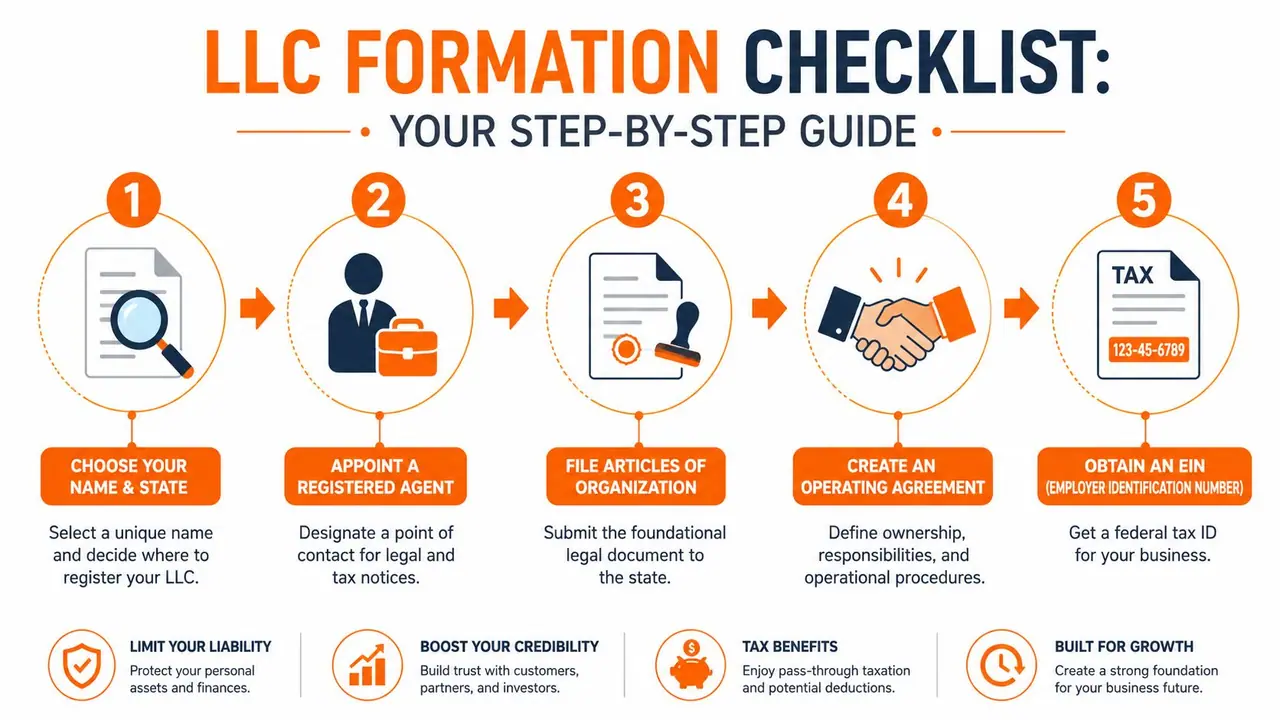
A practical visual helps before you start.
Start with the entity basics
The formal sequence matters. According to this LLC setup walkthrough on YouTube, the process includes choosing a unique LLC name, filing Articles of Organization with the state, drafting an Operating Agreement, obtaining an EIN from the IRS, opening a dedicated business bank account, and transferring the property title into the LLC. That same source notes that filing fees for Articles of Organization range from $50–$500 depending on the jurisdiction.
Start with the name. Don't choose a clever name that creates confusion with existing businesses or doesn't meet state naming rules. A boring, compliant name is better than a creative one that triggers delays.
Then file the Articles of Organization with your Secretary of State. This is the document that creates the entity. In most states, this step is straightforward, but errors here can cascade. If the member names, business address, or management structure are inconsistent with later tax or banking documents, you create cleanup work for yourself.
Before you file, make one practical decision: where the LLC will live. For most hosts, that's the state where the property operates. Trying to get fancy with out-of-state formations usually creates extra registrations and more compliance, not less.
Put the operating rules in writing
A lot of single-member hosts skip the Operating Agreement because no one asks for it on launch day. That's a mistake.
The Operating Agreement tells banks, accountants, partners, and sometimes courts how the company is supposed to function. If you co-own the property, this document is where you settle the uncomfortable issues before they become expensive ones. Who contributed what. Who manages bookings. How profits are distributed. What happens if one member wants out. Who can sign contracts.
The best Operating Agreement is the one you hope never to read again because it already answered the hard questions.
If you don't want to start from a blank page, a structured drafting tool can help you organize the language before review. An AI tool for legal documents can be useful for producing a first draft or clause checklist, especially when you want to spot missing provisions. For anything involving multiple members, significant equity splits, or lender-sensitive transfers, I'd still have a qualified attorney review the final version.
This is also the stage to identify your registered agent and lock down your official mailing process for legal and tax notices. Hosts miss filings not because they don't care, but because notices go to an old address or sit unopened.
Here's a clean working checklist for the formation stage:
- Check name availability
- Confirm the formation state
- Appoint a registered agent
- File Articles of Organization
- Draft and sign the Operating Agreement
- Apply for your EIN through the IRS
- Create a document folder for formation records, permits, notices, and tax documents
Later in the process, you'll handle permits, inspections, insurance, banking, pricing setup, and listing launch. Don't blur those together with legal formation. They're related, but they aren't the same task.
A short walkthrough can also help if you want to see how other business owners think through the sequence.
Make it usable in the real world
Once the state approves the LLC and the IRS issues the EIN, your next job is making sure the entity is able to operate.
That means gathering the exact documents your bank will ask for, checking the name consistency across every record, and making sure your permit applications match the entity details. If your city issues STR permits in one name while your bank account is in another variation, you'll spend time fixing avoidable mismatches.
It also means planning the next layer early:
- Local compliance: Your city or county may require a short-term rental permit, tax registration, or inspection.
- Insurance coordination: The named insured must match the actual operating setup.
- Property ownership planning: If you intend the LLC to hold the property, prepare for lender and title conversations instead of rushing the deed later.
The hosts who glide through this process usually treat the LLC as part of an operating system, not just paperwork. They don't stop after the approval email.
Activating Your LLC Property Taxes and Banking
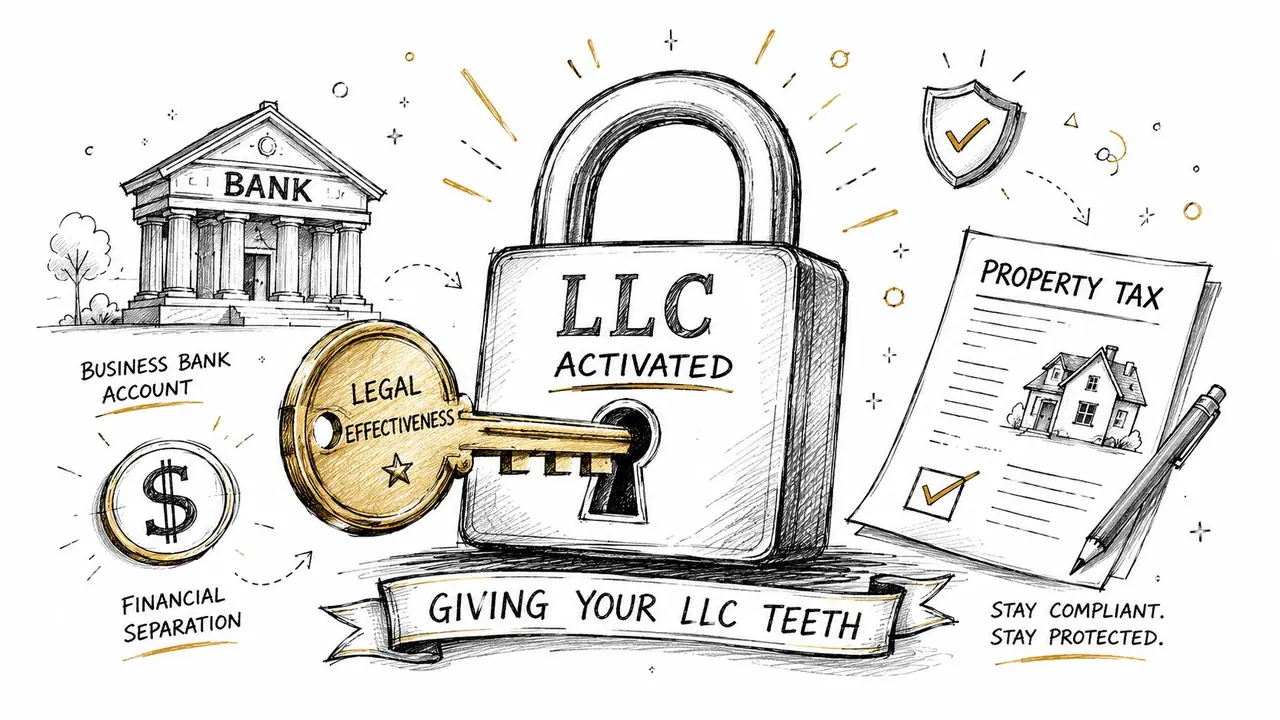
Filing the LLC creates the shell. These next moves give it legal and financial substance.
Move the property carefully
If the property stays in your personal name while the LLC collects rent on paper, the structure is weaker than most hosts realize. Title matters.
Hosts should slow down, especially if there's a mortgage. Don't assume you can deed the property into the LLC without consequences. Review the loan documents, then talk to the lender and a local real estate attorney before recording anything. The right path depends on how the loan is written, how the property is used, and how your county handles transfers and exemptions.
For hosts with local tax complexity, especially on business-owned assets, niche resources can be useful. If you're dealing with Texas-specific assessment issues, this guide on protesting Texas business property tax is one example of the kind of operational follow-up many owners overlook after formation.
Separate the money completely
This part is absolutely essential. Open a dedicated business bank account and run rental income and expenses through it. If the LLC pays for cleaners, software, supplies, repairs, and contractors, those payments should come from the LLC account.
Don't swipe your personal card for random STR purchases and “sort it out later.” Don't let Airbnb payouts hit a personal account if the business is operating through the LLC. Don't pay your home grocery bill from the company card because it's convenient.
Operator habit: If a transaction would confuse your bookkeeper six months from now, it probably shouldn't happen that way today.
You may also want a business credit card dedicated to the rental. That gives you cleaner expense tracking and a separate audit trail. It also makes reimbursement rules much easier if you have a co-host or assistant buying supplies.
For owners trying to understand how the booking side and owner side interact operationally, this explanation of how vacation rental by owner works is useful context when you're deciding how much to centralize under one entity.
Choose the tax treatment deliberately
Most Airbnb LLCs start with default pass-through taxation. That means the LLC can provide liability separation while the tax results flow through to the owner's return. Simple can be good.
Where hosts get sloppy is assuming the default is always the best long-term answer. It isn't. If profits increase and the rental becomes a more substantial operating business, a tax professional may suggest exploring an S-Corp election. That's not something to choose because the internet says it saves money. It only works when the numbers and your compensation setup support it.
Keep the sequence straight:
- Form the LLC first
- Run clean books
- See real profit patterns
- Review election options with a tax advisor who understands short-term rentals
The hosts who get the best results don't chase trendy structures. They build a boring, defensible paper trail.
The Critical Insurance Gap Most Hosts Miss
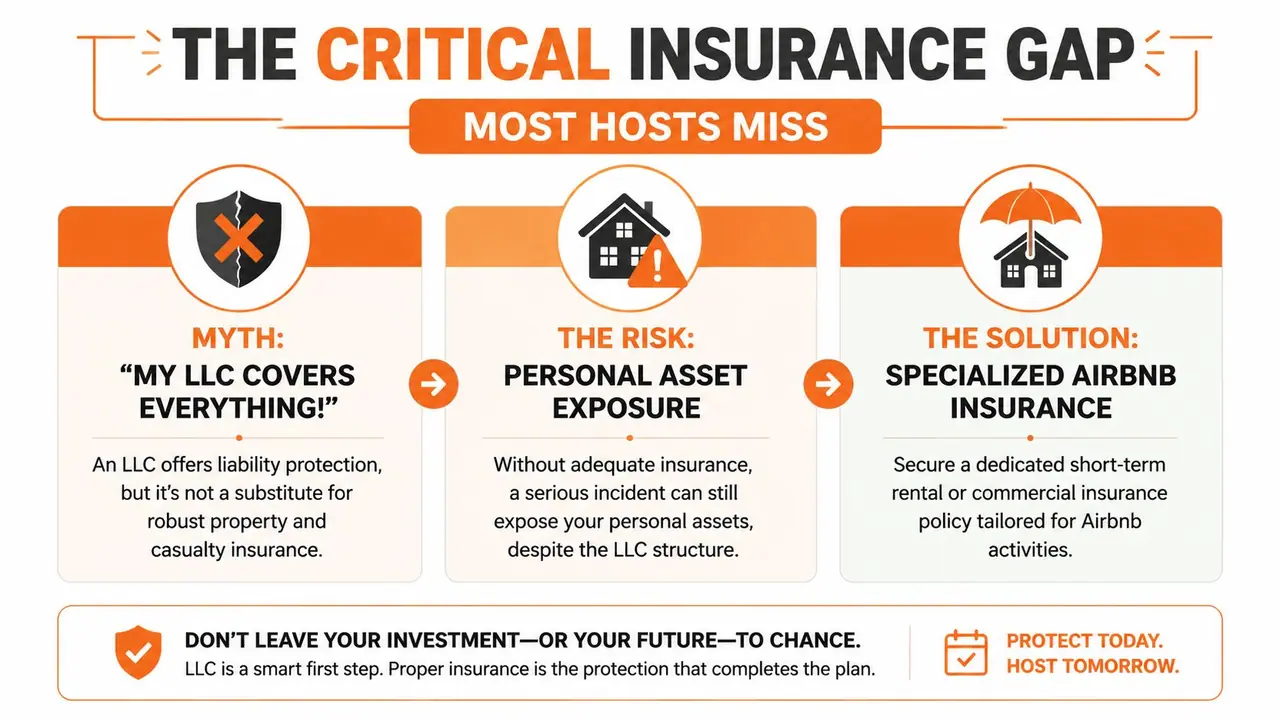
This is the part that trips up otherwise careful hosts.
Why the LLC doesn't replace insurance
An LLC for Airbnb can separate business liability from personal assets. It does not create insurance coverage out of thin air.
That distinction matters because standard homeowners coverage often fails the moment the property is used for commercial short-term rental activity. According to The CEO Host's analysis of STR insurance and LLCs, 78% of standard homeowners policies explicitly exclude short-term rental commercial activity, and recent insurer policy updates require separate STR commercial policies regardless of LLC status.
That's the insurance gap most articles gloss over. Hosts hear “form an LLC for protection” and translate that into “I'm covered.” They're not saying the same thing.
The LLC may help limit where liability lands. Insurance is what funds the defense, the claim, the repair, or the settlement. Without the right policy, you can still face a serious financial problem inside the business.
If your current agent hasn't clearly confirmed short-term rental commercial coverage in writing, assume nothing.
Questions to ask your insurance agent
Keep the conversation direct. Don't ask, “Am I covered for Airbnb?” Ask narrower questions that force a real answer.
- Is short-term rental activity covered as a commercial use?
- Is the named insured the LLC, the owner, or both as needed?
- Are guest injuries covered during paid stays?
- Are property damage claims from guest use covered under this policy type?
- Does the policy exclude business activity conducted through booking platforms?
- Do I need a dedicated STR endorsement or a separate commercial policy?
If the answers come back vague, keep shopping. Vague insurance is expensive insurance.
Common Pitfalls and Ongoing Compliance
The hosts who get into trouble usually didn't make one dramatic mistake. They made a series of small, ordinary ones.
The mistakes that break the shield
Two errors show up again and again. One is failing to transfer the property title into the LLC when that was the whole point of the structure. The other is mixing personal and business money because it feels easier in the moment.
Northwest Registered Agent reports that failing to transfer title rendered asset protection ineffective in 65% of reviewed litigation cases, and mixing personal and business finances led to “piercing the corporate veil” in 42% of disputed lawsuits where finances were commingled, as outlined in their review of Airbnb rental property LLC mistakes.
That's why “I formed the LLC” isn't enough. Courts look at behavior, records, and ownership, not just the filing date.
Common host errors include:
- Using the wrong account: Airbnb income goes to a personal checking account while expenses come out of the LLC.
- Ignoring annual filings: State reports and renewal fees get missed because no one owns the admin calendar.
- Signing inconsistently: Contracts are signed personally in some places and in the company name elsewhere.
- Keeping weak records: No minutes, no written member decisions, no document archive.
Your annual LLC maintenance list
Most LLC upkeep is simple if you systematize it.
- File required state reports: Check due dates every year, not when a penalty notice arrives.
- Pay recurring fees and taxes: State franchise fees, local registrations, and permit renewals don't manage themselves.
- Document important decisions: If ownership, management, or banking changes, put it in writing.
- Review account separation: Confirm all booking income and operating expenses still run through business channels.
- Refresh guest-facing policies: Clear house rules and documented guest procedures support cleaner operations. This guide to registration of guests is a useful operational reference if your compliance process includes identity, arrival, or occupancy procedures.
The strongest LLCs aren't complicated. They're maintained.
Frequently Asked Questions About Airbnb LLCs
Should I use one LLC for multiple properties
It depends on your risk tolerance, financing setup, and appetite for administration. One LLC is simpler. Separate LLCs can create cleaner compartmentalization between properties. Some hosts also explore Series LLC structures where allowed, but that requires state-specific analysis and careful legal guidance.
Do I need a lawyer to form an LLC for Airbnb
Not always. A single-member LLC with a straightforward property and no unusual financing can often be formed without hiring a lawyer for every step. But if you have co-owners, existing mortgages, estate planning concerns, or title-transfer questions, legal review is money well spent.
What does the first year usually involve
Expect formation costs, annual state upkeep, registered agent costs if you use one, bookkeeping setup, tax prep, and insurance upgrades. The exact total varies too much by state and property to give one universal number, so treat any generic online estimate with caution unless it matches your jurisdiction and setup.
Is an anonymous LLC worth it
Usually only if privacy is a major concern and your state structure supports it in a practical way. For most hosts, clean operations, proper insurance, and correct ownership records matter more than anonymity.
Can I form the LLC before I have the property
Yes. In many cases that's cleaner. It lets you open the entity, organize the paperwork, and prepare contracts and banking before the rental goes live.
If you're building a serious hosting business, the legal setup is only half the job. The day-to-day guest experience still needs to run cleanly. ScanStay helps hosts replace paper binders and repetitive messages with a digital welcome book guests can open instantly from a QR code, which makes multi-property operations easier to standardize and manage.