10 Best Sites Like Vrbo for Hosts in 2026
Searching for sites like Vrbo? Explore our 2026 guide to the top 10 alternatives, from Airbnb to niche platforms. Find the best fit for your rental.

Which site should you add after Vrbo if your goal is higher occupancy without giving up margin?
For hosts, that question matters more than finding a platform that looks popular. Vrbo is a major channel for whole-home inventory, but relying on one source leaves gaps in demand, pricing power, and calendar control. The stronger approach is to compare platforms by the factors that affect your business directly: fee structure, guest mix, cancellation norms, and how much operational work each booking source creates.
The best alternative to Vrbo depends on the kind of stays you want more of. Some platforms perform better for international travelers. Others are stronger for premium homes, loyalty-driven guests, or niche audiences. If you are still refining your setup, this guide to Airbnb for hosts is a useful starting point. Day-to-day execution matters too, especially turnover quality between reservations, which is why many urban hosts rely on expert Airbnb cleaning by London House Cleaners.
Treat these sites as distribution channels, not interchangeable logos. The right mix fills low-demand dates, supports your pricing strategy, and keeps operations manageable. This comparison focuses on ten platforms worth considering first, based on host-side trade-offs rather than traveler-facing marketing.
Table of Contents
- 1. Airbnb
- 2. Booking.com
- 3. Homes & Villas by Marriott Bonvoy
- 4. Plum Guide
- 5. HomeToGo
- 6. Vacasa
- 7. Evolve
- 8. Expedia Vacation Rentals
- 9. Houfy
- 10. misterb&b
- Top 10 Vacation Rental Sites Comparison
- Your Next Step From Listing to Thriving
1. Airbnb
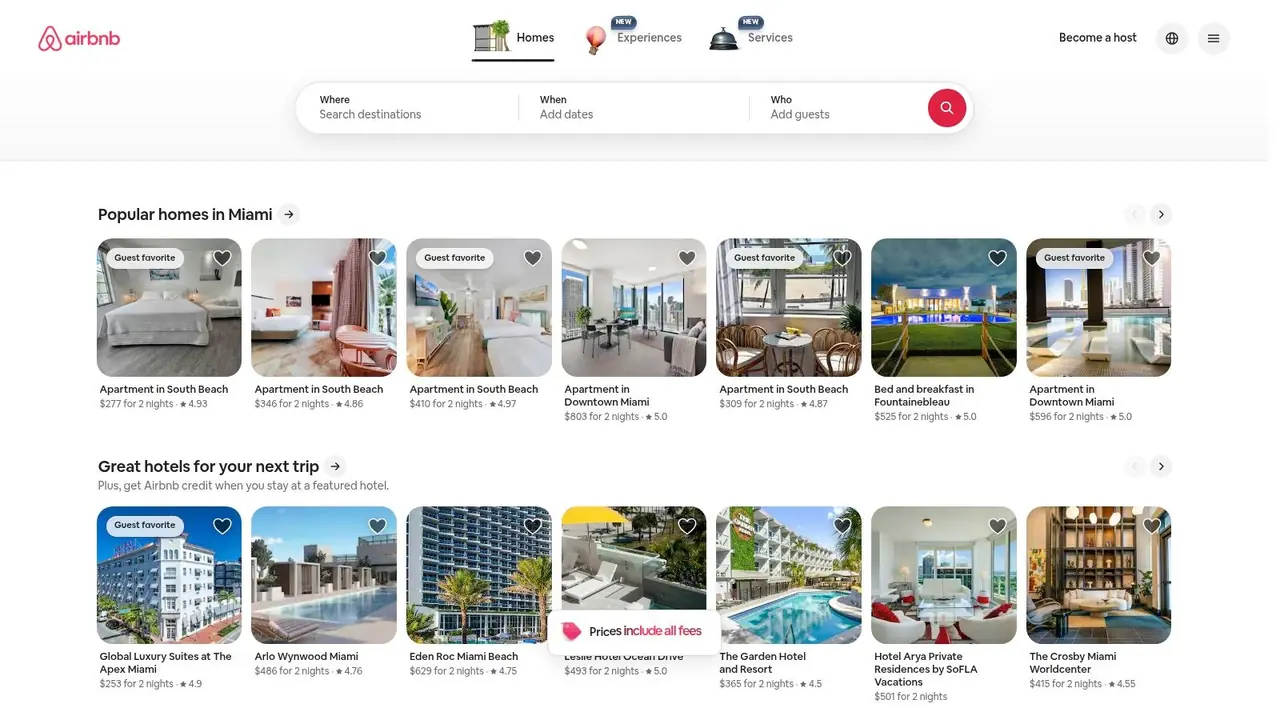
Airbnb is still the first platform most hosts add when expanding beyond Vrbo, and for good reason. It has broad guest awareness, strong trust mechanics through reviews and identity checks, and enough demand depth to work for everything from a single cabin to a multi-unit portfolio. If you manage entire homes, private rooms, or niche stays, it gives you room to test positioning fast.
For hosts, Airbnb's biggest strength isn't just traffic. It's the maturity of the listing system. Search filters, merchandising features, and host protections create a workable environment for operators who keep their calendars, messaging, and pricing sharp.
Where Airbnb usually wins
Airbnb is often the strongest complement to Vrbo when you want to widen demand rather than merely duplicate it. Vrbo leans heavily into whole-home vacation behavior, while Airbnb gives you exposure to a broader booking audience and more varied stay intent.
- Best for flexible inventory: Entire homes, ADUs, guest suites, and distinctive stays all fit naturally.
- Best for operators who optimize: Hosts who actively test photos, titles, pricing, and stay rules usually get more from Airbnb.
- Best for direct operational learning: The platform teaches you quickly what converts and what doesn't.
Practical rule: If your listing struggles on Airbnb, the issue is often merchandising or pricing discipline, not the platform itself.
The downside is competition. Airbnb search results are crowded, and hosts who stop updating listings tend to fade. Fee and pricing presentation also change over time, so margin monitoring matters. If you use Airbnb, run it like a live sales channel, not a set-and-forget listing.
Airbnb also pairs well with operational playbooks like this guide to Airbnb hosting basics, especially if you're tightening turnover standards and guest communication. Cleanliness standards matter more when competition is this dense, which is why some hosts also invest in expert Airbnb cleaning by London House Cleaners.
List on Airbnb.
2. Booking.com
Want more bookings from guests who shop like hotel customers, compare options fast, and book without much back-and-forth? Booking.com is one of the few Vrbo alternatives that can bring that demand at meaningful scale.
For hosts, the main advantage is audience mix. Booking.com tends to perform well with international travelers, short-notice bookers, city stays, and guests building trips across flights, hotels, and rentals in one session. That makes it a useful second or third channel if your Vrbo performance is heavily tied to family vacation patterns or longer lead times.
The catch is operational pressure. Booking.com rewards clear setup and quick execution. If your rates, occupancy limits, payment terms, and cancellation rules are not configured carefully, you feel it fast through support issues, bad-fit bookings, and refund friction.
Best use case for hosts
Booking.com fits properties that already run with hotel-style discipline. Accurate calendars, fast messaging, reliable cleaning, and consistent check-in instructions matter more here than brand personality.
Host-side trade-offs usually look like this:
- Strong exposure to practical-booking demand: Guests often book based on location, price, and policy clarity.
- Less pre-booking conversation: Good for hosts who prefer efficient reservation flow over extended guest vetting.
- Higher setup sensitivity: Small mistakes in fees, child policies, or payment settings can create expensive service problems.
- Useful for shoulder seasons: Many hosts use it to pick up demand that Vrbo alone does not capture.
Booking.com works best when your listing is tightly merchandised and your house rules are written to prevent ambiguity.
This platform can also be harder on margins. Commission costs, payment workflows, and guest expectations can require more discipline than some hosts expect at the start. Still, for professionally run homes, especially in urban, airport-adjacent, or internationally relevant markets, Booking.com can broaden demand instead of just duplicating the same guest pool across another OTA.
If you list on multiple channels, keep your policies aligned and your guest communication standardized. A digital welcome book helps here because it gives Booking.com guests the same check-in, house, and upsell information they would otherwise ask for manually.
List on Booking.com.
3. Homes & Villas by Marriott Bonvoy
Homes & Villas by Marriott Bonvoy sits in a different category from most sites like Vrbo. It isn't built for open-market hosting. It's a curated channel tied to a major hotel loyalty ecosystem, and that changes both guest expectations and host eligibility.
The draw is obvious. Guests already trust the Marriott brand, and they value the ability to earn and redeem loyalty benefits on vacation-home stays. For the right property, that can bring in guests who expect consistency and are willing to book within a known brand framework instead of browsing the wider OTA field.
Who should pursue it
This is usually a fit for professionally managed homes, not casual hosts. If your property needs loose rules, heavy manual screening, or constant exception handling, it's probably not a match.
The best candidates tend to have:
- Professional operations: Reliable cleaning, maintenance, and guest support.
- Premium positioning: Strong design, complete amenity sets, and polished presentation.
- Portfolio discipline: Teams that can hold service standards across every stay.
Where hosts go wrong is assuming this channel will rescue an average listing. It won't. Marriott-style distribution helps when your home already meets a high standard and your operations can deliver a hotel-adjacent experience inside a vacation rental format.
The upside is audience quality and brand spillover. The downside is access. Inventory is smaller than the giant open marketplaces, and independent hosts usually won't find it practical as a first expansion channel.
List on Homes & Villas by Marriott Bonvoy.
4. Plum Guide

Want a channel that supports higher rates instead of pushing you into constant price competition?
Plum Guide is built for hosts whose homes can defend a premium. The platform's value to you is not raw reach. It is stricter positioning. Guests come expecting a narrower set of properties, which can help the right home convert without racing to the bottom on nightly price.
That makes Plum Guide a selective add-on in a multi-platform strategy, not a primary demand engine for every host.
When Plum Guide makes sense
Use it if your listing already wins on design, finish quality, layout, and guest experience. This tends to work best for hosts in urban, lifestyle, and high-ADR leisure markets where presentation drives booking decisions and where a generic listing gets buried fast.
Plum Guide usually fits properties with:
- Strong visual appeal: Professional photography, cohesive interiors, and details that hold up in person.
- Premium operations: Reliable cleaning, fast maintenance response, and consistent guest communication.
- Rate discipline: A home that can justify higher pricing because the stay feels distinct, not just adequate.
The trade-off is straightforward. Plum Guide can improve your brand fit and guest quality, but it will not replace Airbnb or Vrbo for booking volume. If your calendar depends on broad exposure across many traveler segments, this should sit beside larger channels, not instead of them.
Hosts also need to be honest about execution. Curated platforms reward homes that deliver exactly what the photos and description promise. If your listing sells a polished, high-end stay but your turnover, amenities, or presentation slip, guest disappointment hits harder and the pricing premium gets harder to hold.
For that reason, Plum Guide works best for hosts who already run tight operations across every channel and want one more outlet aimed at a higher-spend audience. If you add it, keep your calendar, pricing, and guest information aligned everywhere. A digital welcome book helps here because it gives Plum Guide guests the same clear check-in, house, and local guidance you provide on your other channels.
List on Plum Guide.
5. HomeToGo
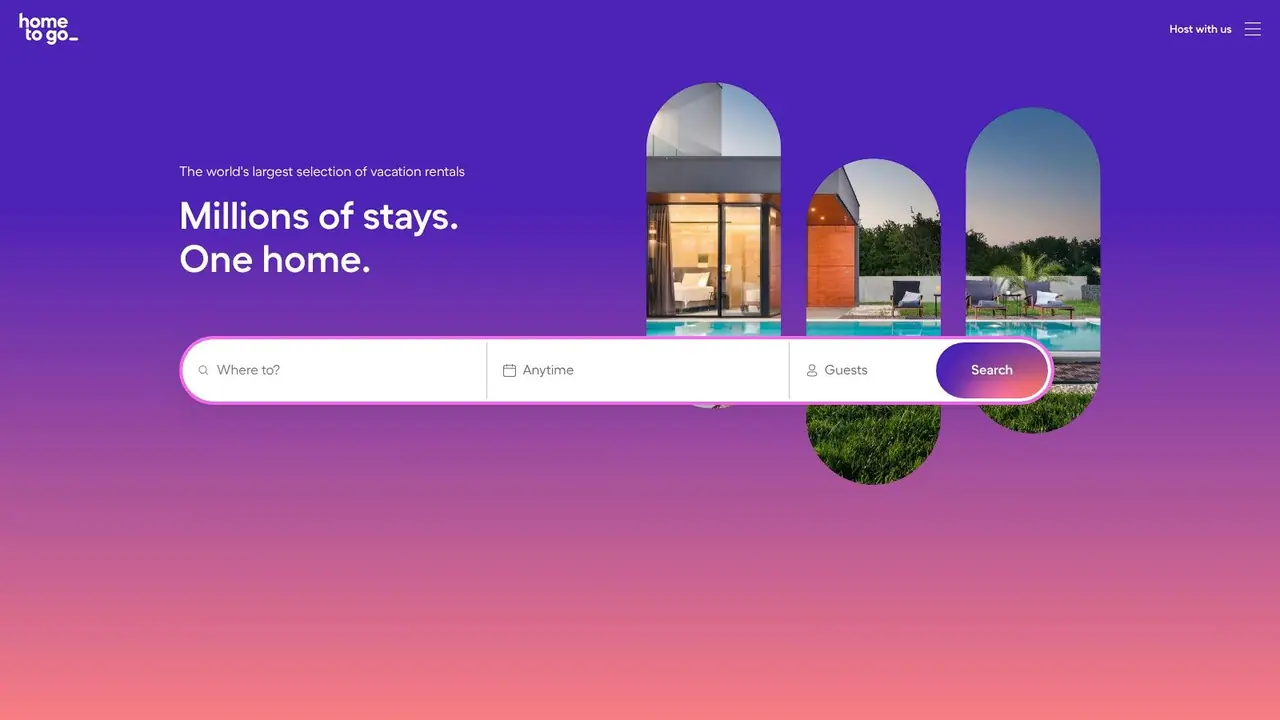
Want more reach without taking on another full marketplace workflow? HomeToGo can help, but hosts need to understand what they are adding to the stack.
HomeToGo works as both a booking platform and an aggregator. That matters because your property may gain visibility through broader distribution, not only through performance inside one closed marketplace. For hosts in seasonal or leisure-heavy markets, that can create useful incremental demand, especially from guests who compare several sites before they book.
The host-side trade-off
More exposure does not always mean more control. On HomeToGo, the guest journey can vary based on how your inventory is distributed and where the reservation is completed. That affects pricing display, cancellation messaging, and who owns the guest relationship at each step.
Hosts should evaluate HomeToGo with that in mind.
- Best use case: Expanding reach for homes already listed on major channels and supported by a channel manager.
- Main risk: Treating every HomeToGo lead like a standard direct marketplace booking when the booking path may differ.
- What to audit: Rate parity, fee presentation, policy accuracy, and how guest details flow into your PMS or messaging process.
This platform usually works best as a distribution layer inside a broader multi-channel strategy, not as your primary growth engine. If you self-manage, review your setup against a short-term rental operations guide before adding another source of bookings. The extra visibility helps only if your calendar, pricing, guest communication, and check-in information stay consistent across every channel.
That last part is where many hosts lose margin. If HomeToGo sends traffic into inventory with mismatched fees or outdated policies, you get more shopper attention but not necessarily more profitable bookings. Keep your listing data clean, confirm where the booking is finalized, and give every guest the same welcome book and house information regardless of which platform introduced them.
List on HomeToGo.
6. Vacasa
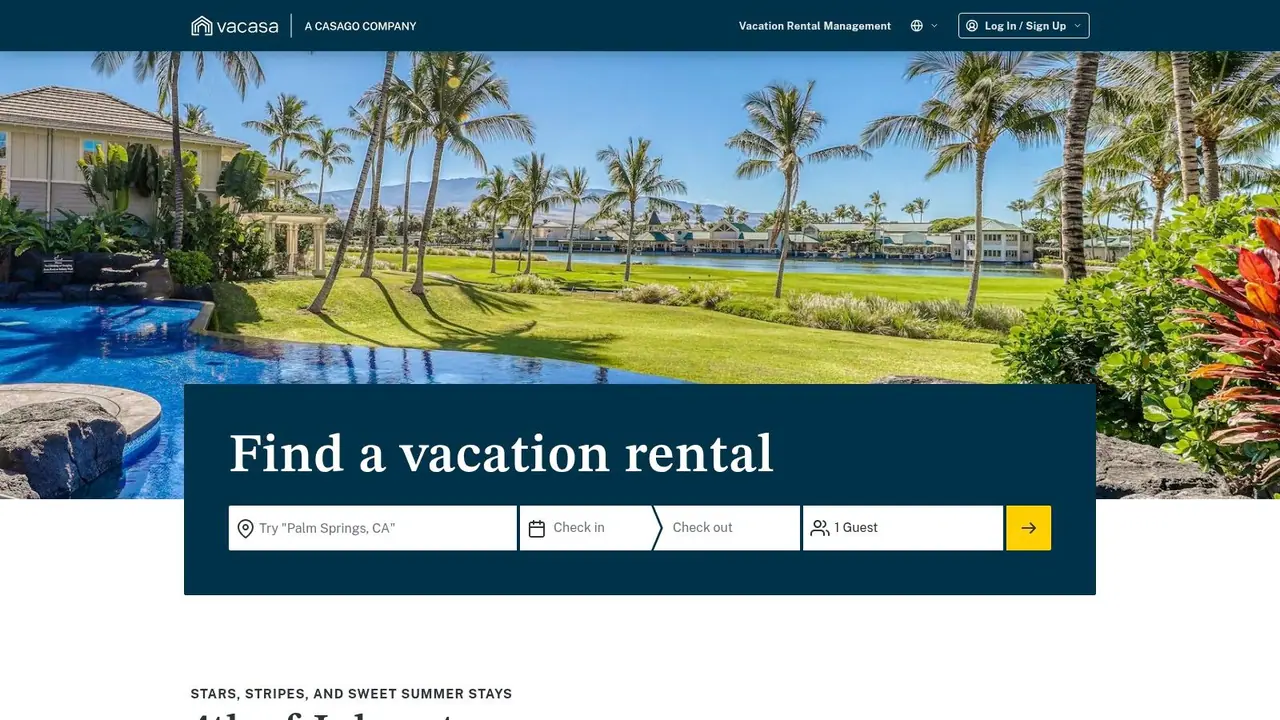
Vacasa is less a pure listing site and more a managed-distribution model. If you're deciding between self-managing on multiple OTAs and handing a home to a professional operator, Vacasa belongs in the conversation because the trade-off is operational control versus standardization.
For some owners, that trade is worth it. Professionally managed inventory can reduce the mess that comes from juggling cleaners, maintenance vendors, guest messaging, and issue response across several channels.
Why some hosts prefer this model
Vacasa works best for owners who don't want to personally operate every booking detail. Coastal, mountain, and family-vacation markets are where this model tends to feel most natural because guests expect reliable turnover, support coverage, and standardized presentation.
The host-side benefit is consistency. The host-side cost is flexibility.
- You gain structure: Centralized support, housekeeping standards, and managed guest communication.
- You lose some autonomy: You won't control every element the way a hands-on host does.
- You narrow your options: Inventory is limited to homes Vacasa manages, not an open host marketplace.
If you're still learning the basics of running a vacation rental, it helps to first get clear on the operational load through a short-term rental guide for hosts. Owners often underestimate how much administrative work sits behind a “simple” multi-platform strategy.
Vacasa makes the most sense when your priority is hands-off consistency. It makes less sense if your edge comes from personal branding, flexible policies, or close control over revenue strategy.
List on Vacasa.
7. Evolve
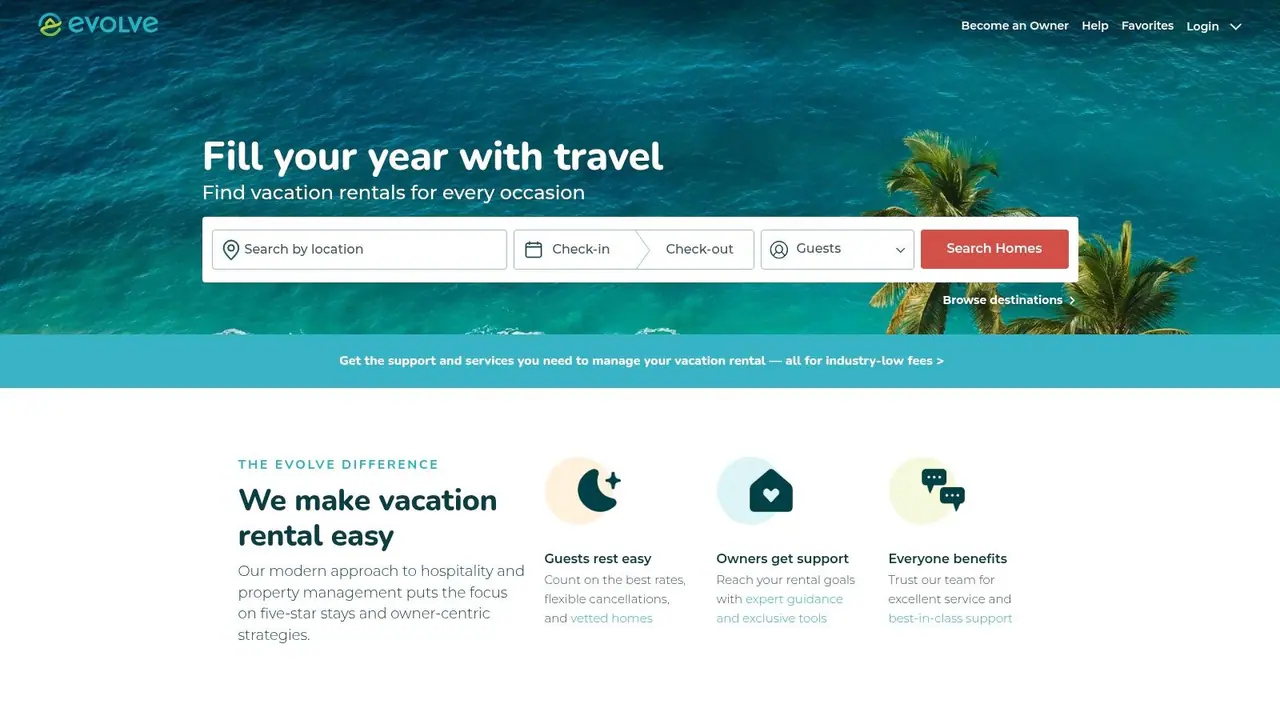
Evolve sits between a traditional property manager and a pure marketplace. That middle ground appeals to owners who want broader distribution without taking on every moving part alone. It markets homes on its own site and across major OTAs, which makes it more of a channel-management solution than just another place to post a listing.
This model is practical because vacation-rental distribution is fragmented. AltexSoft explains that professional operators should review at least one year of booking history, with two to three years being better, and notes that Transparent tracks over 35 million listings across Airbnb, Vrbo, Booking.com, and TripAdvisor. Hosts don't need to memorize those figures to see the message. The market is broad, messy, and hard to manage manually at scale.
Where Evolve fits in a portfolio
Evolve is best for owners who want OTA reach but don't want to manually coordinate every listing, every policy difference, and every guest touchpoint themselves.
Operator note: Managed distribution only works if your owner goals and the manager's playbook are aligned. If you want aggressive manual control over rates and exceptions, friction shows up fast.
The upside is simpler distribution and a more standardized guest journey. The downside is that you're operating within Evolve's framework, not building a fully independent system. That's fine for many owners. It's limiting for others.
List on Evolve.
8. Expedia Vacation Rentals
Expedia Vacation Rentals matters because it captures travelers who don't think in “host platform” terms at all. They're booking a trip, not a stay. They may want lodging, flights, cars, and activities in one ecosystem, and that bundled intent can pull in a different type of guest than you'll see on Vrbo alone.
That's especially relevant because Vrbo sits inside the Expedia Group family, so some hosts assume they already have this exposure automatically. In practice, channel behavior and guest shopping patterns still differ enough that you should evaluate Expedia as its own demand source.
How to think about Expedia
This isn't usually the first alternative hosts add, but it can be a smart complement if your market attracts fly-to guests, event travelers, or convenience-oriented bookers.
A practical way to view Expedia:
- Good for trip-based shoppers: Guests who want one booking ecosystem.
- Good for mainstream appeal: Condos, cabins, and familiar vacation inventory tend to fit cleanly.
- Less useful if your edge is uniqueness: Ultra-distinctive stays often merchandise better on Airbnb-style platforms.
The trade-off is overlap. Some inventory and audience behavior will intersect with sister brands or partner channels. That doesn't make Expedia redundant. It just means you need to watch where bookings are coming from and whether the extra exposure improves your occupancy mix enough to justify the operational complexity.
List on Expedia Vacation Rentals.
9. Houfy
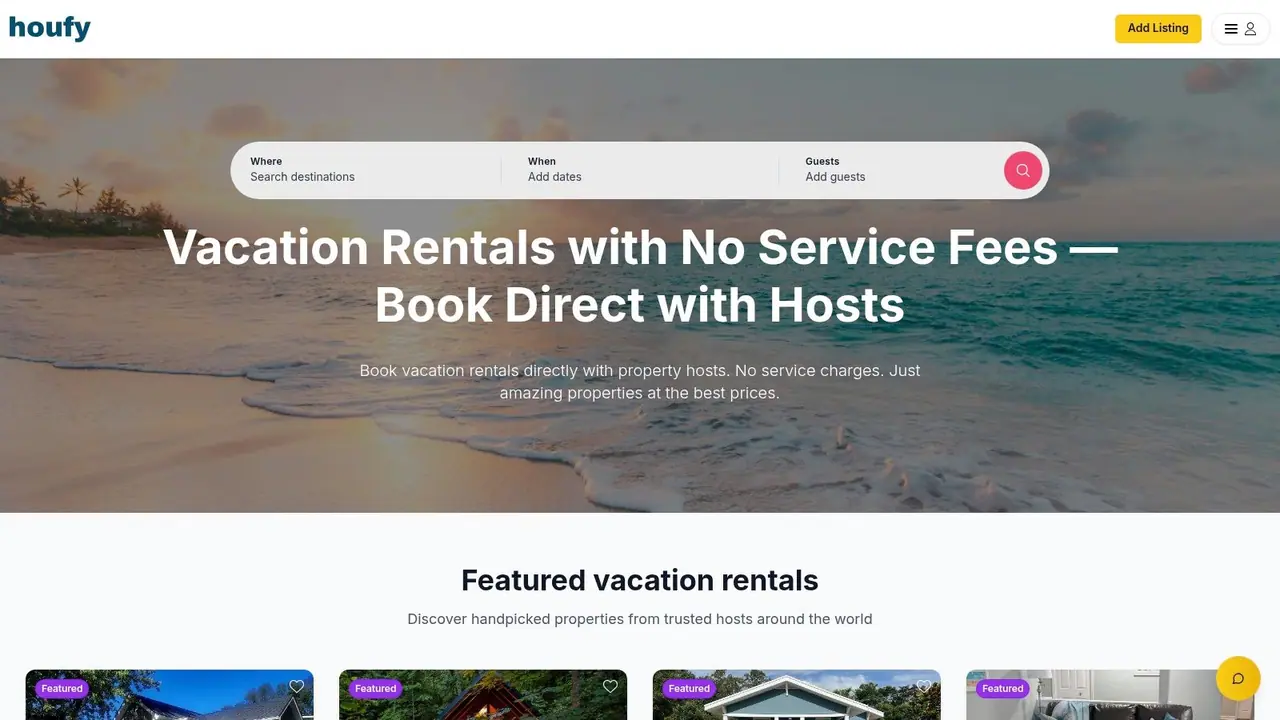
Want more control over pricing, guest communication, and repeat bookings? Houfy deserves a look if your goal is to build a direct booking channel instead of relying only on OTAs to fill the calendar.
The appeal is straightforward. Houfy keeps the platform layer light, which can improve price perception for guests and protect more revenue on each booking for hosts. That matters if you have seen conversion drop once travelers reach the final checkout total on larger marketplaces.
The trade-off is just as clear. Houfy does not bring the built-in demand you get from Airbnb, Booking.com, or Vrbo. Hosts usually see the best results when they already have traffic sources they control, such as past guests, social media, search visibility, or a branded website.
What works and what doesn't
Houfy is strongest as part of a multi-platform strategy, not as a full replacement for major channels. Use OTAs to capture discovery. Use direct booking to improve margins, drive repeat stays, and reduce dependence on third-party policies and fees.
What works:
- Direct relationship ownership: You control the guest experience before arrival, during the stay, and after checkout.
- Stronger margin retention: Lower platform friction can leave more room for profit or more flexibility in your nightly rate.
- Better repeat-stay economics: Returning guests often convert more easily when they can book direct through your own ecosystem.
What doesn't:
- Weak top-of-funnel demand: A listing alone will not generate major visibility unless you bring your own audience.
- More operational responsibility: You need clear systems for payments, rental agreements, screening, support, and chargeback handling.
- Less room for sloppy processes: Direct bookings work best when your messaging, check-in flow, and guest information are organized.
That last point gets missed. If you send guests to a direct channel, the experience still has to feel professional. A good digital welcome book, clear house rules, and fast pre-arrival communication do more than reduce questions. They help direct bookings convert and run smoothly at scale.
Hosts considering Houfy should understand the owner-managed side of the business first, especially the responsibilities that come with a vacation rental by owner setup.
List on Houfy.
10. misterb&b
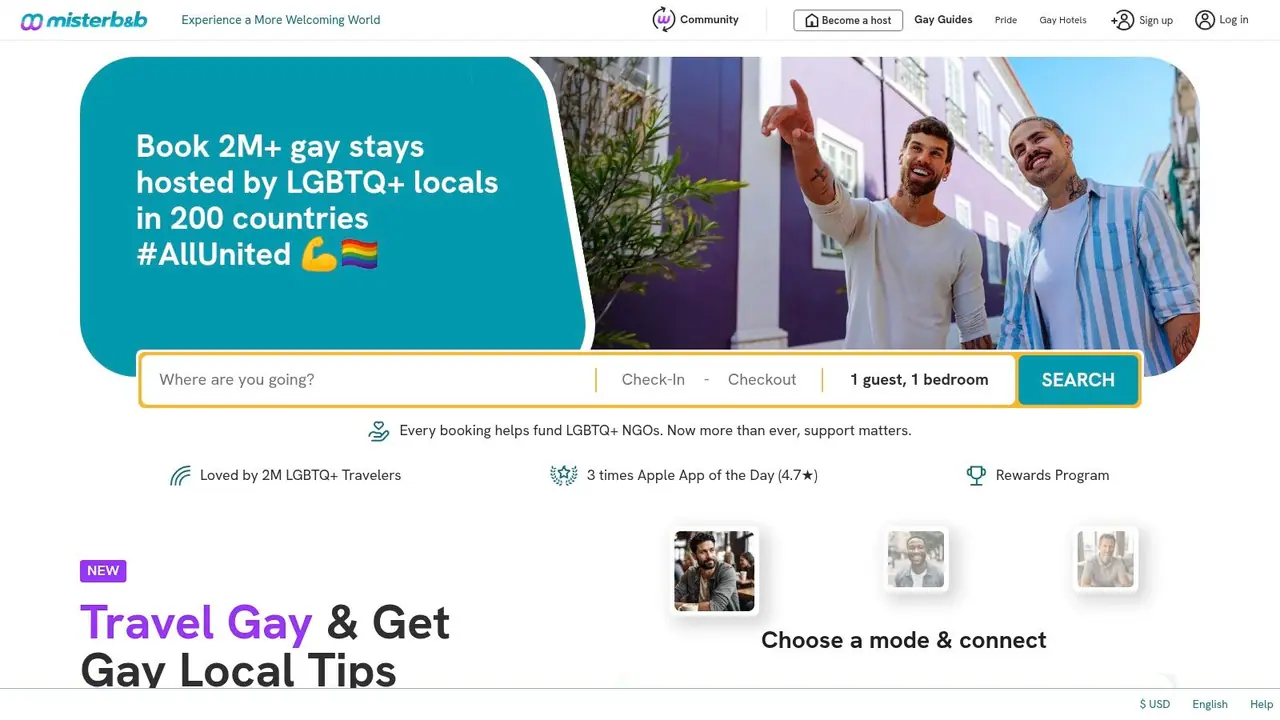
Need a channel that reaches guests your Airbnb or Vrbo listing may miss?
misterb&b works best as a targeted add-on for hosts serving LGBTQ+ travelers, especially in urban markets, resort destinations, and event-driven locations where community fit influences booking decisions. The value is not raw reach. It is audience alignment.
That distinction matters for hosts. A smaller platform can still produce stronger booking quality if the guest profile matches your home, your brand, and your local demand pattern. I would not treat misterb&b as a volume channel. I would use it to diversify acquisition and improve occupancy in periods where mainstream platforms send lower-intent traffic.
Best fit for this platform
Hosts get the most from misterb&b when the listing already signals a clear fit. That can mean a property in a destination with established LGBTQ+ travel demand, a home designed and photographed with a specific guest experience in mind, or a host brand that communicates inclusivity with credibility. If that fit is weak, the listing can sit idle even with solid fundamentals.
There is also a practical trade-off. Specialist channels usually require more intentional merchandising. Your photos, listing copy, and house presentation need to match the audience you want, not just describe the number of bedrooms and bathrooms. Generic listings rarely perform well on niche platforms because guests are choosing for relevance, not only price.
Use misterb&b if your property has a real market match and you want another demand source that is different from the major OTAs. Skip it if your only goal is broad exposure. In that case, your time is often better spent improving conversion on higher-volume channels and keeping operations tight across the ones you already use.
List on misterb&b.
Top 10 Vacation Rental Sites Comparison
| Platform | Core features | UX & Trust (★) | Pricing / Value (💰) | Target audience (👥) | Unique selling points (✨ / 🏆) |
|---|---|---|---|---|---|
| Airbnb | Massive marketplace; robust search & categories; reviews & identity checks | ★★★★ | 💰 Variable host/service fees; high demand offsets cost | 👥 Mass‑market travelers & hosts (solo → portfolios) | ✨ Huge demand + built‑in protections; 🏆 global brand |
| Booking.com | Hotel‑style checkout; large homes & apartments inventory; strong SEO | ★★★★ | 💰 Commission‑heavy for hosts; strong conversion | 👥 Hotel‑oriented travelers and mainstream bookers | ✨ Familiar checkout & strong distribution; 🏆 unmatched SEO reach |
| Homes & Villas by Marriott Bonvoy | Curated, professionally managed homes; Bonvoy points | ★★★★ | 💰 Premium pricing; curated host requirements | 👥 Loyalty members & premium family/group travelers | ✨ Earn/redeem Bonvoy points; 🏆 hotel‑brand trust & standards |
| Plum Guide | Rigorous vetting; Home Critics on‑site assessments; editorial support | ★★★★ | 💰 Premium positioning; host fee models vary | 👥 Quality‑seeking travelers wanting consistency | ✨ "Plum Test" vetting; 🏆 high design & quality control |
| HomeToGo | Metasearch + marketplace aggregator; broad multi‑site inventory | ★★★ | 💰 Price‑comparison focus; routing to partners can vary cost | 👥 Deal hunters and comparison shoppers | ✨ Aggregates OTA listings in one search; good for discovery |
| Vacasa | Professional property management; housekeeping & 24/7 support | ★★★★ | 💰 Pro‑managed service fees & cleaning charges | 👥 Travelers seeking consistency; owners wanting full management | ✨ End‑to‑end management; 🏆 consistent guest experience |
| Evolve | Hybrid: direct bookings + OTA distribution; cleanliness standards | ★★★ | 💰 Transparent host fees; simpler pricing than many OTAs | 👥 Owners who want marketing + control | ✨ Direct booking + wide OTA reach; consistent standards |
| Expedia (Vacation Rentals) | Vacation rentals hub; bundling with flights & cars; Expedia ecosystem | ★★★ | 💰 Variable commissions; bundle value for travelers | 👥 Travelers bundling transport & lodging | ✨ Trip bundling across Expedia Group; 🏆 strong support infrastructure |
| Houfy | Fee‑free direct bookings; owner control; simple site builder | ★★★ | 💰 Minimal/no guest fees; hosts retain revenue | 👥 DIY hosts & budget‑conscious travelers | ✨ No marketplace fees; direct owner‑guest relationships |
| misterb&b | LGBTQ+‑friendly listings; community filters & resources | ★★★ | 💰 Competitive/varies by listing | 👥 LGBTQ+ travelers and allies | ✨ Community‑vetted, identity‑affirming stays; 🏆 largest queer‑friendly platform |
Your Next Step From Listing to Thriving
What turns a listing into a reliable rental business?
For most hosts, the answer is not one more OTA. It is a channel mix you can operate well. Vrbo can still be a productive source of bookings, but depending on a single platform leaves your occupancy, pricing power, and guest pipeline exposed to algorithm changes, fee shifts, and audience changes that you do not control.
The better approach is selective distribution. Choose platforms based on what they add to your business, not on how many doors they open. A family-sized whole-home rental may perform well on Airbnb and Booking.com because both can widen reach and fill different demand pockets. A luxury property may justify the tighter standards and narrower volume of Plum Guide or Homes & Villas by Marriott Bonvoy if the average booking value is higher. Hosts who want more control over guest communication and repeat business can add Houfy as a supporting direct-booking channel.
Each new listing site adds operational cost. Not always in software spend, but in calendar risk, guest messaging, pricing consistency, and cleaning coordination. That is where many expansion plans break down. More exposure only helps if your back-end process can support it without creating double bookings, confusing check-in instructions, or uneven guest experiences across channels.
Standardization fixes that.
A digital welcome book is one of the most practical tools to put in place before adding more distribution. Guests need the same answers no matter where they booked: Wi-Fi details, parking rules, entry steps, appliance instructions, house rules, local recommendations, checkout tasks, and upsell options. Keeping that information in one place cuts repetitive messages and reduces the chance that one platform gets outdated instructions while another stays current.
It also improves review quality in ways hosts feel quickly. Guests judge the stay by how easy arrival feels, how fast they can find key information, and whether they need to message you for basic details. A property that feels organized earns better reviews, fewer support requests, and less friction for your team or cleaner.
If you are expanding, do it in stages. Add one channel. Measure booking quality, cancellation patterns, length of stay, and the final guest price after fees. Then decide whether that platform deserves a permanent place in your mix. Revenue grows faster when you protect operations and margins than when you chase every marketplace at once.
If you're refining turnover procedures while scaling, this Pine Country Window Cleaning guide to short-term rental cleaning checklists is a useful operational reference.
If you're ready to grow across sites like Vrbo without creating more guest-message chaos, ScanStay gives you a simple way to standardize the stay experience. You can replace paper binders and repetitive check-in texts with one digital welcome book, delivered through a QR code guests open in their browser. That means clearer house rules, faster access to Wi-Fi and check-in details, easier upsells, and less time answering the same questions every week.