The 10 Best Short Term Rental App Tools for 2026
Find the best short term rental app for your needs. We review 10 top tools for PMS, guest guides, pricing, and messaging to streamline your hosting biz in 2026.
A host has three arrivals tonight, one cleaner running late, a guest asking for the Wi-Fi code through Airbnb, and a maintenance note buried in a text thread from two days ago. That is usually the point where a short term rental app stops being a nice-to-have and becomes part of daily operations.
Small portfolios hit this wall too. The problem is rarely a lack of effort. It is a stack that grew by accident: notes app for turnovers, saved replies for guest messages, a paper binder for house rules, and scattered reminders across email, SMS, and channel inboxes. The result is predictable. Slower responses, more repeated questions, and more room for details to slip between booking, check-in, cleaning, and review follow-up.
The better approach is to build a tech stack by function. One tool handles reservations and channel management. Another improves the guest experience. A third keeps housekeeping, inspections, and maintenance on track. Operators who set their systems up this way usually spot the gaps faster, because each app has a clear job instead of trying to do everything poorly.
For many hosts, the best first upgrade is not a full PMS migration. It is guest-facing information that reduces routine questions and sets up smoother arrivals. A digital guide paired with a QR code check-in system for short-term rentals often removes friction faster than a larger software rollout, especially if the current process still depends on printed binders or copied messages.
The apps in this guide are not just a top-10 list. They are building blocks for a cleaner, more cohesive operating system. Some are stronger on distribution and automation. Others earn their keep through guidebooks, upsells, cleaning workflows, or accounting control. The right choice depends on where the operation breaks first, and which tool will save the most time without adding new complexity.
Table of Contents
- 1. ScanStay
- 2. Guesty
- 3. Hostaway
- 4. Lodgify
- 5. Hospitable
- 6. OwnerRez
- 7. Hostfully PMS and Digital Guidebooks
- 8. Touch Stay
- 9. Duve
- 10. Breezeway
- Top 10 Short-Term Rental Apps: Feature Comparison
- From Cluttered to Cohesive Your Next Move
1. ScanStay
A guest lands late, the Wi-Fi card is missing, and your phone lights up with the same check-in question you answered three times last week. That is usually the point where I tell hosts to stop shopping for a bigger system and fix the guest information layer first.
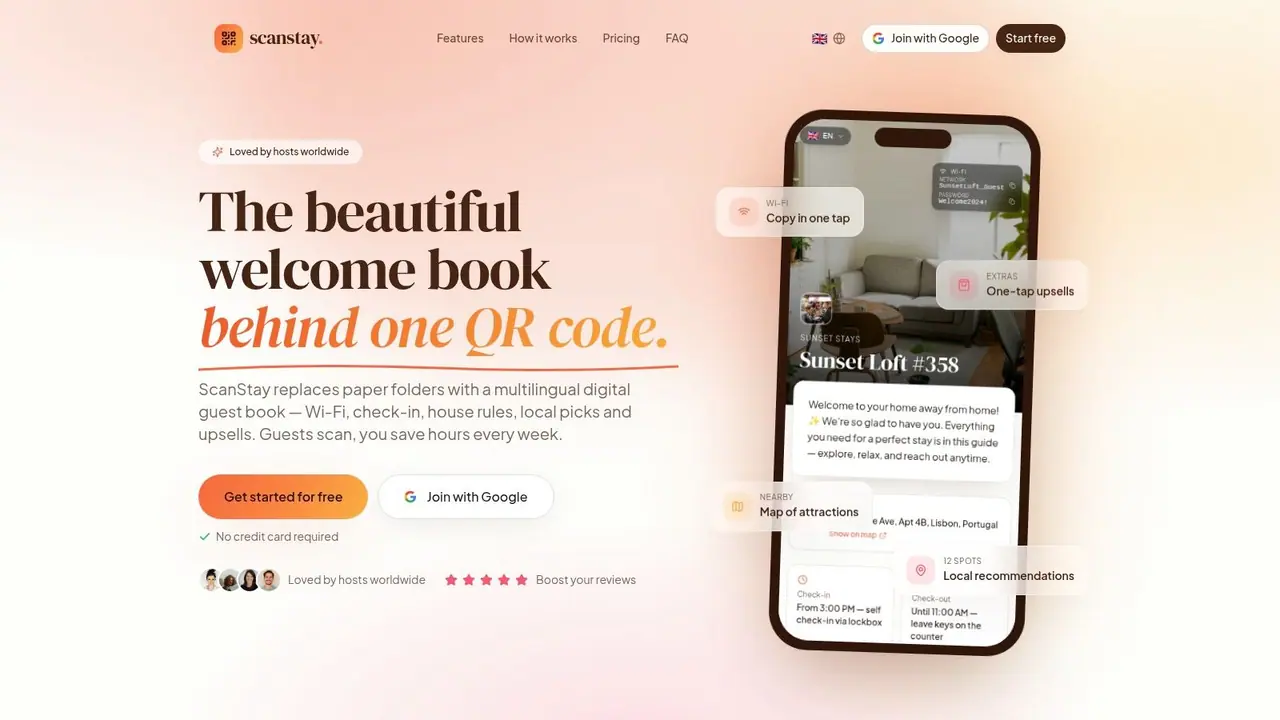
ScanStay handles that job well. It gives guests one mobile-friendly guide for Wi-Fi, arrival steps, house rules, local recommendations, video instructions, and add-ons, all in the browser. No app download. No paper binder to update. No need to bury key details inside platform messages that guests rarely reread once they are at the door.
Why it's the best first upgrade
For a lot of small and midsize operators, this is the highest-return first app in the stack because it removes repetitive work without forcing a PMS migration. You can build guides from a central dashboard, reuse templates across listings, and keep the guest-facing experience consistent even if your bookings come from several channels. That matters when your operating model depends on clear, repeatable communication more than another layer of back-office software.
The self-serve effect is its core value. Guests scan once and answer the common questions themselves, which cuts down the worst kind of support load: urgent, low-value messages that arrive during turnovers, late arrivals, or weekends.
I also like the multilingual support. If you host international travelers, built-in translation helps you publish usable instructions faster instead of maintaining separate versions by hand.
The upsell flow is practical too. Late checkout, airport transfers, parking, or equipment rentals fit naturally inside the guide, where guests are already looking for stay details. Done well, that feels organized rather than salesy.
Practical rule: If you are still answering the same five guest questions every week, start with the guidebook layer before you price out a full PMS change. If you are comparing larger systems at the same time, this affordable property management software guide is a useful reality check on cost versus actual operational need.
Where it fits in your stack
ScanStay sits in the guest experience layer of a modern short-term rental tech stack. It works alongside a PMS, not in place of one. For new hosts, it can be the first tool that brings some structure to communication. For established managers, it often becomes the standardized front-end that keeps guest information clean while the PMS handles reservations, channel sync, and reporting.
It also works well for teams building a smoother QR code check-in system for vacation rentals. Guests scan and get what they need quickly, which is often more useful than sending another long arrival message.
A few trade-offs matter:
- Best fit: Hosts and managers who want faster setup, cleaner guest communication, and room for upsells.
- Operational upside: Standardized guidebooks reduce repetitive messaging and make on-site information easier to maintain across units.
- Main limitation: Because it is web-based, the experience depends on the guest having a phone and decent internet access.
- Pricing consideration: Higher-tier features such as white-labeling, deeper analytics, and some monetization options sit on the upper plans.
The pricing model is straightforward, which I value. You can start small, test adoption with real guests, and only move up if the portfolio or feature needs justify it. That makes ScanStay easier to trial than systems that require a sales process before you can even judge fit.
2. Guesty
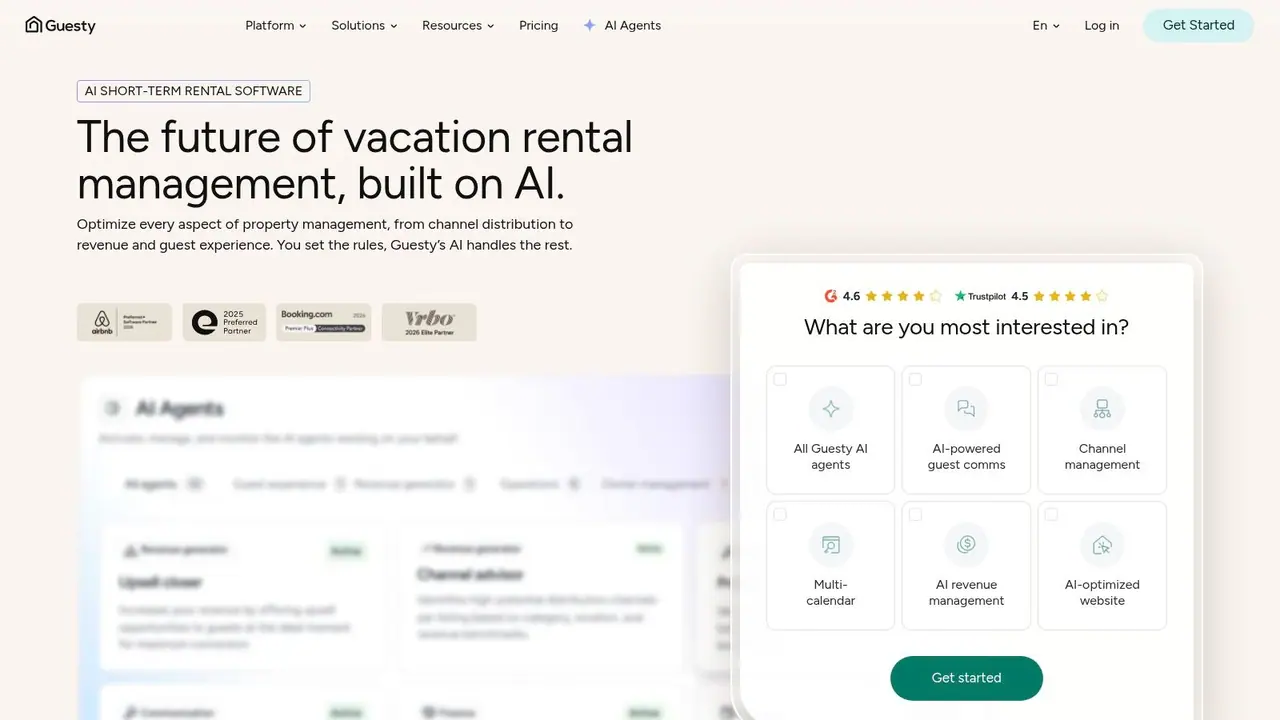
Guesty sits in the core PMS layer. If you need one system to manage reservations, channel distribution, messaging, workflow automation, and reporting, it's one of the more established names in the category. For larger portfolios, that maturity matters more than flashy feature lists.
Its strength is breadth. You get a unified inbox, channel management with major OTAs, automation tools, revenue features, and a large integration marketplace. If your stack is spreading in too many directions, Guesty can become the center.
Best for larger all-in-one PMS needs
This is usually the tool I'd look at when a host has outgrown lightweight automation and now needs operational structure. It's also a reasonable option when you want fewer software vendors, not more.
That said, broad systems come with broad costs. Guesty pricing is quote-based, and total spend can move around depending on modules and add-ons. If you're a smaller operator, that's the main reason to compare it against leaner alternatives and against an affordable property management software guide before committing.
Guesty makes the most sense when complexity is already part of your business. It's harder to justify when you're paying enterprise-style software costs to run a simple portfolio.
Another practical note: if guest communication is your biggest headache, Guesty may not be your first fix. It's a strong backbone, but many hosts still benefit from a dedicated guest-facing tool layered on top. You can review the platform directly on the Guesty website.
3. Hostaway
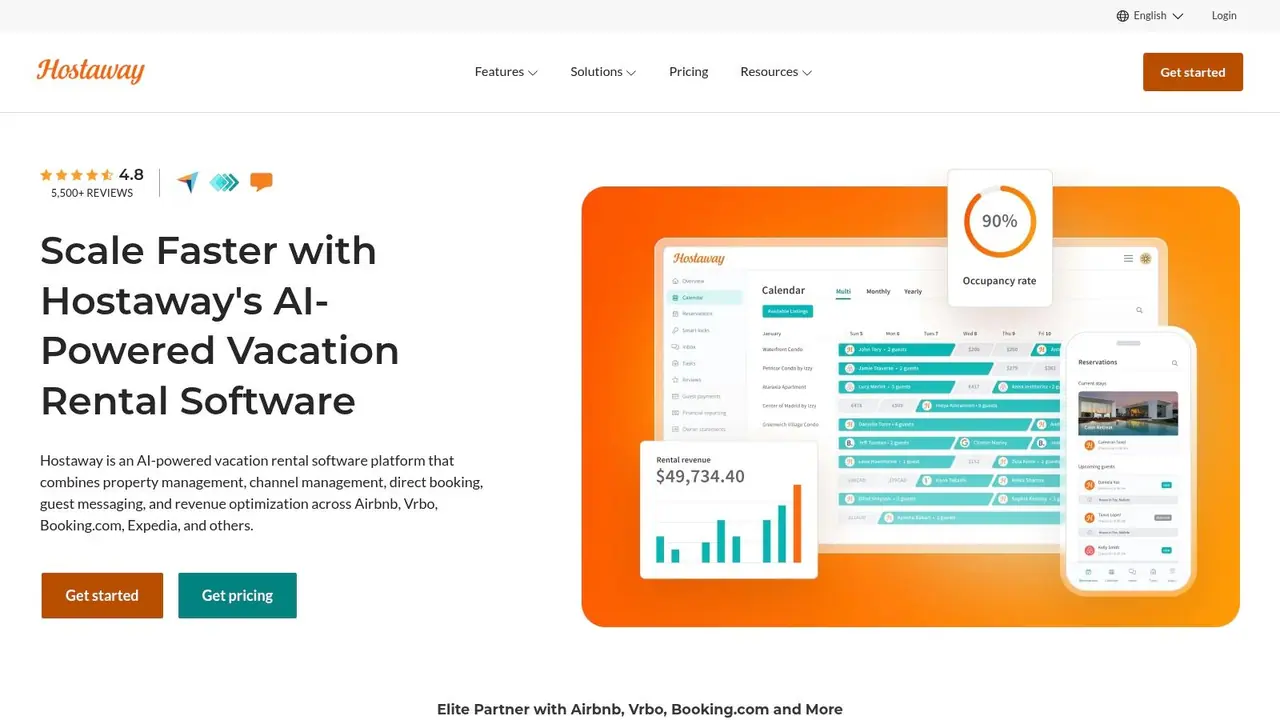
Hostaway is a strong fit for managers who are already thinking like operators, not casual hosts. It combines PMS functionality, channel management, automations, reporting, a direct booking engine, and revenue tools in one system. The product leans toward professionalized portfolios, especially in the U.S.
The distribution side is one reason it gets serious attention. Hostaway highlights API connections to Airbnb, Vrbo, Booking.com, Google Vacation Rentals, and Homes & Villas by Marriott. If your bookings come from several channels and rate parity mistakes are hurting you, centralized control matters a lot.
Best for professional managers scaling distribution
Hostaway's best use case is a fast-growing business that needs stronger OTA connections and a system that won't need replacing in six months. It's not the lightest platform, but it can save you from stitching together too many separate tools later.
The trade-off is familiar. Pricing isn't publicly listed, and very small portfolios may find the platform heavier than necessary.
A few things stand out in practice:
- Operational fit: Better for managers with several listings or a clear plan to grow.
- Stack role: Core PMS and channel manager.
- Potential downside: More platform than a single-listing host usually needs.
Independent research in the sector has found that adopting enhanced market-transparency technology was associated with a 12.9% increase in occupancy and a 12.8% increase in revenue (SSRN property technology research). That doesn't mean any one PMS guarantees those outcomes, but it does reinforce the broader point. Better operating systems can produce measurable business impact. You can evaluate Hostaway directly on the Hostaway website.
4. Lodgify
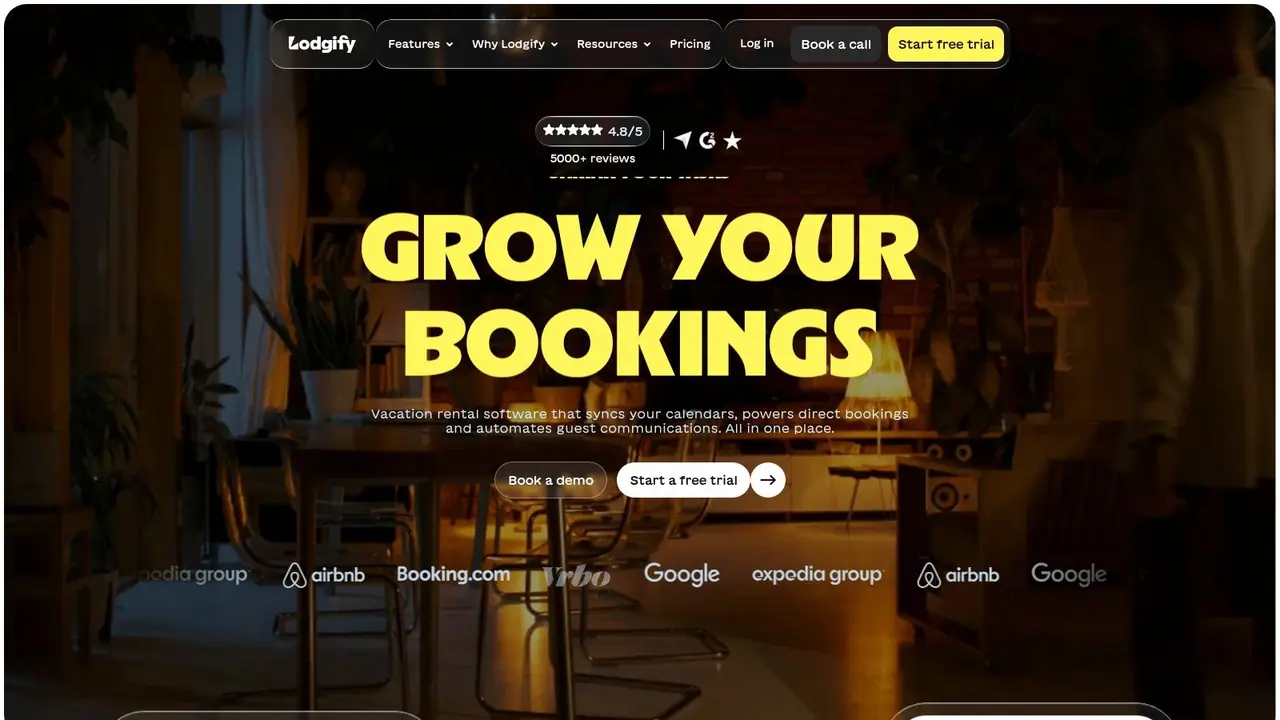
Lodgify is the tool I'd shortlist when direct bookings are a real priority, not just a vague goal. It combines core PMS functions with a website builder, payment integrations, reservation management, and channel sync. That mix makes it useful for owners who want a branded booking presence rather than relying only on OTA traffic.
Its website builder is the headline feature, and for many hosts that's enough reason to consider it. You can launch a branded site faster than you could with a custom build, and you don't need a separate web platform just to start taking direct reservations.
Best for direct booking focused brands
Lodgify works well for small to mid-sized operators who want to own more of the guest journey. It's also easier to understand than some heavier enterprise PMS options, which matters when the person operating the software is also the person managing turnovers and guest messages.
The caution point is revenue tooling depth. Smart pricing exists, but some advanced pricing rules or revenue workflows may still push you toward third-party tools.
- Why hosts choose it: Direct booking websites plus core PMS in one package.
- Where it fits: Brand-forward operators who want a cleaner web presence.
- Where it can fall short: Advanced revenue management and some higher-end automation needs.
The broader category is still growing fast. One market report estimates the global short-term rental app market at USD 13.42 billion in 2024 and projects it to reach USD 47.2 billion by 2034, with a 13.4% CAGR. The same report places North America at 37.5% share in 2024 and the U.S. market at USD 4.53 billion (short-term rental app market projections). That growth helps explain why tools like Lodgify keep expanding beyond simple calendar sync. You can see current plans and features on the Lodgify website.
5. Hospitable
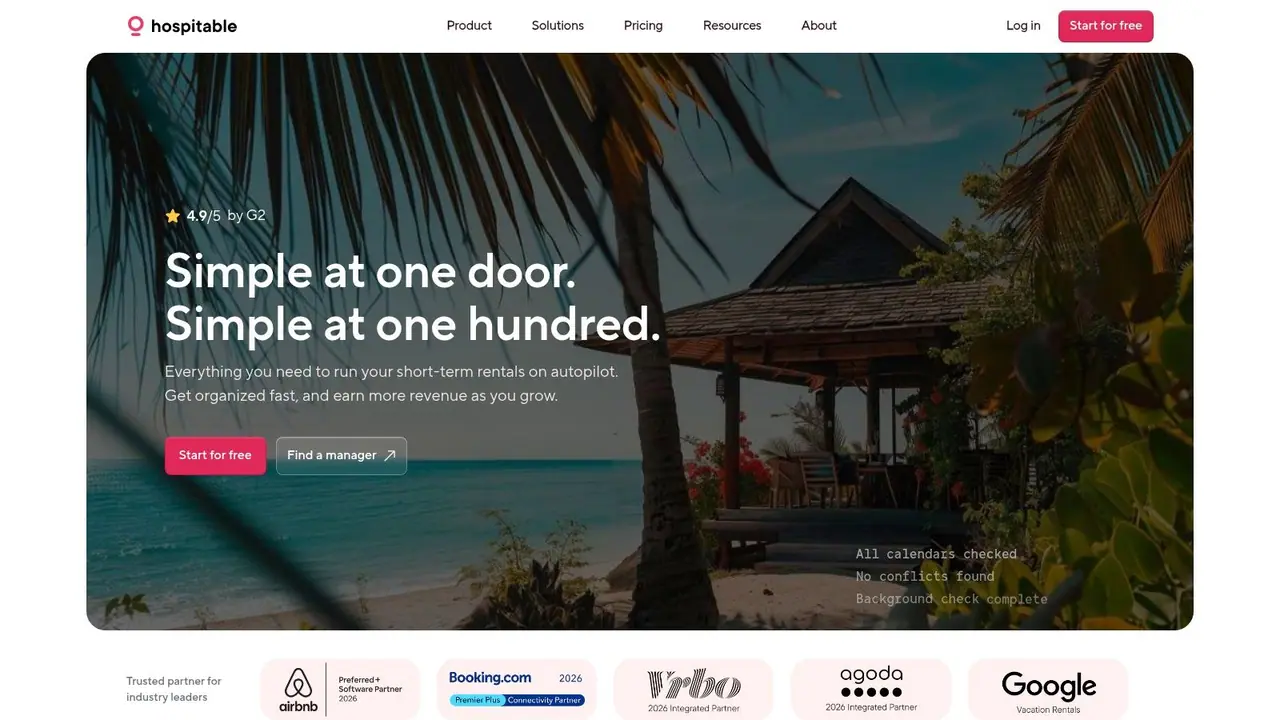
Hospitable has always made sense to me as the automation-first option for hosts who don't want a bloated back office. It focuses on the work that drains time every week: messaging, inbox management, task automation, channel syncing, and guest-facing flows like upsells and automated door code generation.
That narrower focus is a strength. A lot of hosts don't need an enterprise PMS. They need fewer interruptions and cleaner routines.
Best for hosts who want fast automation without enterprise weight
Hospitable is usually easiest to recommend to solo hosts and smaller teams. Public pricing is clearer than many competitors, onboarding tends to be simpler, and the feature set is often enough for operators who mainly want to automate communication and routine operations.
It does have limits. If you run more complex trust accounting, owner reporting, or deeper back-office workflows, you'll probably hit the ceiling earlier than you would with systems like Guesty or OwnerRez.
The best short term rental app for a small portfolio is often the one your team will actually configure properly. Unused enterprise features don't save time.
I'd frame Hospitable this way:
- Strongest value: Good balance of automation and usability.
- Best fit: Small and mid-sized hosts who want less manual messaging.
- Less ideal for: Operators who need more advanced accounting or owner-side tooling.
It's a practical product rather than a glamorous one, and that's part of its appeal. You can review its current feature set on the Hospitable website.
6. OwnerRez
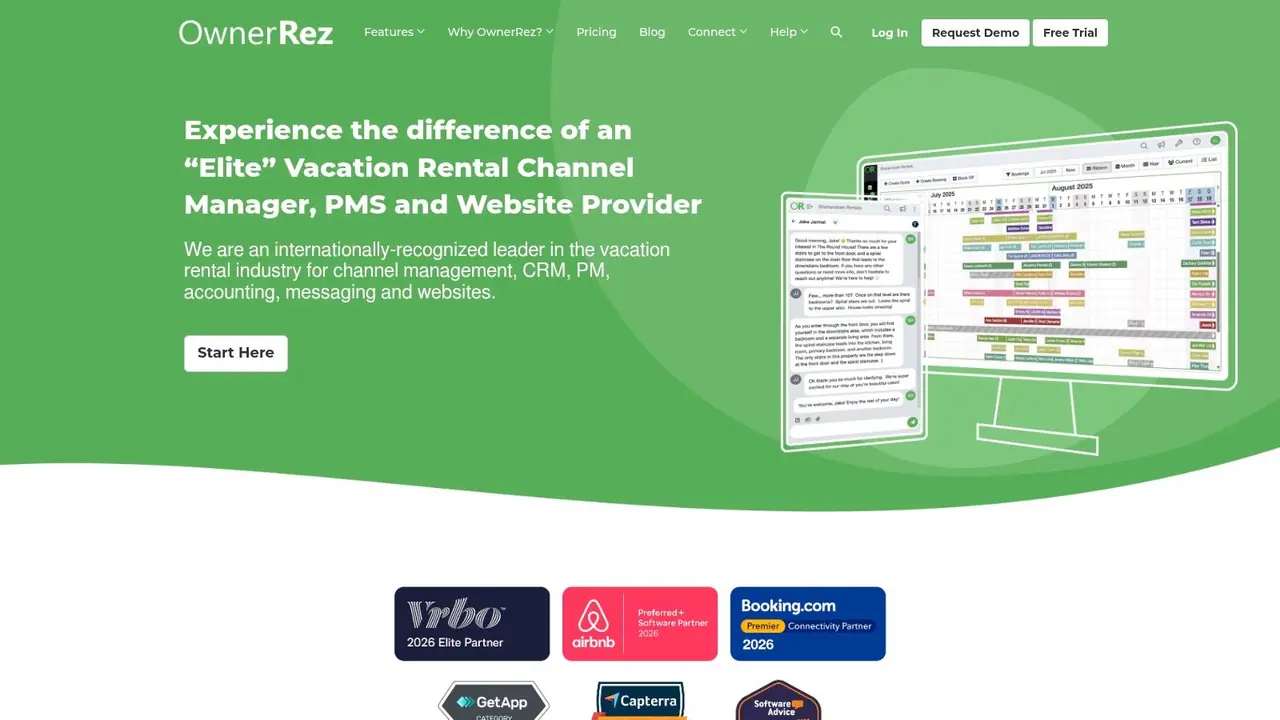
OwnerRez is the tool I'd reach for when the conversation shifts from guest messaging to accounting discipline. It has a strong reputation with independent operators who care about trust accounting, owner statements, direct booking capability, and configurable backend controls.
This is not the slickest product in the category. That's fine. For many managers, the point isn't style. It's control.
Best for operators who care about accounting discipline
OwnerRez gives you public per-property pricing, modular add-ons, month-to-month billing, direct booking sites, channel connections, and owner reporting that's often stronger than what lighter platforms provide. If you manage on behalf of owners, that backend clarity can matter more than having the newest AI feature.
The trade-off is that some newer platforms feel more modern on the automation front. OwnerRez can look more utilitarian, and some of the extra convenience features you'll see elsewhere may need more setup or outside tools.
One simple way to look at it:
- Choose OwnerRez if: Reconciliation, statements, and owner reporting are central to your business.
- Skip it if: Your main issue is guest-facing communication and you want the shortest path to automation.
- Best stack pairing: OwnerRez plus a strong digital guidebook or guest portal tool.
Another practical point from data analysis research in the STR space is that meaningful trend analysis often requires combining internal booking records with external platform data, and using two to three years of history where possible. That's one reason backend discipline matters so much for operators making pricing and portfolio decisions. You can explore the platform on the OwnerRez website.
7. Hostfully PMS and Digital Guidebooks
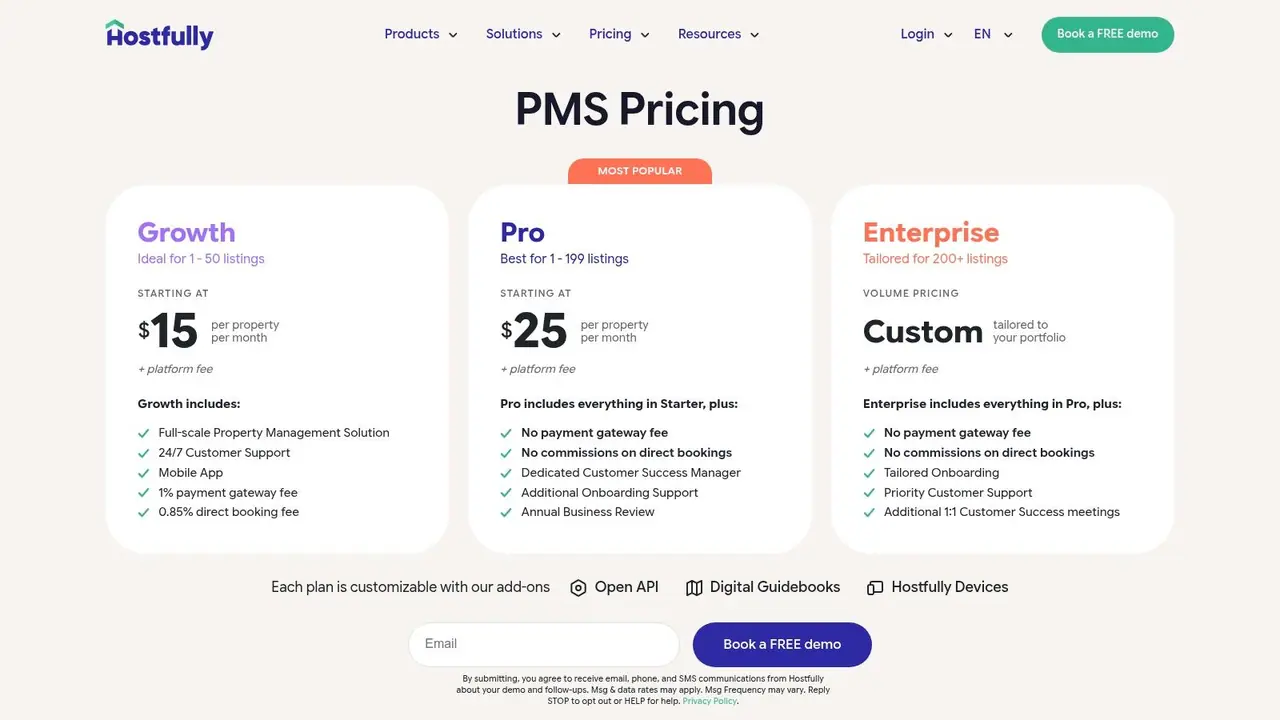
Hostfully is interesting because it spans two stack layers. There's the PMS for reservations, automations, and distribution, and there's the digital guidebook product for guest-facing property information, local recommendations, and upsells. That split gives hosts flexibility.
Some operators use both. Others use the guidebooks alongside a different PMS. That modularity is useful when you don't want a full system migration just to improve guest communication.
Best for teams that want PMS plus guest guide flexibility
The PMS side covers the usual core needs, including channel management and automation. The guidebook side is where Hostfully has long been recognizable to many hosts. It gives guests a web-based information layer that can reduce repetitive questions and make the stay feel more organized.
The downside is commercial clarity. Some pricing details still require a quote, and that can slow down evaluation if you're comparing several tools at once.
For practical use, I'd weigh Hostfully like this:
- Good fit: Hosts who want one vendor for PMS plus guest guidebooks.
- Best feature mix: Mature ecosystem and guest information tools in one brand.
- Main drawback: Less pricing transparency than many hosts want during shortlist stage.
There's also a strong underserved use case around accessibility. Peer-reviewed research notes a lack of evidence on impact perceptions in short-term rental platforms, while accessibility-oriented inventory remains niche rather than a mainstream discovery path (accessibility research in STR platforms). A detailed digital guidebook can help hosts present step-free access, bathroom layout, and other practical information more consistently, even if the booking platform itself does a weak job of surfacing it. You can review options on the Hostfully pricing page.
8. Touch Stay
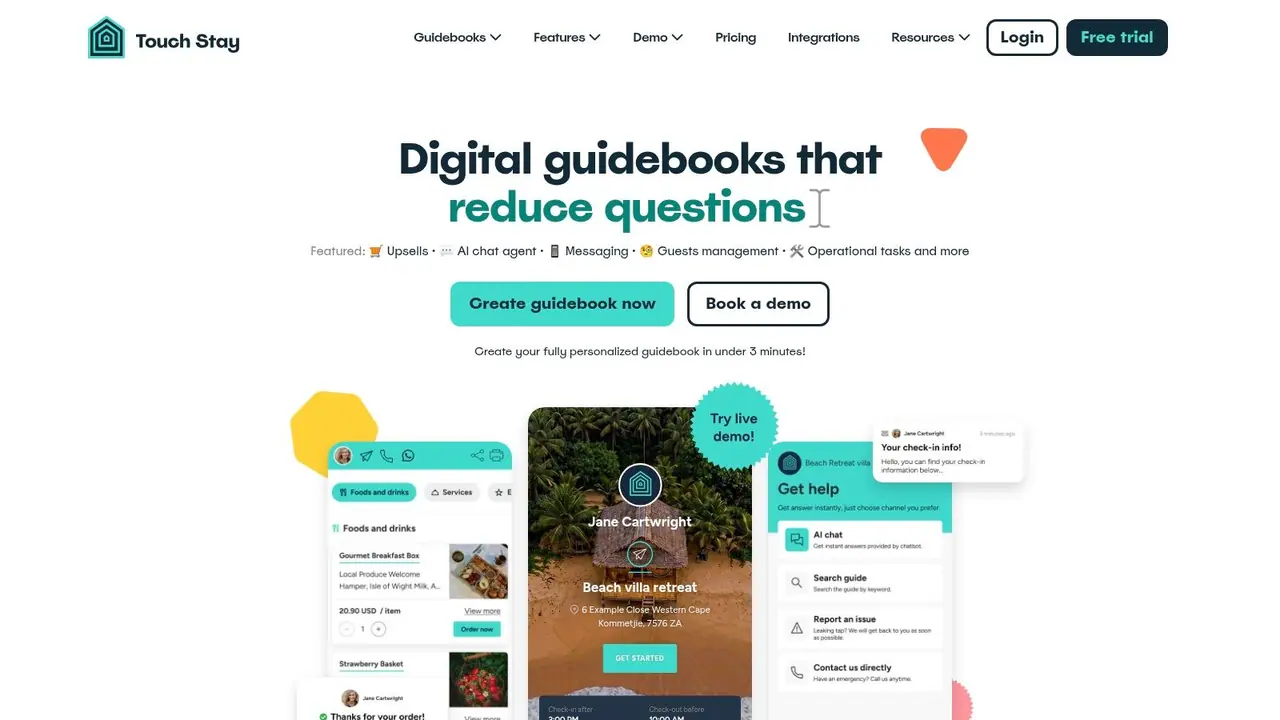
Touch Stay is one of the better-known digital guidebook tools in the space, and it's easy to see why. It gives guests a single web link for property details, check-in instructions, Wi-Fi, videos, local recommendations, and other stay information. Scheduled sends, templates, integrations, and analytics make it easier to deploy across multiple listings.
The appeal is polish. If your current welcome process feels fragmented, Touch Stay can make it look much more intentional without forcing guests into another app.
Best for polished guest information delivery
This tool is strongest when guest education is the main job. It's especially useful for properties with quirks that need explanation, or hosts who are tired of answering the same arrival and house questions over and over.
The main drawback is pricing clarity. Public pricing details aren't always fully itemized, so some hosts will need to go through the site or sales process before they can compare total cost properly.
If you're evaluating this category, it helps to compare Touch Stay with a broader vacation rental welcome book software guide rather than looking at it in isolation.
A digital guidebook works best when it replaces messages, not when it duplicates them. If you still send the full instruction essay by chat, the guidebook won't carry its weight.
Touch Stay also integrates with many PMS platforms, which makes it a useful add-on instead of an all-or-nothing stack decision. You can see the current product on the Touch Stay website.
9. Duve
Duve is built around the guest journey more than the reservation backend. Think online check-in, branded guest app or room directory, messaging, payments, upsells, and mobile key integrations. It's a strong option for boutique hospitality operators and multi-unit short-term rentals that want a more branded, monetizable guest portal.
That focus gives it a different role in the stack. It's not trying to be your whole operational universe. It's trying to modernize the stay itself.
Best for monetized guest journeys
Duve works well when the property experience has enough complexity or enough guest spend potential to justify a more robust portal. That can mean boutique hotels, serviced apartments, or STR portfolios with multiple upsell opportunities before and during the stay.
Its modular structure is a plus. You can start lighter and expand into more of the suite later. The hard part is pricing visibility, because many plans are quote-based and can vary by unit count and product mix.
A simple breakdown:
- What stands out: Guest-facing flows, e-commerce style upsells, and branded presentation.
- Best fit: Operators who care about pre-arrival check-in and ancillary revenue.
- Watch out for: Potentially higher complexity and less transparent pricing.
If you already have a PMS you like but the guest journey still feels generic, Duve is the kind of layer worth evaluating. The product details are on the Duve website.
10. Breezeway
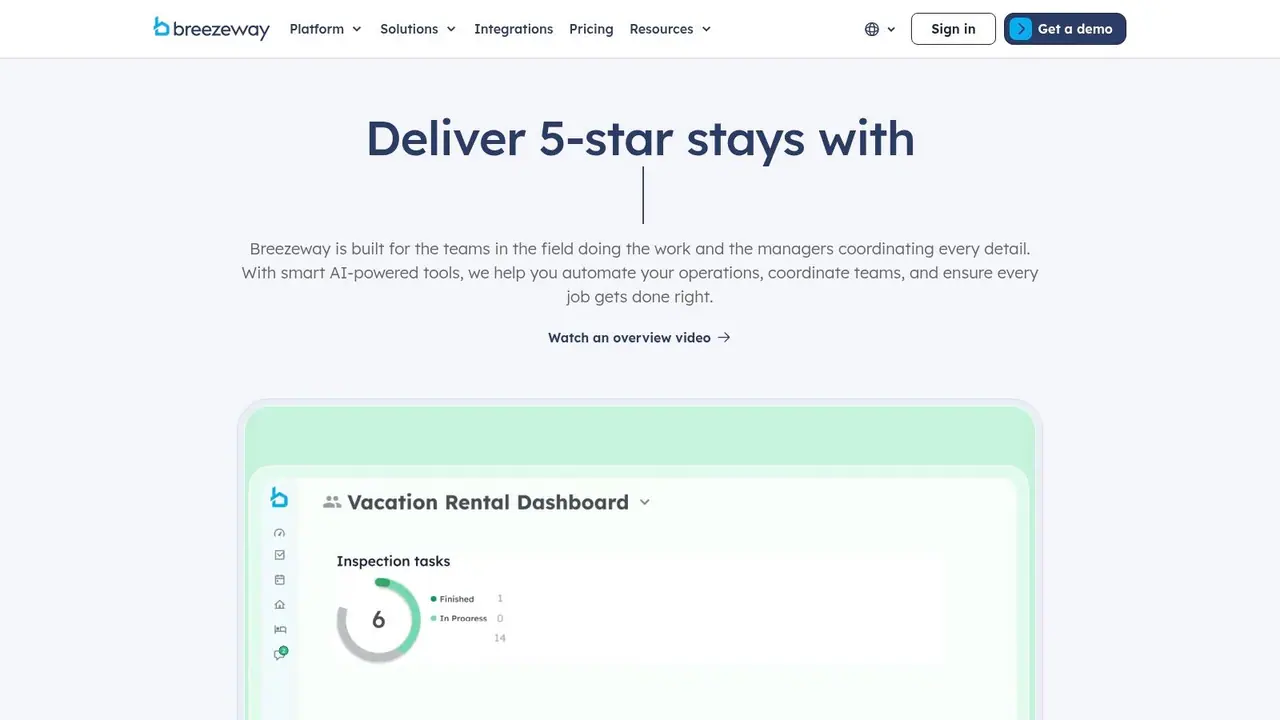
Breezeway belongs in the operations layer of the stack. If your main problem is not bookings but execution on the ground, its functionality becomes essential. Cleaning coordination, inspections, maintenance, quality assurance, team messaging, and guest communications all sit much closer to the core work of turnover.
A lot of hosts wait too long to tighten this part of the business. They focus on pricing and listings while turnovers stay inconsistent.
Best for housekeeping and quality control
Breezeway is strongest for managers with teams, vendors, or enough unit volume that checklists and QA standards need to be formalized. The dedicated operational workflows can reduce misses that directly affect reviews, from incomplete cleans to unresolved maintenance issues.
It also matters more now because regulation and compliance are becoming more operational, not just legal. Local rules can be highly specific. Riverside County limits owners or owner entities to no more than two STR certificates and sets a 500-unit cap in Idyllwild, while Honolulu permits STRs only in resort-zoned areas and a few apartment-zoned areas (Riverside County STR program details). That kind of rule environment affects house rules, occupancy controls, check-in instructions, and local contact processes. Operations software helps teams enforce those details consistently.
- Best use case: Teams running repeatable turnovers and inspections across multiple units.
- Big advantage: Purpose-built quality control and maintenance workflows.
- Main drawback: Pricing often depends on modules and unit count, so comparison shopping takes more effort.
If your guest messaging is fine but your field execution is uneven, Breezeway solves a different and very real problem. You can review the platform on the Breezeway website.
Top 10 Short-Term Rental Apps: Feature Comparison
| Product | Core features ✨ | UX / Quality ★ | Pricing & Value 💰 | Target audience 👥 | Unique selling points |
|---|---|---|---|---|---|
| ScanStay 🏆 | QR web guide: Wi‑Fi copy, check‑in/out, house rules, Google‑pinned maps, one‑tap upsells, AI (18 langs), analytics, A5 QR poster | ★ Reported jump to 4.94 avg; ~82% fewer messages; mobile‑first, no app | 💰 Free tier → Solo $19 / Pro $49 / Unlimited $99; clear pricing; upsell revenue potential | 👥 Solo hosts → managers → agencies; multilingual properties | ✨ Fast setup, reusable templates, white‑label, built‑in monetisation |
| Guesty | Unified inbox, channel manager, pricing toolkit, native guest app, large integrations | ★ Mature, reliable channel sync at scale | 💰 Quote‑based; cost rises with add‑ons | 👥 Growing portfolios & enterprise operators | ✨ Enterprise PMS + broad marketplace integrations |
| Hostaway | OTA APIs, automations, reporting, direct booking engine | ★ Credible for large US portfolios | 💰 Quote‑based; geared to scale | 👥 Professional managers & fast‑growing portfolios | ✨ Deep OTA partnerships; enterprise reliability |
| Lodgify | Drag‑drop direct‑booking websites, channel sync, payment gateways | ★ Good for branded direct‑booking UX | 💰 Competitive tiers for small→mid; some dynamic pricing fees | 👥 Owners prioritising branded direct bookings | ✨ Built‑in site builder + PMS/payments |
| Hospitable | Automated messaging, unified inbox, channel sync, task automation, upsells | ★ Transparent pricing; praised by small/mid hosts | 💰 Public pricing; straightforward monthly plans | 👥 Small → mid‑sized hosts wanting fast setup | ✨ Strong messaging automations & simple onboarding |
| OwnerRez | Trust accounting, owner statements, per‑property pricing, direct booking | ★ Highly rated for accounting & reporting | 💰 Per‑property pricing; month‑to‑month, modular add‑ons | 👥 Independent US operators & owner‑focused managers | ✨ Robust accounting + configurable pricing |
| Hostfully (PMS & Guidebooks) | PMS + channel manager, Guidebooks for guest info and upsells | ★ Longstanding brand; smooth guidebook integrations | 💰 PMS often quote‑based; guidebooks separately priced | 👥 Hosts needing integrated guidebooks & PMS | ✨ Guidebooks that pair with PMS or other stacks |
| Touch Stay | Web guidebooks, scheduled sends, AI content assistant, analytics, integrations | ★ Strong guest adoption; templates & multilingual support | 💰 Per‑property tiers; public pricing limited | 👥 Managers scaling guidebooks across properties | ✨ AI assistant + wide PMS integrations |
| Duve | Online check‑in, branded guest app/room directory, messaging, mobile keys, payments | ★ Flexible modular UX for hotels & multi‑unit STRs | 💰 Quote‑based; costs vary by rooms/units | 👥 Boutique hotels & multi‑unit STRs | ✨ Mobile keys, branded room directory & payments |
| Breezeway | Tasking, QA workflows, inspections, maintenance, messaging, welcome Guide | ★ Purpose‑built ops tooling for scale | 💰 Module/unit pricing; sales contact for quotes | 👥 Operations‑centric teams & large portfolios | ✨ Deep cleaning/QA workflows + integrated guest messaging |
From Cluttered to Cohesive Your Next Move
Friday at 4 p.m., a guest cannot find the lockbox, a cleaner needs the gate code, and your inbox is full of questions that were answered last week. That is usually not a sign that you need more software. It is a sign that your tools are not organized around the actual work.
The better way to choose a short term rental app is to treat it as part of a stack. Each layer should solve a specific operational problem. In most STR businesses, that means three categories: a PMS for reservations and channel control, a guest experience tool for check-in details and house information, and an operations platform for cleaning, inspections, and maintenance.
Hosts often make the wrong first purchase. They shop for an all-in-one system, then end up paying for features the team does not use while the actual bottleneck stays in place.
For many operators, the first bottleneck is guest communication.
A digital welcome book is often the fastest, lowest-risk fix because it cuts repetitive messages without forcing a full PMS migration. If guests keep asking for Wi-Fi details, parking instructions, appliance directions, or checkout steps, the issue is usually not staffing. The information is buried, inconsistent, or missing at the moment guests need it. A good guidebook closes that gap quickly and improves the stay right away.
That is why I usually recommend building the stack in this order:
- Fix repeated guest questions first: Add a digital guidebook if your team answers the same operational questions every week.
- Upgrade the booking system second: Replace or add a PMS when channel syncing, automation, or reporting errors start creating avoidable mistakes.
- Add operations software third: Use tasking, inspections, and maintenance workflows when field execution needs more accountability across staff, vendors, or multiple units.
- Check integrations before you buy: Shared data matters. Manual re-entry creates extra work and causes preventable errors.
This approach is slower at the start and better over time. Teams adopt one tool properly, standardize the process around it, and then add the next layer with less confusion.
If your current pain point is guest instructions, missing house information, or outdated paper binders, start there. ScanStay gives hosts a digital welcome book with QR access, multilingual support, reusable templates, and upsell tools. It is a practical first step for operators who want a cleaner guest experience and fewer repetitive messages without rebuilding the whole stack at once.