10 Best Affordable Property Management Software for 2026
Find the best affordable property management software for your STR business. Our 2026 guide reviews 10 top tools on features, pricing, pros, and cons.
Escape the chaos with affordable property management software that fits the way small operators work. If your evenings disappear into check-in questions, calendar fixes, and back-and-forth with cleaners, you're not looking for a giant enterprise platform. You're looking for something that stops the daily interruptions without creating a second job in setup, training, and billing review.
That's where most roundups miss the point. They compare feature lists, but they don't spend enough time on total cost of ownership. A cheap-looking tool can get expensive fast once you add payment processing, add-ons, per-unit fees, or features that are only available on higher tiers. That matters even more for small managers because budget software often lands in an actual range of roughly $100 to $300 per month for professional-grade setups, with enterprise systems costing far more, depending on how many extras you need.
The bigger trend is clear too. Cloud products already account for most market revenue in the U.S. property management software segment, with 61.1% of 2023 revenue tied to cloud delivery. That fits what small hosts need: remote access, subscription pricing, and less technical overhead.
Table of Contents
- 1. OwnerRez
- 2. Hospitable
- 3. Hostfully (PMS)
- 4. Lodgify
- 5. iGMS
- 6. Uplisting
- 7. Smoobu
- 8. Tokeet (AdvanceCM)
- 9. Zeevou
- 10. Host Tools
- Top 10 Affordable Property Management Software Comparison
- Choosing Your Tool and Building a Smarter Host Stack
1. OwnerRez
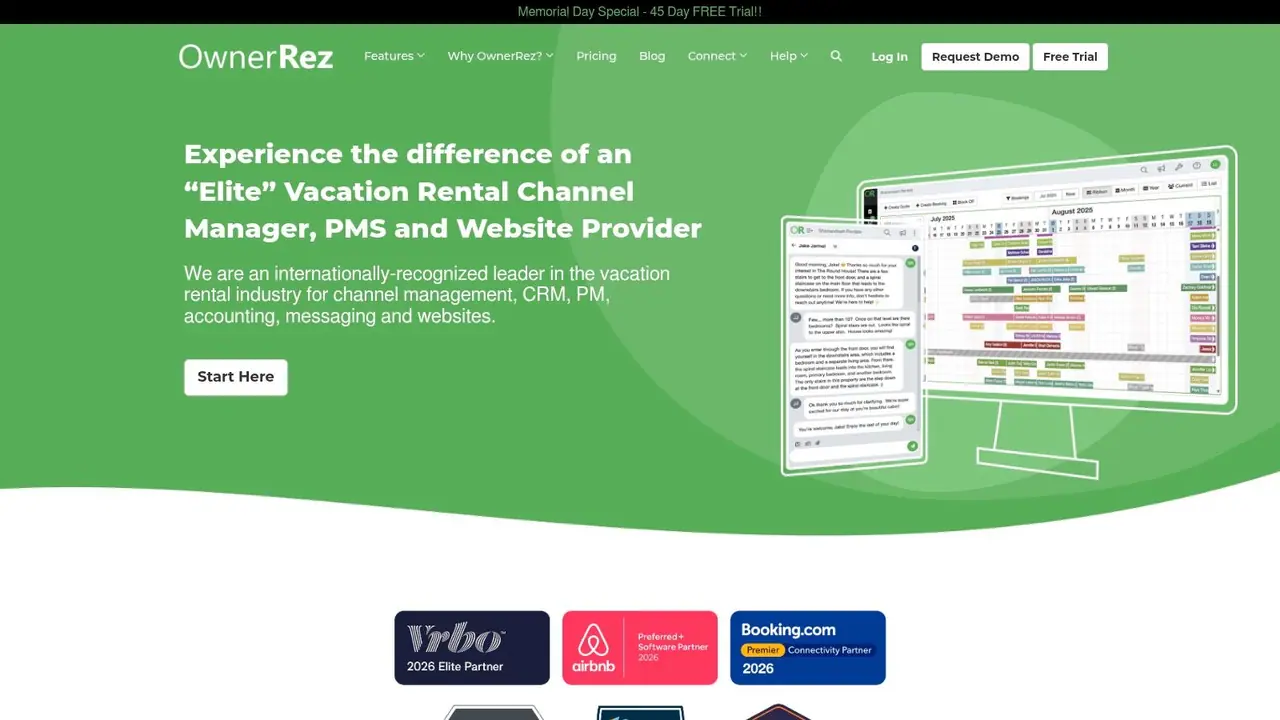
OwnerRez is the tool I'd put in front of a manager who's outgrown lightweight host apps and now needs structure. It's built for vacation rentals, and it shows in the details: direct API channel connections, strong fee and tax handling, owner statements, commission calculations, rental agreements, and direct-booking widgets.
Where it stands out is control. If you manage properties for owners and need to explain every charge, fee split, or statement line, OwnerRez handles that kind of operational mess better than simpler systems. It's also a good fit when direct bookings matter and you don't want a platform taking a cut on every reservation.
Where OwnerRez earns its keep
The trade-off is setup time. This isn't the cheapest option in effort, even if it can be cost-effective in the long run. Advanced pieces like QuickBooks integration, hosted websites, SMS, and some premium tools cost extra, so the base subscription isn't the full story.
- Best for multi-owner operations: Owner statements and commission logic are stronger than what you get in lighter host-first tools.
- Best for fee-heavy portfolios: If you charge cleaning, pet, resort, management, or local tax layers, the granularity helps.
- Not ideal for impatient setups: If you want to be live by tonight, this probably isn't your first stop.
Practical rule: Choose OwnerRez when reporting accuracy and owner accountability matter more than a fast learning curve.
If you're managing a growing vacation rental business and want a clearer operating model, ScanStay's guide to vacation property management pairs well with this kind of system.
You can explore the platform at OwnerRez.
2. Hospitable
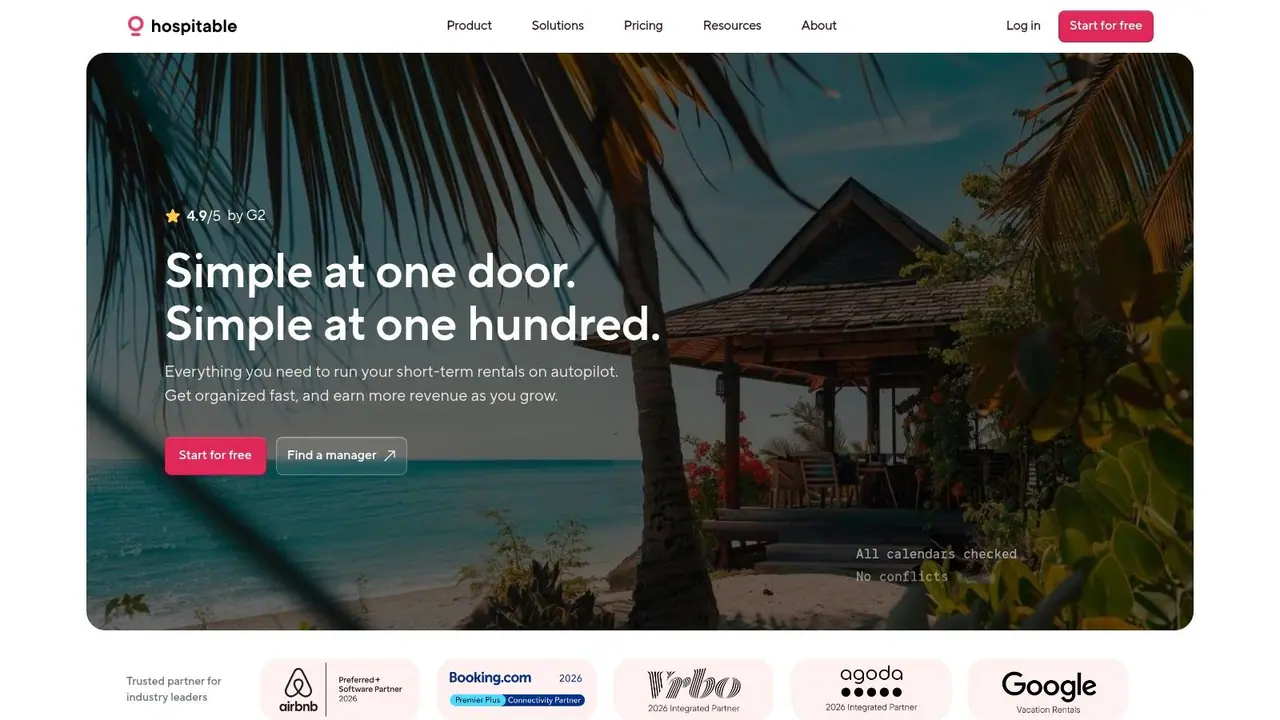
Hospitable solves a very specific pain first: repetitive guest communication. If your day gets chopped up by the same Wi-Fi question, the same parking question, and the same check-out message, this is one of the fastest ways to get relief.
Its unified inbox, automated messaging, AI assistance, channel sync, guest portal, and rule-based workflows make it easy to deploy. For many hosts, that matters more than accounting depth. A system you'll finish setting up beats a more powerful platform that sits half-configured for weeks.
Best fit for message overload
Hospitable can be a smart budget entry point because its Essentials tier lowers the barrier for small hosts. But you still need to watch the true monthly spend. Processing charges, device-related costs, and higher-tier automation can push the total upward if you rely on smart locks, thermostat workflows, or portal features.
The cheapest communication stack is often the one that removes interruptions first, not the one with the longest feature list.
This is especially useful for hosts trying to improve conversion and reduce friction in guest communication before spending heavily elsewhere. If that's your current bottleneck, these ideas on how to increase Airbnb bookings fit naturally alongside Hospitable's automation model.
- What works well: Fast setup, automated replies, cleaner guest communication.
- What doesn't: Deep accounting and owner reporting usually need another tool.
- Who should skip it: Managers who need serious trust accounting or highly detailed owner statements.
Visit Hospitable to review current plans and features.
3. Hostfully (PMS)
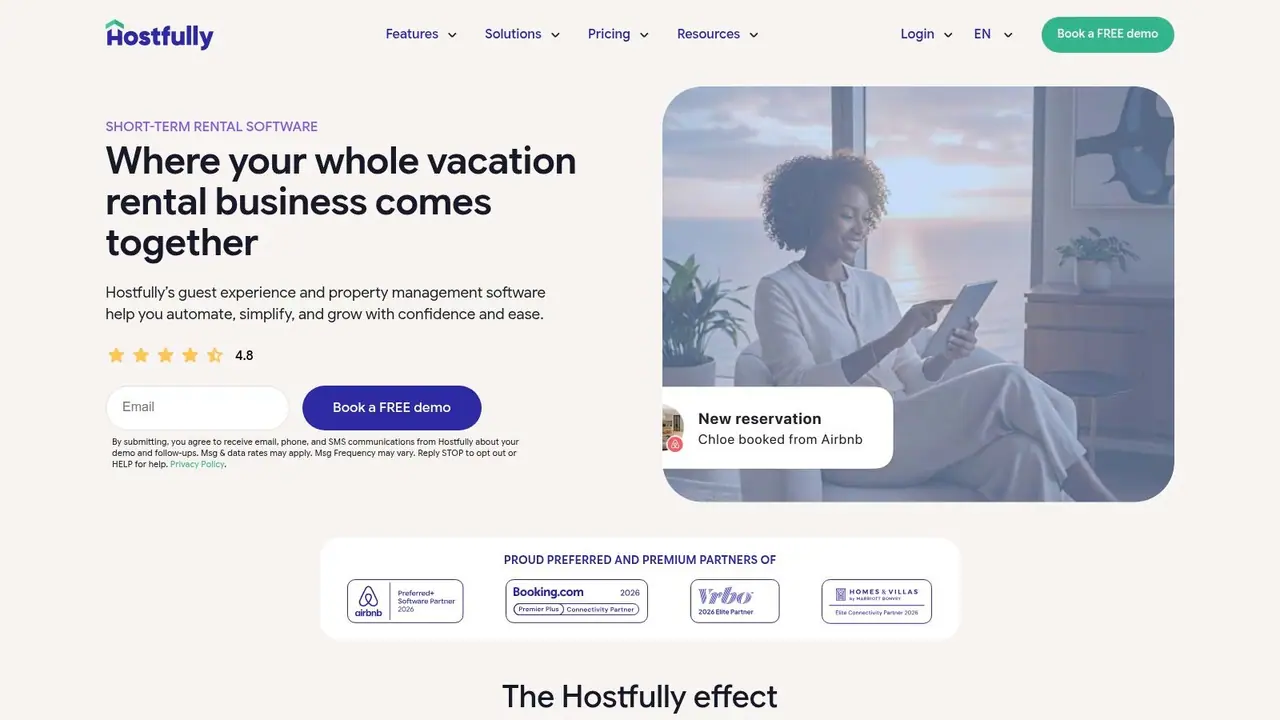
Hostfully sits in a useful middle ground. It's more operationally complete than lightweight automation tools, but it usually feels more approachable than a heavily accounting-centered PMS. For many short-term rental managers, that balance is the appeal.
You get API connections to major OTAs, a unified calendar and inbox, owner portal access, owner statements, mobile access, direct-booking options, and a marketplace for add-ons. If you're trying to standardize operations across several listings without moving into a full enterprise system, that package makes sense.
Where costs can creep up
Hostfully's per-property model is easy to understand at first glance, and that's a plus. The catch is that platform fees and optional add-ons can change the actual monthly cost. Advanced analytics, specialized integrations, and higher service expectations tend to increase spend over time.
That doesn't make it a bad value. It just means you should budget based on your actual workflow, not the headline number.
- Strong fit: Operators who want owner-facing tools and channel management in one system.
- Less ideal: Hosts who only need messaging automation and basic sync.
- Watch closely: Direct-booking commissions and payment flow details by tier.
Guest experience still needs attention after the PMS is in place. If you're tightening operations and want fewer support messages, these ideas on how to improve guest satisfaction complement Hostfully well.
You can review the platform at Hostfully.
4. Lodgify
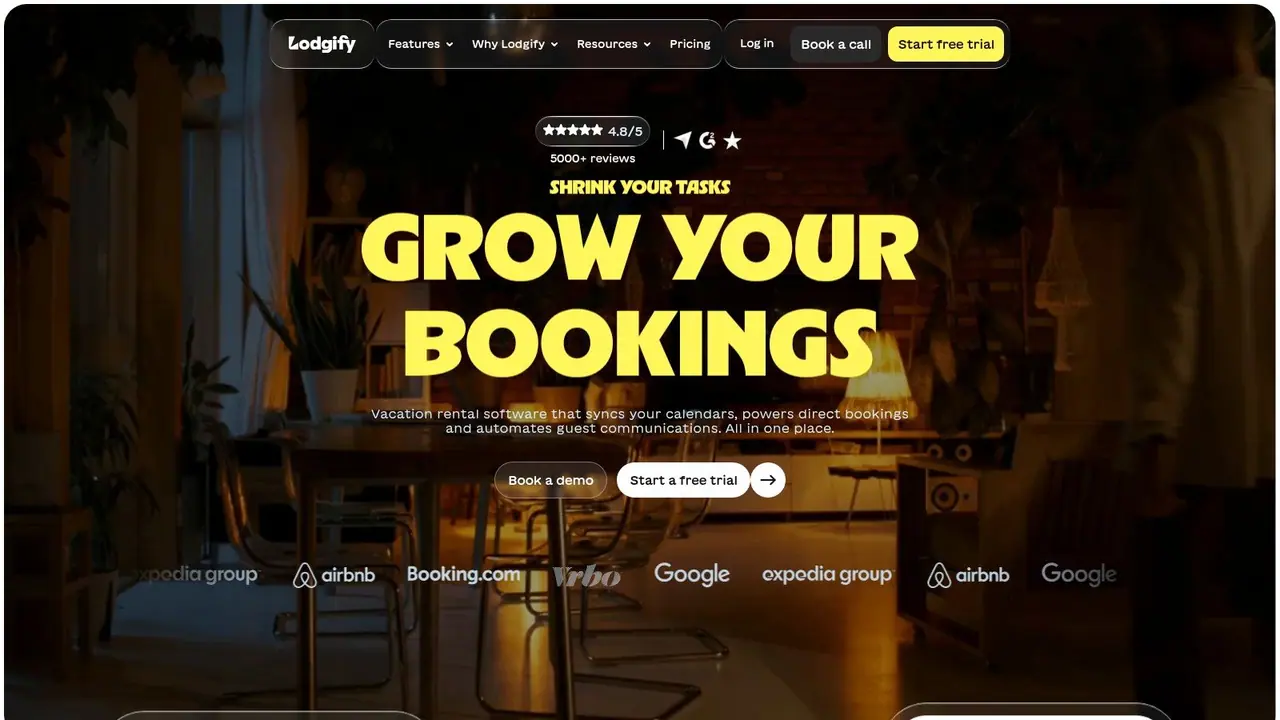
Lodgify is one of the easier choices when your direct-booking site matters almost as much as your PMS. Some hosts don't want a separate website builder, booking engine, and channel manager. Lodgify brings those pieces together in a cleaner package than many low-cost tools.
Its no-code website builder, embeddable widgets, channel manager, Google Vacation Rentals support, inbox, reporting, and newer pricing features make it a practical all-in-one for hosts who want a stronger brand presence. This is its key advantage. You can get operational software and a direct-booking storefront without building a complicated stack from day one.
Best when direct booking matters
The trade-off is pricing structure. Lodgify gives you choices between plans with booking fees and plans built around a higher subscription with no booking fee. That sounds flexible, and it is, but it also means you need to model your likely volume before picking a tier.
If your occupancy is steady and direct bookings are a real channel, the higher fixed plan may be the better deal. If your calendar is less predictable, a lower subscription with transaction-based costs may feel safer.
Don't pick Lodgify just because the website looks good. Pick it if you'll actively use the direct-booking engine.
A practical note from the broader market: cloud delivery continues to dominate this category, and one market outlook found cloud solutions captured 72.41% of 2025 revenue in property management software, while small operators with 1 to 500 units were a fast-digitizing segment growing at 11.13% CAGR. Lodgify fits that movement toward accessible, scalable, cloud-based tools.
Check current options at Lodgify.
5. iGMS
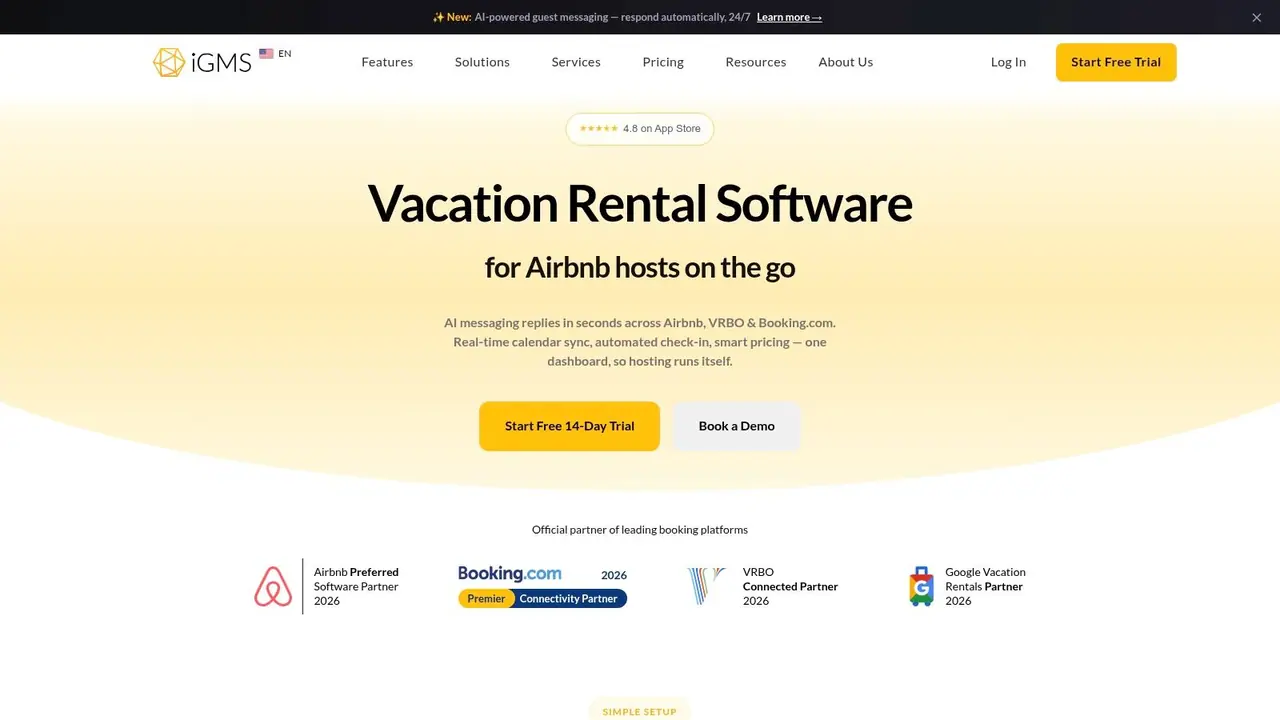
iGMS is one of the more practical options for hosts who hate paying for unused capacity. Its appeal comes from pricing flexibility. You can choose a usage-based approach or move to flatter monthly tiers if you want predictable budgeting.
That matters for seasonal operators. If you run a portfolio that swings hard between busy and slow periods, a pay-as-you-book model can feel fairer than paying full freight every month. On the other hand, if your occupancy stays healthy year-round, flat pricing usually makes life easier because your software bill doesn't jump with every booked night.
The real trade-off with flexible pricing
Feature-wise, iGMS covers the basics well: channel management, automation, unified inbox, AI-assisted guest replies, direct booking options, owner portal on higher plans, and built-in revenue management support in some markets. It's broad enough for many small to midsize short-term rental operations.
The weak spot is depth. If you need advanced reporting, highly detailed accounting, or complex owner-level finance controls, iGMS can start to feel thin compared with more specialized PMS platforms.
- Good choice for seasonal inventory: The Flex model can line up better with uneven booking patterns.
- Good choice for simple budgeting: Pro plans are easier to forecast.
- Not the best choice for finance-heavy teams: Reporting and accounting needs may outgrow it.
You can compare plans at iGMS.
6. Uplisting
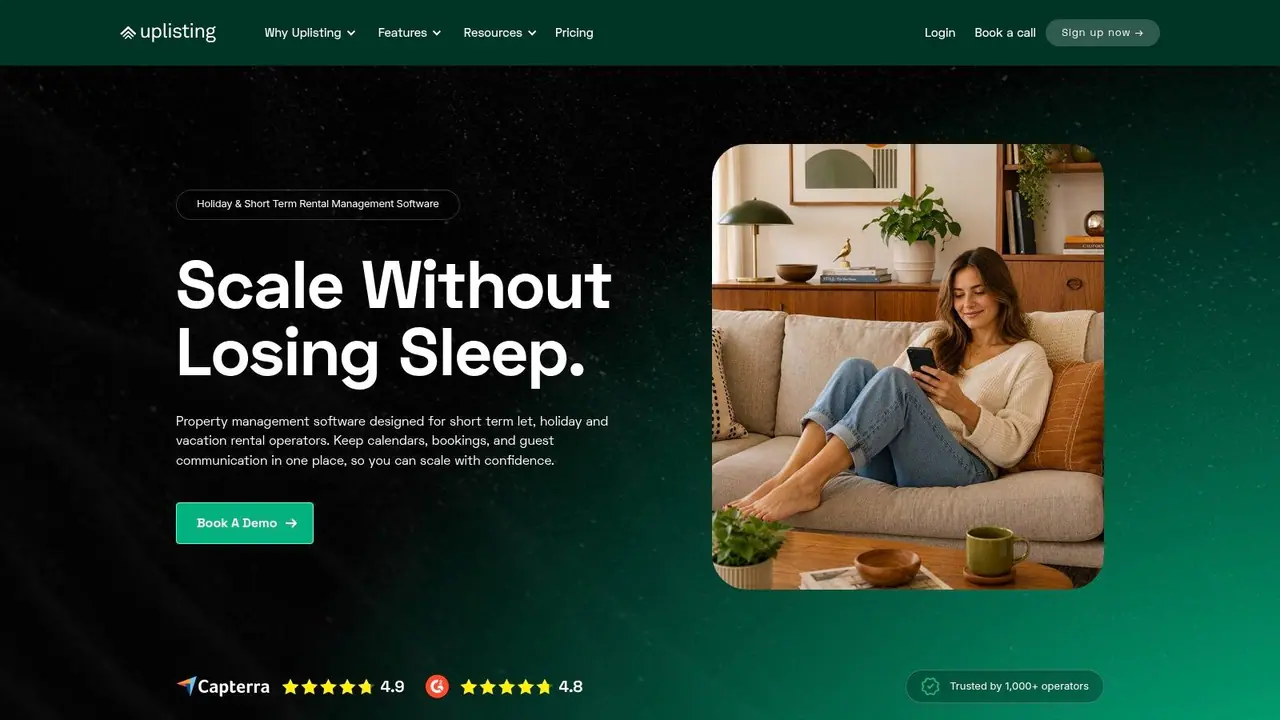
Uplisting has a reputation for being clean, reliable, and focused. That sounds boring until you've lived through double-booking anxiety or flaky sync behavior. Reliability is a feature, especially for small teams who don't have an operations manager cleaning up software mistakes.
It offers API integrations with major channels, unified inbox and calendar views, direct booking, payment workflows, security-deposit automation, and integrations with pricing tools. It's a good example of affordable property management software that feels polished rather than stripped down.
A strong choice for small teams
The catch is right in the cost structure. Uplisting can be a tougher sell for solo hosts with very small portfolios because there's a monthly minimum around the lower end that raises the effective cost per unit when you have only a few listings. For managers with more properties, that issue fades and the value improves.
Its other limitation is accounting depth. Uplisting handles operations well, but if your finance workflow is complex, you may still need separate bookkeeping or reporting tools.
Reliable sync is worth paying for if a single booking mistake creates hours of guest recovery work.
One useful benchmark from the wider market: independent research projects the global property management software market to reach USD 5.89 billion by 2033, growing at a 6.4% CAGR, with the cloud segment at 61.2% of 2025 revenue and the residential segment at 70.5%. Uplisting fits that residential, cloud-first pattern well.
Explore the platform at Uplisting.
7. Smoobu
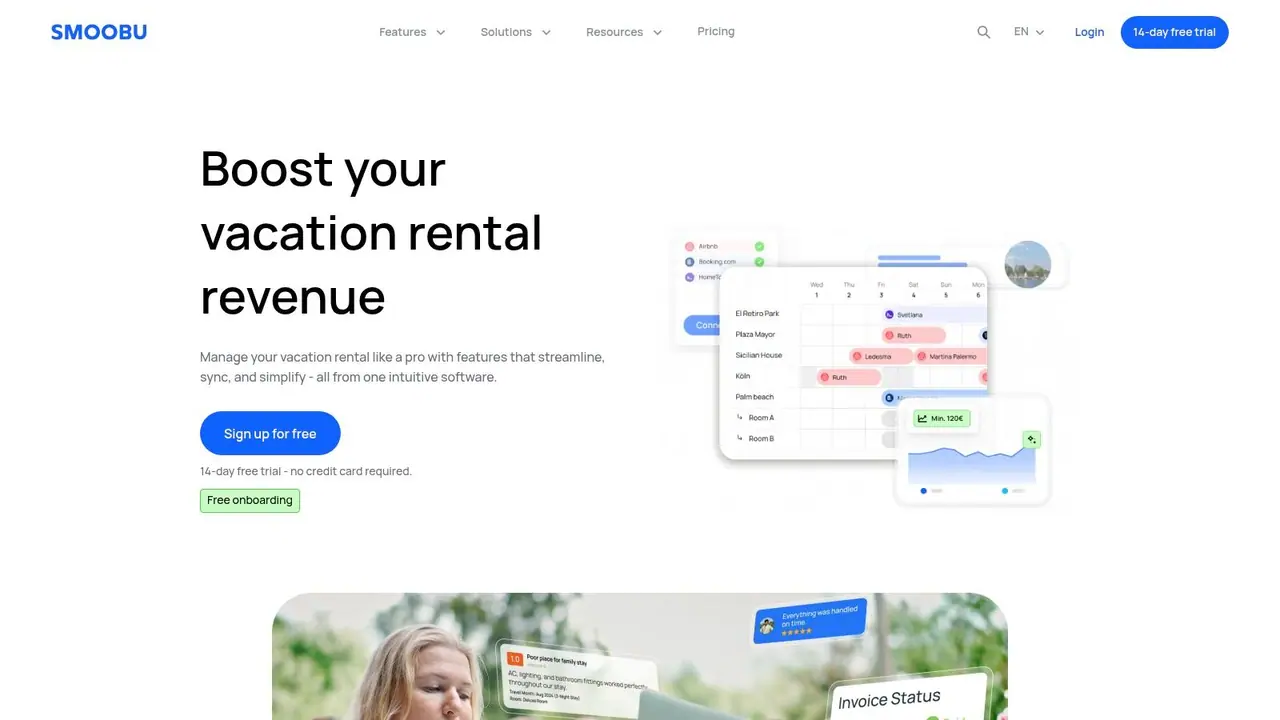
Smoobu is a sensible pick for hosts who want fewer moving parts. It doesn't try to be everything. Instead, it focuses on the core functions most small portfolios use: channel sync, messaging, direct booking, and a website builder that's simple enough to launch without hiring anyone.
That simplicity is its strongest selling point. If you manage a handful of units and want to replace spreadsheets and manual channel updates, Smoobu often feels more approachable than tools built for agencies and multi-owner portfolios.
Why small hosts like it
The downside is predictable. Once you start needing richer accounting, owner statements, or deeper operations controls, Smoobu can feel lightweight. Dynamic pricing is available as an add-on, which is convenient, but it's still another layer to price in.
For a small host, though, that may be exactly right. You don't always need the platform with the most features. You need the one your team can learn in an afternoon and trust by next week.
- Best for: Small portfolios that need channel management without complexity.
- Best feature mix: Sync, messaging, simple direct booking, easy onboarding.
- Less suitable for: Management companies with owner reporting requirements.
You can try it at Smoobu.
8. Tokeet (AdvanceCM)
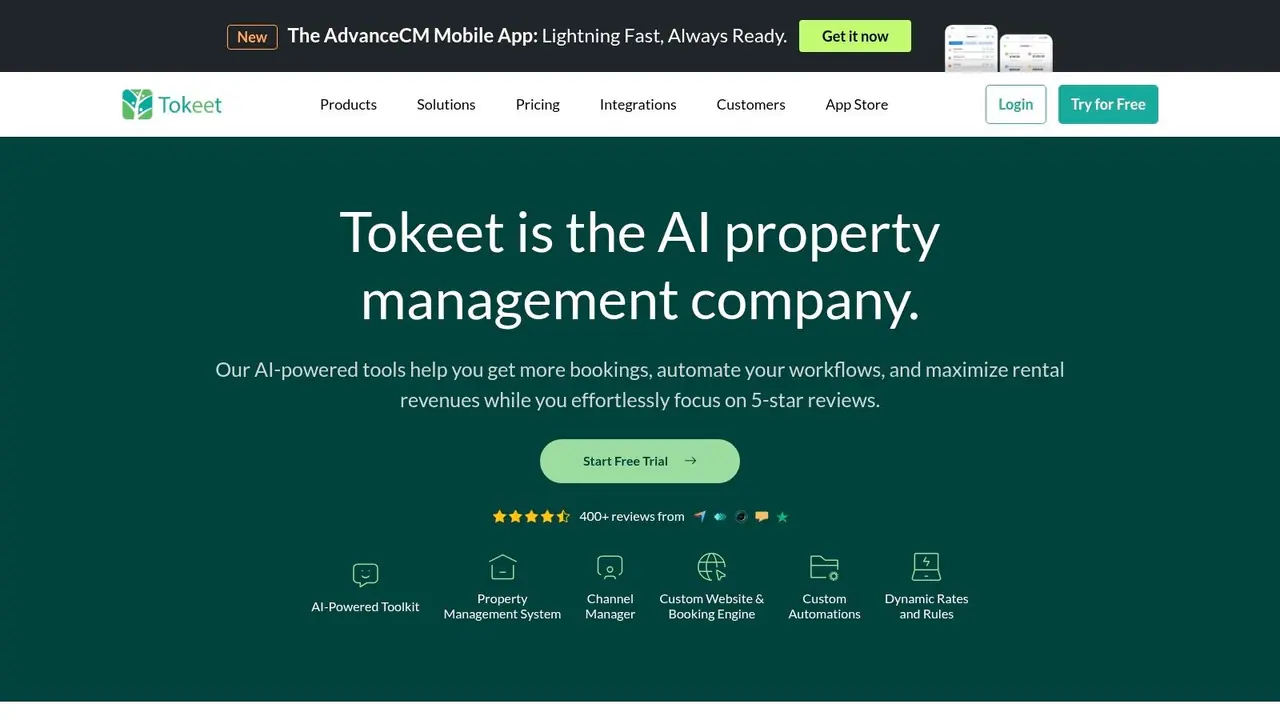
Tokeet, through its AdvanceCM ecosystem, appeals to operators who like modular software. Instead of one rigid package, you get a system built around bundles and connected tools. That can be a good way to avoid overpaying for features you won't use right away.
Core functions include channel management, workflows and automation, invoicing and payments, a website builder, AI-assisted messaging, mobile support, and optional dynamic pricing. There's also an entry-friendly feel to the lineup, which is why many smaller operators look at it before committing to a more expensive PMS.
Modular can be good and annoying
The obvious advantage is flexibility. The obvious downside is that flexible pricing usually means calculator pricing. You often have to work through selectors and plan builders to understand your real cost.
That's not a dealbreaker, but it does increase implementation friction. If you're already stretched thin, any tool that makes pricing hard to evaluate usually also takes longer to scope properly.
- Good fit: Operators who want website, automation, and pricing tools from one vendor.
- Less ideal: Anyone who wants a fast, transparent quote and immediate clarity.
- Important step: Use the trial before migrating live calendars and workflows.
Review the current ecosystem at Tokeet.
9. Zeevou
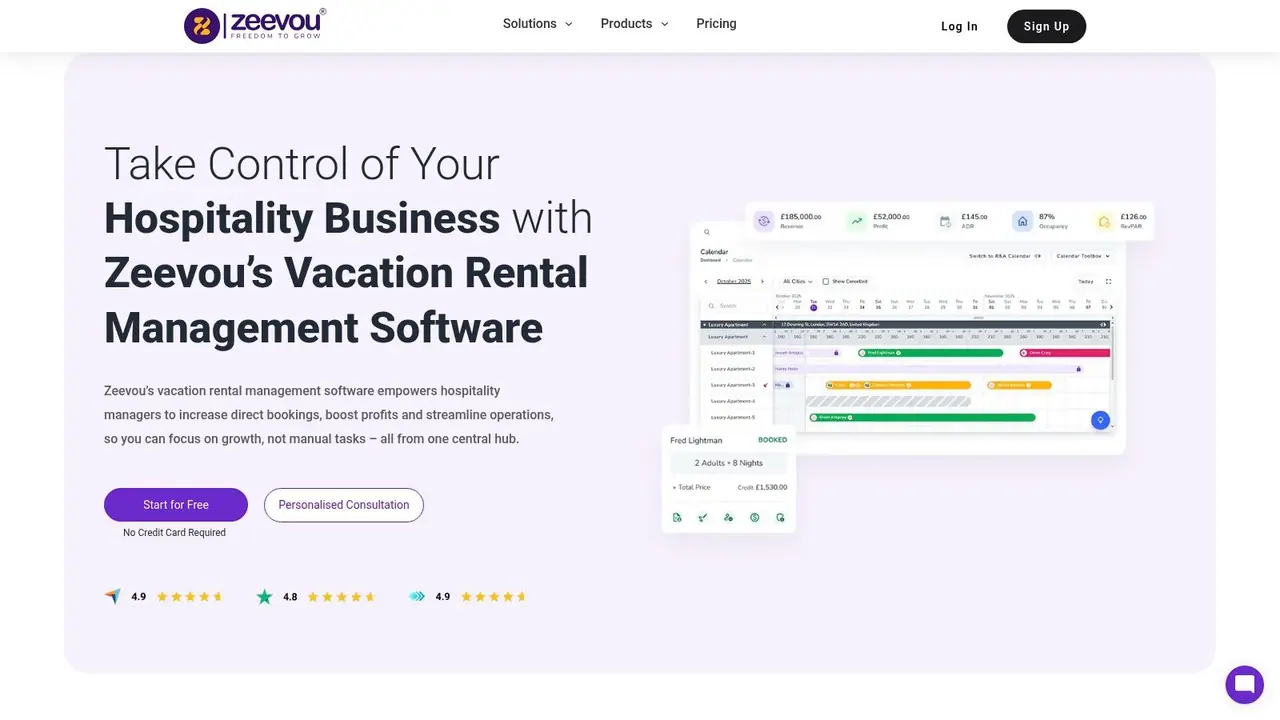
Zeevou is one of the more interesting entries on this list because the value proposition is aggressive. A free core model that includes website, CRM, channel manager, and PMS functions gets attention fast, especially from smaller operators trying to avoid a heavy software commitment.
It also covers a lot of ground operationally. Messaging automation, task and maintenance tools, pricing rules, reporting, mobile apps for cleaners and handymen, and Google Vacation Rentals support give it a wider footprint than many budget-oriented tools.
Strong value if you can handle setup
What you save in upfront cost, you may spend in configuration time. Broad platforms often ask for more decisions during onboarding. That's fine if you want control. It's less fine if you're trying to switch systems during a busy season.
Still, Zeevou is compelling when you want an end-to-end environment without setup fees and surprise training charges hanging over the decision.
Broad feature sets save money only if you finish the setup. Half-configured software is expensive, even when the subscription isn't.
A good use case is the operator who has outgrown simple host tools but isn't ready for an enterprise contract. You can explore that model at Zeevou.
10. Host Tools
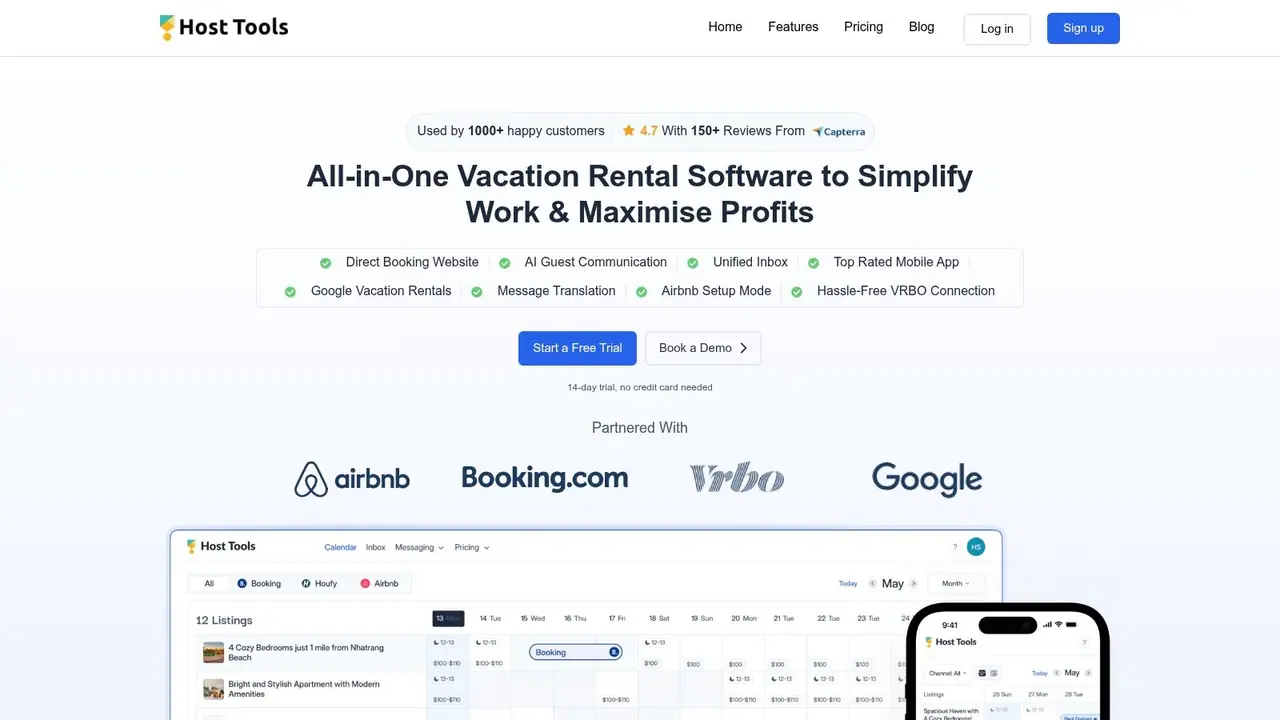
Host Tools is the option I'd consider when you're not ready for a full PMS but you can't keep juggling manual messaging and pricing updates. It works well as a lightweight automation layer. That distinction matters. It's not trying to be your accounting backbone or owner-reporting engine.
You get automated messaging, a unified calendar, multi-channel price sync, rule-based pricing, mobile apps, direct booking checkout on higher tiers, and integrations with outside pricing tools. For a host moving up from platform-native tools, that's often enough to create breathing room.
Best as an automation layer
The primary advantage is speed. Host Tools is easy to learn, and that lowers implementation cost even if the subscription itself isn't the only thing you care about. Time spent configuring software is a cost, especially for owner-operators.
The limitation is just as clear. If you need trust accounting, owner statements, or serious financial workflows, you'll hit the edge quickly.
- Best for early-stage systems: Centralized messaging and pricing before a full PMS migration.
- Best for lean stacks: Pair it with a direct-booking page and guest guide for a simple setup.
- Not enough for: Agencies that need owner accounting and deep operational reporting.
If you want a lighter automation platform first, see Host Tools.
Top 10 Affordable Property Management Software Comparison
| Product | Core features | UX & Reliability | Pricing / Value | Target audience | Standout (USPs) |
|---|---|---|---|---|---|
| OwnerRez | Channel APIs (Airbnb/Vrbo/Booking/Google); quotes, invoicing & e-sign; owner statements; widgets | ★★★★, powerful, steeper learning curve | 💰 Per-property pricing; no booking commissions | 👥 Multi-owner managers & accounting-heavy operators | ✨ Granular fees/taxes; 🏆 Owner accounting/reporting |
| Hospitable | Unified inbox + AI Assist; guest portal; channel sync; automations | ★★★★, fast to deploy, automation-first | 💰 Essentials free tier; dynamic in-app fees for some features | 👥 Small hosts focused on messaging automation | ✨ AI messaging & guest portal; 🏆 Messaging-first workflow |
| Hostfully | Channel manager; owner portal; direct-booking & marketplace; mobile app | ★★★, solid UX; platform fees on top | 💰 Per-property pricing that scales; platform fee applies | 👥 Growing portfolios needing owner tools | ✨ Marketplace & API; 🏆 Scalable PMS for portfolios |
| Lodgify | No-code website & widgets; channel manager; reporting; dynamic pricing | ★★★★, user-friendly for direct bookings | 💰 Choice of 0% booking-fee plan or lower-subscription with booking fees | 👥 Hosts prioritizing direct bookings & site control | ✨ Built-in website + widgets; 🏆 Flexible fee models |
| iGMS | Channel mgmt; automation & AI replies; revenue mgmt (select markets) | ★★★, budget UX; basic analytics | 💰 Flex pay-per-booked-night or flat Pro monthly plans | 👥 Seasonal hosts or pay-as-you-book operators | ✨ Flex pricing per booking; 🏆 Cost-effective for low occupancy |
| Uplisting | Channel sync; direct-booking engine; payments & deposit automation | ★★★★, reliable sync & automation for SMBs | 💰 Transparent public pricing; ~ $100/mo min under 5 props | 👥 SMB teams scaling operations | ✨ Dependable sync & fair billing; 🏆 Reliability |
| Smoobu | Channel sync; messaging; website builder; optional dynamic pricing add-on | ★★★, quick setup for small portfolios | 💰 Approachable plans; dynamic pricing extra per property | 👥 Hosts with 1–5 units | ✨ Easy setup + 14‑day trial; 🏆 Low entry cost |
| Tokeet (AdvanceCM) | Channel manager; workflows & invoicing; WebReady website; modular add-ons | ★★★, modular features; recommend trial for stability | 💰 Self-serve bundles; free plan + low-cost options | 👥 DIY hosts wanting modular stack | ✨ Modular ecosystem & WebReady; 🏆 Flexible bundles |
| Zeevou | Channel manager; free core website/CRM/PMS; task & maintenance tools | ★★★, broad feature set, more initial setup | 💰 Free core offering; paid upgrade packs | 👥 Small operators seeking low upfront cost | ✨ Free core PMS; 🏆 Transparent onboarding/pricing |
| Host Tools | Automated messaging; price rules & multi-channel sync; Pro adds checkout | ★★★★, very fast to learn, lightweight | 💰 Low-cost automation; Pro tier for direct-booking checkout | 👥 Hosts wanting automation before full PMS | ✨ Rapid setup & focused automations; 🏆 Lightweight automation layer |
Choosing Your Tool and Building a Smarter Host Stack
Affordable property management software only works when the total system stays affordable. That sounds obvious, but plenty of hosts save on the PMS and then overspend on scattered add-ons, manual work, or upgrades they didn't plan for. A better approach is to decide what problem you need solved first, then build around that.
How to Choose Your Ideal PMS
Focus on three things.
First, identify your core problem. If your day is getting buried in guest communication, Hospitable and Host Tools are strong candidates because they reduce repetitive messaging fast. If your pain sits in channel sync, direct booking, and more structured operations, OwnerRez and Lodgify are better starting points.
Second, match the tool to your portfolio shape. Per-property pricing can be excellent when you're growing steadily and need room to scale. Simpler flat-fee tools often suit very small portfolios better. Flexible booking-based models can work for seasonal units, but they can also make monthly costs harder to predict.
Third, be honest about technical comfort. Some platforms save money on paper but cost you more in setup hours, migration stress, and training. If you're not especially technical, free trials, clean onboarding, and responsive support matter more than edge-case features you may never use.
Beyond PMS Complementing Your Software with a Digital Welcome Book
Many small operators overspend. They acquire a larger PMS tier primarily for a better guest-facing experience. However, that is frequently unnecessary.
A leaner PMS can handle reservations, channel sync, and operations, while a digital welcome book handles the guest information layer. That's a smarter stack for a lot of hosts. Instead of forcing one tool to do everything, you let each tool do one job well.
ScanStay fits that second layer neatly. It gives guests one QR-based guide for Wi-Fi details, check-in and check-out instructions, house rules, local recommendations, and video how-tos in a mobile browser with no app required. It also supports branded content, multilingual delivery, reusable templates, and optional upsells like late checkout or transport. In practice, that means you don't need to pay premium PMS pricing just to reduce repetitive guest questions.
This stack works especially well in a few scenarios:
- Low-cost PMS plus guest guide: Use a simpler PMS for bookings and operations, then let ScanStay handle arrival info and house details.
- Automation-first setup: Pair Hospitable or Host Tools with ScanStay to reduce both inbox volume and repeat questions.
- Direct-booking growth: Combine Lodgify, OwnerRez, or Hostfully with ScanStay to improve the guest journey after booking.
Your Next Step
Don't choose based on the longest feature grid. Choose the tool that removes your biggest operational drag with the least implementation pain. For some hosts, that's a messaging-first platform. For others, it's a more complete PMS with stronger owner reporting or direct-booking support.
Start narrow. Trial one or two tools that match your actual bottleneck. Test the calendar sync, message automation, onboarding flow, and owner or guest experience before you migrate everything. Then price the full stack, not just the subscription. Include add-ons, payment fees, and the time you'll spend getting it live.
That's how you find affordable property management software that stays affordable after month one.
If you want the simplest upgrade with the fastest guest-facing payoff, try ScanStay. It gives your guests one clean place to find check-in info, Wi-Fi, house rules, local tips, and upsells, so you can pair a lower-cost PMS with a polished guest experience instead of paying for a bloated all-in-one.