A Host's Guide to Laundry Linen Service
Find the best laundry linen service for your rental. This guide for hosts covers costs, contracts, logistics, QC, and integrating with guest operations.
You finish a turnover, open the linen closet, and realize the next guest arrives in a few hours. One fitted sheet is still damp. Two bath towels have makeup staining that didn't come out. Your cleaner texted that the dryer at the property is running slow again. That's the moment most hosts stop thinking about laundry as a household task and start seeing it for what it is: an operations bottleneck.
For a single unit, doing it yourself can feel manageable until occupancy tightens and same-day turns stack up. For multiple properties, it quickly turns into scheduling risk, inventory loss, and inconsistent presentation. Guests won't see your process, but they will notice rough towels, mismatched sets, or anything that looks less than fresh.
A professional laundry linen service solves more than washing. It gives you dependable turnaround, repeatable quality, and a system your cleaners can work around without improvising every week. That matters because the commercial side of this business is already mature. The U.S. Industrial Laundry & Linen Supply industry is projected to generate $22.0 billion in revenue in 2026, and hospitality accounts for 39% of demand, according to IBISWorld's industry profile. Hosts aren't inventing a new workflow here. They're plugging into infrastructure that already supports hotels and other high-volume operators.
Table of Contents
- Why Smart Hosts Outsource Their Laundry
- Calculating Your Needs and Choosing a Cost Model
- How to Vet Providers and Verify Quality
- Negotiating Contracts and Service Level Agreements
- Setting Up Your Operational Workflow
- Integrate with Guest Tech for Revenue and Trust
- Frequently Asked Questions About Laundry Services
Why Smart Hosts Outsource Their Laundry
Hosts usually outsource cleaning first and keep laundry in-house longer than they should. That's understandable. Laundry looks cheaper because it happens in the background. But its full cost shows up in late check-ins, emergency rewash cycles, and cleaners waiting on machines instead of resetting the space.
A laundry linen service also changes how you buy and maintain inventory. Once linens move through a consistent process, it's easier to standardize sheet sets, towel weights, and replacement timing. That makes your properties easier to staff and easier to scale.
Outsourcing removes the most fragile part of turnover
The weak point in many short-term rental operations isn't booking demand. It's the handoff between checkout and the next arrival. Laundry creates the most friction because it depends on machine reliability, drying time, stain treatment, folding, and storage discipline all at once.
When a host outsources that function, the turnover becomes simpler:
- Cleaners focus on reset work: beds, bathrooms, surfaces, staging, and damage checks.
- Linens arrive ready to use: folded, sorted, and easier to count.
- You stop running a mini laundromat: no detergent management, no lint-clogged dryer surprises, no backup loads at home.
Practical rule: If a task can delay check-in even when the property is otherwise clean, it belongs in a controlled vendor workflow.
There's another advantage that doesn't get discussed enough. Outsourcing makes your guest experience more consistent. Fresh bedding isn't only about hygiene. It's also about feel, smell, fold quality, and presentation. If you're refining bedroom presentation, these expert tips for luxury beds are useful because they show how guests interpret “hotel quality” long before they analyze anything consciously.
It's a business decision, not a convenience purchase
The commercial laundry world is large enough to support national employers and major service sectors. According to TRSA's overview of commercial laundry and linen services, the industry contributes $37.3 billion in GDP and supports 304,000 jobs nationwide. That's a reminder that professional laundry isn't a niche add-on. It's a core service layer for hospitality.
For hosts, the takeaway is simple. You don't need to build this function from scratch. You need a provider, a contract, and a workflow that your team can repeat without texting you every turnover.
Calculating Your Needs and Choosing a Cost Model
A host with five same-day turns can look fully booked on paper and still lose the evening to a towel shortage. Laundry planning works that way. Revenue is tied to availability, but availability depends on whether the right linen is clean, counted, and back in the right unit before check-in.
Start with turnover demand, not washer capacity. Providers price what leaves your property and what has to come back ready for use. That means volume, item mix, turnaround timing, and how much backup stock you carry all affect cost.
Start with par levels, not gut feel
For most short-term rentals, 3 to 4 par levels per bed is a workable starting point. One set is on the bed, one is in laundry, one is shelved, and one covers late pickups, damage, stains, or an unexpected same-day turn. If you run tighter than that, every delay turns into an operating problem.
Par levels should be calculated by item, not just by room. In practice, fitted sheets, pillowcases, bath towels, and duvet covers usually run short first because they move fastest and are harder to substitute without guests noticing. That matters on the front end too. If housekeeping has to mix mismatched towels or reuse worn backup linen, the guest sees it immediately, and your review score reflects a back-of-house inventory mistake.
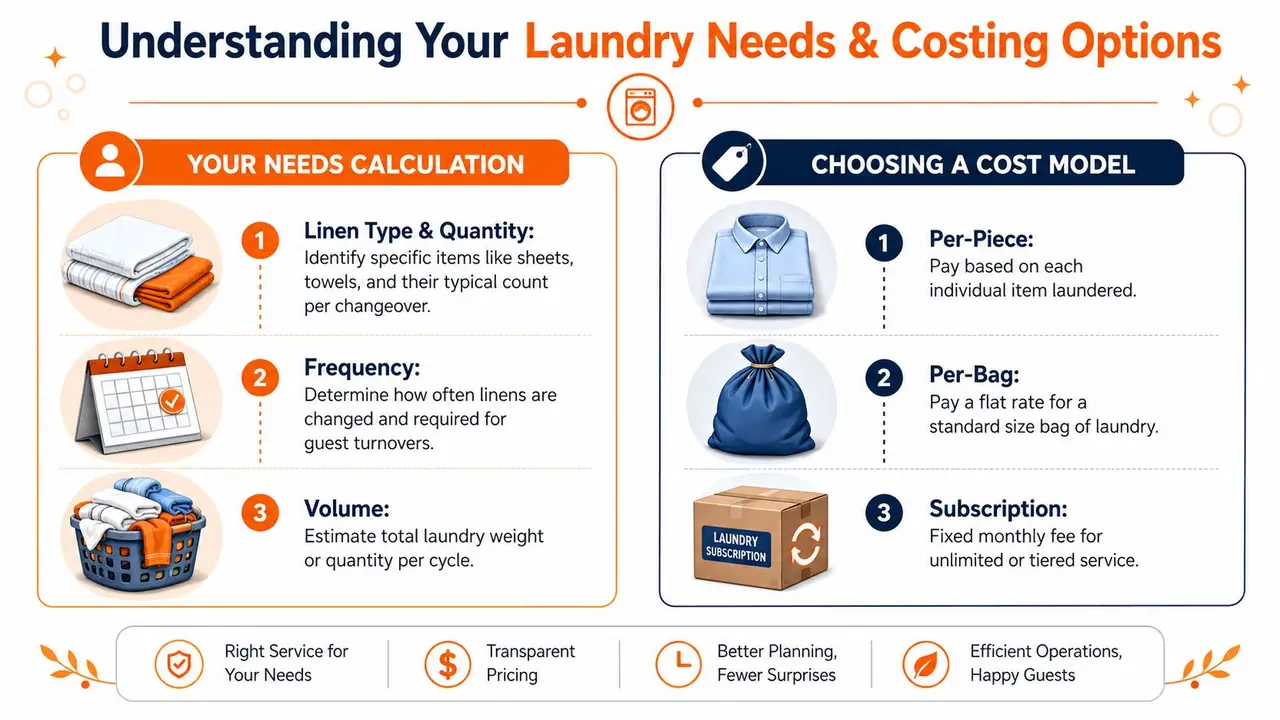
A useful worksheet answers four questions:
- How many beds and bathrooms does each property have
- What gets changed every turnover
Sheets only, or also duvet covers, bath mats, hand towels, kitchen towels, and robes? - What creates spikes
Back-to-back bookings, pet stays, beach traffic, mid-stay refreshes, or longer reservations with towel swaps all increase usage. - What can't run short
Usually the core items in your most common sizes and colors.
If you cannot count ideal inventory by shelf and by unit type, you will have a hard time controlling loss, over-ordering, and emergency rewash fees.
Match the pricing model to the way you operate
Providers usually price in three ways. The best option depends on how standardized your units are and how predictable your occupancy is.
| Model | Best For | Pros | Cons |
|---|---|---|---|
| Per-pound | Mixed loads and variable weekly volume | Flexible when occupancy changes, less item counting | Bulky items can distort cost, poor sorting can raise your bill |
| Per-item | Standardized inventory across units | Easier reconciliation, cleaner cost tracking by turnover | More counting, more disputes if staff swap items between units |
| Subscription | Stable portfolios with recurring turnover patterns | Predictable monthly budgeting, less admin | Slow periods can leave you paying for unused capacity |
I usually advise hosts to choose the model that matches how they already manage inventory, not the one that looks cheapest in a quote.
Per-pound pricing fits operators with mixed unit types, changing occupancy, and less standardized stock. Per-item pricing works better when every two-bedroom has the same sheet sets, towel counts, and replacement specs. Subscription pricing can make sense for a stable portfolio, but only if the contract reflects your real seasonal pattern instead of your busiest month.
Don't compare quotes without the operating details
The headline price matters less than the service rules behind it. Two vendors can both quote per-pound and produce very different results depending on stain handling, folding standards, pickup windows, emergency turns, and whether returns come back sorted in a way your cleaners can restock quickly.
One normalization method from institutional linen management is to measure linen against actual demand instead of against habit. HandCraft Services' linen management guide explains this in a healthcare setting with lbs./APD. Hosts do not need that exact metric, but the discipline applies. Track pounds or item counts per occupied night, per turnover, or by property type. That shows which units overconsume linen, which cleaners over-strip beds, and where losses are happening.
That visibility does more than reduce laundry expense. It protects revenue.
When linen usage is predictable, you can set tighter turnover windows with less risk, reduce owner-payout leakage from replacement buying, and keep guest-facing standards consistent across every unit. If you use digital guest tools like ScanStay, that consistency shows up where it pays. Better presentation supports higher trust at check-in, fewer avoidable complaints, and a stronger base for upsells, local partnerships, and repeat bookings. Clean sheets are a back-of-house line item. Consistent linen execution is part of the product guests buy.
How to Vet Providers and Verify Quality
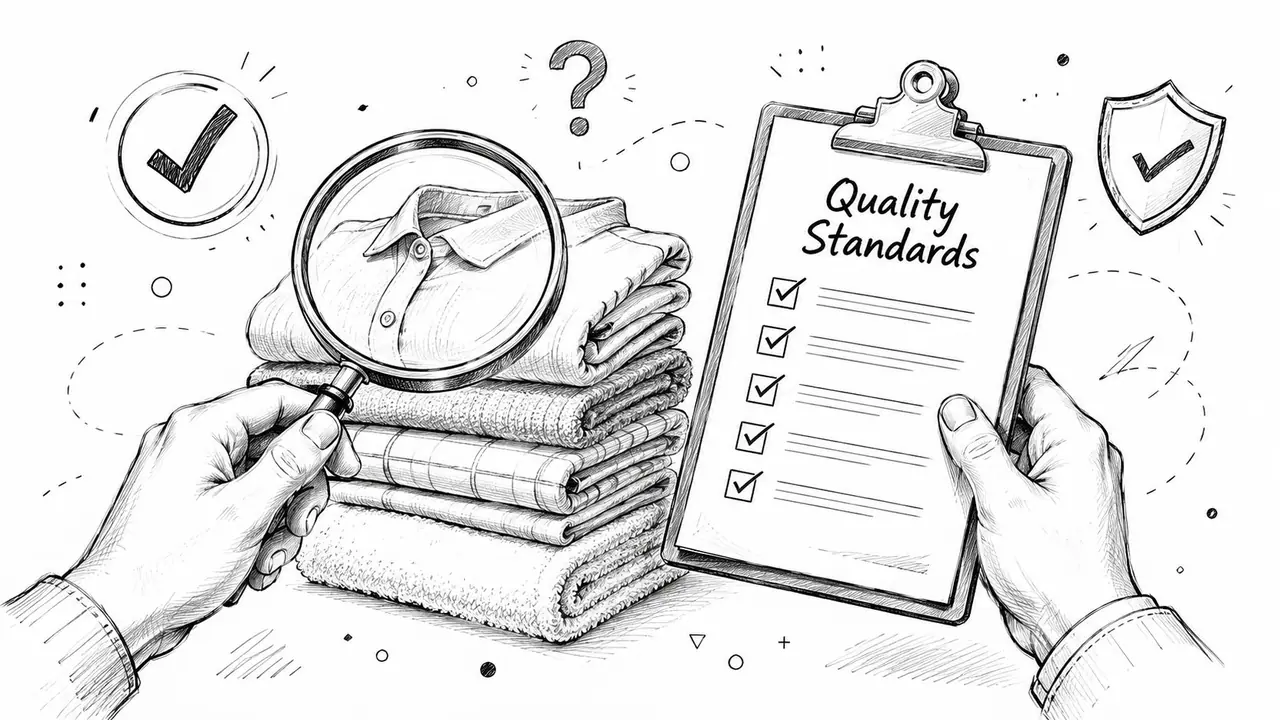
The fastest way to choose the wrong provider is to ask only about price and pickup frequency. You need to know how they process textiles, how they handle mistakes, and how they prove standards when you're not standing in the facility watching.
Ask questions that reveal how they actually work
A provider can sound polished and still be a poor fit for short-term rentals. Vacation-rental linen work is operationally different from routine residential pickup because your deadlines are tied to arrivals, not convenience.
Use questions like these in your first screening call:
- What hospitality clients do you already serve
You're listening for familiarity with same-day turns, packed weekends, and presentation standards. - How do you sort loads
The answer should reflect soil level, color, and fabric separation rather than “we wash everything together.” - What happens to stained items
You want a clear protocol for treatment, holdbacks, and communication. - How do you package returns
Folded by room type, by item type, or in mixed bags creates very different restocking outcomes. - What's your process for missing pieces
If they can't explain reconciliation, you'll end up guessing whether the issue happened at the property, in transport, or at the plant.
A good provider also understands presentation. Ask them to show a returned bath towel, a fitted sheet, and a duvet cover packed for delivery. The condition and fold tell you a lot.
Use digital proof, not verbal reassurance
Laundry hygiene is a guest concern that can affect trust even when nobody complains directly. 68% of guests express concern about laundry hygiene in rentals, based on the verified data you provided. That means hosts need more than “we follow best practices.”
Ask for remote-verification materials such as:
- Photos or video of the facility: especially soil-to-clean separation and storage areas
- Documented wash procedures: especially for whites and heavily soiled items
- Digital service logs: pickup, processing, and delivery records
- Compliance documents or inspection summaries: if available
- Issue-resolution records: how they document and close quality complaints
Clean linen isn't only a processing outcome. It's a documentation outcome. If nobody can show what happened, you're left defending the result without evidence.
You can also create your own receiving audit. Have your cleaner or inspector photograph one stack from each delivery: bath towels, pillowcases, fitted sheets, and one problem-prone item such as makeup towels or kitchen cloths. Keep that record tied to delivery day. If quality drifts, you'll have examples instead of opinions.
For hosts managing remotely, digital verification matters even more. It lets you evaluate hygiene standards without on-site audits and gives you something concrete to share if a guest raises a concern.
Negotiating Contracts and Service Level Agreements
A laundry vendor can look reliable for weeks, then fail at the worst possible time. Friday turnover is stacked, your cleaner is waiting on sheets, and the incoming guest is due at 4:00. In that moment, the contract decides whether you have a recoverable delay or an expensive scramble.
The contract should define what happens under pressure
Good vendors do not object to clear terms. Clear terms protect both sides. They give your team a standard for counts, delivery windows, replacements, credits, and communication when something slips.
The biggest mistakes I see are simple. Hosts agree on price and pickup days, but leave the hard parts vague. Then a batch comes back short, mixed between properties, or late before a same-day check-in. Now everyone is arguing from memory.
Write the agreement for a high-occupancy week, not a quiet one.
Clauses worth insisting on
Your service agreement should cover routine operations and failure points in plain language.
Required items include:
- Turnaround window
Define the standard pickup-to-delivery timing, rush options, cutoff times, and what counts as late. - Quality standard
State the acceptable condition on return. No visible stains, no odor, fully dry, correctly folded, and no heat damage that roughens towels or weakens sheets. - Loss and damage responsibility
Set the process for investigating missing items, issuing credits, replacing stock, and documenting damaged linen. - Count method
Decide whether inventory is reconciled by item, bag, property, or tagged batch. Ambiguity here creates disputes fast. - Packaging standard
Require returns to be sorted in the way your operation uses them, by item type, bed set, or unit. - Chain of custody
Name who can release linen, who can receive it, where handoff happens, and what proof is required at pickup and delivery. - Service failure remedies
Spell out what happens after a missed delivery, repeated shortages, or quality drift. Credit, remake, emergency run, or termination rights should not be improvised. - Exit terms
Set the notice period and the timeline for returning all remaining inventory.
A short escalation ladder helps. First issue gets documented. Repeat issues trigger a review. Continued failures trigger the exit clause.
A usable SLA gives your staff something they can enforce at 6:30 a.m., not just language that looks professional in a PDF.
Match the SLA to your operating model
A single cabin with two backup sets needs a different agreement than ten urban units turning over across one weekend. If your operation depends on same-day turns, ask for timing commitments by route and by day, not broad weekly service language. If your cleaner stages bags for pickup and another person receives delivery, require documented handoff at both points.
This is also where front-of-house outcomes start to show up. Late or inconsistent linen service does not stay in the back room. It leads to delayed check-in, rushed cleaning, lower review scores, and refund pressure. If you use digital guest tools, the connection is even clearer. Guests trust your house rules, upsells, and local recommendations more when the basics feel tight and well run.
For hosts tightening vendor terms across the whole business, this guide to vacation rental contracts is a useful reference for assigning responsibility before there is a dispute.
Ask about tracking before problems force the issue
Item tracking is not necessary for every host, but it becomes valuable once linen moves through multiple hands or multiple properties. Ask how the provider separates stock by unit, records shortages, handles substitutions, and confirms return quantities. Even a simple digital log is better than verbal confirmation.
Tracking matters most when:
- cleaners cover several units in one shift
- runners or third parties move bags
- you store duplicate sets across properties
- premium towels and sheets make loss expensive
- guest arrivals leave little room for recovery
The goal is control, not paperwork. A strong agreement turns laundry from a recurring guess into a defined part of your revenue operation.
Setting Up Your Operational Workflow
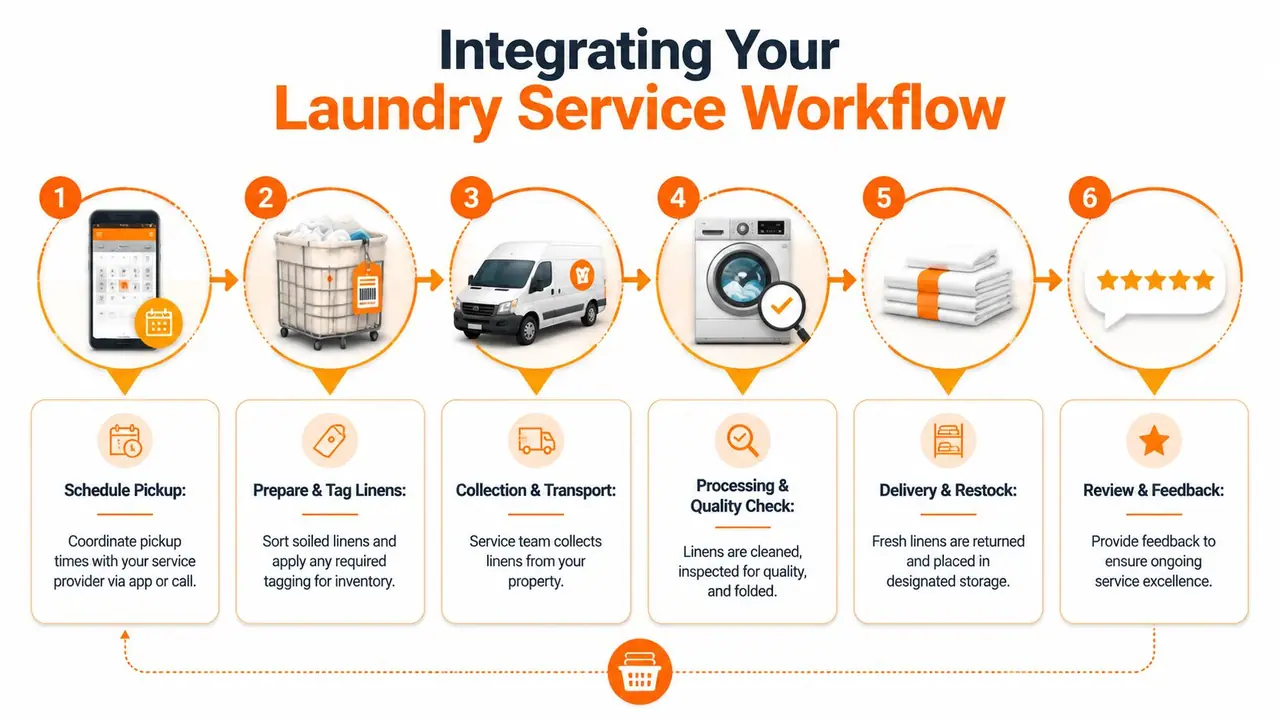
Signing the contract is the easy part. The useful part is making sure your cleaners, inspectors, and backup staff all follow the same handoff without texting for clarification.
Build the handoff around the cleaner's checklist
The best workflow starts at checkout, not at pickup. Your cleaner should know exactly what leaves the property, what stays, and what gets flagged.
A dependable turnover sequence looks like this:
- Strip and separate
Keep heavily soiled items, whites, and specialty fabrics distinct if your provider requires it. - Count exceptions, not every piece
Standard items can move by preset quantity. Only note variances such as missing towels, stained duvet covers, or damaged protectors. - Bag by category or unit
Pick one method and keep it consistent. - Stage pickup in one secured place
Don't let bags sit scattered across utility rooms, porches, or guest-access areas. - Update the next-set status
Your team should know whether the property already has enough clean stock for the next arrival.
For teams using task software, assign laundry as a distinct turnover step rather than burying it inside “clean property.” That makes accountability clearer. If you're tightening cleaner workflows generally, this article on an Airbnb cleaning jobs app is a good operational companion.
Create a receiving routine that catches problems fast
Returned linen should never go straight from doorstep to closet without inspection. You don't need a long audit. You need a short repeatable one.
Use a receiving checklist like this:
- Touch test: are items fully dry and soft, not crisp from overheat
- Visual pass: stains, hair, lint, or dingy whites
- Count check: enough core pieces for the next turnover
- Fold standard: easy for any cleaner to restock quickly
- Segregation: specialty sizes or premium sets kept separate
A property manager who skips receiving checks usually discovers problems at the worst time, when the bed is half-made and the guest is already en route.
The goal isn't perfect paperwork. The goal is finding defects while you still have time to fix them.
Inventory discipline keeps the workflow calm
Keep clean stock stored in a consistent way across properties. The same shelf for king fitted sheets. The same bin for backup pillowcases. The same labeling style everywhere. Standardization cuts handoff errors more than most hosts expect.
For larger portfolios, maintain a simple master list:
- Core bedroom stock
- Bathroom stock
- Kitchen and utility textiles
- Reserve stock held off-site
- Items under review or replacement
This is also where your par strategy earns its keep. If one property burns through extra towels during a long weekend, your system should absorb the hit without stripping another unit bare.
Integrate with Guest Tech for Revenue and Trust
Most hosts treat laundry as a hidden operating expense. That's too narrow. Linen service can also support guest confidence and create a small but meaningful upsell path when it's tied to your digital guest experience.
Turn laundry into a guest-facing amenity
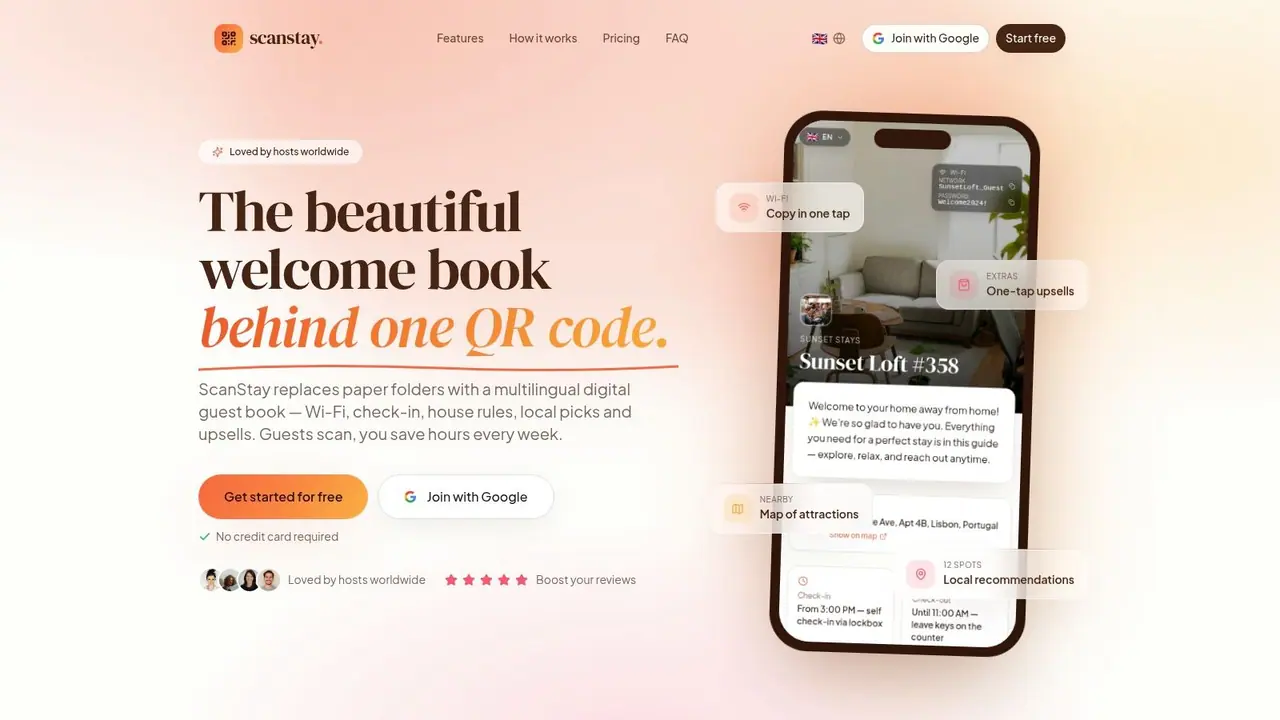
The missed opportunity is convenience. 73% of short-term rental guests are interested in convenient laundry services, and hosts who integrate one-tap upsells into a QR code welcome book can boost per-guest income by 15-20%, based on the verified data you supplied.
That doesn't mean turning your stay into a menu of add-ons. It means offering a few well-timed, low-friction options guests understand:
- fresh towel drop during a longer stay
- mid-stay sheet refresh
- baby-item textile refresh when relevant
- garment laundry pickup where local service allows it
The operational trick is to connect the service request to a simple digital path guests can access without messaging you. A QR-led arrival flow works especially well for that. If you're designing the front-end guest journey, this guide to a QR code check-in system shows how hosts reduce friction around the basics first.
The video below shows the kind of digital guest flow that makes these service add-ons easier to present clearly.
Use digital proof to support confidence
Revenue is only half the story. The better play is trust. If your provider can supply hygiene documentation, service logs, or process summaries, those can be turned into guest-facing reassurance instead of buried back-office files.
Useful examples include:
- A short hygiene standards note in the welcome experience
- A link to service verification when guests ask how linens are handled
- A request form for extra towels that routes through your existing support flow
- A clear turnaround note so guests know when additional linen can arrive
That's especially helpful for guests who already worry about cleanliness but don't want a long explanation. A concise digital answer beats a defensive message thread every time.
Keep the offer narrow and operationally safe
Not every laundry upsell is worth offering. If your provider can't support same-day requests consistently, don't promise them. Start with one or two add-ons that fit your existing route and staffing.
A workable setup usually has:
- one request window
- one fulfillment method
- one internal owner for exceptions
- one pricing format that's easy for guests to understand
That discipline keeps the front-of-house offer aligned with the back-of-house reality. When that alignment is missing, laundry turns from a convenience feature into another support problem.
Frequently Asked Questions About Laundry Services
Hosts usually ask the hardest questions after they've already had one bad experience. Better to decide your position before that happens.
Is a residential fluff-and-fold service good enough
Sometimes, for a single smaller property with low turnover and simple linen inventory. But the fit gets weaker once you need strict pickup windows, cleaner-ready folding, documented reconciliation, or consistent treatment across multiple units. The issue usually isn't wash quality alone. It's operational reliability.
Should you rent linens or own your inventory
Owning works better when brand consistency matters and you want control over fabric choice, color, and replacement standards. Renting can simplify replenishment, but you'll need to understand substitution rules and presentation consistency. For most hosts, the better question isn't “which is cheaper.” It's “which gives my cleaners the least room for confusion.”
What if a provider ruins a full batch
Your contract's terms are paramount. Stop using the affected stock, document the condition immediately, photograph representative items, and notify the provider in writing the same day. If your agreement includes a damage-resolution process, follow it exactly. If it doesn't, fix the contract before you keep working with them.
Should seasonal or outdoor textiles use the same provider
Not always. Outdoor dining linens, pool towels, and event-style pieces often need different handling and storage discipline than bedroom stock. If you're selecting textiles for exterior setups, this guide to choosing outdoor table covers is a helpful reference because durability and cleaning practicality matter as much as appearance.
What matters most in the first month with a new laundry linen service
Don't judge the relationship only by whether the linens come back clean. Watch the handoff quality. Are counts consistent? Are returns packaged in a way your team can use? Are issues acknowledged quickly? The first month tells you whether the provider has a repeatable process or is just handling tasks as they come up.
ScanStay helps hosts turn operational details into a cleaner guest experience. With a simple ScanStay QR welcome book, you can centralize check-in info, house rules, service add-ons, and guest requests in one mobile-friendly place, so extras like mid-stay linen refreshes feel organized instead of improvised.