Short Term Rental Guide: Your 5-Star Success in 2026
Unlock 5-star success! This short term rental guide covers property setup, pricing, marketing & compliance for your listing.

You're probably in one of two places right now. You've either launched a short-term rental and discovered that hosting means answering the same questions over and over, chasing cleaners, checking if the lock code worked, and hoping guests read the binder. Or you're managing a few properties already, and the work isn't hard because any one task is complicated. It's hard because all of it happens at once.
That's where most hosts get stuck. They treat each booking like a separate event instead of building a repeatable operating system. The hosts who stay profitable don't just furnish a unit and list it online. They create a business system that handles guest communication, turnover, pricing, and compliance with less friction and fewer mistakes.
That matters more now because this category keeps getting bigger and more competitive. Industry estimates put the global short-term rental market at $101.69 billion in 2025 and $106.47 billion in 2026, while U.S. supply is projected to rise to 1.77 million listings in 2026 and demand is expected to grow 4.1% year over year, according to StayFi's vacation rental statistics report. More listings mean more choice for guests. More choice means the sloppy operators get filtered out fast.
A good short term rental guide shouldn't just tell you to buy nice towels, write a better title, and send polite messages. It should show you how to run the property like a hospitality business that works even when you're not glued to your phone.
Table of Contents
- Introduction Your Blueprint for a Profitable STR Business
- Setting the Stage for Five-Star Stays
- Creating a Listing That Converts
- Automating Operations to Save Time and Reduce Errors
- Maximizing Revenue with Smart Pricing Strategies
- Engineering a Flawless Guest Experience
- Navigating Short-Term Rental Regulations
- Conclusion Your Path to Scaling and Success
Introduction Your Blueprint for a Profitable STR Business
Hosts often think the business gets easier after the first few bookings. Usually it gets noisier first. More reservations mean more arrival messages, more cleaning coordination, more opportunities for something small to slip through, and more time spent repeating information that should already be obvious.
The fix isn't more hustle. It's better structure.
A short term rental guide is only useful if it helps you build a property that runs the same way every time. Guests should know where to park, how to enter, how to connect to Wi-Fi, how to use the appliances, and what to do at checkout without needing to message you for each step. Your cleaner should know exactly what standard to reset the unit to. Your calendar rules should support revenue, not inadvertently block it.
Practical rule: If you have to personally explain the same thing three times, it belongs in a system.
That shift changes the business. You stop managing from memory and start managing from process. Instead of reacting to every booking, you build a repeatable guest journey. Instead of patching issues after a bad review, you remove the friction that causes them.
The opportunity is still strong, but the easy era of sloppy operations is fading. The market is expanding, yet supply is rising too, as noted earlier. That combination rewards operators who convert better, communicate faster, and deliver a more polished stay without increasing their workload every week.
That's the blueprint in this guide. Build the physical product well. Present it clearly. Automate the repetitive work. Price with intention. Design the guest experience. Stay compliant. When those pieces work together, you don't just have a rental. You have a business system.
Setting the Stage for Five-Star Stays
A short-term rental is not a regular lease with prettier photos. It's a hotel-like, high-turnover unit for stays under 30 days, built around self-service and efficient information delivery, according to Key Data's explanation of what defines a short-term rental. That changes how you should furnish, stock, and prepare the space.
If an item looks great but breaks easily, slows cleaning, or confuses guests, it's the wrong item. Good setup lowers labor, reduces questions, and gives guests a smooth arrival without needing you on standby.
Build for turnover, not for show
Start with the surfaces and furniture your team touches every turnover. Choose pieces that clean fast, wear well, and don't need delicate handling.
A practical setup usually looks like this:
- Living room seating: Pick durable fabrics, washable covers, and tables that don't show every scratch.
- Beds and linens: Use mattress protectors, extra pillow sets, and white or easy-match linens so replacement is simple.
- Dining area: Avoid fragile chairs and high-maintenance finishes. Guests drag furniture.
- Entry zone: Add hooks, a luggage area, and a visible place for arrival instructions.
- Kitchen basics: Favor matching sets that are easy to reorder instead of one-off items you'll never find again.
The best furnishing decisions aren't the most stylish ones. They're the ones your cleaner can reset quickly and your guest can use without asking questions.
Stock the property like an operator
Guests notice two kinds of amenities. The essentials they expect to work, and the extras that make the stay feel thoughtful. Don't confuse the second group with the first.
A basic stocking system should cover:
| Area | Non-negotiables | What earns goodwill |
|---|---|---|
| Bathroom | Soap, shampoo, towels, toilet paper, plunger | Makeup towels, extra hooks, hair dryer |
| Bedroom | Fresh linens, blackout coverage, hangers | Bedside charging access, extra blanket |
| Kitchen | Coffee setup, cookware, trash bags, dish soap | Oil, salt, simple food storage containers |
| Utility | Cleaning spray, broom, laundry instructions | Labeled supplies guests can use confidently |
Safety is part of the product too. Put fire extinguishers where they're easy to find. Keep a first-aid kit visible. Label anything that could confuse a guest, especially unusual locks, thermostats, or appliance controls.
Photograph the space honestly and clearly
Photos should do more than look good. They should reduce doubt.
Use wide, bright images, but don't hide layout realities. If the second bedroom is compact, show it accurately. If parking is tight, include a useful photo of the parking area. If the entrance is hard to spot at night, include an arrival shot.
Strong listing photos usually follow this order:
- Lead with the main selling space. Usually the living room, view, pool, or standout bedroom.
- Show the full guest journey. Exterior, entry, sleeping areas, bathrooms, kitchen, workspace, outdoor space.
- Answer practical questions visually. Stairs, parking, laundry, crib, desk, coffee machine, backyard fence.
- Keep editing realistic. Oversaturated photos create disappointment at check-in.
A five-star setup doesn't mean luxury. It means guests can arrive, settle in, and use the property without friction. That's the standard worth building for.
Creating a Listing That Converts
Most listings fail in one of two ways. They're vague, or they're overloaded. Either the host says almost nothing useful, or they dump every feature into a wall of text that no one reads. A listing that converts works more like a sales page. It helps the right guest decide quickly.
Write for one guest type first
Don't try to attract everyone. A property near offices and transit should speak differently than a beach house built for families.
Lead with the use case, not a generic adjective. “Walkable two-bedroom with dedicated workspace and self check-in” does more work than “beautiful cozy apartment.” Guests aren't booking adjectives. They're booking fit.
Your description should answer four questions fast:
- Who is this place for
- What's the stay experience like
- What should a guest know before booking
- Why should they trust the listing
A simple structure works well. Open with the main appeal. Follow with the layout. Then note practical details like stairs, parking, noise, pet rules, or shared spaces. End with the type of trip the property suits best.
If you need help tightening your copy, reviewing strong vacation rental description examples can help you see how experienced hosts balance clarity and persuasion.
Use photos to answer objections
Guests usually scroll photos before they read details. That means your image order should handle common booking hesitations before they turn into a message.
Include the details guests often ask about but hosts forget to show:
- Sleeping arrangements: Show each bed clearly, not just the room.
- Bathroom setup: Guests want to know if there's a walk-in shower, tub, or ensuite.
- Work setup: If you mention remote work, show the desk and chair.
- Outdoor areas: Don't imply private use if the space is shared.
- Access realities: Show stairs, elevators, narrow driveways, or unusual entrances.
Set rules that filter problems without killing bookings
House rules should protect operations, not read like a threat.
Good rules are specific and neutral. Bad rules sound defensive, emotional, or punitive. “Quiet hours after 10 PM” works. “No nonsense and absolutely no parties under any circumstances or you will be removed immediately” makes the host sound difficult even if the policy is fair.
Use rules to clarify the points that affect the stay:
- Occupancy and visitors
- Pets if allowed
- Smoking
- Noise
- Parking
- Check-in and checkout expectations
Write them so a reasonable guest can say yes without friction. The wrong guest will still filter themselves out, which is exactly what you want.
Automating Operations to Save Time and Reduce Errors
Manual hosting feels manageable at one property, right up until a same-day turnover overlaps with a late guest question, a missing supply, and a cleaner waiting for entry. Then the cracks show. The core problem isn't effort. It's that the process lives in your head, your inbox, and a few scattered apps.
The fastest way to stabilize an STR business is to automate the repeatable parts first.
A visual view helps when you're mapping those handoffs:
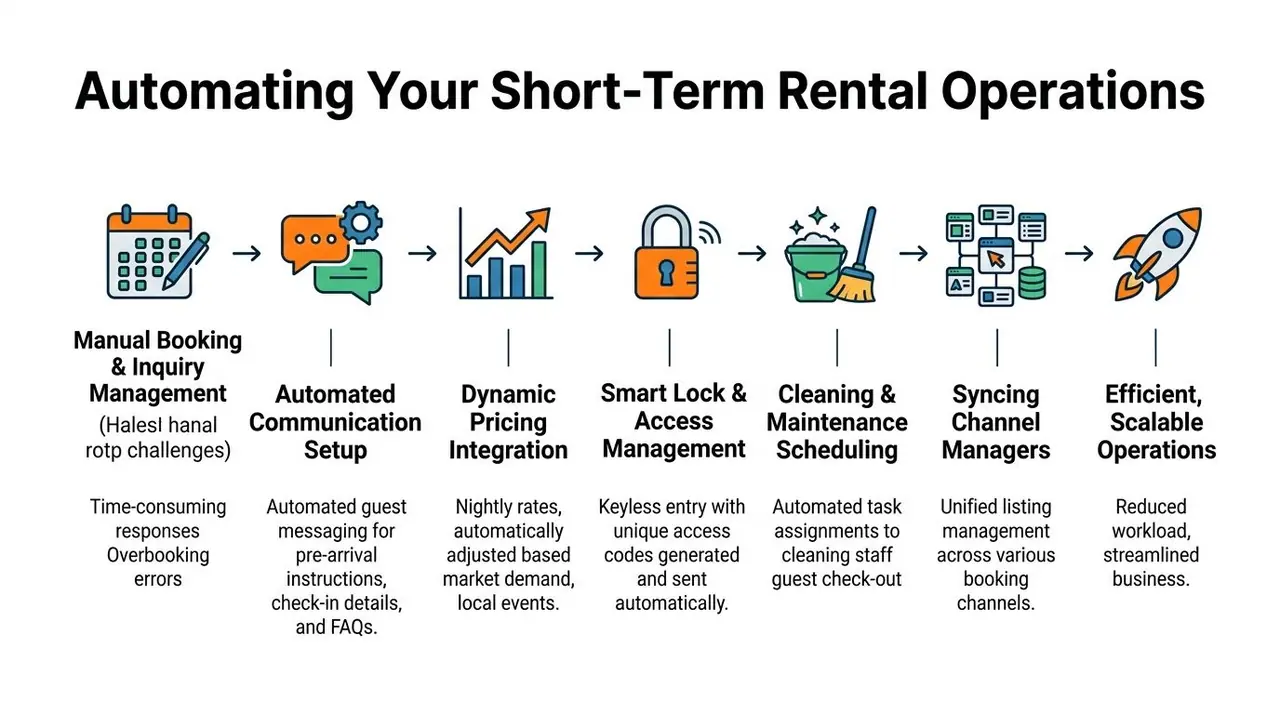
The three workflows that need automation first
Start with cleaning, maintenance, and guest communication. If those three are inconsistent, everything else gets expensive.
Cleaning coordination should trigger automatically when a booking starts or ends. Your cleaner needs one source of truth for date, time, unit, reset standard, and any special notes. Don't rely on screenshots and text threads. They get missed.
Maintenance tracking needs a simple rule. Any recurring issue gets logged the first time, not the fourth. Loose handles, weak batteries, slow drains, or Wi-Fi complaints rarely stay minor. A basic task board with due dates beats memory every time.
Guest communication should cover the entire stay lifecycle with templates and timing rules. Booking confirmation, pre-arrival message, access instructions, first-night check-in, and checkout message should all be prewritten, reviewed, and updated centrally.
If your operation depends on you remembering what to send and when to send it, you don't have a system yet.
For a practical walkthrough of streamlining arrivals, a QR code check-in system guide shows how hosts reduce repetitive instruction sending and make access details easier to find.
Replace scattered instructions with one guest hub
Paper binders go out of date. Long message threads bury important details. PDF attachments rarely get read when guests are standing outside with luggage.
A better model is one digital guest hub for the full stay: parking, entry steps, Wi-Fi, house rules, appliance how-tos, local recommendations, and checkout. ScanStay is one tool built for that workflow. It lets hosts replace paper binders and repetitive messages with a QR-code-based digital welcome book guests can open in their phone browser.
That matters because short-term rentals run on self-service. When information is easy to access, guests ask fewer routine questions and staff spend less time resending details. The experience also feels more professional because the same information appears the same way every time.
This video shows the shift from ad hoc messaging to a cleaner guest information flow:
Automate the routine and keep the human touch for exceptions
Automation doesn't make hosting cold. It removes unnecessary friction so you can respond well when something needs judgment.
Use automation for:
- Scheduled guest messages: Arrival reminders, door instructions, and checkout prompts
- Task assignment: Cleaner dispatch, maintenance follow-ups, and restock reminders
- Access timing: Smart lock code creation and expiration
- Calendar syncing: Cross-platform availability updates to reduce avoidable conflicts
Keep human attention for things software won't handle well:
| Automate | Handle personally |
|---|---|
| Standard check-in instructions | Early check-in requests that affect turnover |
| Routine checkout reminders | Complaint recovery |
| Cleaner scheduling triggers | Refund disputes |
| Appliance guides and Wi-Fi info | Safety issues or property damage |
Hosts often overestimate how much guests want personal interaction. Most guests want fast answers, clear instructions, and a stay that works. Give them that consistently and your operations get lighter without becoming impersonal.
Maximizing Revenue with Smart Pricing Strategies
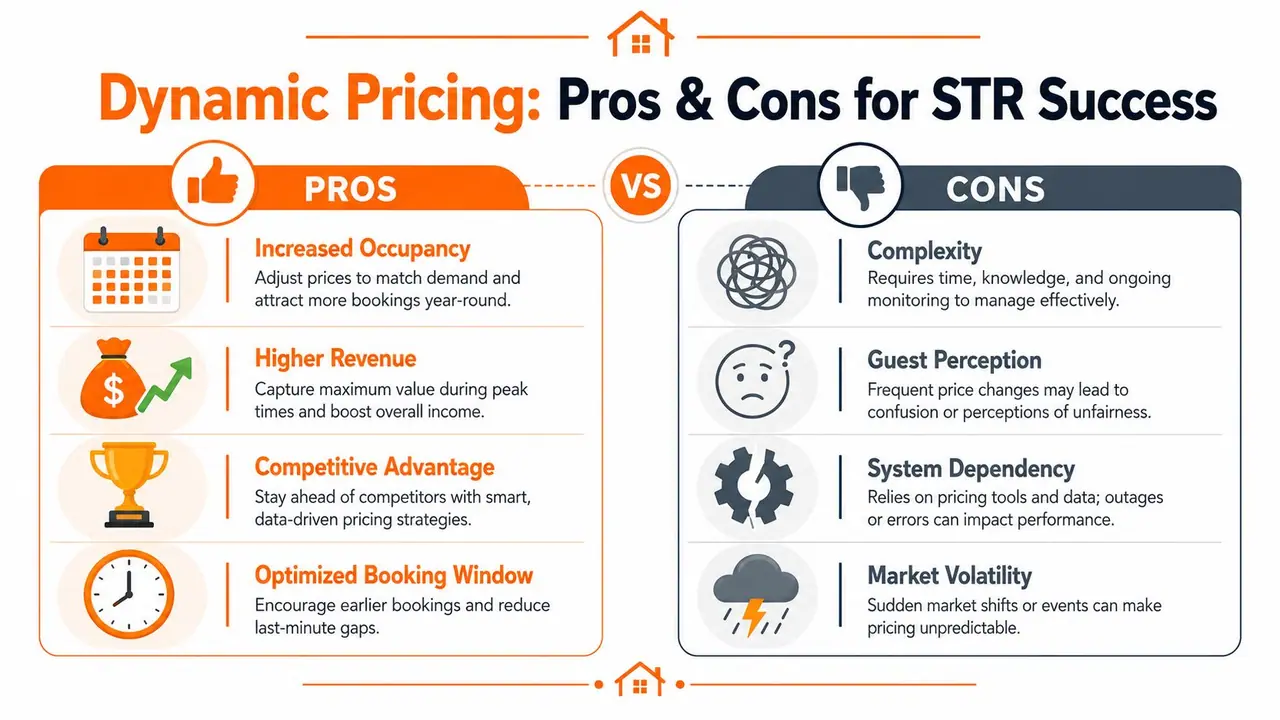
Many hosts think pricing means picking a nightly rate that feels fair and adjusting it when bookings slow down. That's not a pricing strategy. That's guessing with occasional edits.
Revenue management in short-term rentals is more about calendar quality than headline price. DoorLoop notes that average U.S. STR occupancy was 54.7% in 2024, while hotels posted 66% occupancy in 2023, and the average stay duration is around 5 nights, according to DoorLoop's short-term rental statistics overview. In practice, that means each booking window, turnover, and length-of-stay decision has real weight.
Price for calendar value, not ego
A strong nightly rate that leaves awkward holes in the calendar can underperform a slightly lower rate that creates cleaner booking patterns. The right question isn't “Can I charge more?” It's “What booking shape does this rate create?”
That's where operators need to watch more than one metric. As AltexSoft explains in its vacation rental data guide, vacation-rental occupancy is based on booked days divided by available days, and blocked days, maintenance holds, and minimum-stay rules can distort the picture. If revenue shifts, you need to know whether price, stay length, or inventory restrictions caused it.
A practical pricing rhythm usually includes:
- Base rate logic: Weekday versus weekend demand
- Seasonality adjustments: Higher or lower demand periods
- Lead-time pricing: Earlier booking windows versus last-minute demand
- Minimum-stay rules: Tight enough to reduce turnover pain, loose enough to avoid dead space
Gap nights need a playbook
The most overlooked revenue leak in many portfolios is the orphan night or small cluster of nights trapped between bookings. These gaps often can't sell under standard rules, so they sit there earning nothing.
Enso Connect highlights gap nights as a recurring source of lost revenue and notes that hosts use dynamic pricing rules, adjusted minimum stays, and last-minute discounts to fill them, while the decision to discount versus wait depends on local demand and seasonality, according to its guide to gap-night revenue optimization.
What works in practice:
- Open adjacent nights selectively: If a two-night hole appears, reduce minimums only for those dates.
- Discount with a reason: Late discounts work better when the booking window is short and replacement demand is weaker.
- Protect high-value periods: Don't force cheap bookings into dates likely to book at stronger rates.
- Watch cleaning drag: A low-value one-night stay can be worth it, or not, depending on turnover cost and staff strain.
Some nights should be discounted. Some should be protected. The mistake is treating every gap the same.
Revenue grows when convenience is purchasable
Nightly rate is only one part of revenue. Guests often want small conveniences that fit neatly around operations if you package them well.
Common examples include:
- Late checkout when same-day turnover allows it
- Early check-in when the unit is ready
- Mid-stay cleaning for longer bookings
- Equipment rentals such as beach gear or baby items
- Transport coordination if your market supports it
The key is control. Don't offer an upsell that creates chaos for cleaning or access. Build service rules first, then sell only what operations can deliver consistently. A simple one-tap upsell flow inside your guest information system works better than handling these requests one by one in messages.
Engineering a Flawless Guest Experience
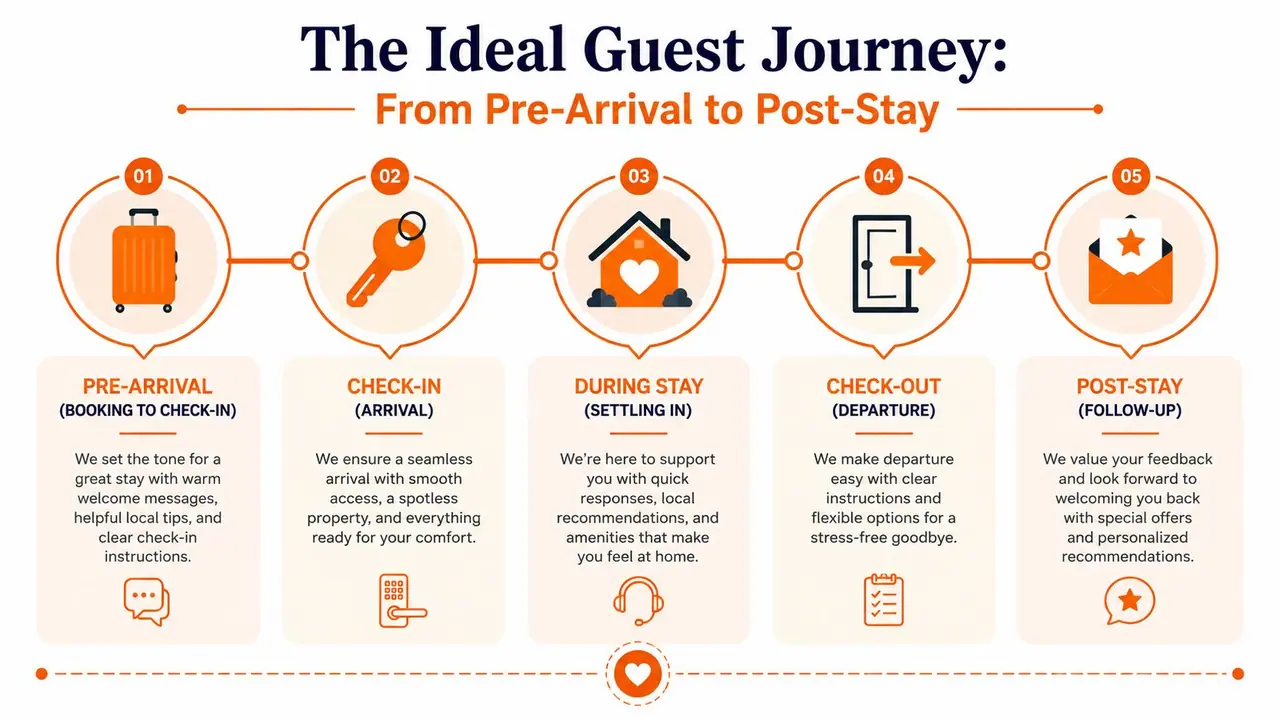
A smooth guest experience rarely comes from big gestures. It comes from removing friction at the exact moments guests feel uncertain. Most complaints happen in predictable windows: right after booking, on arrival day, during the first hour inside the property, and at checkout.
The guest journey should feel like a sequence, not a pile of messages.
Before arrival
A guest who knows what to expect is easier to host. Send arrival information early enough to reduce stress, but not so early that it gets buried. The message should answer access, parking, timing, and anything unusual about the property.
Pre-arrival communication should feel deliberate, not chatty. Good hosts anticipate confusion before it happens. If the front gate sticks, say so. If the building entrance is behind another storefront, show a photo. If the area has strict quiet hours, mention them before check-in, not after the first complaint.
A digital guide works well here because guests can revisit details without searching their inbox. Practical examples for improving this part of the stay are covered in this guide on how to improve guest satisfaction.
During the stay
The first ten minutes inside the property set the tone. Guests want to connect to Wi-Fi, understand the climate controls, find coffee, and know they're in the right place. If they can do all of that without messaging you, the stay starts strong.
A reliable in-stay setup usually includes:
- Immediate essentials: Wi-Fi, thermostat, parking details, trash instructions
- Video or visual how-tos: TV, hot tub, lockbox, stove, washer
- Local recommendations: Restaurants, groceries, pharmacies, coffee, transit
- Clear house guidance: Noise expectations, pet rules, outdoor use, checkout basics
Guests don't judge you only by the property. They judge how quickly they can understand it.
Local recommendations matter more than many hosts think. Not because they need a long city guide, but because they need a few trustworthy answers at the right time. Where should they get breakfast. Which grocery store is easiest. What's nearby for kids. What spot is walkable.
Departure and follow-up
Checkout should be simple enough that guests don't need to reread three messages. Keep the list short. Return keys if applicable, load used towels where instructed, take trash to the correct place, and lock up. That's usually enough.
After departure, ask for feedback in a way that invites honesty without sounding needy. The best review requests are brief and tied to service. Thank them for staying. Mention that feedback helps. If there was an issue and you solved it well, that's often the moment the guest decides whether the overall stay felt professionally handled.
This is also where your operational discipline affects experience. If pricing rules helped fill small booking gaps without creating rushed turnovers, the property is cleaner and the arrival is calmer. Guests never see the pricing logic, but they feel its consequences.
Navigating Short-Term Rental Regulations
Regulation is where a lot of profitable-looking rentals get exposed as fragile businesses. Hosts often check whether short-term rentals are “allowed” and stop there. That's not enough. The operational risk sits in the local details.
Some jurisdictions require far more than a basic permit. According to the City of Virginia Beach short-term rental permit guidance, cities may require annual zoning approvals, proof of liability insurance, 24/7 local contact registration, and maintenance of guest records for up to 3 years. That kind of local complexity directly affects cost, workload, and whether a property still makes sense.
Treat compliance like an operating system
Don't treat regulation as a one-time hurdle before launch. Treat it like a recurring business function.
That means assigning responsibility for:
- Permit renewals
- Tax registration and filing
- Insurance reviews
- Safety inspection scheduling
- Record retention
- Contact information updates with local authorities
If you manage multiple properties, make a compliance dashboard. One spreadsheet is enough if it's kept current. List each address, permit type, renewal date, tax accounts, insurance status, emergency contact requirement, and document location.
What to verify before you list
Every market has its own version of the same core questions. Ask them in order.
- Can this address legally operate as a short-term rental
- What license or zoning approval applies to this exact unit
- What taxes must be collected or remitted
- What insurance standard is required
- Are there occupancy, parking, signage, or contact-person rules
- What safety standards need proof or inspection
Call the city or county department that handles planning, zoning, or business licensing if the website is unclear. For condo units or homes in managed communities, verify HOA and building rules separately. Plenty of hosts get the city approval and then run into a private restriction that matters just as much.
Keep records like you expect an audit
Most hosts don't get in trouble because they intended to break rules. They get in trouble because they can't produce clean records when asked.
Keep a digital folder for each property with:
- Permit and renewal documents
- Insurance documents
- Safety inspection records
- Tax registrations
- Guest stay records
- Local contact information
- Incident logs
Compliance gets expensive when the paperwork is scattered.
A compliant rental is easier to sell, easier to insure, and easier to grow. It's also less likely to get derailed by a surprise notice that forces you into reactive cleanup.
Conclusion Your Path to Scaling and Success
A profitable short-term rental doesn't run on good intentions. It runs on design. Not design in the decorative sense, but in the operational sense. The property is set up for turnover. The listing attracts the right guest. The daily work is automated where it should be. Pricing protects calendar value. The stay feels easy. The paperwork is under control.
That combination is what turns hosting into a business instead of a side job that keeps stealing your evenings.
The hosts who scale well usually don't have secret tactics. They have repeatable standards. Their cleaners know what done looks like. Their guests know where to find answers. Their calendars follow rules. Their compliance documents aren't buried in random folders. When they add another property, they're copying a system, not reinventing one.
That's the value of a strong short term rental guide. It helps you stop improvising.
If you're managing one unit, this approach gives you back time and reduces mistakes. If you're managing several, it creates consistency across the portfolio. If you want to grow into direct bookings, boutique hospitality, or co-hosting, these systems become the base you build on.
The goal isn't perfection. It's control. Control over information, turnovers, pricing decisions, guest expectations, and risk. Once you have that, better reviews and smoother operations stop feeling random.
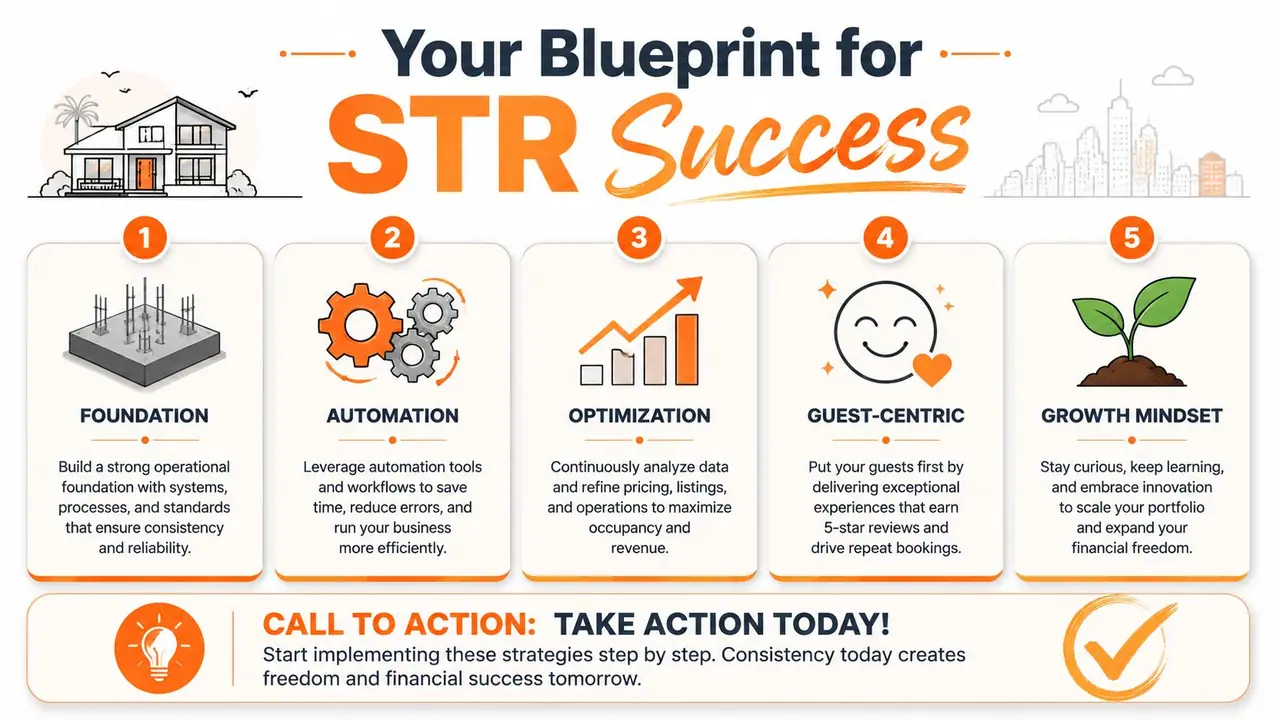
Start with the bottleneck that causes the most repeated work. For some hosts that's guest messaging. For others it's cleaning coordination, pricing gaps, or compliance sprawl. Fix that one properly, document the process, and move to the next. A well-run STR business is built that way. One system at a time.
If you want a cleaner way to deliver check-in steps, Wi-Fi details, house rules, local recommendations, and optional upsells without relying on paper binders or repetitive messages, ScanStay is built for that workflow. It gives hosts a digital welcome book guests can open by QR code or link, which helps standardize information delivery across one property or an entire portfolio.