Find Your Ideal Alternative to Guest Book for Rentals In
Ditch paper binders! Find the ideal alternative to guest book for your Airbnb or short-term rental. Explore digital guides & creative ideas for 2026.

Your binder by the front door looked like a good idea when you set up the rental. Then real stays started. Guests still text for the Wi-Fi. They still call about the thermostat. They miss the best local spots because they never open the binder, or they open it once and never find the page they need.
That's why so many hosts now need an alternative to guest book systems that works during a stay, not just on check-in day. A paper guest book can feel warm and personal, but it's a weak delivery tool for house rules, arrival steps, service offers, and local recommendations. It also gives you almost no control once you manage more than one property.
The better replacement depends on what you need most. Some hosts want a fast QR guide that cuts repetitive messages. Some want a tablet sitting in the unit. Others want a guest guide that also handles upsells, messaging, verification, or access.
This guide keeps it practical. You'll see digital tools that replace the old binder, a few lower-tech ideas worth stealing from the wider guest book world, and the trade-offs that matter when you're running short-term rentals instead of planning a one-off event.
Table of Contents
- 1. ScanStay
- 2. Touch Stay
- 3. Hostfully Digital Guidebooks
- 4. RueBaRue Digital Guest Guides
- 5. YourWelcome
- 6. Enso Connect
- 7. Operto Guest
- 7 Guest Book Alternatives, Feature Comparison
- From Info to Income Choosing Your Best Guest Book Alternative
1. ScanStay
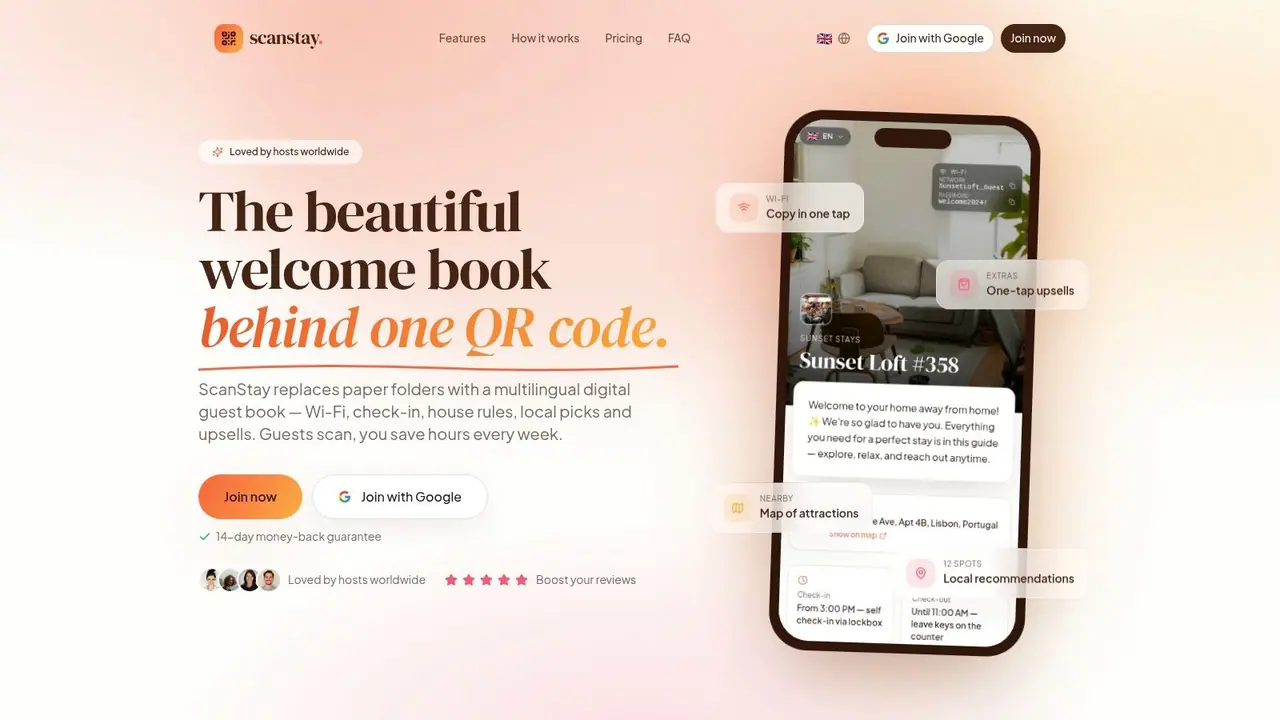
ScanStay is the clearest fit for hosts who want an alternative to guest book binders without adding friction for guests. The setup is simple in the way hosts need simple. Put out one QR code, let guests scan in their browser, and give them the essentials immediately: Wi-Fi, check-in and check-out steps, house rules, local recommendations, and video how-tos.
That app-free approach matters. Digital guest books made up 38.1% of the global guest book market in 2025, with an estimated value of about $457.2 million, and the market is projected to reach 43.6% share by 2034 according to Dataintelo's guest book market report. For rentals, that shift isn't just a trend. It reflects how guests already behave. They reach for their phone first.
Why it stands out
ScanStay is built around guest convenience and host control. Guests don't need to download anything. Hosts can manage content from one dashboard, duplicate setups across properties, and print an A5 QR poster for the unit. It also supports 18 languages with AI translation, which is useful when your listing attracts international bookings.
What separates it from a basic digital guide is the revenue layer. You can add one-tap service upsells like late checkout, transfers, or equipment rentals inside the same flow guests already use for practical information. That's the right place to sell extras because the offer appears when the guest is already engaged.
Practical rule: If your guidebook and your upsell flow live in different tools, guests usually ignore one of them.
A few strengths stand out for working hosts:
- Fast guest access: Guests scan and open the welcome book in their mobile browser, with no app barrier.
- Cleaner support flow: One-tap Wi-Fi copy and video how-tos reduce the most repetitive messages.
- Portfolio efficiency: You can clone content across units instead of rebuilding the same instructions.
- Transparent pricing: The plans are public, which is still not common in this category.
Where it works best
ScanStay fits single hosts, co-hosts, and property managers who want to replace the binder with something easier to maintain and easier for guests to use. It's especially strong when your biggest pain is repeat messaging, not enterprise workflow complexity.
There are limits. Some advanced features sit on higher plans, and because it's web-based, guests need internet access. In practice, that means you should still place the QR where guests can see it immediately and consider pairing it with a simple printed fallback card for critical basics.
For hosts improving arrival flow, ScanStay's own guide to a QR code check-in system for rentals is worth reading because it matches the same low-friction model. If you want a polished, branded replacement for a paper guest book that also helps monetize the stay, this is the strongest all-rounder on the list.
2. Touch Stay
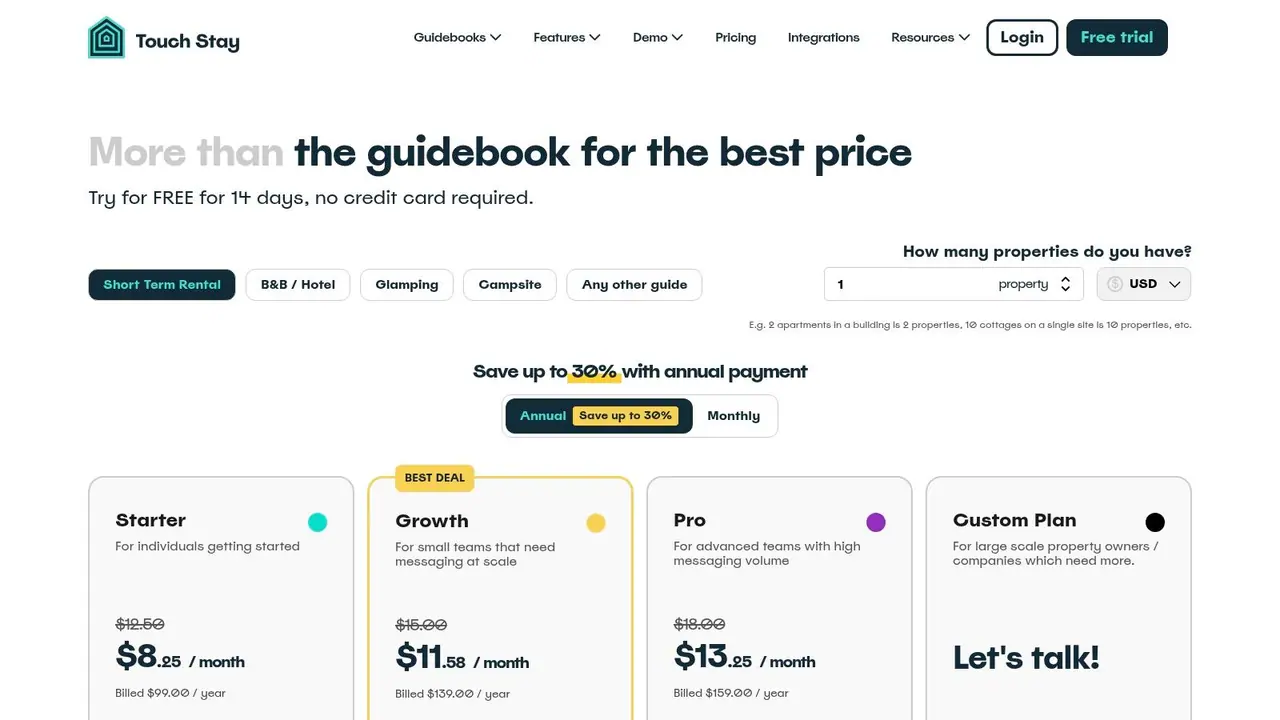
Touch Stay pricing appeals to hosts who want a mature digital guidebook without jumping into a larger operations stack. It's web-based, mobile-friendly, and designed for rentals, B&Bs, campgrounds, and boutique hotels. That focus shows in the templates and sharing options.
The biggest advantage here is polish with relatively low setup friction. You can share guidebooks by short link or QR code, add maps, media, and branding, and use pre-built structure instead of starting from a blank page. For hosts replacing a paper binder, that usually gets better results than over-customized systems that never get fully finished.
Best fit
Touch Stay works best when your priority is reducing repeat guest questions and presenting information well. It also suits hosts who care about presentation quality and want enough flexibility to reflect their brand without building a custom guest app.
What it doesn't do as well is instant clarity on scale pricing. A single-property entry point is public, but broader portfolio pricing relies on a calculator instead of a fixed public grid. That's not a dealbreaker, but it makes budgeting slower for managers comparing several tools side by side.
A guidebook only helps if the host keeps it current. Strong templates beat endless customization for most small teams.
A few practical trade-offs matter:
- Good for organized hosts: The templates make it easier to launch quickly and keep consistency across listings.
- Less ideal for tinkerers: If you want to endlessly style every page, setup can take longer than lighter tools.
- Solid middle ground: It sits between basic QR manuals and full guest-experience platforms.
If your setup process is eating time, ScanStay's article on reducing STR setup time highlights the broader operational point well. The simpler the content system, the more likely it stays accurate. Touch Stay is a strong choice for hosts who want a professional digital replacement for a guest book and don't need the heavier automation layers found in broader platforms.
3. Hostfully Digital Guidebooks
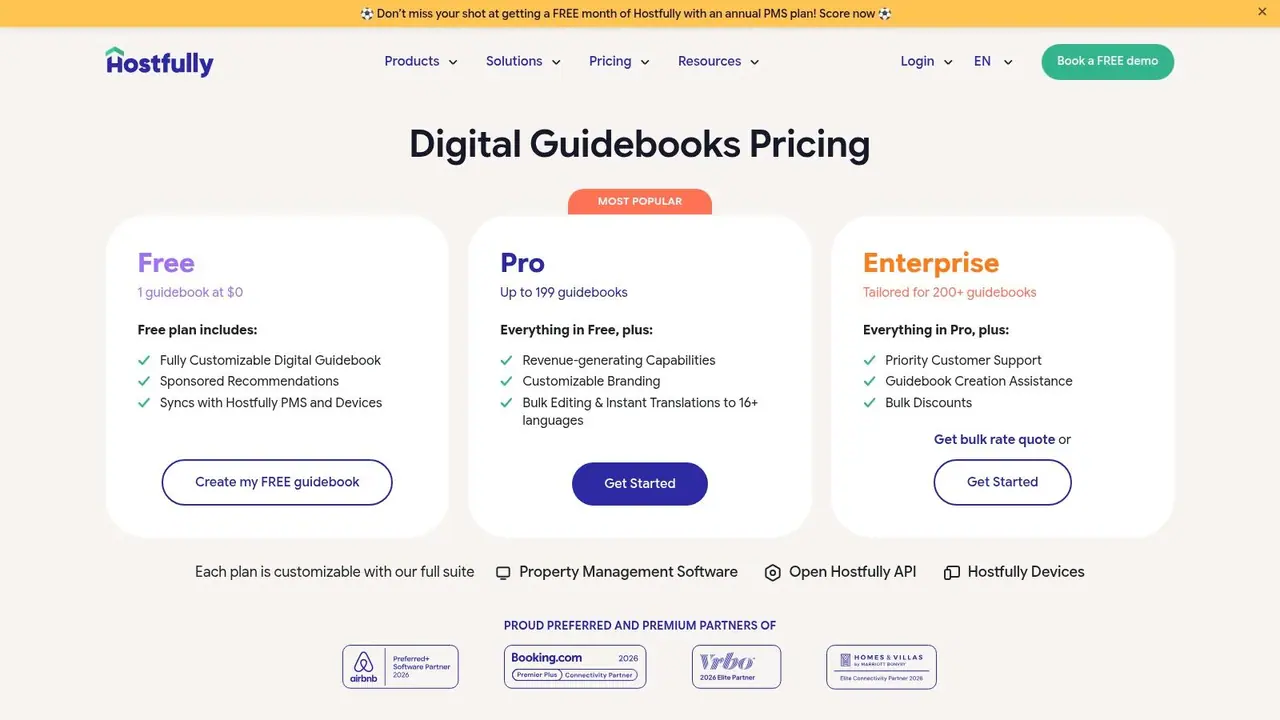
Hostfully Digital Guidebooks is one of the better-known names in this category, and its appeal is easy to understand. You can start with a free single-guidebook tier, then move into paid options if you need more branding control, bulk editing, or broader portfolio support.
That free starting point matters because many hosts know they need an alternative to guest book binders but aren't ready to commit to a paid platform before testing guest behavior. Hostfully gives them a low-risk way to validate whether guests will use a web guide, QR code, or PDF export.
Where it earns its place
Hostfully is strongest for hosts who think they may scale. The platform supports unique links, QR access, PDF or print export, instant translations into 16+ languages, and portfolio-friendly editing tools. Those options help when you're serving different guest types or operating multiple units with shared content blocks.
Its weakness is the same thing that makes it scalable. The product can feel heavier than necessary for a first-time host replacing one old binder in one apartment. Public feature pages are clear, but exact paid pricing isn't fully shown in simple flat-plan form for every case, so larger buyers need a sales conversation.
- Best entry point: A true free tier makes testing easier than tools that require payment up front.
- Best scale feature: Bulk editing reduces the pain of updating repeated policies or local recommendations.
- Best fallback format: PDF and print exports help guests who still prefer something static.
The wider market supports that shift toward digital options. Industry research highlighted that browser-accessible, QR-based formats align with contactless guest service and remove app downloads, which is exactly why digital guidebooks keep replacing physical binders in hospitality settings. Hostfully fits that movement well.
If you're comparing formats and content structure, ScanStay's article on the vacation rental welcome book is a useful companion read. Hostfully is the sensible choice when you want to start small, keep future scaling open, and offer guests more than one way to access the same information.
4. RueBaRue Digital Guest Guides
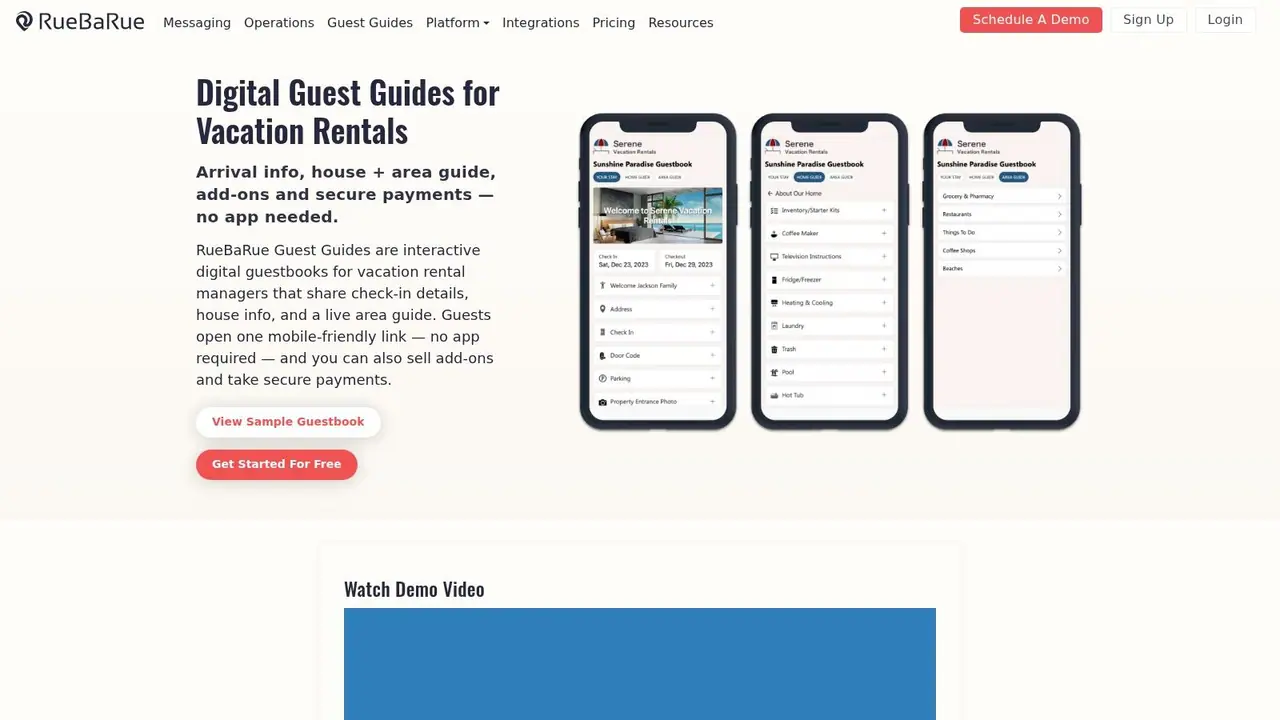
RueBaRue Digital Guest Guides takes a broader approach than a simple digital guest book. It combines home guides, area guides, search, QR access, analytics, and optional modules for messaging, operations, and payments. If you dislike stitching together too many single-purpose tools, that can be attractive.
Its strongest feature is the auto-updating area guide layer. For hosts, local recommendations are usually the first thing that goes stale in a paper binder. Hours change, venues close, and the best nearby spots evolve. A guide that refreshes more dynamically has a real operational advantage over a manually edited printed book.
What makes it different
RueBaRue is one of the few options here that leans into searchable guest information. That's more important than many hosts think. Guests don't read guidebooks front to back. They search for parking, hot tub, trash, or checkout. Search beats page-flipping every time, especially on mobile.
It also bakes payments into the guestbook flow, with support for common payment methods through integrations. That makes add-ons easier to buy because the guest stays inside the same experience instead of jumping to a separate form.
Search is underrated. Guests rarely browse instructions calmly. They look for one answer while carrying bags or heading out the door.
Still, RueBaRue isn't the easiest tool to price or scope quickly. Pricing is custom, advanced modules may make more sense for larger operators, and payment-related add-ons come with transaction costs. For a host with one or two units, that can feel like more platform than needed.
- Choose it for consolidation: It reduces vendor sprawl if you also want messaging and operations modules.
- Choose it for local discovery: The area-guide angle is stronger than most static manuals.
- Skip it for simplicity: If all you want is a clean QR manual, there are lighter options.
This is a good alternative to guest book setups when your guest guide is becoming part of a larger operating system, not just a place to store instructions.
5. YourWelcome
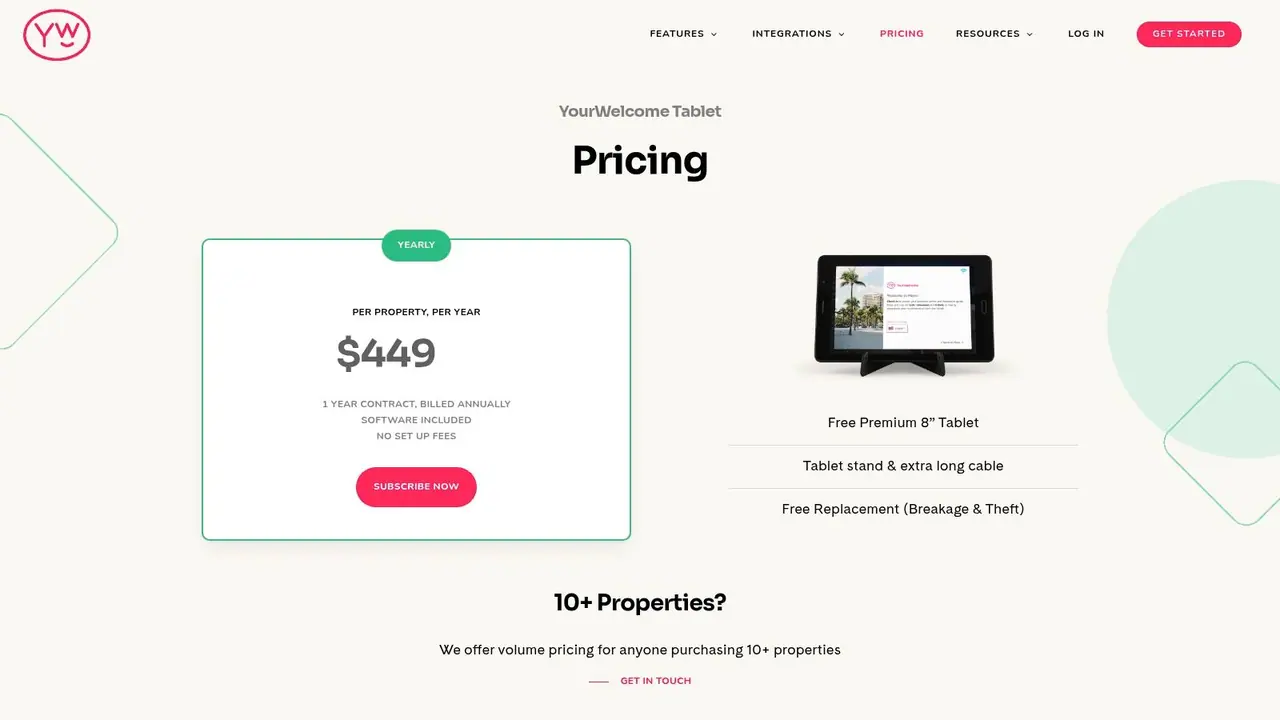
YourWelcome pricing takes a different path. Instead of relying mainly on the guest's phone, it puts a dedicated tablet inside the property and manages the content through cloud software. For some rentals, that's a smarter replacement for a traditional guest book than a QR code alone.
The main reason is visibility. A binder can be ignored. A QR plaque can also be ignored if guests don't notice it. A lit, placed tablet on the counter or entry table is much harder to miss. That matters in homes where guests arrive tired, distracted, or not especially keen to scan signs.
When a tablet beats a QR code
YourWelcome is strongest when you want a visible in-unit hub for check-in support, appliance videos, local tips, upsells, surveys, and direct booking prompts. The included hardware lowers the barrier to entry if you don't want to source tablets yourself, and replacement coverage reduces some of the risk of having devices in the field.
This model also fits properties where guests may not have reliable mobile data on arrival. The device is already there, already powered, and already positioned where they need it.
That said, a tablet introduces physical operations. Someone has to place it well, keep it powered, and make sure cleaners or guests don't unplug or move it. It also tends to cost more than pure web-only guidebooks.
- Best for visibility: The guide is physically present in the room.
- Best for in-stay selling: Upsell prompts feel natural on a device guests see during the stay.
- Less ideal for lean operations: Hardware adds one more thing to maintain across units.
If you run premium properties and want a stronger on-premise presence than a paper guest book or QR code card can provide, YourWelcome is a credible option. If your operation values minimal hardware and fewer moving parts, a browser-based alternative to guest book systems will usually stay simpler over time.
6. Enso Connect
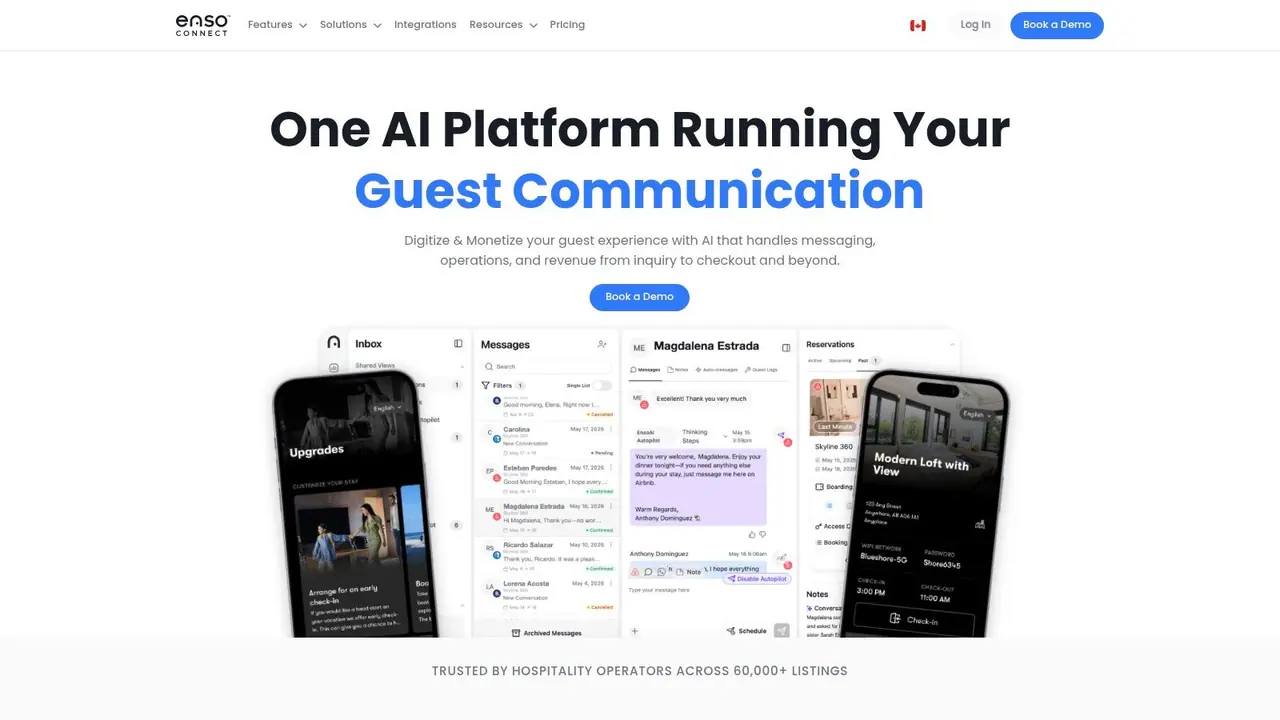
Enso Connect is less a digital guest book and more a guest journey platform. Its branded, app-less Boarding Pass centralizes arrival instructions, verification, access, messaging, guidebooks, payments, and timed upsells in one place. If you want heavy automation, the conversation then shifts.
That broader scope can make sense because guest satisfaction with digital guest book alternatives depends heavily on mobile-first browser access, fast QR-to-camera load time, and instant availability of photos or messages instead of delayed processing, as described in Scene Disposable's digital guest book overview. The best digital experiences feel immediate. Enso is built around that expectation.
Who should choose it
Enso Connect is the right fit for managers who want to operationalize the whole stay. Verification, access, communications, and revenue offers all sit inside a coordinated flow. That's useful when you're managing enough properties that fragmented tools start creating friction for staff and guests alike.
Where smaller hosts hesitate is complexity and pricing. There's no simple public plan grid for quick comparison, and the platform may be far more than a single-unit host needs. If your only problem is a clunky binder, this can be overkill.
If your team already uses automation for locks, messaging, and check-in, the guest guide should sit inside that system, not outside it.
Enso works best for operators who think in workflows, not pages. For them, the guest book isn't a book anymore. It's one step in a structured guest experience that starts before arrival and continues through departure.
7. Operto Guest
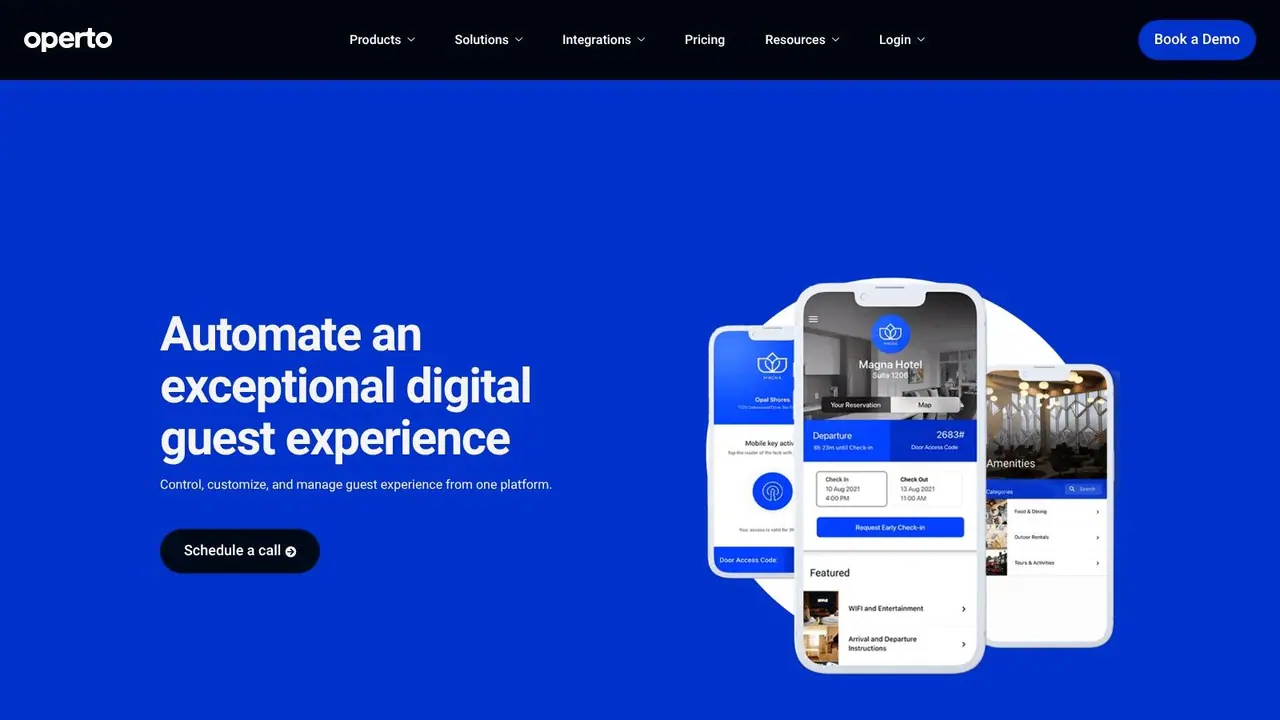
Operto Guest sits in a similar category to Enso Connect, but its positioning is especially strong around guidebooks paired with verification, messaging, upsells, and smart access integrations. It's a practical option when the old guest book problem is really an automation problem in disguise.
A lot of hosts start by wanting an alternative to guest book binders, then realize the bigger issue is that guest information, access instructions, and service workflows all live in separate systems. Operto is designed to close that gap.
Operational trade-off
Operto's appeal is straightforward. Guests get a mobile-first guidebook experience, while operators get tighter control over verification and access workflows. That can reduce handoffs and make arrivals feel more consistent across a portfolio.
The trade-off is that this is not a light replacement tool. Pricing requires a conversation, packaging is customized, and some hosts will never use enough of the platform to justify the complexity. For enterprise-friendly operations, that's fine. For simple setups, it's a lot.
A few hosts should look closely at it:
- Managers with smart locks already deployed: Operto becomes more useful when access is central to your workflow.
- Teams standardizing arrivals: Verification, messaging, and guide content in one stack helps consistency.
- Operators with growth plans: It suits businesses building repeatable systems, not just prettier manuals.
For hosts who need a guest guide plus operational control, Operto is a serious contender. For hosts who want fewer Wi-Fi questions and a cleaner local guide, a lighter browser-based tool will get there faster.
7 Guest Book Alternatives, Feature Comparison
| Product | 🔄 Implementation complexity | ⚡ Resource requirements | 📊 Expected outcomes | 💡 Ideal use cases | ⭐ Key advantages |
|---|---|---|---|---|---|
| ScanStay | Low, fast setup, templates and central dashboard | Low, subscription + internet; printable QR poster | Measurable review + support reductions (hosts report fewer messages, upsell revenue) | Single & multi‑property hosts, boutique hotels, agencies wanting quick ROI | No‑app guest flow, AI translation, one‑tap upsells, transparent tiered pricing |
| Touch Stay | Low–Medium, simple setup; deeper styling takes time | Low, web guidebooks; per‑property pricing scales | Fewer repeat questions; cost‑effective for small portfolios | STRs, campgrounds, boutique hotels and multi‑unit portfolios | Strong templates, easy guest access, competitive entry price |
| Hostfully Digital Guidebooks | Medium, feature‑rich; bulk tools add complexity | Low–Medium, free single guidebook; paid tiers for scale | Scalable operations, multi‑language support and exportable guides | Hosts testing single property and scaling to portfolios | Free tier, bulk editing, instant translations and multiple share methods |
| RueBaRue (Digital Guest Guides) | Medium, core guide + optional ops increases complexity | Medium, add‑ons (payments, messaging) and transaction fees | Consolidation of guides, payments in flow; reduces vendor sprawl | Managers wanting integrated ops, payments and guest communications | Auto‑updating area guides, integrated payments/messaging and analytics |
| YourWelcome | Medium, includes device deployment and remote management | High, tablet per unit plus subscription; power & placement needed | Visible in‑stay engagement and upsell capture from on‑device prompts | Properties that prefer a dedicated in‑unit device (hotels, B&Bs) | Hardware included, on‑premise upsell focus, device replacement policy |
| Enso Connect | High, identity, access and automation require setup | Medium–High, integrations, custom onboarding and pricing | Increased ancillary revenue and automated guest flows | Portfolios and boutique hotels needing verification & access control | Boarding Pass web app, identity verification, AI automation and timed upsells |
| Operto Guest | High, often part of a broader access/automation deployment | High, smart‑lock integrations and enterprise packaging | End‑to‑end automation from pre‑arrival to departure | Enterprise portfolios and managers seeking full automation | Combines guidebook, verification, messaging and access integrations |
From Info to Income Choosing Your Best Guest Book Alternative
The right alternative to a guest book does more than answer questions. It becomes the center of a smoother stay. Guests know how to get in, how things work, what the house rules are, and what extras are available. You get fewer repetitive messages, fewer avoidable mistakes, and a more professional guest experience.
The old paper model still has a place if you want a decorative touch. The wedding world has pushed guest book alternatives far beyond the classic binder, including audio guest books, QR-based digital books, signed objects, framed artwork, puzzles, and displayable keepsakes, as shown in The Knot's roundup of guest book alternatives. That matters for rentals because it reminds hosts that a “guest book” no longer has to be a book at all. It can be digital, tactile, or both.
For short-term rentals, the practical choice usually comes down to four questions:
- Assess your goal: Do you mainly want to reduce guest messages, create a better in-stay experience, or generate ancillary revenue?
- Evaluate your tech comfort: Do you want a browser-based QR guide like ScanStay, or would a dedicated in-property device like YourWelcome suit your homes better?
- Consider your portfolio: One property can tolerate manual upkeep. Several properties need repeatable templates, central management, and quick content updates.
- Look at monetization: If you want to sell late checkout, transfers, gear rentals, or local add-ons, choose a platform that makes those offers easy to find and easy to buy.
There's also a simple operational truth. Guests use what's easy. Browser access is easier than app downloads. Search is easier than flipping pages. One clear QR sign is easier than a thick binder stuffed with laminated sheets.
The best upgrade isn't the one with the longest feature list. It's the one your guests will use and your team will maintain. For many hosts, that means a lean digital system first, then layering on upsells, automation, or hardware only if the business really needs them.
A modern guest book replacement should save time, support the stay, and help the property earn more. If it only looks nice on a counter, it's still doing the old binder's job.
If you want a practical alternative to guest book binders that guests will use, ScanStay is a strong place to start. It gives hosts one QR code for Wi-Fi, check-in details, house rules, local recommendations, video how-tos, and service upsells, all in the guest's browser with no app required. For single rentals and multi-property portfolios alike, it's one of the clearest ways to replace repetitive messages with a cleaner, more profitable guest experience.