Master Early Bird Pricing for STR Hosts in 2026
Learn to use early bird pricing to fill your rental calendar and boost revenue. Guide for STR hosts: strategy, examples, implementation, tools.

Three months before peak season is when a lot of hosts start checking the calendar too often. A few good bookings are in. Plenty of nights are still open. You know demand will come, but you don't know when, and that gap creates stress. If you're managing more than one property, that stress multiplies fast.
The hosts who stay calm usually aren't waiting for luck. They've already given guests a reason to commit early. They use early bird pricing to pull demand forward, lock in revenue sooner, and make the next stretch of the season easier to run.
In short-term rentals, that matters more than people admit. An early booking isn't just a reservation. It's cleaner scheduling, better staffing, fewer pricing panics, and more room to plan the guest experience instead of chasing occupancy at the last minute.
The useful twist for STR operators is this: early bird pricing doesn't only belong on the nightly rate. It can work on pre-arrival add-ons, in-stay services, and upsells that guests are more likely to buy when they're excited about the trip and still in planning mode. That's where this strategy gets much more practical, especially if you're trying to raise revenue without training guests to expect constant discounts.
Table of Contents
- Introduction Fill Your Calendar Sooner
- What Is Early Bird Pricing and Why It Works
- The Benefits and Risks for Rental Hosts
- Early Bird Pricing Models and Templates for Your STR
- How to Implement Your Early Bird Strategy
- Power Up Your Offers with ScanStay
- Conclusion Start Pricing Proactively Not Passively
Introduction Fill Your Calendar Sooner
A familiar pattern shows up every year. A host sets strong base rates for the season, assumes good dates will sell themselves, and waits. Then a few slower weeks creep by, nearby listings start filling, and the temptation kicks in to cut prices hard just to create movement.
That approach usually gives away margin at the worst time. It reacts to empty dates after the market has already spoken. Early bird pricing flips the timing. Instead of discounting because demand feels weak, you reward guests who are willing to commit before everyone else.
For STR hosts, that changes the tone of the season. You stop managing from anxiety and start managing from a booked base. Even a partial layer of early reservations can steady your pricing decisions for the rest of the calendar.
Practical rule: Reward planning, not hesitation. The guest who books early should get the better deal, not the guest who waits to see if you'll blink.
This works especially well when the property has clear seasonal demand, attracts trip planners, or depends on direct bookings where you control the offer. Beach stays, holiday periods, school breaks, event weekends, and longer leisure stays are obvious fits. So are properties that need more lead time to coordinate cleaners, maintenance, and local partners.
There's another angle many hosts miss. Guests don't only plan the stay early. They often plan the extras early too. Airport pickup, gear rental, grocery setup, baby equipment, early check-in, late checkout, and mid-stay cleaning all feel easier to buy when the trip is still fresh in the guest's mind. That makes early bird pricing a revenue tool, not just an occupancy tactic.
What Is Early Bird Pricing and Why It Works
A family is planning a July beach week in January. They are comparing three properties, checking flights, talking through PTO, and deciding whether to bring the grandparents. That is the moment early bird pricing is built for. The guest is interested, the trip is still being organized, and a clear incentive can turn a maybe into a booking.
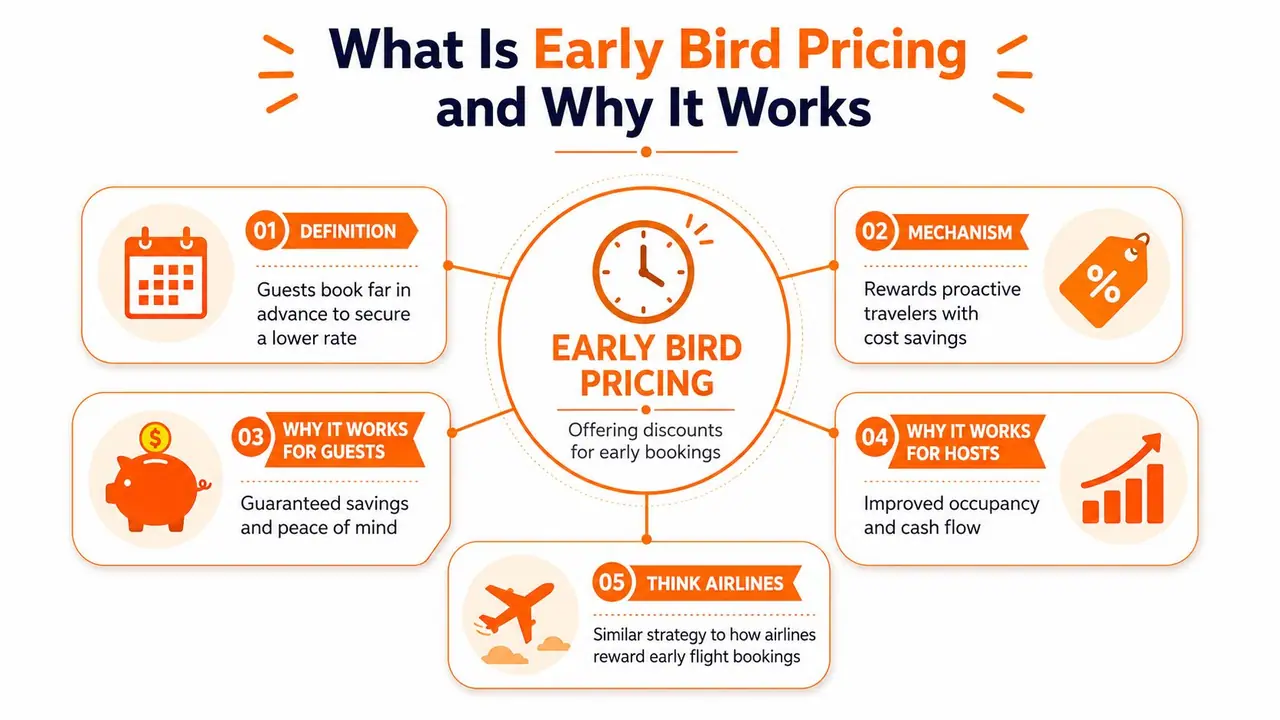
Early bird pricing means offering a better rate to guests who book far enough ahead of arrival, then shifting back to your standard pricing as the stay gets closer. The concept is familiar from travel. Airlines have trained people to expect lower prices earlier in the booking window. An analysis of early booking versus last-minute flight pricing shows the same basic pattern. Earlier commitment usually gets rewarded.
For a short-term rental host, the value is straightforward. You are using timing to shape demand. Guests get a reason to stop waiting. You get confirmed revenue earlier, which gives you better control over the rest of the calendar.
Early bird pricing works best as one part of a broader rate strategy, not as a blanket discount you leave running all year. Hosts who already adjust prices based on seasonality, pace, and occupancy will usually get better results because they know where an advance discount helps and where it just gives away margin. A good practical guide to dynamic pricing explains how those pieces fit together.
The psychology is simple. Guests respond to a clear deadline and a clear benefit. A lower price tied to an advance booking window feels earned. It also reduces decision friction because the guest knows exactly what they gain by acting now instead of revisiting the listing later.
Three factors usually drive the response:
- A deadline creates urgency: "Book 60 days ahead and save 10%" gives the guest a reason to decide now.
- A real cutoff reduces wishful waiting: If the offer expires, guests cannot assume the same deal will still be there next week.
- A defined reward feels fair: You are not discounting randomly. You are rewarding planning.
That same logic applies beyond the nightly rate. This is the part many hosts miss.
Guests often decide on extras well before check-in, especially for family trips, destination stays, and longer bookings. If you use a digital guest tool like ScanStay, early bird pricing can also be applied to in-stay upsells such as airport pickup, crib rental, grocery stocking, pet fees, early check-in, or late checkout. A guest who books a stay four months out may not only commit to the reservation sooner. They may also pre-purchase add-ons while the trip still feels active and organized in their mind.
Done well, early bird pricing changes from a simple discount into a booking system. It helps fill nights earlier, and it can pull ancillary revenue forward too.
The Benefits and Risks for Rental Hosts
Where hosts gain leverage
A host opens the calendar for peak summer in January and sees two very different paths. In the first, nothing books until spring, rates get adjusted every week, and operations stay reactive. In the second, a portion of those dates is already committed early, the base revenue is in place, and the host can make pricing and staffing decisions with more control.
That is the main benefit of early bird pricing. It buys time.
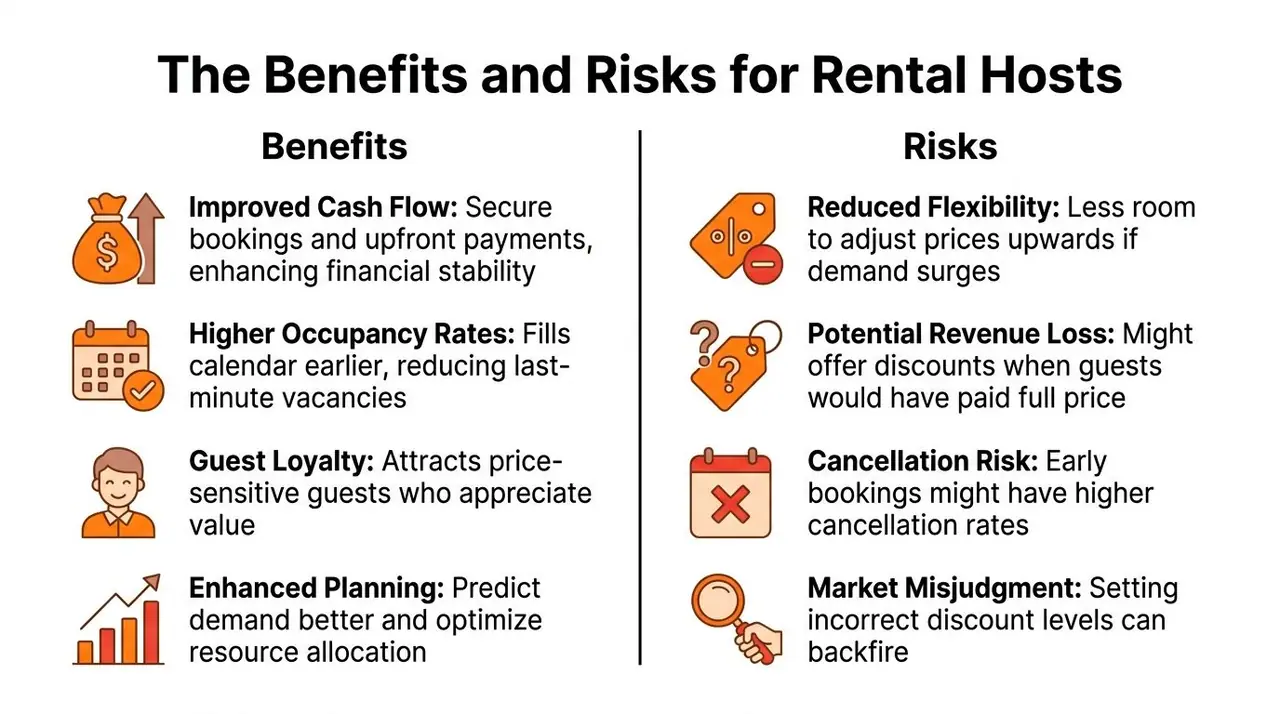
Earlier bookings improve cash flow, but the bigger operational win is predictability. With more nights confirmed in advance, it gets easier to block maintenance, set cleaner schedules, order supplies, and avoid scrambling when multiple arrivals stack up on the same turn day.
It also protects rate discipline on the rest of the calendar. Once a solid base of nights is booked, there is less pressure to cut rates on every remaining gap.
The same principle applies inside the stay. If you use a guest-facing tool like ScanStay, early bird offers can pull add-on revenue forward too. A guest who books four months ahead is often willing to reserve airport pickup, a crib, grocery stocking, early check-in, or late checkout before arrival, especially when the offer has a real deadline and is easy to accept from one screen. That matters because ancillary revenue is easier to plan, staff, and deliver when it is sold before check-in instead of negotiated by message at the last minute.
For a broader look at setting rates, forecasting demand, and protecting margin across the full booking cycle, this guide to vacation rental revenue management is useful alongside an early bird strategy.
The practical upsides usually show up in four places:
- Stronger calendar visibility: You can see which weeks are pacing well and which ones still need help.
- Better operations planning: Housekeeping, maintenance, and owner holds are easier to schedule with fewer surprises.
- More pricing confidence: Premium dates with early demand can hold firmer rates on the remaining inventory.
- Earlier upsell decisions: Guests have more time to add paid services before the trip slips into the background.
Here's a practical video if you want another perspective on revenue strategy before you set your offer.
Where hosts get burned
The biggest risk is simple. You give away margin on nights that would have sold at full price anyway.
I see this most often on obvious high-demand dates. Holiday weekends, school breaks, local event periods, and proven summer weeks usually do not need much help. If those dates get an automatic early bird discount, the host fills the calendar sooner but leaves money behind for no operational reason.
The second risk is guest conditioning. If guests learn that your best deal always appears far in advance, and that late dates also soften later, they stop responding to the listing and start waiting for whichever discount shows up next. That is hard to reverse.
There is also an execution risk with upsells. Discounting add-ons too aggressively can train guests to postpone purchases until they see a promo, or it can turn useful paid services into low-margin admin work. Early check-in is a good example. Selling it early can improve planning, but if cleaning teams are already tight, every discounted early check-in request creates stress on turnover day.
A few warning signs usually mean the strategy needs work:
- High occupancy, weak revenue: Nights are sold, but average daily rate and total stay value are softer than expected.
- Discounts applied to every date type: Shoulder nights, premium weekends, and holiday periods all get treated the same.
- Cutoffs that keep changing: Once you extend the deadline a few times, guests stop believing the offer is real.
- Upsells added without capacity checks: You sell services early, then struggle to deliver them consistently.
The fix is tighter targeting. Use early bird pricing on dates that benefit from earlier commitment, keep the window and discount clear, and review the performance by stay type, not just total bookings. On the upsell side, reserve early bird offers for services you can fulfill reliably and profitably. The strategy works best when it improves booking pace and stay revenue without creating a discount habit you regret later.
Early Bird Pricing Models and Templates for Your STR
A beach house host opens summer dates in January. By February, a few long stays are on the books, but the main opportunity is still sitting there. Here, the model is crucial. The wrong early bird setup gives away rate too broadly. The right one gets commitment early, protects margin, and creates room to sell profitable extras before the guest even arrives.
Three models that fit most rentals
The first model is the flat percentage discount. It is the easiest to run and the easiest for guests to understand. Book by a set date, get a set discount. I usually start here for single listings, shoulder season campaigns, or any host testing early bird pricing for the first time.
The second model is tiered early bird pricing. Guests who book farthest in advance get the best rate, then the discount steps down as the stay date gets closer. This works best for homes with longer lead times, peak-season demand, or repeat guest patterns you already understand. It takes more discipline to manage because each cutoff has to stay firm.
The third model is the value-add early bird offer. This is often the better move for premium STRs. Instead of reducing the nightly rate, keep rate strength and reward early commitment with something useful during the stay. That could be early access to paid add-ons, a stocked arrival package, beach gear setup, or credit toward an in-stay service.
This is also where early bird pricing gets more interesting with a tool like ScanStay. Hosts can apply the concept beyond room revenue and use it to sell upsells earlier. For example, a guest who books 45 days out could get first access to discounted early check-in, a mid-stay clean, parking, pet add-ons, or local partner services. That brings in revenue before arrival and gives operations more time to plan delivery.
For discount size, the goal is not to chase the biggest number. The discount needs to be noticeable enough to change booking behavior without training guests to wait for a lower price. In practice, many hosts land in a moderate range and adjust by season, stay length, and how price-sensitive their guests are. If you want broader revenue context, this dynamic hotel pricing guide is a useful reference for balancing fixed offers with pricing controls.
Early Bird Pricing Model Templates
| Model Type | Description | Best For | Example Offer |
|---|---|---|---|
| Flat discount | One set discount for guests who book within a defined advance window | Single-property hosts, shoulder season, simple direct booking campaigns | Book 60+ days early and get 10% off your stay |
| Tiered discount | Discount decreases as the arrival date gets closer | Peak periods, larger homes, longer booking windows | Book 90+ days early and save more, book 60+ days early and save less |
| Value-add offer | Hold the nightly rate and include a useful perk for early bookers | Premium listings, experience-led stays, hosts protecting ADR | Book early and get a mid-stay clean credit or priority early check-in access |
| Upsell-first early bird | Offer advance pricing on in-stay extras rather than the stay itself | Hosts using digital guest tools, operators with strong add-on margins | Reserve your stay now and pre-purchase parking, breakfast packs, or late checkout at a lower rate |
| Offer tied to stay rules | Early bird applies only to selected lengths of stay, weekdays, or channels | Hosts who want tighter demand control | Book 75+ days early for weekday stays of 3 nights or more and receive the offer |
A few practical rules keep these templates profitable.
- Start with one model. Guests should understand the offer in one read.
- Match the model to the booking pattern. Tiered pricing makes sense for properties with real advance demand, not erratic lead times.
- Use value-adds when your rate already holds. A lower headline price is harder to recover than a well-chosen perk.
- Sell upsells early only if fulfillment is reliable. ScanStay can make pre-arrival offers easy to present, but the offer still has to work operationally on turnover day and during the stay.
The strongest setup is usually simple. One booking incentive, one clear deadline, and if it fits the property, one pre-arrival path to sell in-stay extras before the guest starts asking for favors for free.
How to Implement Your Early Bird Strategy
A guest books your beach house 70 days out. Great. Then they message three days before arrival asking for early check-in, parking, and a stocked fridge. If your early bird strategy only covered the nightly rate, you left money and planning control on the table.
The best setups start with one question. What behavior are you trying to pull forward? For some hosts, it is getting shoulder-season dates booked sooner. For others, it is locking in premium weeks early enough to reduce pricing stress. For operators using digital guest tools, it can also mean getting add-ons sold before arrival, while the guest is still planning the trip and before those requests turn into favors.
Build the offer around one operational goal
Set the goal first, then build the rule set around it. A host trying to smooth occupancy in May needs a different structure than a manager protecting July ADR. The offer should match the problem.
Keep the framework tight:
- Choose the stay window: Pick the dates you want to influence.
- Choose the booking window: Decide how far in advance the guest must book.
- Choose the condition: Minimum stay, direct booking only, selected units, or weekday-only use.
- Choose the limit: Cap how much discounted inventory you are willing to release.
- Choose the follow-up offer: Decide which pre-arrival extras the early booker will see first.
That fifth step is where many hosts miss the main upside. Early bird pricing can train guests to commit early on more than the stay itself. If someone books well ahead, that is usually the right time to present discounted parking, baby gear, mid-stay cleaning, breakfast packs, or late checkout. The guest is still planning. Your team still has time to schedule delivery and staffing.
Set clear limits. If too many prime nights go out at the early rate, you are not shaping demand. You are just underpricing strong inventory.
Write the offer the way guests actually read it
Guests do not need clever copy. They need a simple reason to act now and a clear picture of what they get.
These messages usually hold up well in STRs:
- Direct booking site: Book at least 60 days ahead and get the lower advance rate.
- Email to past guests: Returning guests can book next season early before standard pricing goes live.
- Pre-arrival message after booking: Confirm your stay now and reserve parking or late checkout at the advance price before arrival week.
Plain language also helps operationally. If the guest can understand the rule in one read, your team will spend less time explaining exceptions later.
If you need tighter control over messaging, automation, and guest workflows across listings, this guide to vacation rental management software is a useful reference.
Connect the discount to delivery capacity
This is the part hosts skip, and it is usually where margin leaks out.
Every early bird offer needs a fulfillment check. Can housekeeping support the extra early check-ins you are promoting? Can your local partner handle five grocery setups arriving on the same Friday? Can your team deliver the perk consistently in peak turnover windows?
A weak perk creates more problems than a modest discount. I would rather offer a smaller, reliable early benefit than a bigger promise my team has to walk back.
For single listings, a time-based rule is often enough. For small portfolios, use property type and stay pattern to decide where the offer applies. A family cabin with long lead times may need one booking window. An urban apartment with shorter lead times may need another. Keep the logic simple enough that your reservation team, owner, and guest all interpret it the same way.
Launch small, then adjust fast
Do not roll this out across every listing at once. Start with a narrow test. One season, one unit type, or one extra.
Watch three things closely:
- booking pace
- average booked rate
- attach rate on pre-arrival extras
If bookings come in earlier but total revenue drops, the discount is too generous or the dates were going to book anyway. If occupancy improves and add-ons start selling earlier, the strategy is doing its job. That is the version worth expanding.
The strongest early bird strategy is easy to explain, profitable to fulfill, and built to sell more than the room. That is how hosts turn advance demand into better calendar control and stronger guest spend before check-in.
Power Up Your Offers with ScanStay
Use early bird logic beyond the room rate
Most hosts stop at the accommodation price. That's fine, but it's incomplete. Some of the best early bird opportunities sit in the extras a guest can buy before arrival or shortly after booking.
A guest who just confirmed a stay is still planning the trip. That's when pre-arrival grocery setup, airport transfer, baby gear, welcome packages, parking, pet add-ons, and mid-stay cleaning feel easiest to say yes to. Once the trip starts, that same guest gets busier and less price-sensitive in a useful way, but also less likely to browse a long list of optional services.
For higher-friction digital products and service decisions, one useful finding is that buyer sensitivity can shift from price to certainty, and deeper discounts of 30%+ can hurt perceived value instead of helping, especially when the buyer is worried about integration risk or quality, according to this analysis of early bird pricing for certainty-sensitive offers. That lesson applies well to STR upsells too. Sometimes the better early bird offer isn't "cheaper." It's "easier to trust."
In practice, that means an upsell can perform better when the guest sees a simple decision like:
- Reserve your airport transfer before arrival
- Book your late checkout in advance
- Add a mid-stay refresh before your trip starts
The point isn't to create a giant service menu. The point is to offer a small set of relevant add-ons while the guest is still in planning mode.
Automation matters more than the discount
Manual early bird offers break down fast. Someone forgets to remove the special. A team member quotes the old rate. A guest sees one price in a message and another at checkout. That's where systems matter.
Modern implementations use price rules tied to time triggers like "Days before booking", which automate the move from discounted to standard pricing without manual updates, as described in this documentation on creating automated early bird price rules. That same logic is what makes in-stay service offers practical at scale.
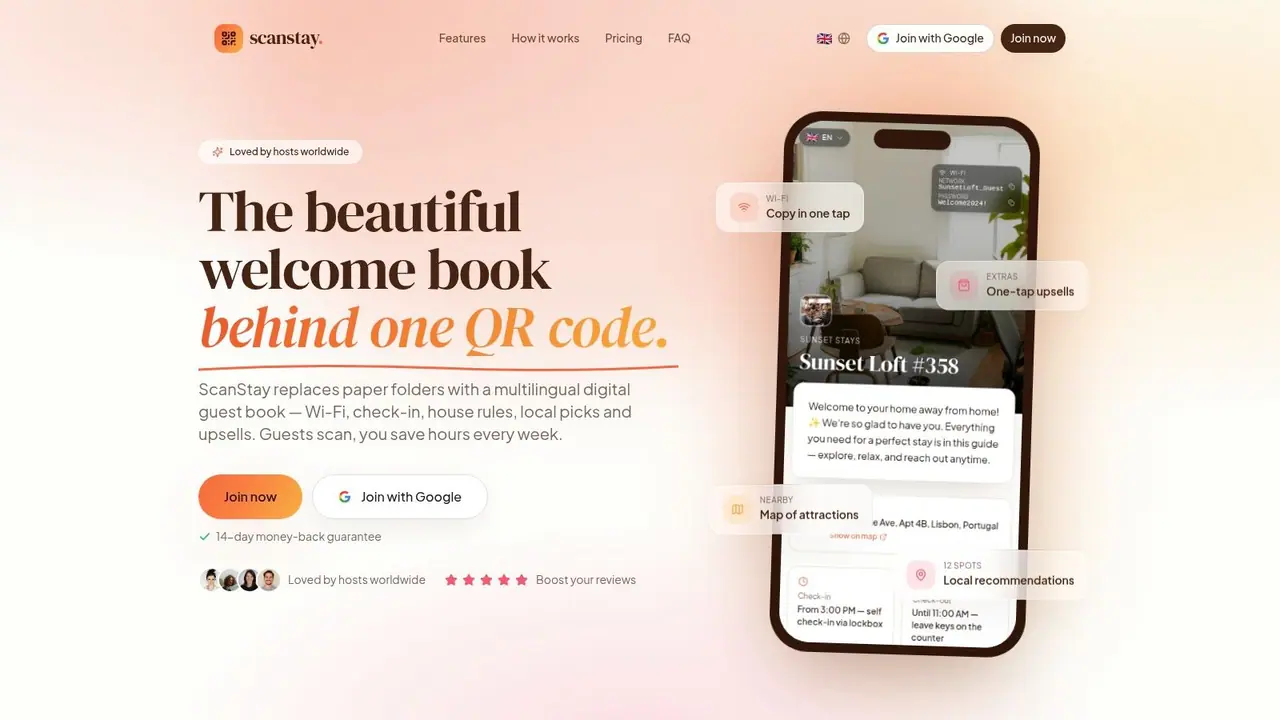
A digital guest experience tool such as ScanStay gives hosts a better place to surface and manage those offers than a scattered mix of PDFs, chat replies, and post-booking messages. Instead of burying add-ons in a long email, hosts can present services in one mobile-friendly place and spotlight the ones that matter most before arrival.
The smartest early bird offer is often the one that expires automatically and still feels useful to the guest.
That shift matters. You move from "discounting the stay" to "monetizing guest intent." For hosts trying to grow revenue without touching their headline room rate too often, that's a much stronger place to operate.
Conclusion Start Pricing Proactively Not Passively
Early bird pricing works when it's deliberate. Not broad. Not permanent. Not desperate.
For STR hosts, the main value is control. You bring bookings forward, stabilize part of the calendar, and make better pricing decisions on the remaining nights. You also avoid the common trap of waiting too long, then cutting rates under pressure.
The hosts who use this well usually stay disciplined on three points. They limit the offer. They protect the standard price. And they apply the same logic to services and upsells, not just the stay itself.
Start with one property or one booking window. Keep the rules simple. Watch how guests respond. Then expand what works.
The bigger lesson is that early bird pricing isn't just a discount tactic. It's a way to shape demand before demand starts shaping you.
If you want a cleaner way to present guest information and turn pre-arrival interest into add-on revenue, ScanStay gives hosts a practical setup for digital welcome books, service upsells, and mobile-friendly guest communication without the clutter of paper binders or repetitive messages.