10 Best Airbnb Cleaning Jobs App Platforms in 2026
Find the best airbnb cleaning jobs app for hosts or cleaners. We review 10 top platforms for scheduling, payments, and finding gigs. Read our 2026 guide.

The 11:00 AM message hits while one unit is still dirty, the next guest is asking for early check-in, and the cleaner is waiting on an access code that changed overnight. Hosts know how fast one missed update turns into a late-ready room, refund request, or review problem. Cleaners deal with the same breakdown from the other side. They lose time to vague instructions, last-minute changes, and payment follow-up that should have been handled inside the job flow.
An airbnb cleaning jobs app solves more than hiring. It gives hosts a way to run turnovers as part of operations, with calendar syncing, automatic job creation, checklists, photos, messaging, and payouts in one system. For cleaners, the right app can replace one-off requests with recurring short-term rental work, clearer scope, and fewer disputes about what was done.
The shift away from spreadsheets and scattered texts came from volume and timing pressure across the short-term rental market. Turnovers happen on tight windows, often with same-day bookings, and there is very little room for missed communication. Platforms built for STR cleaning address that pressure directly. They are designed for speed, accountability, and proof.
Actual value shows up after the cleaning is finished.
When the cleaning status updates on time, hosts can send accurate readiness messages, release check-in details with confidence, and reduce guest uncertainty before arrival. That connection between back-office cleaning and front-office guest communication is easy to miss until it fails. A late clean is rarely just a cleaning problem. It becomes a guest experience problem within minutes.
Table of Contents
1. Turno formerly TurnoverBnB
A host has a same-day checkout at 11, new guests arriving at 4, and one missing message can turn into a bad review. A cleaner has the opposite problem. They need reliable job flow, clear scope, and payment that does not depend on a long text thread. Turno remains one of the few apps built around that exact handoff between back-office operations and the guest-ready front end.
That focus shows up in the day-to-day workflow. Cleaners can build a profile, accept or bid on local STR jobs, message hosts inside the app, work from unit-specific checklists, upload photos, and get paid through the platform. Hosts get the other side of that system: scheduled turnovers tied to booking activity, less manual follow-up, and a cleaner record of what was done and when.
Why Turno still leads for dedicated STR turnover work
Turno launched as TurnoverBnB and grew into one of the best-known platforms for short-term rental turnover coordination, with multi-language mobile apps and a large footprint across STR markets, as noted earlier. That scale is a key differentiator, since marketplace density determines whether an app produces real local jobs and coverage or just another account to maintain.
For hosts, the main advantage is operational control without building every process from scratch. Calendar sync with Airbnb and Vrbo, auto-scheduled jobs, in-app messaging, and payment handling reduce the admin load. More important, they create a cleaner line between a completed turnover and the guest experience that follows. If your team also relies on readiness notifications, check-in instructions, or a digital welcome book, that connection matters. The cleaning workflow is not separate from hospitality. It sets the stage for it.
For cleaners, Turno is usually strongest as a source of repeat STR work rather than one-off general cleaning leads. The jobs tend to be closer to real turnover work, with laundry notes, restocking expectations, and deadline pressure that standard home-cleaning apps often handle poorly. The trade-off is familiar. Good markets can stay busy, while thinner markets may not justify relying on the platform alone.
A few practical trade-offs stand out:
Best for STR-specific demand: Cleaners are more likely to find actual turnover work here than on broad gig platforms.
Useful host automation: Reservation syncing, auto-pay, and centralized chat cut down on manual coordination.
Quality varies by city: In strong STR markets, supply and demand can work well. In weaker markets, either side may struggle to find the right fit.
Platform fees affect margins: Convenience has a cost, so cleaners and hosts should compare payout and pricing against direct relationships over time.
Practical rule: Hosts with recurring turnovers should use Turno if they want marketplace access and scheduling automation in one system. Cleaners should treat it as a lead source first, then keep the long-term value focused on consistency, standards, and repeat work.
Website: Turno
2. TIDY
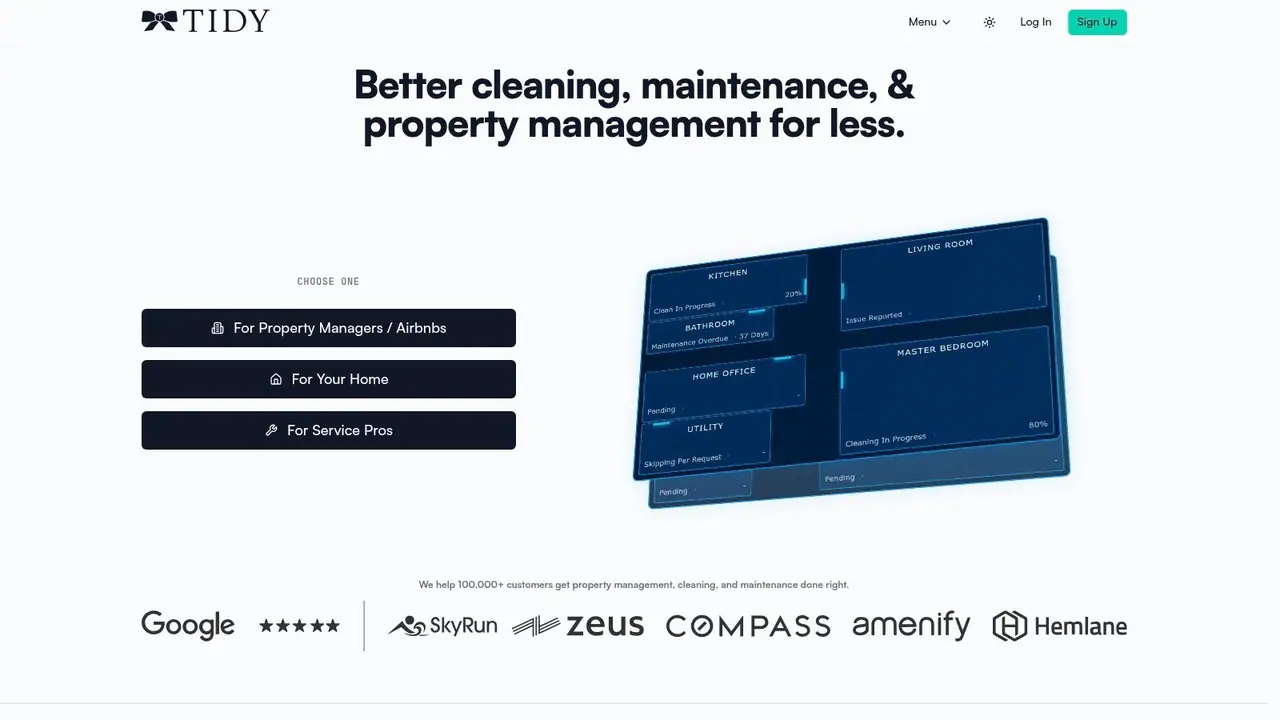
TIDY sits in a useful middle ground. It isn't as narrowly identified with STR turnovers as Turno, but it gives hosts and property managers more than just a directory of cleaners. That distinction matters if you need workflows, not just names.
The platform is strongest when a host wants reservation syncing, automated job creation, digital checklists, photo tracking, invoicing, and communication in one place. Cleaners can benefit from that structure because it creates clearer instructions and fewer “can you also” surprises after arrival.
Where TIDY works best
TIDY makes the most sense in US markets where there's enough host demand to keep the pipeline moving. For hosts, it can work well if you want one platform for vacation rental cleaning and other property cleaning needs. For cleaners, it's a decent fit if you don't want to rely only on one STR marketplace.
What works:
Operational depth: TIDY goes beyond lead matching and supports repeat workflows.
Cleaner accountability: Checklists and photo verification help reduce disputes.
Flexible client mix: You're not boxed into only one job type.
What doesn't work as well:
Lead flow varies by market: Some cleaners will see healthy activity, others won't.
Ratings shape access: Better jobs often go to cleaners with stronger histories.
Some features lean host-side: Cleaners may feel less control than on a pure marketplace.
Hosts who want a backup to their primary marketplace often land here because it combines scheduling logic with enough quality control to keep standards visible.
Website: TIDY
3. Properly
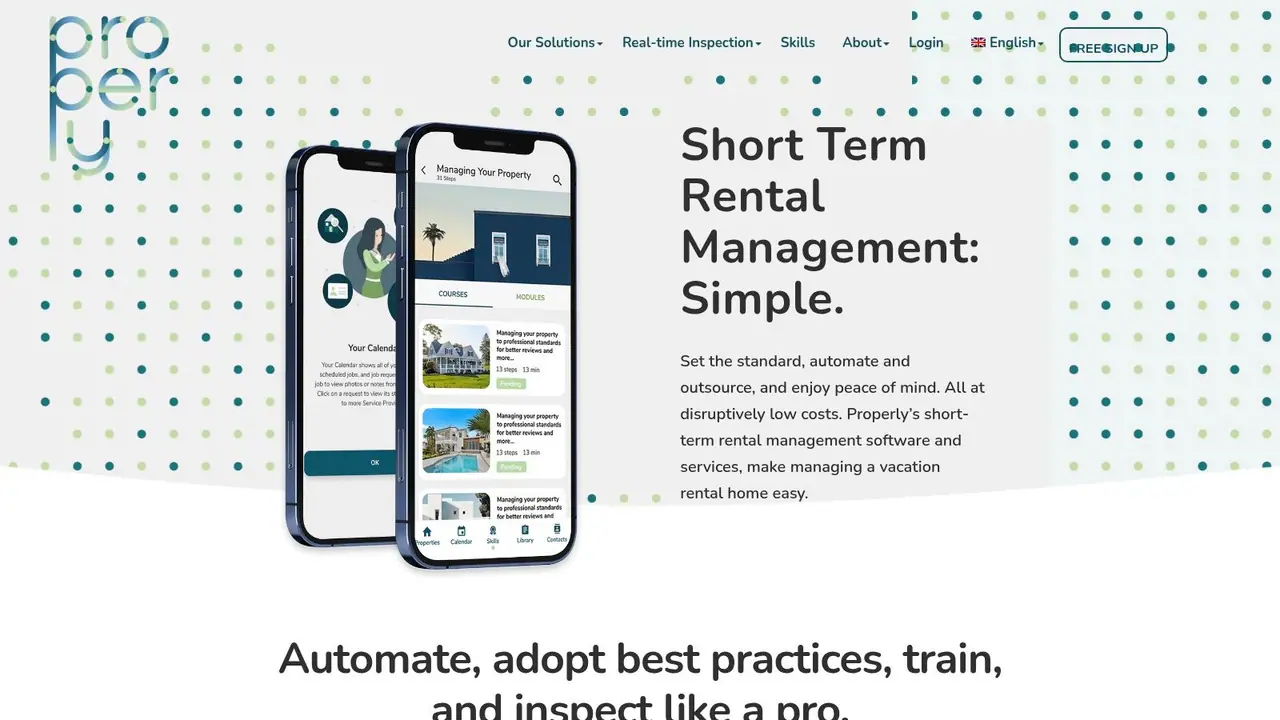
A guest checks out at 10, the next one arrives at 4, and the problem is not finding any cleaner. The problem is making sure the home looks the same every time, down to pillow placement, restocked supplies, and the photo that confirms the patio is ready. Properly is built for that level of control.
Its main advantage is visual SOPs. Hosts can create photo-based instructions room by room, then assign cleanings and inspections against that standard. Cleaners get clearer expectations, which usually means fewer back-and-forth messages and fewer disputes about whether a turnover was finished correctly. That also ties cleaning to the guest-facing side of the operation. If your team uses readiness checks before sending check-in details or updating a digital welcome book, Properly fits that workflow better than a generic job marketplace.
Properly also stands out as a quality-control system, not just a place to pick up work. As noted in Xenia's review of Airbnb cleaning apps, the platform is often used by operators who want inspections, task verification, and documented consistency across properties. These compliance rates make Properly appealing to operators who prioritize repeatable standards across multiple properties.
For cleaners, that structure cuts both ways. Detailed checklists make it easier to keep premium host accounts and justify higher rates. They also slow down teams that prefer fast, lightly documented turns. If your business wins on speed alone, Properly can feel rigid. If your business wins on reliability, it can help you prove value.
For hosts: Best for photo-based checklists, inspections, and standardized turns across multiple listings.
For cleaners: Better for retaining quality-focused clients than for chasing high job volume.
Watch local demand: In smaller markets, it may work better as an operations tool than a lead source.
Setup matters: Hosts need to build the standards properly first, or cleaners inherit a messy system with extra steps.
Website: Properly
4. Cleanster
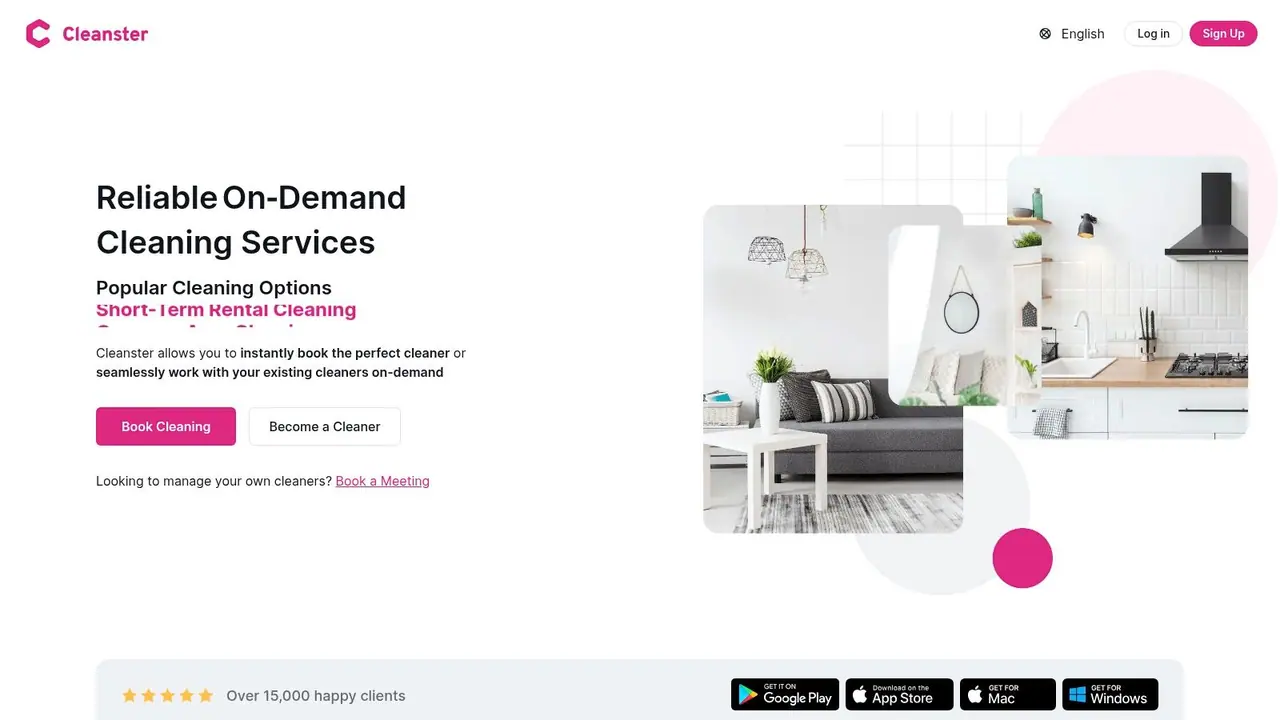
Cleanster is useful when speed matters more than elegant process. It has a strong mobile-first feel, and that can help when a host loses a cleaner, a guest checks out late, or a same-day turn suddenly looks risky.
It isn't only for short-term rentals, but many hosts use it for turnover-style cleanings. That gives cleaners a shot at filling open slots quickly, especially in larger metros where hosts need backup labor fast.
Best use case for Cleanster
The upside is obvious. Mobile confirmations, in-app job steps, photo capture, and chat all support urgent work. If you're a cleaner trying to plug schedule gaps, Cleanster can help you pick up near-term jobs without long setup cycles.
The downside is also obvious once you've used broad-demand apps. Job quality and instructions can vary a lot by host, and that means one turnover feels organized while the next feels improvised.
Good fit for urgent jobs: Same-day and short-notice opportunities are where mobile marketplaces help.
Useful for cleaners building volume: It can fill dead time between regular clients.
Less standardized than STR-first tools: You may need to clarify turnover expectations manually.
Pay expectations can vary: Cleaners should review the full job details before accepting.
Fast fill apps are most valuable when they support a primary system, not when they are the entire system.
Website: Cleanster
5. Turnify
A host with five checkouts before noon needs more than a cleaner marketplace. They need a turnover system that assigns work, confirms completion, captures photos, and flags problems before the next guest arrives. Turnify is built for that operating model.
Its appeal is straightforward. Turnify is centered on short-term rental turnovers, so the workflow reflects how STR teams work. Hosts get calendar syncing, job assignment, messaging, and photo verification. Cleaners get clearer scopes of work than they usually see on broad house-cleaning apps, which matters because a turnover includes reset tasks, staging, supply checks, and issue reporting, not just cleaning.
For hosts, the primary advantage is control without hiring a full property management layer. A cleaner can mark the unit complete, upload photos, and give the host enough visibility to trigger the next guest-facing step, whether that is sending check-in details or updating a digital welcome book once the property is ready.
For cleaners, that structure cuts down on guesswork. Better instructions usually mean fewer disputes about whether the job was finished correctly. The trade-off is that Turnify can feel more process-heavy than a general gig app. Cleaners who want quick, low-instruction jobs may find that extra documentation slows them down.
Who should shortlist Turnify
Turnify fits hosts who care about consistency across multiple units or remote properties. It also fits cleaners who want repeat STR work with clearer standards, not random one-off home cleans.
What to check before you commit:
Built for turnovers: Better fit for linen resets, restocking, and inspection photos than generic cleaning apps.
Useful accountability tools: Photo-based completion helps hosts verify readiness without being on site.
Local supply can vary: Some markets will have stronger cleaner coverage than others.
Process is stricter: Cleaners should expect checklist-driven jobs, not loose instructions.
Best as part of a larger system: It handles back-of-house cleaning well, but hosts still need a front-of-house process for guest communication once the unit is confirmed ready.
Website: Turnify
6. Homeaglow
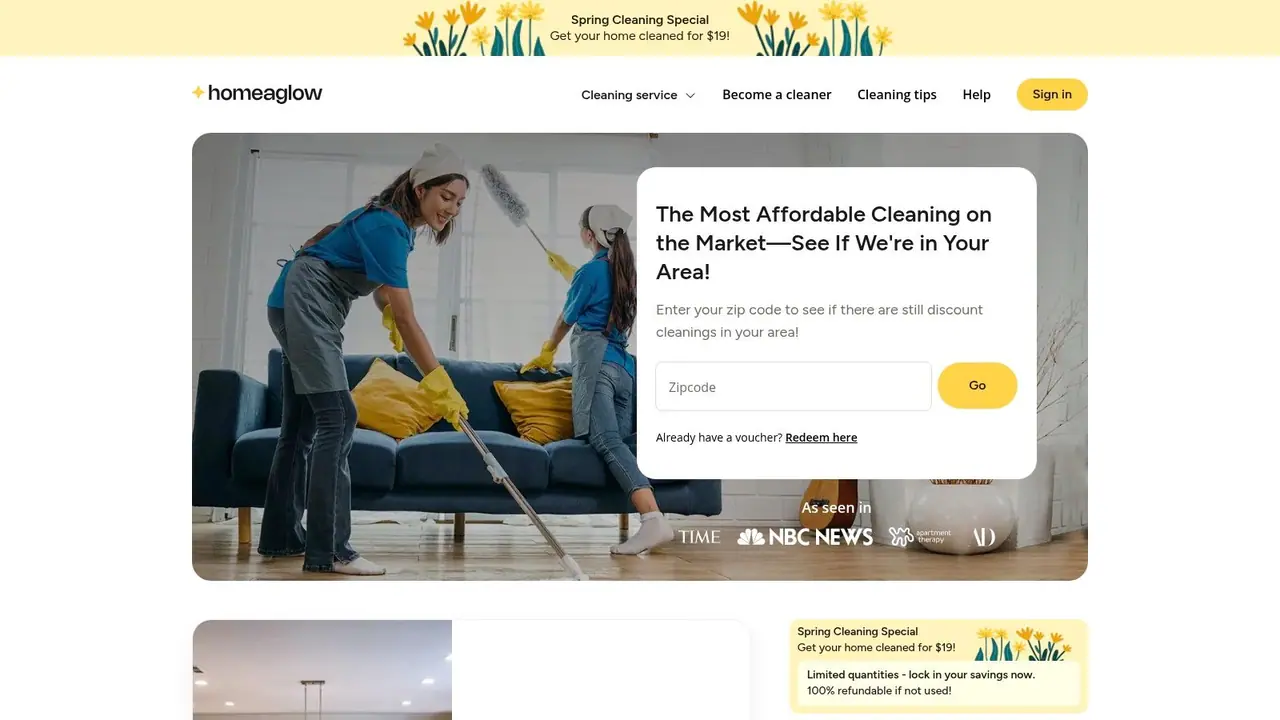
Homeaglow is not an STR-native platform, and that's the first thing to understand. It's a broad house-cleaning marketplace. That can be a strength if you're a cleaner who wants a larger demand pool, but it can also create friction because Airbnb turnovers have stricter standards and tighter deadlines than regular home cleans.
For hosts, Homeaglow is usually a fallback or overflow option rather than the core operating system. For cleaners, it can be a volume play.
The trade-off with broad marketplaces
The big advantage is reach. Large consumer marketplaces can produce a steadier flow of local leads in major cities than niche vacation-rental platforms. If your week has open gaps, a broad app can keep revenue moving.
The downside is that you often have to educate clients or screen jobs carefully. A host might say “cleaning,” but what they really need is linen turnover, consumable restock, photo verification, and issue reporting.
Strong for lead volume in cities: Good if you need demand from many client types.
Less ideal for strict turnovers: Hosts may still need outside systems for checklists and readiness.
Useful as a secondary channel: Better for padding the calendar than running the whole business.
Reputation matters: Reviews and local trust do a lot of the heavy lifting.
Website: Homeaglow
7. Handy
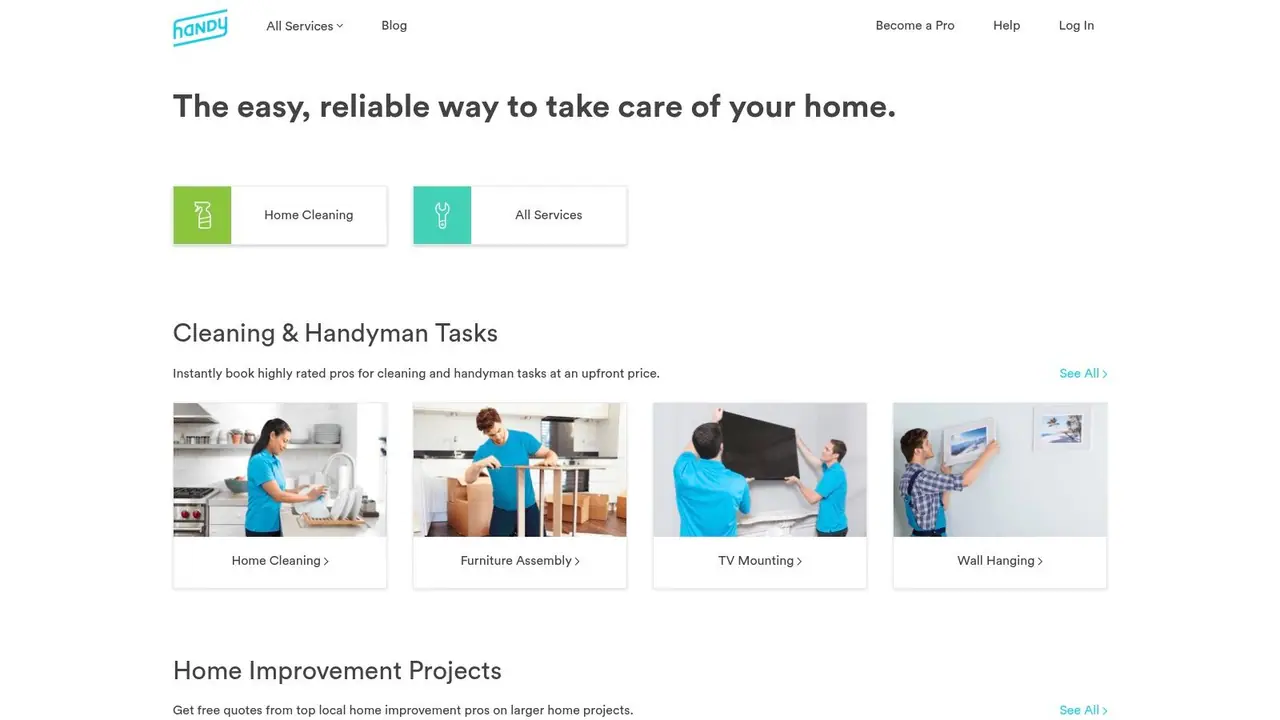
A host loses a cleaner the morning of check-in. A cleaner has a gap between recurring clients. Handy can solve both problems, but usually as a labor marketplace, not as a turnover system.
That distinction shapes the right use case. Hosts can use Handy to find backup help in larger cities, especially for basic cleaning coverage. Cleaners can use it to keep hours full and pick up residential jobs alongside short-term rental work. But neither side should expect the app to handle turnover checklists, staging standards, inventory notes, or ready-for-guest confirmation on its own.
Best used for backup coverage, not process control
Handy works best when the main problem is finding available labor fast. That can be useful for a host dealing with cancellations, overflow, or a sudden schedule conflict. It can also work for cleaners who want more paid hours without depending only on vacation-rental clients.
The trade-off is operational control.
Short-term rental cleaning is tied directly to the guest experience. A property is either ready for arrival or it is not. If the app helps you book a cleaner but leaves inspection photos, linen tracking, damage reporting, and host communication to text messages, you still need another layer in your system. For hosts, that usually means using Handy as a stopgap while keeping standards, checklists, and guest-readiness updates somewhere else. For cleaners, it means being very clear about scope before accepting work, especially if the host expects hotel-style turnover detail from a general cleaning booking.
A few practical takeaways:
Good for emergency staffing: Handy can help cover open jobs when your preferred cleaner is unavailable.
Useful for cleaners filling calendar gaps: It can support income between recurring STR turnovers.
Weak on STR-specific workflows: Photo verification, restock tracking, and property notes usually need separate tools or direct coordination.
Less suited to premium hosting standards: Hosts who promise consistent guest-ready presentation need tighter process control than a general marketplace usually provides.
The closer your operation is to hotel-level consistency, the less you should depend on a generic marketplace alone.
Website: Handy
8. Taskrabbit
Taskrabbit works best for cleaners who want more control over rates, service area, and client communication. It's not an STR platform, but it's one of the better general marketplaces for cleaners who think like operators and want to shape their own local book of business.
That flexibility matters because many turnover jobs are really hybrid service jobs. A host may need cleaning, minor restocking, simple maintenance, or quick setup help before check-in. Taskrabbit's broader service categories can support that kind of upsell path.
Best for cleaners who want pricing control
Taskrabbit lets cleaners set their own hourly rates and choose where they work. For independent cleaners, that can feel more business-friendly than marketplaces that push everyone toward tighter pricing bands or more controlled acceptance flows.
But there's a cost to that freedom. Since the app isn't built for vacation rental operations, cleaners need to create their own standards. They have to define what a turnover includes, confirm linen handling, clarify supply responsibility, and make sure the host understands the difference between a basic clean and guest-ready staging.
A few reasons it works:
Rate control: Better for cleaners who know their market and don't want rigid pricing.
Direct communication: Good for clarifying unusual turnover requests before arrival.
Repeat local business: Strong path for turning one-off hosts into direct recurring clients.
A few reasons it doesn't:
No STR-native workflow: You're building your own process.
Competition can compress margins: Especially in dense cities.
Hosts may assume too much: Scope needs to be written down clearly.
Website: Taskrabbit
9. Keepers
Keepers is the kind of platform many cleaners say they want. It's niche, structured, and focused on short-term rental housekeeping instead of trying to serve every cleaning use case at once. That usually means better fit, clearer expectations, and less translation between what hosts ask for and what cleaners deliver.
Its photo-based surveys and structured turnover flow are especially useful for accountability. Hosts can see what happened at the property, and cleaners can protect themselves from vague complaints after the fact.
Why niche focus can help
A smaller STR-only network won't beat the biggest marketplaces on reach. It can still beat them on relevance. If every workflow assumes a vacation rental clean instead of a standard home service, both sides spend less time explaining basics.
For hosts, that can mean less setup friction once they find local coverage. For cleaners, it can mean more jobs that match hospitality work, not just loosely described “cleaning” requests.
Strong alignment with STR needs: Better terminology, better task flow, less guesswork.
Quality proof is built in: Helpful for retaining demanding hosts.
Network maturity matters: Smaller footprint can limit available jobs.
App polish should be checked locally: Newer tools sometimes improve quickly but can still have rough edges.
Website: Keepers
10. ConnectAndClean
A host gets a same-day checkout and a same-day check-in. The cleaner needs the task fast, with clear instructions, access details, and a way to confirm the unit is guest-ready without a long text thread. ConnectAndClean is built for that handoff.
The platform is a two-sided STR marketplace. Hosts can sync calendars so turnover requests appear automatically. Cleaners can review jobs, apply, message inside the app, and keep payments and communication in one place. That matters because cleaning is not a back-office chore in a short-term rental. It directly affects check-in timing, review scores, and whether the next guest walks into a unit that feels ready.
Best for operators who want a simpler STR workflow
ConnectAndClean makes the most sense for hosts who want tighter turnover coordination without buying a larger operations platform. If you manage a small portfolio, that can be a practical trade-off. You get scheduling and cleaner communication tied to reservations, but you may give up some of the deeper inspection, reporting, or automation layers found in more mature tools.
For cleaners, the upside is job relevance. Listings are tied to vacation-rental work rather than generic house cleaning leads, so expectations are usually closer to the actual task. Turnovers have different pressure points: laundry timing, restocking, damage flags, and readiness for the next arrival. A platform built around that work can produce better jobs than broad marketplaces, if local demand is there.
Local supply is the deciding factor.
That is the caution with ConnectAndClean. A smaller marketplace can work very well in one city and feel thin in the next. Hosts should check how many active cleaners are available near each property before relying on it for core operations. Cleaners should do the same in reverse and confirm there is steady booking volume, not just a few scattered listings.
Used well, ConnectAndClean can sit in the middle of a useful operating system. The cleaning gets assigned from the booking calendar. The unit is marked ready once the work is done. Then the guest-facing side of the business can move on schedule, whether that means sending check-in details, confirming arrival timing, or updating a digital welcome book after the property is ready.
Website: ConnectAndClean
Top 10 Airbnb Cleaning Jobs Apps Comparison
| Platform | Core features | UX / Quality | Value & Pricing | Target & USP |
|---|---|---|---|---|
| Turno (formerly TurnoverBnB) | Dedicated STR cleaner marketplace, auto‑scheduling, checklists, photo proof, auto payouts | ★★★★ | 💰 Saves admin time; marketplace fees apply | 👥 Hosts & cleaners focused on turnovers, ✨ Official Airbnb partner, 🏆 STR workflows |
| TIDY | Reservation sync, digital checklists, photo verification, invoicing | ★★★★ | 💰 Lead generation model; market‑based pricing | 👥 US hosts & cleaners, ✨ Broad US coverage, 🏆 Recognized brand |
| Properly | Visual step‑by‑step checklists, photo verification, damage reporting | ★★★★☆ | 💰 Subscriptions for hosts; helps win higher‑value jobs | 👥 Pro hosts & cleaners, ✨ Photo‑rich verification, 🏆 Professional reporting |
| Cleanster | On‑demand STR category, in‑app steps, before/after photos, client chat | ★★★★ | 💰 Good for same‑day fills; pay varies by job | 👥 Mobile‑first cleaners in metros, ✨ Fast short‑notice fills |
| Turnify | Calendar sync, automated dispatch, photo checklists, host/cleaner apps | ★★★★ | 💰 Useful managed feel; pricing varies | 👥 Hosts wanting Airbnb workflows, ✨ STR‑centric UX |
| Homeaglow | Real‑time job board, instant payouts, ratings & reviews | ★★★ | 💰 Steady lead flow in big cities; platform fees reported | 👥 General residential cleaners (pick up STR jobs), ✨ High consumer demand |
| Handy | App scheduling, routing, payments, multi‑service coverage | ★★★ | 💰 Large demand pool; platform controls rates | 👥 Cleaners serving homeowners & occasional STRs, ✨ Broad service categories |
| Taskrabbit | Set your own rates, direct messaging, same‑day bookings, upsells | ★★★★ | 💰 Rate control for cleaners; service fees exist | 👥 Local pros seeking flexibility, ✨ Rate & service control |
| Keepers | STR‑specific scheduling, photo surveys, checklist verification | ★★★★ | 💰 Focused STR leads; newer marketplace so volume varies | 👥 Cleaners specializing in STRs, ✨ Structured surveys for quality |
| ConnectAndClean | Auto‑created jobs from synced calendars, cleaner profiles, direct contracting | ★★★☆ | 💰 Reduces host back‑and‑forth; smaller marketplace | 👥 Hosts & cleaners wanting automation, ✨ Auto‑post from bookings |
From Chaos to Control Building Your Perfect Cleaning System
The right airbnb cleaning jobs app does more than assign labor. It creates a shared operating layer between the person managing bookings and the person doing the turnover. That's why the best choice depends less on feature lists and more on which side of the market you're on, how much local coverage exists, and how much process discipline you need.
If you're a host, start with the question that matters most in practice. Are you trying to find cleaners, manage cleaners, or verify quality? Turno is often the strongest first choice when you need a live STR marketplace and built-in automation. Properly stands out when your main issue is consistency, visual standards, and inspection proof. TIDY and Turnify sit in the middle for operators who want structure without jumping into a full enterprise stack. Smaller platforms like Keepers and ConnectAndClean can work well if they're active in your market.
If you're a cleaner, don't choose only by brand visibility. Choose by job fit and income stability. Dedicated STR platforms usually offer better-aligned work, but broad marketplaces like Taskrabbit, Handy, Homeaglow, and Cleanster can help fill dead time or lead to repeat local relationships. The smartest cleaners rarely depend on one source alone. They keep one or two primary channels for turnover work and one secondary channel for smoothing slow periods.
There's also a real quality-versus-volume trade-off. General marketplaces often have more total demand. STR-specific apps usually have better instructions, stronger turnaround logic, and clients who understand what guest-ready means. If a cleaner wants fewer disputes and more repeat hospitality work, niche apps are usually the better bet. If a host wants fewer operational surprises, the same logic applies.
Another practical point. Back-office cleaning systems directly shape front-office guest experience. A turnover that gets completed, verified, and marked ready on time supports better check-in communication, faster readiness updates, and fewer guest support messages. That's where operations software starts paying off beyond housekeeping itself.
The best setup is often a stack, not a single app. Hosts may use one platform to source cleaners, another to verify quality, and a guest-facing system to communicate readiness and property info. Cleaners may use one app for STR work, another for backup demand, and their own direct client process for long-term retention. What doesn't work well is trying to run a modern turnover business through scattered texts, memory, and manual payment reminders.
Choose the platform that matches your local market, your workflow, and your tolerance for coordination overhead. Then commit to using it properly. Apps help most when the checklist is clear, the expectations are written down, and everyone knows where proof, messages, and payment live.
A strong cleaning workflow gets the property ready. ScanStay helps the guest experience catch up. Hosts can replace paper binders and repetitive messages with a single QR code that gives guests instant access to Wi-Fi, check-in and check-out details, house rules, local recommendations, and one-tap upsells in their mobile browser. When your cleaning system and guest guide work together, you get a smoother turnover, fewer support messages, and a more polished stay from checkout to check-in.
Frequently asked questions
How much do Airbnb cleaners charge per turnover?
Most independent cleaners charge 25 to 60 USD for a studio or one-bedroom turnover and 60 to 150 USD for larger homes, with same-day and back-to-back jobs priced higher. Agencies typically add 20 to 40 percent for guaranteed coverage.
Do cleaning apps work for a single property?
Yes, but the value is different: with one property you mainly gain checklists and photo proof, while multi-property hosts gain auto-assignment, backup cleaners, and consolidated payments.
What should a cleaner deliver besides a clean property?
Timestamped photo proof, a restocking confirmation, and a damage or maintenance note. Those three outputs are what make remote hosting realistic.
What should I read next?
Start with our Airbnb turnover cleaning checklist, then set up automation with calendar-triggered cleaning schedules, and price the work correctly using our guide to the Airbnb cleaning fee.