How to Start an Airbnb Without Owning Property: A 2026 Guide
Learn how to start an Airbnb without owning property in 2026. This guide covers rental arbitrage, co-hosting, legal steps, and financial modeling for success.
You want Airbnb income, but you don't want to buy a property, take on a mortgage, or wait years to save a down payment. That's where most new operators get stuck. They assume short-term rentals are a real estate game first, when in practice they're often an operations game first.
That distinction matters.
If you're trying to figure out how to start an Airbnb without owning property, the key question isn't “Can it be done?” It can. The better question is which model matches your cash, your risk tolerance, and the amount of time you can realistically put into guest operations. A person with limited capital but strong service skills should not choose the same path as someone who can fund setup costs and wants higher upside.
The operators who last in this business make that choice early. They don't chase whatever model sounds easiest on social media. They pick the structure that fits their situation, get permission in writing, and build systems before the first guest arrives.
Table of Contents
- Your Entry into the Lucrative World of Airbnb Hosting
- Choosing Your Path Four Models for Non-Ownership Hosting
- The Legal and Landlord Approval Playbook
- Modeling Your Profitability and Startup Costs
- Designing a Flawless Five-Star Guest Experience
- Scaling Your Operation from One Unit to a Portfolio
Your Entry into the Lucrative World of Airbnb Hosting
A non-owner Airbnb business is real, but it only works when you treat it like hospitality and not passive income. You're not buying appreciation. You're creating margin through pricing, guest communication, cleaning coordination, and reliable execution.
That's why this business attracts two types of people. The first group wants an asset-light entry into short-term rentals. The second wants to build operational experience before taking on ownership later. Both can work, but only if the model matches the person running it.
There are four practical paths commonly considered:
Rental arbitrage
You lease a property long term, then operate it as a short-term rental with the landlord's approval and only where local rules allow it.Co-hosting
You manage a listing for an owner and earn a fee instead of taking on the lease.Property management partnerships
You build a service-based business around owner relationships, vendor coordination, pricing, and guest support across multiple units.Lease-to-list hybrid structures
You combine elements of leasing and management, usually with more customized agreements and more negotiation upfront.
Practical rule: The right model is the one you can operate well for a year, not the one that sounds most exciting for a week.
What separates good operators from struggling ones isn't access to a secret tactic. It's judgment. They know when fixed rent is worth the exposure. They know when a fee-based model is smarter. And they know that one signed agreement with weak terms can wipe out months of work.
Choosing Your Path Four Models for Non-Ownership Hosting
The fastest way to make a bad decision is to start with the unit instead of the model. A great-looking apartment won't save a weak business structure. Choose the structure first, then shop for the opportunity that fits it.
Start with the risk question
Rental arbitrage is the higher-upside, higher-pressure path. You control the listing, the brand, and the daily operation. Industry guidance notes that property managers typically earn 10%–20% of a property's revenue, while rental arbitrage lets the operator capture the spread between monthly rent and short-stay income, which is why many non-owner hosts use it as an entry model before expanding (SmartAsset on investing in Airbnb without owning property).
Co-hosting and property management are lower-capital models. You don't usually carry fixed rent, but your income depends on service quality, owner trust, and your ability to systemize communication and turnover. If you're evaluating arbitrage more closely, this guide on Airbnb rent arbitrage gives useful operational context.
The lease-to-list hybrid sits in the middle. It can be attractive when an owner wants more involvement, or when a straight management deal doesn't give you enough control over the guest experience. It also takes stronger negotiation skills because custom terms create custom problems if the agreement is vague.
Comparing Airbnb Non-Ownership Models
| Model | How It Works | Upfront Capital | Risk Level | Income Potential |
|---|---|---|---|---|
| Rental arbitrage | You lease the unit and operate it as a short-term rental with written approval | Higher than service models because you're usually covering setup and launch costs | High because rent is fixed even when bookings fluctuate | Highest upside if the unit performs and costs stay controlled |
| Co-hosting | You manage guest communication, turnovers, calendars, and coordination for an owner | Low | Lower because you're not exposed to lease obligations | Fee-based income, often steadier but capped by your service scope |
| Property management partnerships | You offer a fuller operating service across one or more owner units | Low to moderate | Moderate because labor can expand fast if systems are weak | Strong if you can manage several listings efficiently |
| Lease-to-list hybrid | You negotiate a custom arrangement that blends operational control with owner participation | Moderate | Moderate to high depending on how the deal is structured | Can be attractive when the agreement gives control without full arbitrage exposure |
Which model fits which operator
If you have capital, can underwrite a market properly, and don't mind carrying fixed obligations, rental arbitrage is often the cleanest way to build brand control fast. It works best for people who can manage pricing, furnish well, and stay disciplined on costs.
If you have more time than cash, start with co-hosting. It's the fastest way to learn guest operations, owner communication, and vendor management without signing a lease.
If you're good at sales, process, and local relationship building, property management partnerships can become a real business. But don't confuse low capital with low effort. These deals are operationally dense.
If you already understand STR operations and want more control than a basic co-hosting agreement gives you, a hybrid can work. New operators usually overcomplicate these deals. Simpler is better.
Most people don't fail because the model is wrong in theory. They fail because the model is wrong for them.
The Legal and Landlord Approval Playbook
The legal step is where most careless launches die. Not pricing. Not furniture. Permission.
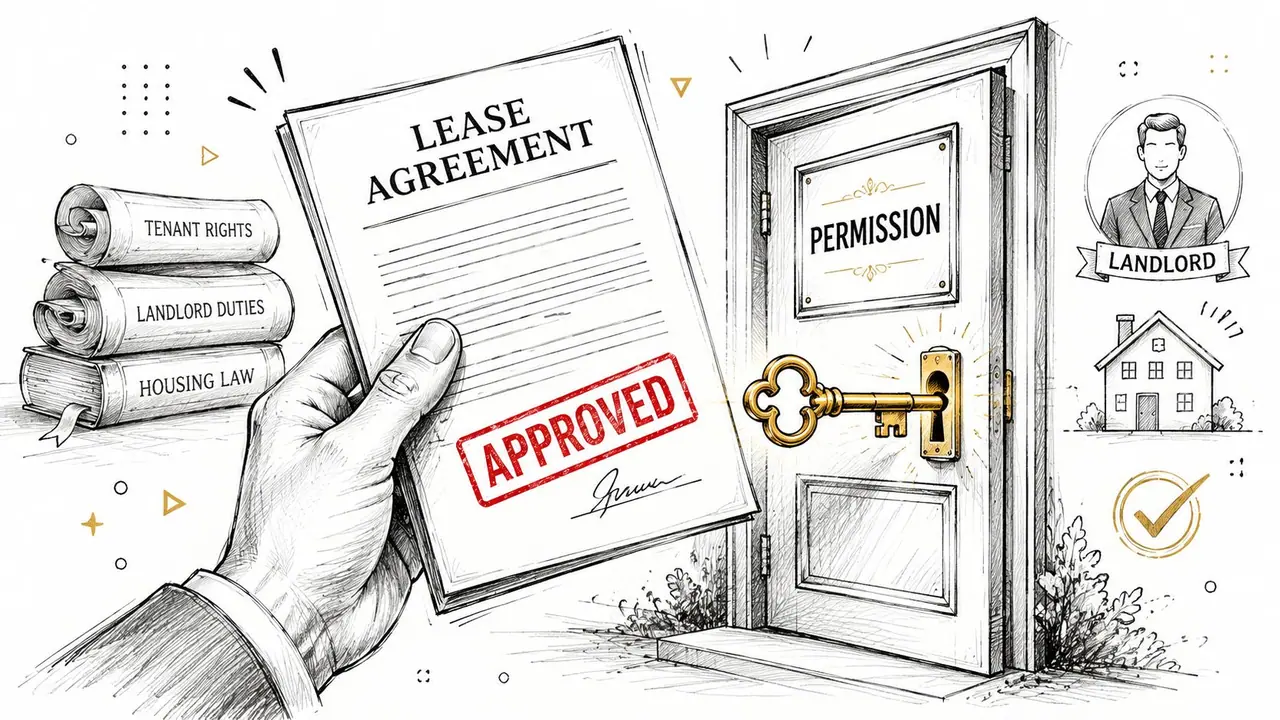
For rental arbitrage, you must secure explicit landlord consent and a lease addendum allowing subletting. The recommended order is to validate local regulations first, negotiate written permission second, and only then launch. A common failure point is spending on furnishing or setup before consent is in writing (Guesty's guidance on starting an Airbnb business without owning property).
Check the market before you pitch
Don't approach a landlord with a generic promise that you'll “Airbnb the place responsibly.” That sounds like risk. Landlords respond better when you show them a controlled operating plan.
Your checklist should include:
- Zoning and STR rules: Confirm the city, county, building, and neighborhood rules that apply to short-term rentals.
- Building-level restrictions: Some properties allow long-term leasing but ban short stays through HOA or condo rules.
- Permit and registration requirements: If the market requires a license or registration, know that before you negotiate.
- Tax handling: Understand who collects and remits local lodging-related taxes in that market.
A landlord conversation goes better when you present the unit as a professionally operated hospitality asset, not a side hustle experiment.
What to lock into the agreement
The lease addendum matters as much as the initial “yes.” If the permission isn't specific, it isn't protection.
Include language around:
- Subletting and short-term rental use: The agreement should clearly authorize the activity.
- Duration and renewal terms: You need to know how stable the operating window really is.
- Access rules: Clarify owner inspections, maintenance access, and emergency procedures.
- Care standards: Note expectations for cleaning, maintenance reporting, and property condition.
- Insurance obligations: State what coverage you carry and what the landlord expects.
For operators reviewing their paperwork, this overview of vacation rental contracts is a useful reference point.
A short walkthrough can help you spot weak points in the approval process before you sign anything:
Protect the operation before launch
Specialized liability coverage isn't optional. Neither is a plan for guest damage, vendor access, and emergency communication. Industry guidance also recommends setting up dynamic pricing and channel management from day one, because the unit has to earn above rent, cleaning, utilities, and platform fees to stay viable. That isn't something you fix later with “better hosting.”
Get the legal path clean before you buy a single lamp.
Modeling Your Profitability and Startup Costs
A non-owner Airbnb deal lives or dies in the spreadsheet before it lives or dies in the listing. If you can't model the unit plainly, you shouldn't sign it.

Many guides mention co-hosting but don't compare its economics clearly against arbitrage. Property managers typically earn 10–20% of revenue, and that has to be weighed against arbitrage's fixed rent exposure and higher setup costs when you choose the right risk-adjusted model for your market (Lodgify on making money with Airbnb without property).
Build the model in the right order
Most beginners do this backward. They estimate revenue first because it's exciting. Start with cost structure instead.
Write down every startup cost you expect to carry. That usually includes furnishing, decor, linens, kitchen setup, lock hardware, initial consumables, photography, licensing, and any launch-related service fees. Don't round lazily. Use line items.
Then build the monthly operating view:
- Fixed costs: Rent, internet, utilities, software, insurance, and any recurring vendor retainers
- Variable costs: Cleaning, laundry, restocking, maintenance calls, guest consumables, and platform-related costs
- Reserve planning: Damage, replacement items, and slow periods
The monthly P and L to draft before you commit
Your forecast doesn't need to be fancy. It needs to answer one question. Does expected nightly revenue consistently cover the all-in carrying cost of the unit?
Use a sheet with these rows:
| Category | What to include |
|---|---|
| Revenue | Nightly bookings and any operational income tied to the stay |
| Fixed monthly costs | Rent, base utilities, internet, recurring software, insurance |
| Variable operating costs | Cleaning, laundry, consumables, supply replacement, maintenance |
| Net operating result | Revenue minus all monthly costs |
| Cushion | A realistic margin for softer weeks and operational mistakes |
If you're new to underwriting, this primer on whether Airbnbs are profitable helps frame what to test before committing.
What good underwriting looks like
Good underwriting is conservative. It assumes setup takes longer than expected, guest issues happen, and not every month will feel like peak season.
Pull demand and pricing benchmarks from tools such as AirDNA or PriceLabs. Then test the deal under less flattering assumptions than the best-case version in your head. If the margin only works when everything goes right, the deal doesn't work.
The technical failure point in arbitrage is margin compression. When average nightly revenue stops covering the all-in monthly cost, the unit turns from business asset to liability.
Co-hosting models need a different test. Instead of asking whether nightly income beats rent, ask whether your fee covers the support burden. Some listings look easy until you count the messages, owner calls, cleaner issues, and calendar fixes.
Designing a Flawless Five-Star Guest Experience
The guest doesn't care which business model you chose. They only see the stay.

A smooth experience starts before check-in. A guest books, gets a clear confirmation, receives arrival instructions at the right time, enters the property without friction, finds the Wi-Fi immediately, understands the house rules, and knows what to do if something goes wrong. That sequence sounds basic, but most bad reviews come from one of those moments breaking down.
The guest journey that reduces support load
Strong operations come from consistency, not charm.
A practical guest flow looks like this:
- After booking: Send a concise confirmation with what happens next
- Before arrival: Deliver check-in steps, parking notes, access details, and house rules
- During the stay: Give guests one place to find Wi-Fi, appliance instructions, local recommendations, and support contacts
- Before checkout: Send simple departure instructions without turning checkout into a chore list
- After departure: Follow up, close loops on issues, and review your own internal notes
Digital tools demonstrate their value. Operators often use PMS messaging, smart locks, and shared cleaner calendars together. Some also use a digital welcome book. ScanStay is one option that puts Wi-Fi details, check-in information, house rules, local recommendations, and video how-tos behind a QR code in the guest's browser, which helps reduce repetitive questions while standardizing information delivery.
What guests notice first
Guests notice missing basics faster than fancy decor. If the unit is attractive but the instructions are confusing, support volume climbs. If the apartment is simple but the stay feels easy, reviews usually hold up better.
The operational details that matter most are usually the least glamorous:
- Arrival clarity: Access instructions must be impossible to misread
- Bed and bath readiness: Clean linens, working lights, stocked paper goods
- Kitchen usability: Enough essentials to make the place functional
- Noise and expectations: Clear rules before the guest tests boundaries
- Fast issue handling: Problems don't need to disappear. They need a response path
The systems that keep reviews stable
A successful co-hosting business depends on strong systems. The workflow includes defining responsibilities in a formal agreement and using software to automate messaging, calendars, and pricing. Without that automation, a management fee that typically falls in the 10–20% of revenue range can be eroded quickly by labor-heavy guest support and coordination (Hostaway on making money on Airbnb without owning property).
That's true even for one unit. It becomes unavoidable at three.
Use a standard cleaner checklist. Use saved replies that still sound human. Keep maintenance contacts organized before something breaks. And log recurring guest questions, because every repeat question is a signal that your instructions are weak.
Guests reward clarity. They rarely praise it directly, but they punish confusion immediately.
Scaling Your Operation from One Unit to a Portfolio
One profitable unit proves you can operate. A portfolio proves you can repeat.
Turn one good unit into a repeatable operating system
The first unit should produce documents, not just income. Build a playbook as you go. Save your guest message templates, cleaning standards, restock lists, maintenance escalation steps, photo standards, and owner reporting format.
If those systems only live in your head, you don't have a business. You have a job with a busy inbox.
Create a basic operating stack for every property:
- A launch checklist: What gets done before the listing goes live
- A turnover checklist: What cleaners verify every stay
- A support workflow: Who handles guest issues, maintenance, refunds, and escalations
- A performance review cadence: When you review pricing, reviews, and operational friction
How to win more owner deals
For co-hosts and managers, growth comes from trust and proof of control. Owners want to know three things. Will you protect the property, protect the guest experience, and make their life easier?
A strong proposal is simple. Show the service scope, communication standards, pricing approach, vendor coordination process, and reporting method. Don't overpromise on revenue. Owners usually trust the operator who sounds disciplined more than the operator who sounds excited.
The best time to scale is after your first operation feels boring in a good way. Cleaners show up. Guests get the right info. Owner communication is routine. Problems still happen, but they happen inside a system.
That's the point where adding the next unit makes sense.
If you're building a non-owner Airbnb business, guest communication becomes one of the first bottlenecks. ScanStay gives hosts and managers a digital welcome book that replaces paper binders and repetitive messages with a single QR code, so guests can access check-in details, Wi-Fi, house rules, local recommendations, and video instructions in one place.